‘Embedded’ or aloof: Media’s choice in covering emergencies

banner.jpg

In many disaster and conflict hot spots of the world, journalists and relief aid providers work closely together. There are times when journalists play good Samaritan and aid workers dabble as reporters. In the difficult field conditions of emergencies, this is understood and accepted.

But should journalists become ’embedded’ in humanitarian operations? If so, how impartial or independent would their coverage be?

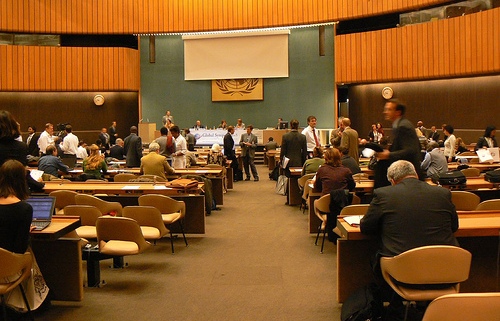
This issue kept coming up during the Global Symposium+5 on ‘Information for Humanitarian Action’ in Geneva this week (22 – 26 Oct 2007). The majority aid officials and handful of journalists present didn’t always agree.

UN agencies and other humanitarian organisations increasingly recognise the power of media, especially broadcast television, to raise public awareness on emergencies. This, in turn, influences political commitments, aid donations and relief operations themselves.

But how close can the media get to aid agencies before they lose their sense of perspective and independent analysis? If journalists becoming embedded with the military in conflicts is frowned upon, what about media’s de facto embedding with humanitarian missions?

There was no consensus on the issue, but a few of us stressed on the need for independent media — independent of governments, aid agencies and other vested interests — to take stock of crisis situations and report, reflect and analyse on what they find.

The presence of nosy reporters might be an occasional irritant to some aid agencies, especially if they have things to hush up, but at the big picture level it can serve everyone’s interest — especially those of affected groups.

Alain Modoux, a former red cross official who went on to become an assistant director general of UNESCO, reminded us how governments often stand in the way of free flow of information on emergency situations. The reasons for such suppression vary: some don’t want to admit failures on their watch, and others fear public discussion and debate, especially at international level, on what is happening in their own country.

Governments can — and often do — bring pressure upon aid agencies to fall in line (or risk being thrown out). In such situations, it’s only the independent media that can take stock of rapidly changing situations and highlight the unmet needs and any disparities in the emergency response.

Then there is the media’s traditional watchdog role. The humanitarian sector is now the world’s largest unregulated industry – billions of dollars flow through the sector every year, most of it public funds (direct donations or taxes collected by governments). Yes, the aid agencies all audit their accounts and the UN has stringent regulations on how they can spend money. But there’s nothing like a bit of media scrutiny to keep everybody clean and honest…

Follow the money! This is what journalists are taught and trained to do – and with good reason. In emergency situations following the money often brings up instances of waste, corruption and mismanagement that aid agencies would rather not talk about.
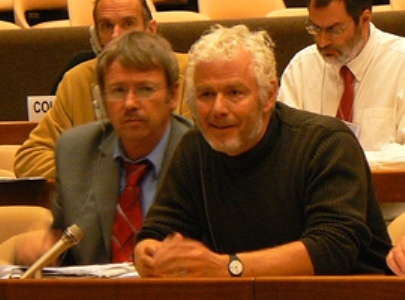
edward-giradet.jpg

Swiss journalist Edward Girardet (photo, above), who specialises in in media, humanitarian aid and conflict issues, has been making this point for a long time.

As he has written: “Humanitarianism should not ‘belong’ to any one group. What the international aid industry urgently needs is more hard-nosed and independent reporting.”

That is unlikely to happen when individual journalists are too cosy with aid workers or their bosses.

Ed was at the Geneva Symposium this week, once again making a case for a viable media watchdog capable of reporting the real causes behind humanitarian predicaments, including how the international community responds.

Read my June 2007 blog post quoting Ed Girardet: Can the media tame the alms bazaar?

In one intervention, I suggested that the media can become the ‘conscience’ of the humanitarian industry – to ensure transparency and accountability of resources, decisions and conduct.

Partnerships between media and aid workers is fine, as long as the media remain somewhat aloof and detached.

And it’s not the global media who can or will stay with the stories as recovery takes months or years. We all saw in the aftermath of the Indian Ocean Tsunami how quickly the global media’s news interest went down.

In the long term, empowering the local journalists to ask the right questions and go in search of answers.

Read this blog post reproduced in Asia Media Forum


Read this blog post adapted in MediaHelpingMedia

New media tsunami hits global humanitarian sector; rescue operations now on…

banner.jpg

Geneva, 25 October 2007 (MovingNews): The global humanitarian sector has been hit by a ‘new media’ tsunami, causing widespread damage and massive confusion in Geneva.

Giant waves — carrying blogs, wikis, YouTube and other new media products — have simultaneously swept over several aid capitals of the world, including London, New York and Tokyo.

United Nations and many other international relief organisations are among the worst affected. These aid agencies, usually among the first to arrive at the scene of major disasters or crises, found their information and communication capacities severely depleted.

“This is entirely a man-made calamity, and we just didn’t see it coming,” the UN spokesperson in Geneva said in a brief message released using the old-fashioned Morse code. “Our risk registers, log frame analyses and satellite technologies gave us no advance warning.”

Eye witness reports said some agencies were completely marooned on old media islands, saddled with very large numbers of completely unreadable documents going back to decades.

First casualties included assorted spin doctors carrying out propaganda for UN agencies. One perished while trying to sanitise the Wikipedia entry about his agency head.

Meanwhile, several dozen injured or badly bruised public information officers have been treated at a language clinic. Some will undergo trauma counselling.

“We have never been exposed to this level of open and two-way communication,” a survivor from UN OCHA said. “We were so used to always being in control, always telling others what to do and how to do it. I still don’t know what hit us!”

In a major show of solidarity, the world’s computer, telecommunications and media industries are rushing emergency teams to provide relief and recovery support.

“For decades, the UN, red cross and other aid agencies have responded to many and varied emergencies. In their hour of need, we have decided to come to their help,” a joint tele-com-media industry statement said.

Other survivors are being given first aid in simple, jargon-free public speaking. Those who respond well will be treated with basic courses in participatory communication methods.

The emergency coordinators have ordered that any spin doctors found alive be quarantined to prevent the spread of the fatal infection known as MDG.

As the recover process continues, ICT activists plan to conduct more advanced exercises — such as how to produce PowerPoint presentations with less than 20 words per slide.

“But we have to take things one step at a time,” a relief worker said. “These people have just had their entire frame of reference collapse all around them. They are in deep shock and disbelief. It will be a gradual process.”

It has now been established that a few alert officials had anticipated the new media tsunami well ahead of its dramatic arrival. But their warnings were ignored, as it now turns out, to everyone’s peril.

In Washington DC, the United States has just designated veteran broadcasters Walter Cronkite , Bill Moyers and Oprah Winfrey as their New Media Tsunami Relief Ambassadors. In the coming weeks, they will tour the decimated UN, red cross and other humanitarian aid agencies, taking stock of the global disaster and sharing their collective wisdom on telling the truth to the public simply and well.

You, dear reader, are now invited to continue building this unfolding scenario:

How soon and how well will the humanitarian sector raise its head from the new media tsunami?

Will they learn lessons from this disaster, or might they soon return to business as usual?

What would happen to the massive outpouring of goodwill, voluntary help and aid?

Message to aid workers: Go mobile — or get lost!

banner.jpg

“MY NAME is Mohammed Sokor, writing to you from Dagahaley refugee camp in Dadaab. Dear Sir, there is an alarming issue here. People are given too few kilograms of food. You must help.”

This short, urgent message of a single individual has already joined the global humanitarian lore. It was sent by SMS (a.k.a. mobile texting) from the sender’s own mobile phone to the mobiles of two United Nations officials, in London and Nairobi. Sokor found these numbers by surfing at an internet café at the north Kenyan camp.

The Economist used this example to illustrate how the information dynamics are changing in humanitarian crises around the world. In an article on 26 July 2007, titled ‘Flood, famine and mobile phones’, it noted:
The age-old scourge of famine in the Horn of Africa had found a 21st-century response; and a familiar flow of authority, from rich donor to grateful recipient, had been reversed. It was also a sign that technology need not create a ‘digital divide’: it can work wonders in some of the world’s remotest, most wretched places.”

Elsewhere in the article, it added: “Disaster relief is basically a giant logistical operation. Today’s emergency responders can no more dispense with mobile phones or electronically transmitted spreadsheets than a global courier company can. But unlike most couriers, aid donors operate amid chaos, with rapidly changing constraints (surges of people, outbreaks of disease, attacks by warlords). Mobile phones increase the flow of information, and the speed at which it can be processed, in a world where information used to be confused or absent. The chaos remains, but coping with it gets easier.

image-from-wikimedia.jpg
Image courtesy WikiMedia

All available indicators suggest that the future of humanitarian assistance is going to be largely dependent on mobile communications. Despite this reality, old habits die hard. I sat through an entire presentation on ‘Innovation to Improve Humanitarian Action’ at the Global Symposium+5 on ‘Information for Humanitarian Action’ in Geneva this week — and not once did I hear mobile phones being mentioned. A group of 15 – 20 people had deliberated for 2 days to come up with their vision of ‘the potential of emerging technologies and approaches used in the field and globally to strengthen information sharing, coordination and decision-making’ in humanitarian work.

It might be that aid workers are all frustrated computer geeks…because all their talk was about collaborative and networking software, Geographic Information Systems (GIS), the use of really high resolution (read: oh-so-sexy) satellite imagery, and the latest analytical tools — all requiring high levels of skill and personal computers with loads of processing power.

But no mobile phones! This was too much to let pass, so I raised the question: did you guys even consider this near ubiquitous, mass scale technology and its applications in crisis and disaster situations? And how do you engage the digitally empowered, better informed disaster survivors and crisis-affected communities?

I also recalled the example of Aceh tsunami survivors keeping each other informed about the latest arrivals of relief supplies – all through their mobile phones (as cited by the head of MERCY Malaysia on the previous day).

It turned out that they did discuss mobiles — well, sort of. Amidst all the gee-whiz talk about high tech gadgets, I received a short answer: widespread as mobile phones now are, ‘these systems are not fully integrated or compatible with other information platforms’ — whatever that means! The group’s spokespersons also pointed out that since mobile services are all operated by commercial (telecom) service providers, using their networks involves lots of ‘negotiations’. (I would have thought it’s the same with those who operate earth-watching or communications satellites.)

The message I heard was: mobile phones are probably too down-market, low-tech and entirely too common for the great humanitarian aid worker to consider them as part of their expensive information management systems. For sure, everybody uses them to stay in touch in the field, but what use beyond that?

What uses, indeed. If today’s aid workers ignore the mobile phone revolution sweeping Africa, Asia Pacific and, to a lesser extent, Latin America, they risk marginalising their own selves. The choice seems to be: go fully mobile, or get lost.

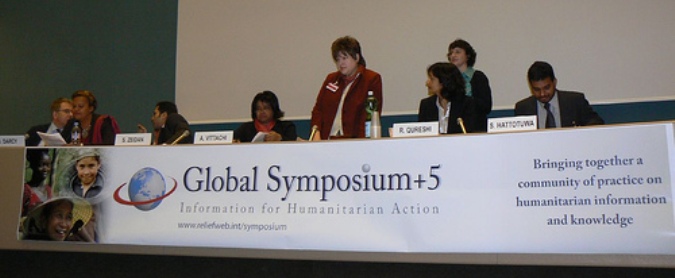
Fortunately, the panel discussion that followed — on ‘Envisioning the Future’ — partly redressed this imbalance. The panel, comprising telecom industry, citizen media and civil society representatives, responded to the question: what will our humanitarian future look like and what role will information play in supporting it?

panel-3-on-envisioning-the-future.jpg

Leading the ‘defence’ of mobiles was Rima Qureshi, head of Ericsson Response, part of the global mobile phone manufacturer’s social responsibility initiatives. She reminded us there were now 3.4 billion (3,400 million) mobile phones in the world — and it was growing at 6 new mobile connections every second. By the time she ended her 8-minute talk, she said, some 3,000 new mobiles would have been connected for the first time.

This represents a huge opportunity, she said, to put information into everyone’s hands whenever and wherever they need it. And mobiles are all about two-way communication.

The new generation of mobile phones now coming out are not locked into a single telecom network, and have built-in global positioning (GPS) capability. This means the phone’s location can be pinpointed precisely anywhere on the planet — which can be invaluable in searching for missing persons in the aftermath of a disaster.

Wearing her Ericsson prophet’s hat, Rima said: “Everything we can do on a personal computer will soon become possible on a mobile. Mass availability of mobile phones, able to connect to the global Internet, will represent a big moment for human communication.”

And not just Ericsson, but many other mobile phone makers and network operators are rolling out new products and services. The new mobiles are easier to use, more versatile and durable, and come with longer-lasting or renewable sources of power. Wind-up phone chargers have been on the market for some years, and some new mobile phones come with a hand-cranking charging device that makes them entirely independent of mains electricity. With all this, the instruments keep getting cheaper too.

And if aid workers ignore these and other aspects of mobile realities, they shouldn’t be in their business!

1743641460_63092b452a.jpg

Rima described another Ericsson initiative called Communication for All. It’s trying to harness the power of shared network, across commercial telecom operators and networks (but with some development funding from the World Bank) to deliver coverage to rural areas that aren’t as yet covered fully. The rolling out of coverage would have profound implications for disaster managers and aid workers.

As James Darcy, Director of humanitarian aid policy at the UK’s Overseas Development Institute, noted from the chair, the future of humanitarian communication is already here — but the sector needs to have more imagination in applying already available technologies for new and better uses.

My colleague Sanjana Hattotuwa, ICT researcher and activist from Sri Lanka, made the point that 3.4 billion mobiles raise new ethical considerations. For example, while it is now technologically possible to track the movement of every mobile phone – and therefore, in theory, each unit’s owner – this knowledge can be abused in the wrong hands. (I’ll write a separate blog post on Sanjana’s other remarks.)

Not everyone in the audience was convinced about the future being mobile. Soon enough, the predictable naysayer popped up: saying only 2.4 per cent of people in Sub-Saharan Africa as yet owned mobile phones, and Internet access was limited to only one per cent. Blah, blah, blah! (I was half expecting someone to blurt out the now completely obsolete – but sadly, not fully buried – development myth that there are more phones in New York city than in the whole of sub-Saharan Africa. That didn’t happen.)

Funny thing was, we were discussing all this at the Palais des Nations, the European headquarters of the UN, which is just literally across the street from the headquarters of the International Telecommunication Union (ITU), the authoritative monitor of telecom and ICT industry data and trends! It seemed that the gulf between some humanitarian workers and the telecom industry was much bigger than that.

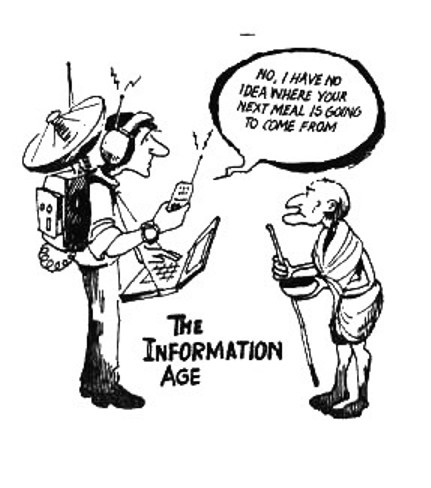
Of course, being connected – to mobile, satellite and every other available information network – is only the first step. We can only hope humanitarian workers don’t end up in this situation, captured in one of my all-time favourite ICT cartoons (courtesy Down to Earth magazine):

copy-of-all-inf-no-solutions.jpg

Read about Sri Lanka’s pathfinding action research by LIRNEasia and others: Last Mile Hazard Information Dissemination Project

All Geneva photos courtesy UN-OCHA Flickr on Global Symposium+5

Share (information) if you really care: Challenge to humanitarian community

banner.jpg

Why can’t we humanitarian workers talk to each other in the field?

Why must we, instead, badger and harass people affected by a disaster or war, asking them for the same information over and over again?

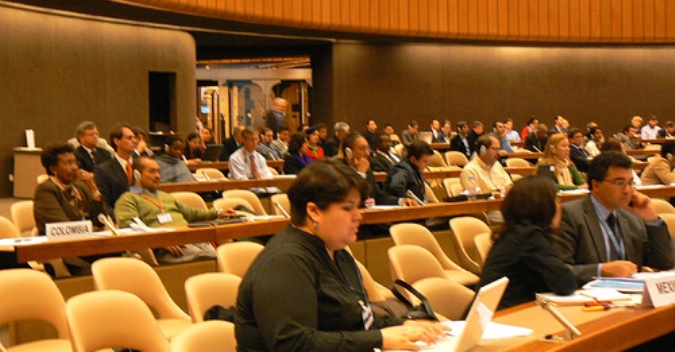
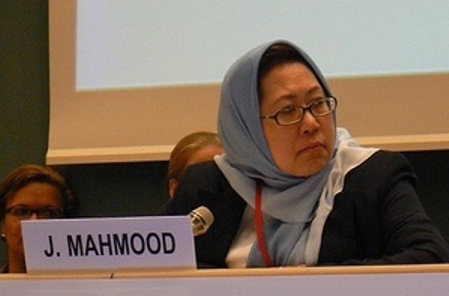
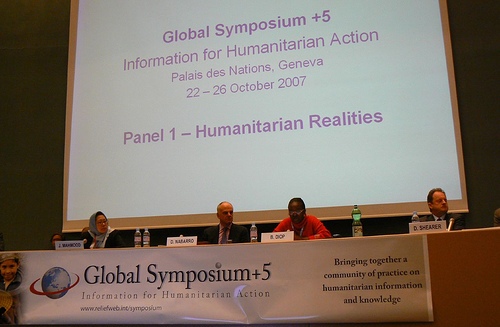
With these simple yet important questions, Dr Jemilah Mahmood, President of MERCY Malaysia, started off the first panel discussion on humanitarian realities at the Global Symposium+5 on ‘Information for Humanitarian Action’ organised by the United Nations Office for the Coordination of Humanitarian Affairs (UN-OCHA). The meeting, held in Geneva from 22 – 26 October 2007 at the Palais des Nations, has brought together over 200 persons involved or interested in information and communication aspects of humanitarian work.

I was nearly dozing off on a surfeit of humanitarian jargon and acronyms when Jemilah started her reality check. The medical doctor turned humanitarian leader spoke from her heart, and spoke such common sense that sometimes seemed to elude the self-important UN types.

Jemilah argued that there was a greater need for community based information gathering and communication, rather than just data mining that often takes place in crisis or emergency situations.

“Communication with affected communities needs to be a genuinely two-way process,” she said, echoing the discussions at my own working group on ‘Communicating with affected communities in crisis’.

dr-jemilah-mahmood-mercy-malaysia.jpg

She talked of people in Aceh, Indonesia, and elsewhere who survived the tsunami — and then faced a barrage of questions and questionnaires from an endless stream of aid workers, many of who asked the same questions again and again! Why couldn’t the first group/s who surveyed survivors not have shared the information they gathered, she wondered.

“I sometimes see how humanitarian agencies are fighting with each other to keep field information to themselves,” she revealed.

There is also a need for humanitarian workers to be more sensitive to and respectful of affected people’s culture and social norms. For example, it is inappropriate to go to predominantly muslim communities and ask about their sexual habits or probe incidents of rape — even though gathering such information would be relevant in some situations. “The humanitarian workers need to find the right ways to tackle these and other challenges,” she said.

Sometimes well meaning aid workers inadvertently overstep their boundaries. In the aftermath of the Pakistan earthquake of October 2005, community meetings were scheduled at times when the people had to break their day-time fasting.

Today’s crisis affected people are becoming better informed and more empowered. Jemilah recalled how mobile phones are increasingly spreading news and information among crisis affected people on the arrival of new food or medicinal stocks. Once in Aceh, the news of vaccine stock arrival spread within hours through mobile texting or SMS, prompting thousands of people to turn up asking for this service.

The humanitarian community needs to combine technology, common sense and human considerations to deliver better services and benefits, she argued. “Technology alone won’t do this for us, but it offers us useful tools,” she said.

She added: “There are huge opportunities to use modern communication technologies to plan better, reduce disaster risks and have a well coordinated response in times of disasters.”

In short, we need locally relevant, low-cost solutions to improve information gathering, information sharing and communication all around, she argued.

1729202869_7825dbdc5b.jpg

MERCY Malaysia is an internationally recognised medical and humanitarian relief organisation. “MERCY Malaysia is not just a response organisation,” says its president Dr Jemilah Mahmood. This realisation came during the Afghanistan crisis (in October, 2001), when members decided it would be more prudent to look towards providing Total Disaster Risk Management (TDRM) to ensure that affected communities become more resilient after a disaster.

Since its inception, MERCY Malaysia has served hundreds of thousands of victims of natural and complex humanitarian disasters from Kosova, Indonesia, India, Turkey, Cambodia, Afghanistan, Sri Lanka, Iraq, Iran and Sudan. Hundreds of volunteers, both from the medical and non-medical field, have been trained and deployed to these areas. Dr. Jemilah Mahmood herself has led most of these missions at home and abroad, in particular to Kosova, Indonesia, Cambodia, Afghanistan, Iraq and most recently to Palestine.

Read The Star newspaper (Malaysia) article on MERCY Malaysia on 12 October 2007

panel-1-humanitarian-realities.jpg

All Geneva photos courtesy UN-OCHA Flickr on Global Symposium+5

The many lives of PI: Crisis communication and spin doctors

banner.jpg

Where does public information (PI) work end and public communication (PC) work begin?

And how can we separate public information work, which is mostly institutional propaganda, from public communication of issues and knowledge directly relevant to saving lives or improving them?

This is the question that we often grappled with this week in Geneva, during the Global Symposium+5 on ‘Information for Humanitarian Action’ organised by the United Nations Office for the Coordination of Humanitarian Affairs (UN-OCHA). The meeting, held from 22 – 26 October 2007 at the Palais des Nations, brought together over 200 persons involved or interested in information and communication aspects of humanitarian work. I was part of working group on ‘Communicating with affected communities in crisis’.

I raised the importance of separating PI from PC from the very beginning of our discussions. PI and public relations (PR) both have their place, I said, but it was not in the same league as communicating issues and knowledge.

Members of my working group – drawn from humanitarian organisations, UN agencies and the media – broadly agreed with this view. But many couldn’t help sliding back to their own agency’s PI/PR agendas during our discussions!

This is no accident. In this age of spin and soundbites, many development and humanitarian agencies are under pressure to raise their individual profiles in the public eye. In trying to do so, they give far higher priority – and resources – to PI/PR than to engaging in issue-based communication, or, to use one of their own favourite phrases, ‘evidence based advocacy’.

For public communication to assume its rightful place in the development process and humanitarian intervention, all key players will need to be more restrained with their PI/PR agenda. But looking around the massive UN complex in Geneva, where a dozen UN agencies are competing with each other for the public’s and media’s attention, I can’t quite see this happening soon.

I touch on this in an essay in August 2007 titled Cheque-book development corrupting the media. Here’s an extract:

As development organisations compete more intensely for external funding, they are increasingly adopting desperate strategies to gain higher media visibility for their names, logos and bosses.

“Communication officers in some leading development and humanitarian organisations have been reduced to publicists. When certain UN agency chiefs tour disaster or conflict zones, their spin doctors precede or follow them. Some top honchos now travel with their own ’embedded journalists’ – all at agency expense.

“In this publicity frenzy, these agencies’ communication products are less and less on the issues they stand for or reforms they passionately advocate. Instead, the printed material, online offerings and video films have become ‘logo delivery mechanisms’.

So the first step would be to deliver less logos and more real information.

Read my other relevant blog posts:

August 2007: Cheque-book Development: Paying public media to deliver development agency logos

April 2007: Say MDG and smile, will ya?

April 2007: MDG: A message from our spin doctors?

Everyone has information ‘needs’ — and information ‘wants’ too!

banner.jpg

When the development community talks of people living in poverty (or ‘the poor’) they almost always talk about somebody else — it is not ‘us’ but a remote, often nameless ‘them’.

And when the humanitarian community talks of people affected by crises — disasters or conflict — that too almost always is about somebody else, typically in a poor country.

The well-meaning, do-good people in development and humanitarian communities are fond of talking about the information needs of the poor or crisis affected. These ‘needs’ are usually defined in terms of survival, sustenance or relief.

It’s as if people in poverty or crisis situations only have a simple set of information needs, but none of the information ‘wants’ that we, the privileged, have in abundance.

In Geneva this week, I have argued that everyone has a right to not only information needs, but also information ‘wants’. Development or emergency relief would become truly meaningful only when both these are met.

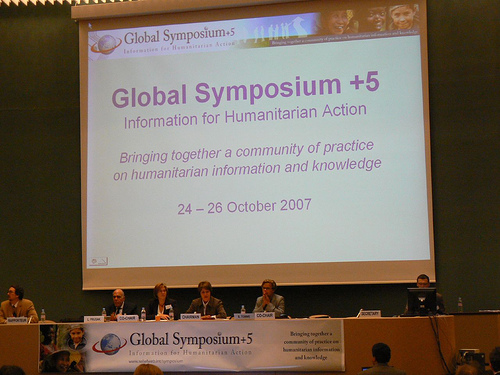
I’m participating in the Global Symposium+5 on ‘Information for Humanitarian Action’ organised by the United Nations Office for the Coordination of Humanitarian Affairs (UN-OCHA). The meeting, held from 22 – 26 October 2007 at the Palais des Nations, UN headquarters in Europe, brought together over 200 persons involved or interested in information and communication aspects of humanitarian work.

I was invited to be part of working group 5 on ‘Communicating with affected communities in crisis’. Members of this group were drawn from national and international humanitarian aid agencies, UN system, governments and the media.

global-symposium5-in-geneva-oct-2007.jpg

Our brief was to ‘look at the information needs of affected populations both during emergencies and in longer term recovery efforts’. We were to ‘evaluate the nature of these needs, to identify actions necessary to achieve operational reality, and to consider the strategies required to integrate beneficiary communications into the humanitarian response framework, particularly through the opportunities offered by the current reform process’.

Now that’s all well and good, and we did that part of our work in earnestly and seriously. The outcome was presented on Oct 25 to the plenary stimulating discussion and debate.

But I kept reminding our working group that we really have to think beyond the mere information needs of people, and address their information wants as well.

This basically means information related to cultural and social aspects. Humans don’t live on bread, water, clothing and shelter alone. We are complex and nuanced beings with a vast array of interests — and that’s equally true for the city stockbroker, village farmer and the aid worker wearing a UN cap.

Evidence of this is all around us if we only care to notice. For example:

* Tens of thousands of people driven to temporary shelters by disasters or wars followed the 2006 Football World Cup in Germany from their make-shift homes. Football mania didn’t stop at the periphery of a camp.

* Every time there is an important cricket match in South Asia, it unites the rich and poor, the sheltered and homeless, and those living normal or crisis disrupted lives.

The sooner we in the development and humanitarian sectors recognise this reality, the better.

1692836466_2c493ea8ec.jpg
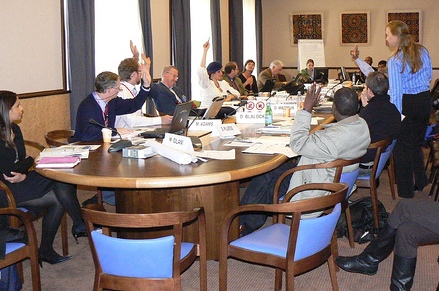
Photo shows working group 5 in session: photo courtesy UN OCHA.

I made a similar point in an essay written in mid 2004 on using information and communication technologies (ICTs) for poverty reduction:
I cringe every time I hear remarks about the poor just needing survival or sustenance related information. The information needs and wants of the poor can be as diverse as everybody else’s. Sarvodaya – Sri Lanka’s largest development NGO — once surveyed the information needs of poor people in rural and semi-urban areas. Their findings included: health and nutrition information, as well as details on bank loans, foreign jobs and insurance policies. There was also interest in world affairs, national politics and cultural affairs…

Read my full essay in GKP Partners Newsletter (My essay is the last one, so keep scrolling down, down, down.)

Three years later I found myself making the same point to a different group, many of who are information specialists working in crisis and emergency situations.

This kind of perception will continue as long as we harbour the us-and-them divide.

1687780850_168f228e8a.jpg

A million video cameras to change the world!

Something remarkable is happening with online public video sharing platforms: progressive non-profit groups worldwide are seizing their power to do good.

YouTube started off more like the people’s version of funniest home videos. But it’s no longer confined to that category. Activist and social groups are increasingly uploading their videos. As broadband Internet rolls out around the world, more people are actually able to watch these videos online.

In response, YouTube, owned by search giant Google, is creating a special section for nonprofits to air their videos and link them to its Google Checkout online payment system to receive funds directly.

“Nonprofits understand that online video isn’t just a way to broadcast public service announcements on a shrunken TV set,” Reuters quoted Steve Grove, head of news and politics at YouTube, as saying. “It’s a way to get people to do more than just absorb your message but to engage with their user generated content as well.”

Pure Digital, maker of the Flip video camera, has said it plans to give away a million video cameras to non-profit organizations around the world to capture images and moments in places traditional media outlets might not be able to reach.

“Video has power and media has power but the challenge is that the media is limited to telling stories that are controlled by a very small number of people,” Jonathan Kaplan, chief executive of Pure Digital, told Reuters. “This program along with YouTube and other sites will expand the media universe for learning what’s really going on in the world,” he said.

Visit FlipVideo website on support for non-profit groups

Reuters quotes the recent example of the impact of clips of the Myanmar army’s confrontations with local protesters which were posted on YouTube and other Web sites. Some of the clips made their way to mainstream news media, which were blocked out of entering or covering events in Burma.

See an example of a YouTube video on what’s happening in Burma:

Our friends at Witness, an activist group founded by the musician Peter Gabriel in 1992, has long specialised in raising awareness of such previously unseen events through video. Sam Gregory, programme director at Witness, says online distribution has made it easier to put videos in front of the right people such as decision makers and others with a personal connection to the cause.

“It’s not necessarily about the size of the audience it’s about placing targeted video and turning ‘watching’ into action,” said Gregory.

Read the Reuters story on 19 Oct 2007: Nonprofits turn to YouTube to raise awareness, funds

My blog post on 1 Oct 2007: Shoot on sight: Rights Alert on Burma

My blog post on 30 Sep 2007: Kenji Nagai: Filming to the last moment

TVE Asia Pacific News story March 2007: TVEAP films now on YouTube

What’s happening with online video has a parallel in how activist groups seized the potential of the hand-held video camera. The handicam was invented in 1985 by Sony. Intended originally for entertainment and domestic documentation purposes only (ranging from family vacations and weddings), it did not take long to find new uses for this revolutionary technology.

The Handicam Revolution in media began when a video camera captured police beating Rodney King on a Los Angeles highway. The shocking amateur footage was broadcast on TV around the world. The acquittal of the police officers after their first trial sparked outrage, and riots erupted in a 20 block section of Los Angeles, leaving 54 people dead and over 2,000 injured.

Ever since Rodney King, broadcasters have been using amateur video to provide images of events that their own camera people have not captured. And human rights activists have started relying on the power of video images to capture the attention of the broadcasters to expose acts of human rights abuse and violation.

The Al and Pachy Show: Climate Change gains public momentum

Compared to former US Vice President and climate campaigner Al Gore, the name Rajendra K Pachauri might not be as widely recognised. In fact, I wonder how many Americans can even pronounce the name correctly.

But Dr Pachauri is a scientific heavyweight himself, and is the other half of this year’s Nobel Peace Prize. He chairs the UN’s Inter-governmental Panel on Climate Change (IPCC), which was announced as joint and equal winner.

He may be less glamorous than Gore, but Pachauri is just as ardent an advocate for the world to seriously tackle global warming. It was Pachauri’s dedicated work ethic and “ability to build and inspire a team” that helped the IPCC to win the world’s most coveted prize.

Read Rajendra Pachauri’s first reaction to the Nobel Peace Prize announcement

In a profile of the Indian engineer turned scientist-diplomat, The Christian Science Monitor noted: “If Gore is the frontman of the crusade against global warming, then Pachauri runs the engine room.”

Like Gore, Pachauri is a global-warming pioneer. Since the late 1980s, the former industrial engineer has sought to use science to convince skeptics and CEOs of the need of reducing mankind’s atmospheric imprint. Now, he warns that if the problem is not addressed, developing nations will bear the brunt of the crisis, suffering for a situation they did not create because they have not the resources to mitigate it.

In their profile, The Christian Science Monitor quoted Tulsi Tanti, a friend and founder of Suzlon, Asia’s largest manufacturer of wind turbines, as saying: “He has been one of the pioneers and voices of reason in the field, not just calling attention to an environment in peril but creating solutions by bridging the gap between academia, business, policymakers, and the public.”

Read full profile from The Christian Science Monitor of 15 October 2007

I first met and interviewed Dr Pachauri in October 1990, during the Second World Climate Conference in Geneva. That was one of the first international scientific conferences that I covered as a journalist, and Pachauri was kind enough to grant me a long interview. We spoke less of climate and more about energy security and innovative energy solutions. At that time he was head of India’s Tata Energy Research Institute, which was later renamed as The Energy and Resources Institute, still abbreviated as TERI.

Our paths have occasionally crossed since, in different parts of the world, and Dr Pachauri has always remained accessible and articulate. I last met him in Rome in the fall of 2003, during the annual GreenAccord Media Forum on Protecting Nature organised by the Italian organisation GreenAccord.

Read Dr Rajendra Pachuri’s speech at GreenAccord 2003 meeting.

Pachauri was his characteristic modest when reacting to the news of the Nobel Prize. ”I was not expecting any awards for my efforts. I feel privileged to share it with Al Gore. I am only a symbolic recipient but it is the organisation which has been awarded,” he said.

He added: ”With this award to the committee, the issue of climate change will come to the fore. It places a larger responsibility on me and I will ensure that more will be done.”

In a phone call soon after the announcement, he reportedly told Al Gore: “This is Pachy. I am so delighted and so privileged to have the IPCC share with you. I will be your follower and you will be my leader.”

The IPCC set up in 1988 comprises 3,000 atmospheric scientists, oceanographers, ice specialists, economists and other experts and is the world’s top scientific authority on global warming and its impact.

Wikipedia on the IPCC and its track record

Wikipedia on Rajendra K Pachuri

Journalists join the Global Race to the Arctic!

Image from Wikipedia

Everybody seems to be heading to the Arctic these days.

With global warming triggering a thawing of the massive ice caps that have covered the North Pole for millennia, bordering countries are trying to stake claims on land masses, open seas and suspected oil and other mineral reserves.

The results of global warming are seen first and strongest in the polar regions. The Arctic sea ice has shrunk at an average annual rate of about 70,000 square kilometres per year since 1979.

There’s suddenly a new race to the North Pole, not so much to reach it first – as happened in the early part of the 20th century – but to grab a piece of real estate.

And now, science journalists can join the race.

The World Federation of Science Journalists (WFSJ) has just announced a competition offering science journalists the chance to win three week-long trips aboard the Canadian research icebreaker Amundsen. It is being organised in collaboration with the Canada Foundation for Innovation and the International Polar Year Circumpolar Flaw Lead Project.

Winners will fly to Inuvik (Canada), and hop aboard a Twin Otter aircraft to the famous icebreaker. There, they will receive first hand experience of global warming where it is unfolding the fastest, says a circular from WFSJ.

To enter, professional journalists are invited to send their CV, coordinates, key pages of passport and a one-page essay on why they should be selected.

World Federation of Science Journalists
28, rue Caron, suite 200, Gatineau (Québec) Canada J8Y 1Y7
Email: info@wfsj.org
Tel.: +819 770-0776
Fax: +819 595 2458
www.wfsj.org

Applications must be received before 5 November 2007.

The irony of the Climate Nobel: With love from oil-rich Norway…

The announcement from Oslo on 12 October held few surprises: the Nobel Peace Prize 2007 has been awarded to climate champion Al Gore and the UN’s IPCC, headed by Indian scientist Dr Rajendra Pachauri.

The selection committee, appointed by the Norwegian Parliament acting on the will of the late Alfred Nobel, said it wanted to bring into sharper focus the “increased danger of violent conflicts and wars, within and between states” posed by climate change.

Mr Gore, 59, was praised as “probably the single individual who has done most to create greater worldwide understanding of the measures that need to be adopted”, through his lectures, films and books.

The UN-IPCC (Intergovernmental Panel on Climate Change), established in 1988, is tasked with providing policymakers with neutral summaries of the latest expertise on climate change. The organisation involves hundreds of scientists working to collate and evaluate the work of thousands more.

In recent years, the usually secretive and conservative Nobel Peace Committee has been increasingly in tune with the changing realities of our world. Recent prizes to environmental activist Wangari Mathaai and microcredit champion Muhammad Yunus indicate that their traditional definition of peace and security – confined for nearly a century to peace-makers and humanitarian agencies – is being widened.

But the irony of the climate Nobel won’t be lost on the long-time champions of climate change action. Here we have oil-rich Norway, sometimes called the Kuwait of Europe, presenting the world’s best known award to an individual and organisation calling for the planet to kick its addiction to oil (and coal, too).

Notwithstanding all that, we join everyone in saluting Al Gore, Pachauri and everyone associated with the IPCC for their years of hard work in bringing climate change to the fore.

The real hard work is only just beginning.

Watch Al Gore press conference following the Nobel announcement:

Read blog post on Oct 21: Al and Pachy Show: Climate Change gains public momentum