Everybody Lives Downstream – but not with the same peace of mind!

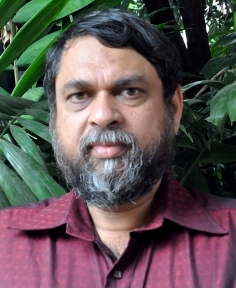
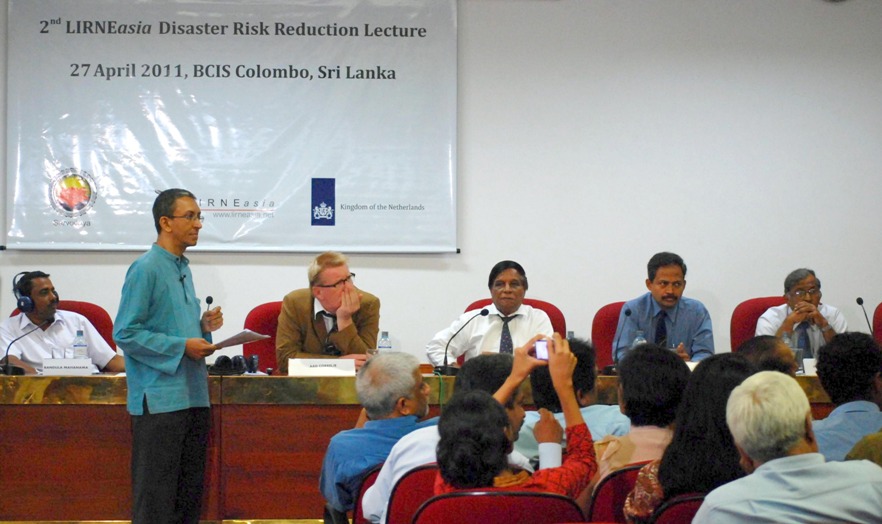
2nd LIRNEasia Disaster Risk Reduction Lecture, 27 April 2011 in Colombo: Nalaka Gunawardene (standing) moderates panel discussion
Writing on 20 April 2011, exactly 25 years after the Kantale large dam breached and washed away downstream villages, I posed the question: “If there were to be a catastrophic dam failure in Sri Lanka today, is there a warning system in place to detect the failure and issue timely warnings? Have the downstream communities participated in evacuation drills and know what action needs to be taken when a warning is issued?”

I’ve been asking such questions for a while. In fact, the post-mortem of the Kantale dam breach was one of the bigger stories I covered soon after I entered mainstream journalism in late 1987. By then, a few months after the incident, a presidential commission of inquiry was looking into what caused that particular disaster.

My interest in this subject is perhaps inevitable. I live in a country that has a high concentration of man-made water bodies. There are approximately 320 large and medium sized dams in Sri Lanka, and over 10,000 smaller dams, referred to as “wewas”, most of them built more than 1,000 years ago. In fact, Sri Lanka probably has the highest number of man-made water bodies in the world. According to the Sri Lanka Wetlands Database, the major irrigation reservoirs (each more than 200 hectares) cover an area of 7,820 hectares, while the seasonal/minor irrigation tanks (each less than 200 hectares) account for 52,250 hectares. This adds up to 60,070 hectares or just over 600 square kilometres — nearly a tenth of the island’s total land area.

Lankans are justifiably proud of their ancient hydrological civilisation — but don’t take enough care of it. Nothing lasts forever, of course, but irrigation systems can serve for longer if properly maintained. In a world where extreme weather is becoming increasingly commonplace, we can’t afford to sit on 25 centuries of historical laurels. Unless we maintain the numerous dams and irrigation systems – most of which are still being used for farming – heritage can easily turn into hazard.
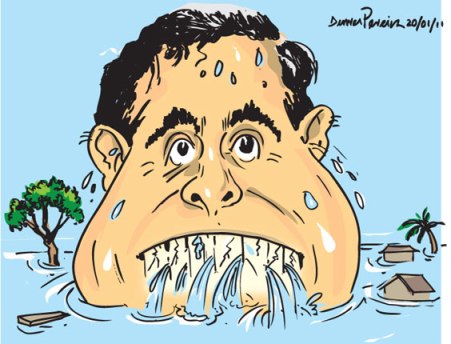
Cartoon from Daily Mirror, 20 Jan 2011
As indeed happened in early 2011, when massive and successive floods lashed the country’s Dry Zone where most reservoirs are located. It was a strong reminder how dams and reservoirs not only attenuate the effects of heavy rains, but if breached, can magnify the effects of such rainfall.

More than 200 small dams did breach during those rains, causing extensive damage to crops and infrastructure. The most dangerous form of breach, the over-topping of the earthen dams of large reservoirs, was avoided only by timely measures taken by irrigation engineers — at considerable cost to those living downstream. This irrigation emergency was captured by a local cartoonist: the head in this caricature is that of the minister of irrigation.

In early February, Sri Lanka announced that it will expand its dam safety programme to cover more large reservoirs and will ask for additional funding from the World Bank following recent floods. Never mind the irony of a proud heritage now having to be maintained with internationally borrowed money. Public safety, not national vanity, comes first.

All this provided a timely setting for the 2nd LIRNEasia Disaster Risk Reduction Lecture in Colombo, which I chaired and moderated. This enabled the issues of flood protection and dam safety to be revisited, building on the path-finding work in 2005-2006 done by LIRNEasia, Vanguard Foundation and Sarvodaya in developing an early warning system for dam hazards in Sri Lanka.
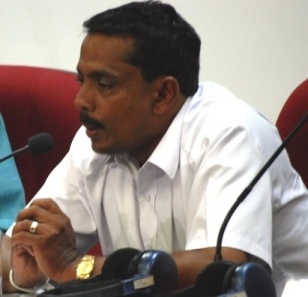
Bandula Mahanama
The main lecture was delivered by Dr Aad Correlje of the Delft University of Technology, the Netherlands. The response panel comprised Bandula Mahanama (a farmer organisation leader from one of the worst flood-affected areas in the Polonnaruwa District), S Karunaratne (Sri Lanka National Committee on Large Dams), Dr Kamal Laksiri (Ceylon Electricity Board) and U W L Chandradasa (Disaster Management Center). A summary is found on LIRNEasia’s blog.

Dams and irrigation systems are widely seen as the exclusive domain of civil engineers. They certainly have a critical role to play, but are not the only stakeholders. I was very glad that both our panel and audience included voices from many of these groups — especially the many communities who live immediately downstream of dams and reservoirs. Some of them are always in the shadow of a dam hazard, and yet helpless about it.

This was the gist of farmer leader Bandula Mahanama’s remarks – he made a passionate plea for a more concerted effort to improve proper maintenance of dams and reservoirs. “Wewas are part of our life, but right now our lives are in danger because the irrigation heritage is in a state of disrepair,” he noted.

I will write more about this in the coming weeks. My last thought from the chair was something I first heard many years ago in a global documentary. When it comes to water management, everybody lives downstream.

That’s certainly the case — but some are more downstream than others. And not everyone lives with the same peace of mind. We need to do something about it.

See also my recent writing in Sinhala on this topic, as part of my weekly science and development column in the Ravaya newspaper in Sri Lanka:

Nalaka Gunawardene’s Ravaya column – 27 Feb 2011 – Dam Safety in Sri Lanka
Gasping for Fresh Air in Delhi and Colombo: Miles to go before we can breathe easily!

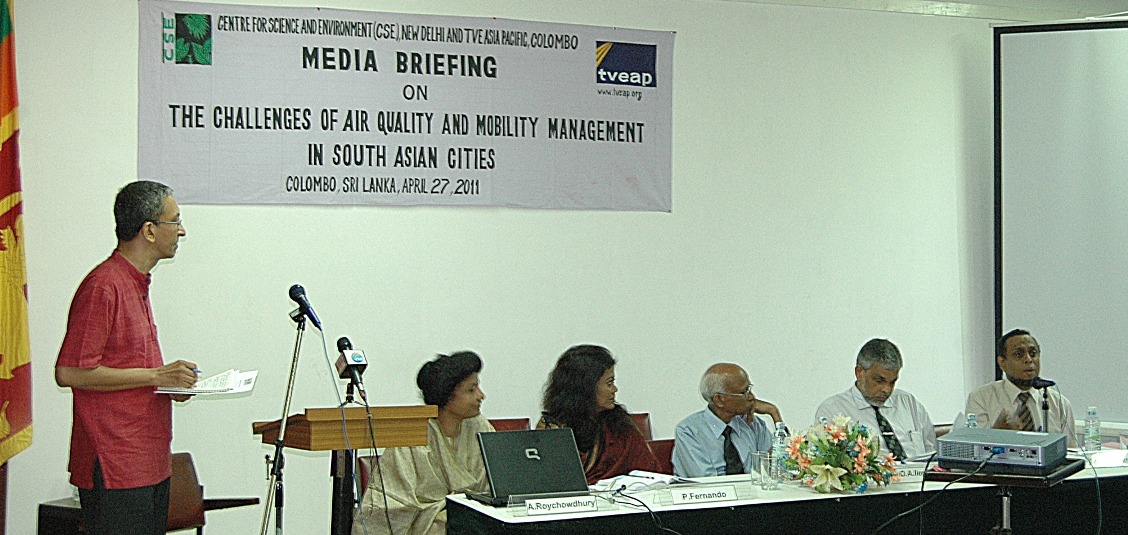
CSE TVEAP Media Briefing on Air Qualitry Issues in Colombo, 27 April 2011

Almost exactly four years ago, I wrote a blog post called Gasp! Asthma on the rise – and we made it all possible. I argued how we who suffer from Asthma — and our numbers keep increasing — are also contributing to making the bad problem worse.

So I write, speak and make films about clean air entirely with an enlightened self interest: I want to breathe more easily. This week, just a few days ahead of the annual World Asthma Day, I once again declared this as I opened a Media Briefing on the Challenges of Air Quality and Mobility Management in South Asian Cities organised in Colombo today by the Centre for Science and Environment (CSE), New Delhi and TVE Asia Pacific.

I held up my life-saving inhaler that I always carry around wherever I go, and am never more than a few feet away from. This is not theatrics, but drama in real life. Almost exactly a year ago, I was rushed to hospital at night for nebulisation. I don’t suffer such attacks too often, thank goodness, but I also don’t want to take chances — as I can never count on good air in my home city.

And I’m far from being alone. Wherever I go, I find increasing numbers of fellow asthma sufferers: we gripe and groan, but only a few among us realise that our lifestyles, choices and apathy contributes to the worsening quality of our air.

Almost every South Asian city today is reeling under severe air pollution and gridlocked urban traffic congestion. Colombo, a medium sized city by South Asian standards, has the (slight) advantage of the sea breeze flushing out part of its polluted air — but Greater Colombo is still struggling with polluting fuels, outdated vehicle technologies and rising numbers of private vehicles leading to massive congestion. Air quality levels vary considerably as we travel to the interior of the island, but some provincial cities now have mounting air pollution problems.

Finding the 'Common Air' in everybody's self interest...

This is why we collaborated with CSE, which has a long track record in knowledge-based advocacy for clean air in India and other countries of developing Asia, to organise this event. It was an open forum where air quality experts in Sri Lanka and India engaged Sri Lankan journalists and broadcasters on the status of Sri Lanka’s air quality and what it can learn from the neighbouring countries.

In my remarks, I said: “The quest for clean air in developing Asia is much more than a simple pollution story. It has many layers and complex links to government policies, regulation, industrial lobbies and technology options.

I added: “Our big challenge, as professional story-tellers, is to ask tough questions, seek clarity and then connect the dots for our audiences. At stake is our health, prosperity and indeed our very lives. Air pollution kills, slowly but surely!”

See my PowerPoint presentation:

Read more: Gasping for Fresh Air, Seeking More Liveable Cities in South Asia

Kantale Dam Breach, 25 years later: Film captures memories and worries

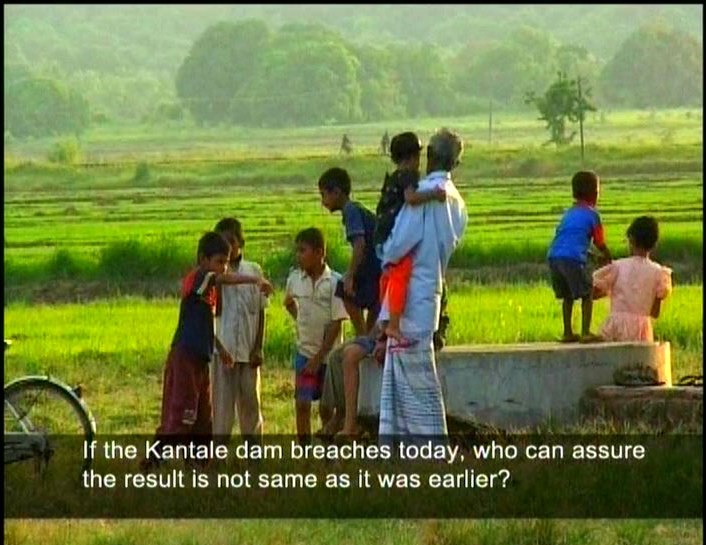
Kantale Reservoir: Full again, but what if another dam breach happens as in April 1986?

There are approximately 320 medium and large dams in Sri Lanka and over 10,000 small dams, most of which were built more than 1,000 years ago. The consequences of a major dam failure in Sri Lanka can be devastating to life, property and the environment.

One such dam disaster happened exactly 25 years ago, on 20 April 1986, when the ancient Kantale dam, 50 feet high and over 13,000 feet long, breached. Its waters rapidly flooded several villages downstream, killing 127 people and destroying over 1,600 houses and paddy lands.

A short documentary made in 2005 revisited the scene of this disaster 19 years later to gather memories and opinions of the affected people and engineers involved. The film, made by Divakar Gosvami, was part of a 2005 study on dam safety by LIRNEasia, Vanguard Foundation, Sri Lanka National Committee of Large Dams and Sarvodaya. Its final report asked: if there were to be a catastrophic dam failure in Sri Lanka today, is there a warning system in place to detect the failure and issue timely warnings? Have the downstream communities participated in evacuation drills and know what action needs to be taken when a warning is issued?

Kantale Dam Breach Revisited: Part 1 of 2

Kantale Dam Breach Revisited: Part 2 of 2

This film is not merely documenting a tragic moment of recent history. It also carries the caution: have we learned the lessons from this incident?

Dr Rohan Samarajiva, Chair and CEO of LIRNEasia, has just written: “As I watch it again in April 2011, I wonder whether all that they had built up since 1986 had got washed away, again. Two successive periods of heavy rainfall at the beginning of the year devastated the livelihoods of the people of the wav bandi rajje, the irrigation civilization we are so proud of. Flood upon flood. More than 200 small tanks breached; big tanks were saved by the emergency actions of irrigation engineers.”

In another recent piece, he asks: Twenty five years after Kantale: Have we learned?

Blogging from Resilience 2011: Pathways for Staying Alive in an uncertain world


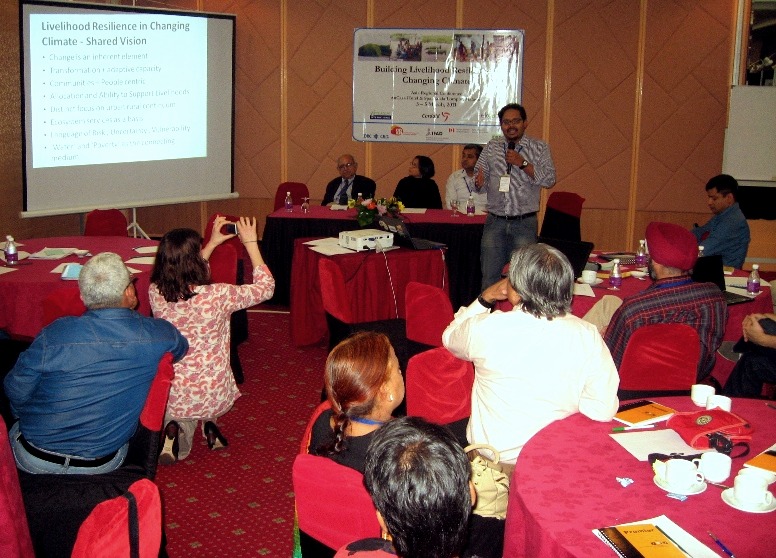
From 3 to 6 March 2011, I kept blogging from Resilience 2011: Asia Regional Conference on Building Livelihood Resilience in Changing Climate, held in Kuala Lumpur, Malaysia.

Along with a few other participants, I also tweeted from the conference. All our tweets are organised under #Resilience2011

Fred Noronha and I set up a YouTube channel for the conference where we posted short interviews filmed with selected participants. It has close to two dozen short videos, all filmed with a FlipVideo camcorder.

Here are links to all the blog posts I wrote on the conference website (text only as the platform didn’t allow visuals to be displayed easily).

6 March 2011: As the planet warms, we must all become more like bamboo!

6 March 2011: Slow disasters need not apply?

6 March 2011: Go beyond IPCC and SAARC, South Asian climate researchers urged

5 March 2011: Policy challenge to researchers: Summarise, simplify – and talk money!

5 March 2011: Wanted: Better Story Telling!

4 March 2011: ICTs for livelihood resilience: The importance of asking the right questions

4 March 2011: Hash-tagging Resilience2011: Twitter feeds from KL Conference

4 March 2011: Floods not always a disaster. Ask Mekong Delta farmers

3 March 2011: Banging Heads Together (nicely)

3 March 2011: SOS: Small Farmers need urgent help for climate adaptation

3 March 2011: Looking for the Bigger Picture

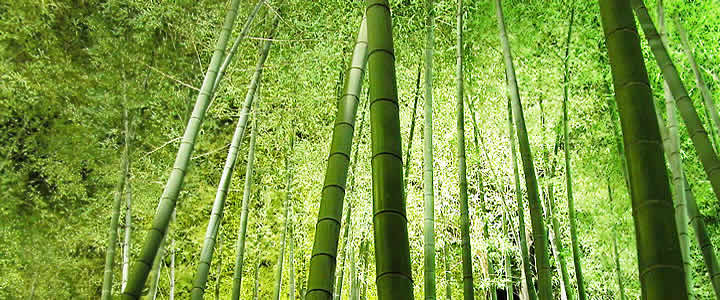
Resilience 2011: As the planet warms, become more like bamboo!

We can't go wrong, emulating Ma Nature...

“The bamboo that bends is stronger than the oak that resists,” says a Japanese Proverb.

In these times of climate change, we all need to bear this in mind. It’s not how we resist the battering, but how we pick up again after repeated onslaughts.

Bamboo is an amazingly versatile plant (actually, a grass) with many uses in Asian cultures. We use it for buildings, furniture, outdoor infrastructure, artistic decor and even eat parts of it.

Beyond these utility functions, the bamboo holds a philosophical lesson that the ancient Japanese and Chinese knew very well: its flexibility is its strength. It can bend and move with the wind or water or other element, rather than being rigid, unyielding and ultimately vulnerable to an unexpected jolt and sideways shift.

Bamboo was mentioned several times by Asian researchers and practitioners who came together at Resilience 2011: Asia Regional Conference on Building Livelihood Resilience in Changing Climate, held in Kuala Lumpur, Malaysia, from 3 to 5 March 2011.

Resilience was discussed and interpreted in a number of ways at the conference. But participants broadly agreed that it is the ability of any individual or community or system to absorb external shocks, bounce back and transform or continue to grow.

Such bouncing back, in some climate related situations, could be to alternatives rather than to the original condition. For example, if poorly built structures are damaged in a disaster or extreme weather condition, the recovery could – and should – be to build back better.

Indeed, the bamboo metaphor is widely used in various fields from business management to self-help counseling. See these interesting links for further insights:

Australian Anthill, June 2009: ‘Be the bamboo’: Thinking tips for innovative minds

The Great Work Blog: The wisdom of Bamboo

Resilience 2011: Banging Heads together to make lives better

What does Livelihood Resilience mean to them?

I am at Resilience 2011: Asia Regional Conference on Building Livelihood Resilience in Changing Climate, being held in Kuala Lumpur, Malaysia, from 3 – 5 March 2011. It is jointly organised by Wetlands International-South Asia (WISA), International Development Research Center (IDRC), The Climate and Development Knowledge Network (CDKN), Cordaid and ekgaon technologies

The conference has attracted three dozen researchers, practitioners and policy makers from across the Asia Pacific region, and from different ‘domains’: Disaster Risk Reduction (DRR) and disaster management; Ecosystem services and conservation; and livelihoods and socio-economic development.

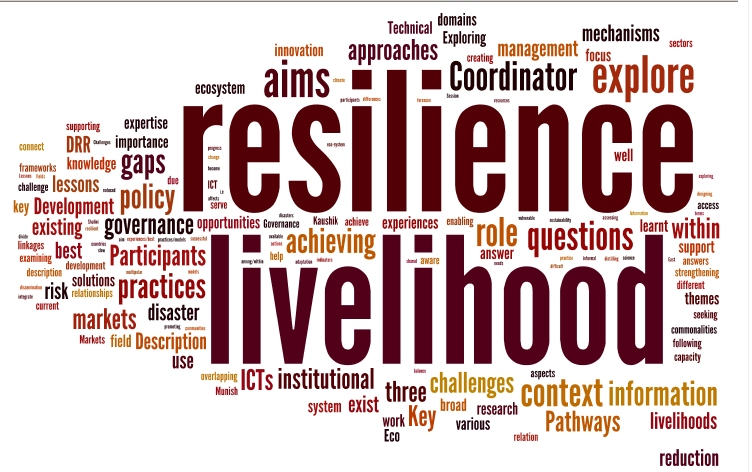
I like hobnob with researchers and activists from whom I learn much. As a science and development communicator, I sit through their often very technical discussions and find ways of relating them to the bigger realities. For a start, I created a word map of the keywords being used in the conference. That gives an idea of concerns at a glance.

I then tried to make sense of the conference introduction note, published on the event website. It looks and reads like the work of a committee, and not the easiest to read and absorb unless one is deep immersed in these areas. Since most of us aren’t, I spent an hour or two rewriting it in my own language. Here it is — my version of what Resilience 2011 conference is trying to accomplish:

Building Livelihood Resilience in Changing Climate Asia Regional Conference
Kuala Lumpur, Malaysia, 3 – 5 March 2011
A layman’s interpretation of the vision, scope and aims of the conference

Asia, home to over 60 per cent of all human beings, is the largest and most diverse geographical region in the world. It is also a region of sharp contrasts and disparities in economic and social development.

Some Asian economies have been growing faster than any other on the planet, and even the global recession has not slowed them down too much. This growth has helped push tens of millions of people out of poverty during the past three decades. Yet, Asia still has the largest number of people living in poverty and food insecurity.

In some respects, gains have been lost. For example, the UN Millennium Development Goals Report for 2010 revealed that the proportion of undernourished Asians has increased recently to levels last seen during the 1990s. Two thirds of the world’s undernourished people live in Asia. At the same time, the natural resources on which food supplies depend – land, water and biodiversity – are degrading rapidly. Food shortages and water scarcities are already being experienced, or anticipated, in many countries.

Growing number and intensity of disasters adds further pressures. According to the international disaster database EM DAT, Asia accounted for nearly half (46 per cent) of the all water related disasters in the world, and 90 per cent of all affected people during 1980 to 2006. During this period, disasters in Asia caused a total of US$ 8 billion worth of economic damage. These disasters impacted disproportionately on the poor and vulnerable sections of society.

Climate change impacts will make this situation worse for everyone, and especially for the poor who already have limited options and ability to adjust to rapid changes. It is now clear that all efforts aimed at reducing poverty and protecting the socially vulnerable groups need to factor in the additional pressures created by changing climate.

To cope with these challenges, we need better understand how livelihoods are threatened, and what strategies can be adopted to improve resilience especially at the grassroots. Researchers and practitioners in natural resource management and poverty reduction are now focusing more and more on the nexus between resources, climate changes and livelihoods.

New ways of looking at the inter-linked challenges have emerged:
• Humanitarian aid workers active on disasters now focus on disaster risk reduction, expanding the scope of risk management to include preparedness and risk reduction.
• Development practitioners working on poverty reduction emphasize on increasing access to various capitals to help address disaster risk and poverty.
• A ‘systems approach’ is being used to look at poverty in broader terms of well-being of people and ecosystem services of Nature.

In addition, researchers and activists emphasize the value of freedoms for participation, economic facilities, social opportunities, transparency guarantees, protective security and ecological security. It is only by ensuring these freedoms that the poor will have a meaningful chance to assert their rights and make their own choices in what they do, and how they do it.

The slowly but steadily warming planet challenges everyone to rethink their conceptual frameworks, and redefine or reconfigure how they work. If there is one thing certain about these uncertain and turbulent times, it is business-as-usual won’t do!

What do we seek to achieve?

Each sector has accumulated a knowledge base, set of best practices and lessons learnt exist within individual domains. Each sector’s theories, approaches and actions within various domains differ on how to make livelihoods more resilient, especially in the often harsh realities of the developing world.

They are all necessary, but not sufficient. Taken individually, no single approach or solution can help make everybody’s livelihoods resilient from the multitude of pressures and impacts. Yet, what one strand cannot withstand on its own, a bundle of strands very likely can: bringing different areas of research, advocacy and practice is the way forward to ensuring better resilience at the grassroots.

This is easier said than done. Both researchers and practitioners have long worked in their own silos or compartments, with occasional nods at each other’s work and periodic exchanges. From this, we need to evolve more integrated framework that brings in the ecologists, disaster managers, social scientists and everyone else who share an interest in making lives better at the grassroots and at the bottom of the income pyramid.

The Kuala Lumpur conference attempts to address this formidable challenge. It will provide a common platform to practitioners and researchers from various ‘domains’ related to livelihoods to work out a shared vision on livelihoods resilience by seeking answers to these questions:
• What are the existing challenges to achieving livelihood resilience?
• What are the gaps in existing livelihood frameworks in relation to disaster, climate change adaptation and conservation in addressing livelihood resilience?
• What are the challenges in scaling up pilot models of Livelihood Resilience?
• How does social adaptation occur in resilience building?

Resilience 2011: Staying Alive on a warming planet – exploring choices

Keywords of sessions at Resilience 2011 Conference: Courtesy Wordle.net

I am in Kuala Lumpur, Malaysia, attending the Resilience 2011: Asia Regional Conference on Building Livelihood Resilience in Changing Climate, being held from 3 – 5 March 2011.

The conference brings together researchers and practitioners from three fields: Disaster Risk Reduction (DRR) and disaster management community; Ecosystem services and conservation community; and the livelihoods and socio-economic development community. Although their work overlap part of the time, they don’t converge too often.

I will blog on different aspects of the conference, trying to connect the dots, and relating the micro to the macro as I often do in my own work communicating development.

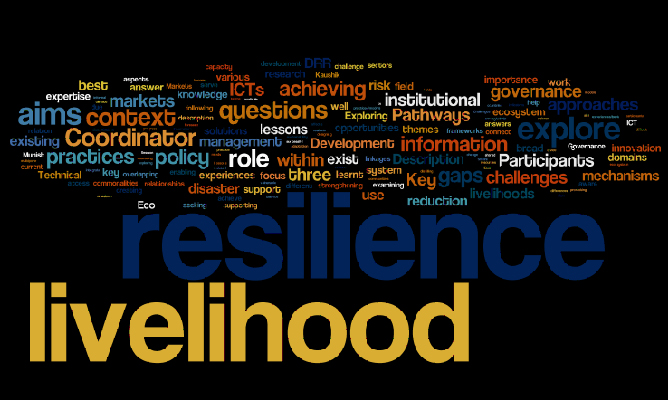
There are many issues, topics and discussions under the broad theme of protecting Asian livelihoods from climate change impacts. For a start, I used Wordle to build a word map, displaying proportionate use of keywords in the conference sessions. The above and below are the word clouds it generated (same words, displayed in different modes).

The conference is organised jointly by Wetlands International-South Asia (WISA), International Development Research Center (IDRC), The Climate and Development Knowledge Network (CDKN), Cordaid and ekgaon technologies of India.

Taya Diaz: Amiable tour guide to a (biological) Treasure Island

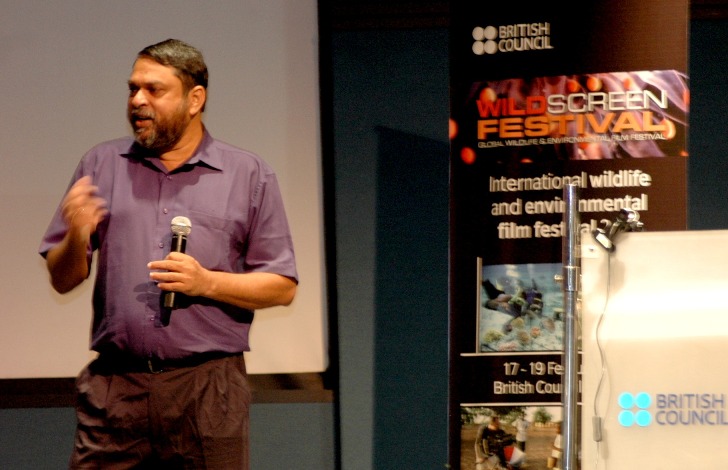
Taya Diaz conducts film making master class during Wildscreen 2011 in Colombo

“Taya Diaz has the shortest name in Sri Lanka but is a big man with a personality to match and a bushy black beard. Apart from being an excellent guide with good knowledge of all aspects of Sri Lankan Wildlife, he’s also a writer and film maker and is excellent company.”

That’s how a bird-watching website once described Taya Diaz, Sri Lankan conservationist turned wildlife film maker.

During the past two decades, Taya has collaborated in making over 20 full-length international wildlife documentaries, all showcasing Sri Lanka’s rich biological diversity and ecosystems. He has been a scientific investigator, presenter, narrator or Sinhalese scriptwriter.

One of his earliest involvements in international film making was with The Temple Troop. Made in 1997, for the BBC and Discovery Channel, it documented a year in the life of a troop of monkeys living in Sri Lanka’s ancient city of Polonnaruwa. These monkeys have been the subject of a long-running study by the Smithsonian Institution’s Primate Biology Program.

Trained as a scientist, Taya has worked in a number of field based conservation projects including the Smithsonian study of monkeys. But it’s as a wildlife and natural history that he now makes a name both in Sri Lanka and overseas.

The Urban Elephant (2000, for PBS/National Geographic), and The Last Tusker (2000, for BBC/Discovery) are two other productions that used Taya’s ground knowledge and scientific expertise. He has provided local liaison for broadcasters such as New Zealand TV, Canal+, Discovery channel, and BBC1.

Taya Diaz: Enough stories to last a lifetime!
For all these reasons, Taya was a natural choice when TVE Asia Pacific was asked to recommend a Sri Lankan film maker to present a master class when the Wildscreen traveling film festival held in Colombo from 17 to 19 February 2011. His master class, titled “Untold Stories of Sri Lanka”, looked at Sri Lanka’s as yet largely untapped potential for authentic, factual stories related to wildlife, natural history and the environment.

He explained the premise for his master class: “Sri Lanka is a pot of plenty in every aspect — the opportunities for a documentary filmmaker are astounding. But sadly, what most audiences see on the airwaves is very standard and boringly similar, touching on the same topics year in and year out.”

Taya feels that documentary films and TV programmes are also essential for educating Sri Lankans about their own natural heritage. Sri Lanka has an impressively high number of plant and animal species for its relatively small land area — which makes it one of the most biologically diverse countries in the world.

“Sri Lankan naturalists, wildlife experts and environmentalists should collaborate more closely with film makers and/or broadcasters to make more local films aimed at local audiences,” he said during a panel discussion I moderated on February 17. “This is essential for raising awareness on environment and sustainable development issues as Sri Lanka pursues rapid economic development after the war.”

Read TVEAP News story on Taya’s master class: Story telling through the local eyes vital, says Taya Diaz

Wildlife and Natural History Film making: Are Darwinian Rules at play?

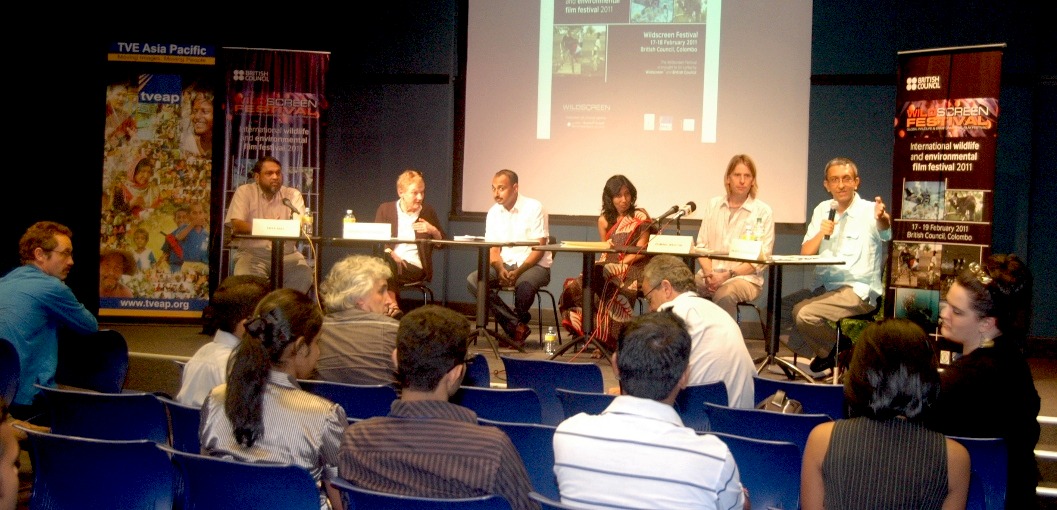
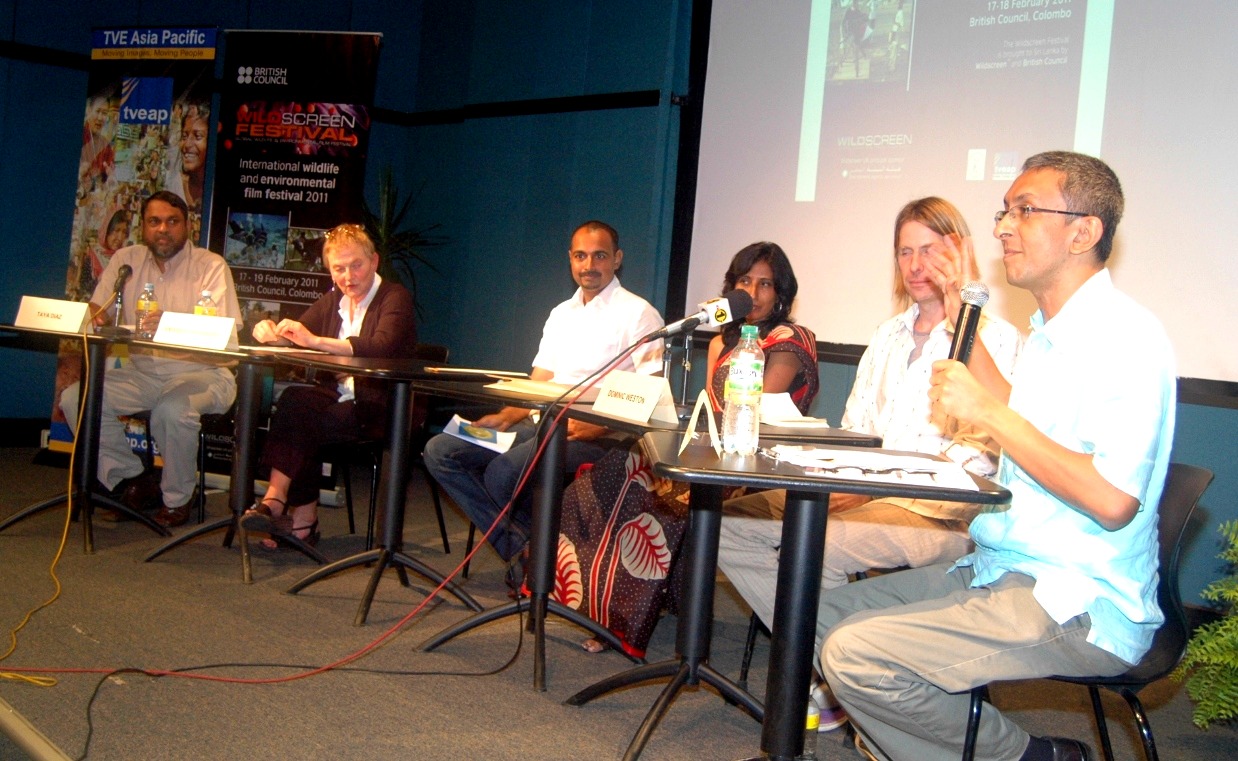
Wildscreen 2011 Colombo Panel: From L to R - Taya Diaz, Amanda Theunissen, Delon Weerasinghe, Anoma Rajakaruna, Dominic Weston and Nalaka Gunawardene

Is there an elite or ‘charmed’ circle of wildlife and natural history film makers in the world? If so, how does a new film maker break into this circle?

This is the question I posed to a group of visiting British film makers and their Sri Lankan counterparts during a panel discussion I moderated at the British Council Colombo on February 17 evening.

The panel, organised around the topic ‘Differences and mutual challenges in Asian, American and European productions/film making’, was part of the Wildscreen traveling film festival held hosted in Colombo, Sri Lanka, from 17 to 19 February 2011.

Amanda Theunissen, who has worked with the BBC Natural History Unit and National Geographic Television, gave a straight answer: yes, there is such a charmed circle.

And although she didn’t say it in so many words, it was clear from our overall discussions that the circle is jealously guarded, and it’s not easy for any newcomer to break into it. And the entry barrier becomes harder if the film maker is from the global South.

I opened the panel recalling the opening sentence of Our Common Future, the 1987 Report by the World Commission on Environment and Development: “The Earth is one but the world is not”. I said: “A similar disparity exists in wildlife and natural history film making. We are all covering the same planet Earth in all its splendour and diversity. But on this planet there are many different worlds of film making.”

I asked my five panelists — Amanda Theunissen and Dominic Weston from the UK, and Delon Weerasinghe, Anoma Rajakaruna, and Taya Diaz from Sri Lanka — to address three key challenges faced by all wildlife and natural history film makers everywhere: the art of effective story telling; fund raising to make films; and ensuring wide distribution of the films made.

The panel discussion was lively, wide-ranging and engaged the audience which comprised mostly aspiring film makers or film students. I didn’t want our discussion to scare any of them away from a career in environment and wildlife film making. But at the same time, we wanted to acknowledge the practical realities — and disparities — that exist within and across countries in this respect.

I’ve now written up a summary of the panel discussion for TVE Asia Pacific news. Its heading comes from a provocative question I asked during the panel: does wildlife film making operate on almost Darwinian rules?

Read the full story: Wildlife and Natural History Film making: Survival of the Fittest?

Wildscreen Colombo Panel: From L to R - Taya Diaz, Amanda Theunissen, Delon Weerasinghe, Anoma Rajakaruna, Dominic Weston, Nalaka Gunawardene

How do you measure progress? Say it in 3 min video!

How do you measure progress? Count simply the economic growth numbers? Or something more? Are people in richer countries necessarily happier? If not, what’s the key to real progress that makes people better economically, environmentally and socially?

The Organisation for Economic Co-operation and Development (OECD) wants to hear from young people about these issues through a video competition. To celebrate the OECD’s 50th Anniversary, young people worldwide are invited to create a short video describing their vision of Progress. In 3 mins, or 180 secs. The competition is open to young people (18-25 years) in every country worldwide.

Upload your video on YouTube and register online before MIDNIGHT (Paris time) on 1 March 2011. Details here. Promo video below: