Wanted: Fair Trade in Film and Television!

This short film, Fair Trade: The Story (8 mins) has been produced by Eq.tv (Equilibrium Television).

It’s very well made, with great use of images and sound, and powerfully sums up the complex issues around fair trade in an accessible manner. The best part: we don’t feel it’s an activist film, even though fair trade is, by definition, progressive and activist.

What is your power as a consumer? The film, produced in association with TransFair USA and TinCan Productions, begins with this question.

It then tells us: “Fair Trade combines stringent environmental criteria with the highest income and labour standards of any product certification. Fair Trade ensures a fair price for farmers, fair wages for workers, safe working conditions, direct marketing access, community development, democratic decision making, sustainable farming methods, environmental protection.”

Chris White of TransFair USA quips: “Fair trade isn’t a product. Fair trade isn’t a brand. Fair trade is a story.”

Fair trade is all about creating opportunities for small scale producers in the developing countries to get organised and supply directly to consumers in different parts of the world. When they sell direct, with few or no intermediaries, they can earn three or four times more, and that money will enhance their incomes, living standards and societies.

Read more about fair trade at Oxfam website, Make Trade Fair

Fair trade is certainly a cherished ideal, but it’s mired in complex economic and political realities. The globalised march of capital, profit-maximising multinational corporations and developed country farm subsidies are three among many factors that made fair trade difficult to achieve in the real world.

Difficult, but not impossible. Determined producers and consumers have shown over the years that they can connect to each other, ensuring greater fairness and justice in transaction. That’s the power of the consumer.

Now here’s another kind of fair trade that I have been advocating for a long time: Fair Trade in Film and Television (FTinFT for short). It’s high time we started promoting this as another plank in fair trade activism.

Let me explain. In the media-rich, information societies that we are now evolving into, media and cultural products are an important part of our consumption — and therefore, more of these have to be produced. In the globalised world, more television and film content is being sourced from the majority world — or is being outsourced to some developing countries where the artistic and technical skills have reached global standards.

But in a majority of these media production deals, the developing country film and TV professionals don’t enjoy any fair terms of trade or engagement. Their creativity and toil are being exploited by those who control the global flow of entertainment, news and information products.

This is why the top talent in the global South become assistants, helpers and ‘fixers’ to producers or directors parachuting in to our countries to cover our own stories for the Global Village. Equitable payments and due credits are hardly ever given.

I personally know many award winning film-makers in developing countries across the Asia Pacific who have been engaged on such unfair, uneven terms. Lacking sufficient market opportunities and trade unions in their own countries, these professionals have little choice but accept the occasional assignment that comes their way from BBC, CNN, AJI or other global players.

Remember, film-makers have families to feed too.
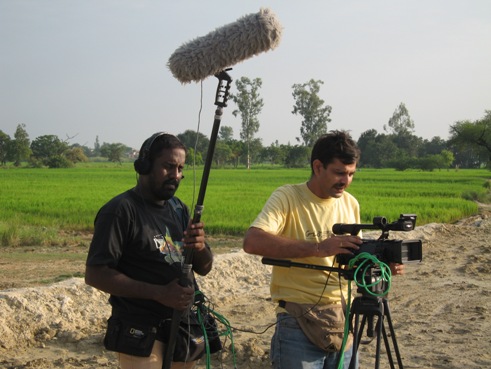
Unfair trade in film and TV is also how the unsung, unknown creative geniuses contribute significantly to the development of new cartoon animation movies or TV series, as well as hip video games that enthrall the global market. Lacking the clout and skill to negotiate better terms, freelancers and small companies across the global South remain the little elves who toil through the night to produce miracles. They work for tiny margins and even tinier credit lines. Some don’t get acknowledged at all.

If you think this is inevitable in the big bad world of profit-making business, hear this. I also know some western charities that champion global justice who are equally guilty of repeatedly exploiting southern film-makers — sometimes, ironically, to produce documentaries about social justice issues!

Even as they cover stories about fair trade practices in coffee or cotton, these entities practise unfair trade in their own industry.

I can cite many examples. Last year, the London-based Panos Institute approached me for recommendations for development-sensitive film-makers in two Asian countries where they wanted to implement some training programmes. I asked if the professionals I can gladly recommend – whose skills are on par with any western counterpart – would be paid international rates. Panos backed out saying they can only pay a local rate, which they felt was good enough.

Then there are UN agencies who always haggle with local film-makers over rates and fees. The same agencies that happily commission PR media agencies from Madison Avenue for hundreds of thousands of US Dollars would ask southern film-makers to donate their time, or work at a reduced fee, for the United Nations causes!

Local rates for local talent is simply not good enough if their work contributes to an international media effort. Southern film-makers and photographers, who lack opportunities to roam the planet looking for stories and work, should be engaged on fair, international rates in any media venture whose products will be consumed globally.

I’m proud to say that TVE Asia Pacific practises what I preach here. We are small time commissioners of southern film-making talent, but we always pay international rates, and engage local talent in every country we work in. And they get due, proper credit in all our productions.

This, then, is the essence of Fair Trade in Film and Television that we must advocate and agitate for. As long as the story tellers of the global struggles for social justice are themselves excluded from the story, there can be no fair trade, or true global justice.

There is now an urgency to address FTinFT because Media Process Outsourcing (MPO) is emerging as a growth industry. May 2007 news: India’s InfoSys and TV18 set up MPO firm.

Let me return to the question frequently posed by fair trade activists: What is your power as a consumer?

Now ask that question as a consumer of media products on TV, video, DVD, web and mobile devices. Don’t take anything for granted. Don’t accept the lofty PR claims of big time (or even small time) producers and peddlers of media content on how ethically they have sourced or made this content.

For a start, look carefully at where stories have been made, and whether local film and TV professionals get proper, on-screen credit. And write to the big players – 24/7 news channels, cartoon corporations and others – demanding to know their fair trade policies and practices in content creation and sourcing.

Make the same demands on the United Nations agencies peddling media products on their social causes. See how many of them will stand a simple test: do they engage southern film-makers to tell stories of development and social justice in the South? If not, why not?

And if you are in a position to decide on commissioning a new film, TV or video product, please consider engaging local talent — but pay them international rates if your product is going to cross borders (these days it very likely will).

We have a long way to go to achieve Fair Trade in Film and Television. Let’s get moving!

Read my call for ethical sourcing of international TV news
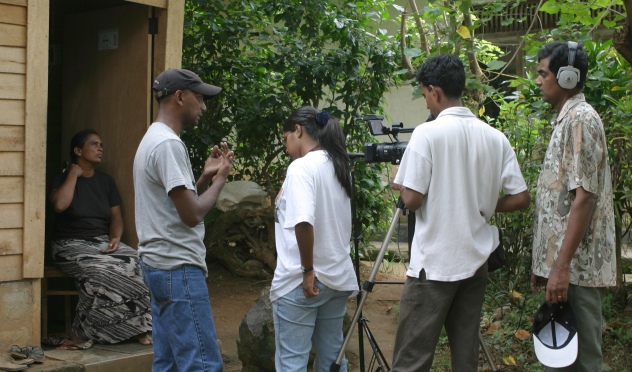
Photos from TVE Asia Pacific image archives

Anita Roddick: “There was nothing like this dame”

Image courtesy Media is a Plural website

Citizen journalist, film-maker and media critic Rory O’Connor has written a moving tribute to extraordinary activist and entrepreneur Anita Roddick, whose premature death on 12 September 2007 has left her many admirers in shock and grief.

He recalls how colleague and fellow media-activist Danny Schechter and he first met Anita at a gathering of progressive business executives called the Social Ventures Network. Their shared background, vision and ideals soon turned them into friends and co-conspirators.

Rory recalls how their company Global Vision embarked on a new human rights-oriented TV newsmagazine in the mid 1990s: “Anita and her husband Gordon were key players in that series – ‘Rights & Wrongs: Human Rights Television’ – coming to fruition. They contributed their energy and enthusiasm, their ideas and information, their contacts and creativity (and oh yes, their capital!) and without all of it, the series would never have been born. But with their help, the award winning newsmagazine was broadcast weekly for four years, on more than 150 public television stations in the USA, as well as on channels and networks in sixty-one other countries. It remains the only regularly scheduled television program in history devoted exclusively to coverage of human rights.

Rory echoes my own point about how Anita was a communicator par excellence, driven more by intuition and inspiration than any textbookish theories:
“Although Anita wasn’t a media activist per se, she intuitively understood how media could be used for activism, and she did so shamelessly and in a cheerfully relentless manner. Whether she was supporting social and environmental causes through window displays, convincing American Express to pay her to appear in an ad promoting the Body Shop and its causes, working with Globalvision on its commercial and non-profit programming (or later writing books, blogging, running an activist website, contributing to the success of Mother Jones magazine, or working closely with — and donating millions to — media-savvy organizations such as Amnesty International,) Anita intrinsically ‘got’ the importance of characters and stories to selling anything—from cold cream to ideas and values – and she employed them cleverly and constantly in support of her principles.”

Watch Anita’s one minute on climate change for Friends of the Earth:

Watch QuantumShift.tv’s thoughtful tribute to Anita Roddick, better presented than the fleeting coverage of mainstream news channels:

Read the full tribute on Media is a Plural website.

Read my own tribute to Anita Roddick: We shall always remember you!

Read Danny Schechter on News Dissector website

Anita Roddick: We shall always remember you

Image courtesy Treehugger

“Remember me!”

That’s how Anita Roddick, who died on 10 September of brain haemorrhage, autographed for me a copy of her book Taking It Personally: How to make Conscious Choices to Change the World.

You’re hard to forget, I told her at the time. And suddenly, memories are all we are left with. And what vivid ones!

Dame Anita Roddick (1942 – 2007), founder of The Body Shop, is one of the most unforgettable persons I have met. And now that she has moved on, far too soon, her memory challenges us to persist with the social, humanitarian and environmental causes that she so passionately championed.

Media obituaries described her as the ‘Queen of Green’, but Anita was much more than just green. She stood for justice, fairness and equality in both business practices and her campaigns. From ethical sourcing of raw materials for her beauty products to agitating for human rights and humane globalization, she was one activist who walked the talk.

“I came out of the womb as an activist. I’m part of the 1960s; it’s in my DNA,” she wrote in Newsweek earlier this year. “So the idea of dying with loads of money doesn’t appeal to me at all.”

She added: “I want to use the last years I have to get my hands dirty working for civil change. I want to be able to see the positive difference that money can make by giving away what I have.”

It’s not immediately clear if she made much headway with that, but the recently set up Roddick Foundation is the latest of a long line of campaigns, social projects and charities that she founded, energised or supported.

Her business acumen and commitment to global justice have been eulogised for years. She was equally adept in using the media and communications to draw attention to a cause, issue or incident.

Without going to any business school, Anita built up a global business that had over 2,200 stores in 55 countries by the time she let go of the company in 2004. And without attending any communication school, she became one of the best communicators of our troubled times – speaking eloquently for her company’s ideals and various charitable causes.

It all came from the heart, and it was passion –- not cold facts or even colder logic -– that drove her to be a phenomenally successful communicator.

Anita loved to say: “The job of a citizen is to keep his mouth open.” And her advice to activists was: Get Informed. Get Inspired. Get Outraged. Get Active.

Never underestimate the power of one, she said. As she liked to put it:
If many little people
In many little places
Did many little deeds
They can change the face of the Earth

And like the Energizer bunny, but with lot more purpose, she kept going, going and going. She loved the Dorothy Sayers quote: “A woman in advancing old age is unstoppable by any earthly force”.

It was on one of her many world travels that our paths first crossed. In the summer of 1991, I was invited to give a workshop at Youthquake, a Canadian environmental conference building up momentum for the Earth Summit scheduled for the following year. It was here that I met two of my all-time favourite activists: geneticist-turned-TV presenter David Suzuki, and Anita Roddick. The celebrity guest was Mutang Tu’o, a representative from the Penan indigenous tribe from Sarawak, Malaysia, whose jungles were in imminent danger of being logged.

Youthquake was part conference, part youth jamboree and altogether a great deal of fun. Anita turned up with her youngest daughter Sam, and spent hours just telling real life stories in her inimitable way – full of laughter and making fun of power and pomposity. After all these years, I can’t remember anything about what I myself spoke, but I know Anita’s remarks had a lasting influence.

In those heady days before the Earth Summit, email and the global Internet, activists had an easier and simpler choice of adversaries — Uncle Sam and World Bank usually came up among the top five. When economic globalization gathered pace, things became more complex and nuanced. Ah, for the good old days!

Anita marched fearlessly into this new world where corporate fortunes are being made at the speed of light, governments are waging wars to the tune of media-entertainment industries, and certain development agencies have turned poverty reduction and HIV/AIDS into cottage industries.

Marshall all facts, get analysis right, take your firing positions and never give up the good struggle, she seemed to suggest: there’s a war out there, and it wasn’t just in Iraq and Afghanistan.

In fact, Taking It Personally was her rough guide on how to tame run-away globalization. For it, Anita invited the top thinkers in the struggle for humanitarian trade policies to weigh in on the problem, and to give citizens the tools and inspiration to do work for constructive solutions. Among its contributors were Vandana Shiva, Paul Hawken (Natural Capitalism), Naomi Klein (No Logo), and Ralph Nader.

When she autographed a copy for me, she added with a mischievous grin that the book’s US distributors had been coerced to withdraw it. She showed a possible reason: that famous photo of President George W Bush reading a book with a young child — while holding it upside down!

It’s this topsy turvy, cruel world that Anita Roddick tried to make slightly better in a thousand different ways. We fellow travellers will sorely miss her, but there is ‘no bloody alternative’ but to just slog on.

— Nalaka Gunawardene; Kathmandu 12 September 2007

Read my earlier post: Anita Roddick, Angkor Wat and the ‘Development Pill’

BBC Online: Dame Anita Roddick dies at 64

War Made Easy: Exposing the Spin Doctors of Death

As we mark the sixth anniversary of 9/11 terrorist attack on the World Trade Center in New York, attention is focused more and more on the role the media played in the days and months that followed.

The war in Iraq was justified as a retaliation against 9/11. The Pentagon marched on to the cheer-leading of American media, which barely asked the basic questions, let along challenge the military-political logic.

A new documentary probes how this shameless acquiescence took place in full public glare. WAR MADE EASY: How Presidents & Pundits Keep Spinning Us to Death, narrated by Sean Penn, features Normon Solomon, on whose 2005 book the film is largely based.

Here’s the trailer for the film:

And its synopsis:

War Made Easy reaches into the Orwellian memory hole to expose a 50-year pattern of government deception and media spin that has dragged the United States into one war after another from Vietnam to Iraq. Narrated by actor and activist Sean Penn, the film exhumes remarkable archival footage of official distortion and exaggeration from LBJ to George W. Bush, revealing in stunning detail how the American news media have uncritically disseminated the pro-war messages of successive presidential administrations.

War Made Easy gives special attention to parallels between the Vietnam war and the war in Iraq. Guided by media critic Norman Solomon’s meticulous research and tough-minded analysis, the film presents disturbing examples of propaganda and media complicity from the present alongside rare footage of political leaders and leading journalists from the past, including Lyndon Johnson, Richard Nixon, Defense Secretary Robert McNamara, dissident Senator Wayne Morse, and news correspondents Walter Cronkite and Morley Safer.

Norman Solomon’s work has been praised by the Los Angeles Times as “brutally persuasive” and essential “for those who would like greater context with their bitter morning coffee.” This film now offers a chance to see that context on the screen.

Approx. 72 minutes
English subtitles
Directed & Written by: Loretta Alper & Jeremy Earp
Produced by: Loretta Alper
Co-produced & Edited by: Andrew Killoy
Executive Producers: Jeremy Earp & Sut Jhally
Associate Producer: Jason Young
Sound: Peter Acker, Armadillo Media Group
Motion Graphics: Andrew Killoy & Sweet & Fizzy
Additional Music: John Van Eps & Leigh Philips
Narrated by: Sean Penn
Based on the book by Norman Solomon

Image courtesy War Made Easy website

I haven’t yet seen this film, but it’s certainly one I want to catch soon. Not the least because I live and work in a war-ravaged country – Sri Lanka – where the politicians and generals have engaged in their own (increasingly sophisticated) acts of spin doctoring. Most alarmingly, large sections of the Sri Lankan media find absolutely nothing wrong to play along, all in the name of patriotism….

Sounds familiar?

Read the full transcript of War Made Easy

The Step-children of Tsunami: Overlooked and forgotten

india-malas-family-lost-their-home-jobs.jpg

Meet Mala. She lives in in Kottaikkadu village in Kancheepuram District in India’s southern Tamil Nadu state.

She was 11 years old when, in December 2004, the Asian Tsunami crashed into village without warning. This made her very poor family desperate and destitute.

The disaster didn’t kill anyone in her village, but caused considerable property damage. In her case, the waves that rolled in spared their small hut, but her fisherman father was nearly drowned: he survived with some injuries.

But the family’s fishing boat and gear were gone. That was a mighty blow.

After the waves had retreated, they returned to their house and started rebuilding their lives. They thought the world’s generosity in responding to the Asian Tsunami will somehow bring some help.

They were wrong.

When the Tsunami triggered massive aid donations, all affected countries pledged to distribute it in a fair, equitable and transparent manner. But as the aid trickled down layers of government and charities, various biases and distortions crept in.

What happened in Mala’s village was an example. We came across the situation when tracking Mala’s family for a whole year (2005) after the Tsunami, documenting their long road to recovery as part of our Children of Tsunami media project.

We tracked two affected families each in India, Indonesia, Sri Lanka and Thailand, filming their progress — or the lack of it — every month and producing video reports that were uploaded to a dedicated website.

Follow Mala’s story through monthly video reports on our website

The most striking example of aid disparity came from India. Even months after the disaster, Mala’s family — or anyone else in her village — received absolutely no relief or recovery assistance.

Officially, it was because ‘no one was killed’ in her village. But everybody in Kottaikkadu village knew the real reason: in the Indian social hierarchy, they occupy the lowest level, known as ‘Dalits’.

Apparently, that was why both government agencies and charities stayed clear of the village.

Our India production team, led by senior journalist and film-maker Satya Sivaraman (with video camera in the photo, below), investigated further. They compared Kottaikadu with its adjoining village of Alambara. Both had suffered similar damage during the Tsunami: people lost their boats and nets, but there were no deaths.

Image from Children of Tsunami website

Yet the people of Alambara – who belong to a supposedly higher caste of fishermen — received food items, boats and fishing nets from various outside sources.

In fact, they felt quite sorry for their neighbours in Kottaikkadu. “On the day of the tsunami we ran over 15 kilometers,” said Kuppuraj, a resident of Alambara. “Kottaikadu villagers, who live just 600 meters away…ran with us — but nobody has helped them to recover.”

There was another incident that showed up the caste-based discrimination, which my colleague Manori Wijesekera, production manager of Children of Tsunami, has just reminded me.

In March 2005, our India film crew found Mala’s father seriously ill with a lung infection (triggered by his near-drowning during the Tsunami) and his family so helpless that they were unable to even seek medical attention.

So the crew put their filming gear aside, and became good Samaritans: they rushed the sick man to a nearby government-run hospital. But once there, doctors refused to admit or treat him — all due to the patient’s supposedly low caste!

It was only when Satya and crew threatened to film the entire sorry episode, and have it broadcast on television later that day, that medical attention was finally provided. Discarding their production plans, our crew stayed with Mala’s family at the hospital through the night and next day to ensure the doctors gave her father the correct medical attention. The family believes that the production team saved her father’s life that day.

Read more about what happened at Children of Tsunami website

Watch the March 2005 video report that covered the hospitalisation incident

mala-with-her-neighbours.jpg

While their father was recovering, Mala’s mother toiled as a labourer to keep the home fires burning. Mala has one younger sister and two younger brothers.

Children of Tsunami: Rebuilding the Future was TVE Asia Pacific’s response to largely superficial media coverage of the Indian Ocean Tsunami of December 2004. It tracked on TV, video and web the personal recovery stories of eight affected families in India, Indonesia, Sri Lanka and Thailand for a year after the disaster. Its many media products — distributed on broadcast, narrowcast and online platforms -– inspired public discussion on aid management and optimum rehabilitation choices.

As we discovered along the way, some of the affected could be better described as Step-children of Tsunami.

In one of my early blog posts, I paid a tribute to the most extreme example of such a child, Thillainayagam Theeban.

The Tsunami has become yesterday’s news, but there are thousands of affected children, women and men who are still living on the edge of survival.

Related links:

Children of Tsunami: Documenting Asia’s longest year

Children of Tsunami revisited two years later

All images courtesy Children of Tsunami media project, TVE Asia Pacific

The Road from Citizen Kane to Citizen Journalist

From Citizen Kane to Citizen Journalist.

That’s the original title given to an essay that I co-wrote with Sir Arthur C Clarke nearly two years ago, at the invitation of the Indian news magazine Outlook.

The editors of Outlook changed it to Arise, Citizen Journalist! — which was fine, though perhaps not as poignant.

Of course, our original title would make sense only if you know what Citizen Kane means. That’s the name of the famous 1941 movie directed by Orson Welles, based on the life and career of American newspaper publisher Charles Foster Kane. The Wikipedia describes Kane as ‘a man whose career in the publishing world was born of idealistic social service, but gradually evolved into a ruthless pursuit of power and ego at any cost.’

Many consider Citizen Kane to be one of the finest movies ever made — some rank it as the best ever.

Image courtesy Wikipedia

In the essay, written within months of the Asian Tsunami of December 2004, we looked at the rise and rise of citizen journalists — taking both a historical perspective and a futuristic scenarios.

On the road thus far, we wrote: “Historically, organised and commercialised mass media have existed only in the past five centuries, since the first newspapers — as we know them — emerged in Europe. Before the printing press was invented, all news was local and there were few gatekeepers controlling its flow. Having evolved highly centralised systems of media for half a millennium, we are now returning to a second era of mass media — in the true sense of that term. Blogs, wikis and citizen journalism are all signs of things to come.

After exploring the corporatisation of the mass media, and its implications for free flow of information and opinions, we ask the question: can the citizen journalist fill the many voids in today’s mainstream media?

The essay quotes John Naughton, a noted British chronicler of the new media, who has watched and commented on the rise of blogging and its impact on the rest of the media. We also refer to researches Shayne Bowman and Chris Willis who have defined citizen journalism as the act of citizens “playing an active role in the process of collecting, reporting, analysing and disseminating news and information”

We raise the all-important question: “Will citizen journalism survive and thrive in the harsh marketplace? The answer to that question lies in our hands—let us not underestimate the power of the discerning media consumer to set new trends (and not forget how mass indifference kills many innovations).

The essay suggests that we should not write off the mainstream media — it has survived and adapted to many changes in both technology and the marketplace.

But our conclusion is definitive: Yet one thing is clear: the age of passive media consumption is fast drawing to an end. There will be no turning back on the road from Citizen Kane to citizen journalist.”

Read the full essay in Outlook magazine’s 10th anniversary issue, 17 October 2005

Read my friend Shahidul Alam on ‘Publishing from the Streets: Citizen Journalism’

Shahidul Alam on citizen journalism on MediaHelpingMedia website

AV against HIV: Recalling my own ‘Richard Gere moment’

The 8th International Conference on AIDS in Asia and the Pacific, or ICAAP8, opens in my home city of Colombo in a few days’ time. As I wrote in an earlier post, some of us have been blocked out of this important event by some arrogant members of the conference Secretariat. But our interest in HIV/AIDS advocacy will not be so easily deterred.

On a positive note, I have vivid memories of my active involvement in the XV International AIDS Conference, held in Bangkok, which attracted over 17,000 delegates to the Thai capital for a week full of events and activities. One of them was the official 2004 International AIDS Film Festival, which TVE Asia Pacific organised at the invitation of the Thai Ministry of Public Health and the International AIDS Society.

2004 AIDS Film Festival in Bangkok 2004 AIDS Film Festival in Bangkok 2004 AIDS Film Festival in Bangkok 2004 AIDS Film Festival in Bangkok

Over 4 days, we screened close to 50 TV and video films at three venues, drawing a total of more than 8,000 visitors. These films came from all over the world, in response to an open call that we had issued. We received a rich mix of genres: documentaries, docu-drama, current affairs programming, short television spots as well as entertainment formats — animation, dramas and reality television.

Films at this festival captured the kaleidoscope of emotions, challenges and contradictions presented by the AIDS pandemic. They were evidence of how TV and film professionals are covering HIV as a major development concern of our times.

That formidable task — which we summed up as ‘AV against HIV’ — received a boost when movie industry heavyweights joined in. We had documentaries narrated by Angelina Jolie, Will Smith and Glenn Close.

And while we were organising the festival, actor-activist Richard Gere sent the word saying he was interested in being associated with it. Of course we seized the offer, and had him open the film festival — hugely raising its profile in the Thai and international media.

2004 AIDS Film Festival banner by TVEAP Richard Gere arrives for 2004 AIDS Film Festival, Bangkok Richard Gere being welcomed by Thai children

After three years, I can still remember the moving speech that Richard Gere made at the opening ceremony in the Scala cinema in downtown Bangkok. Talking to an audience packed with diplomats, businessmen, journalists, activists and government officials, he said his experience with persons living with HIV had changed his life even more than his study of Tibetan Buddhism.

He recalled how he had lost a very close friend to HIV. “I don’t want anyone else to die like that,” he said, adding: “It (AIDS) has gone on too long, way too long.”

Then he did something simple yet very effective. He asked everyone who knew at least one person living with HIV to put their hands up. A few dozen hands went up in an audience of around 500.

Next, he said: hands up everyone who has lost at least one person to HIV. Some hands went down while three dozen remained held up.

I did not put my hands up for either call.

That was a moment of truth for myself. Until then, I hadn’t really, closely known anyone who was living with HIV (and disclosed that fact to me). I also had not lost anyone to HIV. Not knowingly anyway.

As the event progressed, I sat there asking myself:
• What kind of little comfort zone or cocoon am I living in?
• What kind of society do I live in, where very few people – if anyone – would dare to acknowledge they are living with HIV?
• And how can I remain authentic, communicating HIV from such a detached standpoint?

Richard Gere at XVI AIDS Conference in Toronto, 2006

I’ve been writing and speaking about HIV for almost two decades. In that time, I have touched on many aspects of HIV, including:
• The science of HIV/AIDS, as a science communicator;
• Public health aspects of the global pandemic as a feature writer;
• The human rights dimensions of HIV, as a development communicator; and
• Nexus between media and HIV, as a media watcher/researcher.

But I sat there in the Scala cinema wondering if it was sufficient for me to have done all that with the objectivity of a journalist, or the clinical detachment of a researcher.

I then realised that when it comes to HIV/AIDS, we have to suspend these ordinary frameworks and ‘conditioning’ of our training.

We have to:
• Stop thinking of it as someone else’s problem;
• Get away from the ‘us’ and ‘them’ mindset;
• Understand that no one is immune or buffered from the human immunodeficiency virus, HIV; and
• More than anything else — stop living in denial.

These apply to individuals, communities, society — and also governments.

That was my Richard Gere moment.

Read TVEAP news report on 2004 AiDS Film Festival

See more photos on 2004 AIDS Film Festival on TVEAP website

Photos by Jerome Ming and Indika Wanniarachchi for TVEAP

Web 2.0 – The Machine is Us/ing Us!

Technology that drives the web is changing fast. Dozens of free or very low-cost interactive Web tools have emerged in recent years that enhance the ways we create and publish information and the ways we collaborate and share resources – text, images, audio and video.

This evolution of the Web is commonly known as Web 2.0. This term was first coined by the American media company O’Rieliy Media in 2003.

This blog you are reading is part of that web 2.0 evolution. So is YouTube!

Read more about web 2.0 on Wikipedia.

Here’s a cool video that I just came across on YouTube, which uses web 2.0 to show us a few things the new tools enable us to do:

My colleague Manori Wijesekera recently made a great presentation on how the development community can take advantage of web 2.0 tools in creating information products and in communicating their work to different audiences. She was speaking at TVE Asia Pacific’s regional workshop in Khao Lak, Thailand (2 – 6 July 2007), under the Saving the Planet project.

I’ll be summing up her key points in the next few days.

Bill Moyers and the Yes Men: The ultimate media merger?

On 20 July 2007, the Bill Moyers Journal on PBS opened with these words by the inimitable Bill Moyers:

“Here with me now are two partners of Triglyceride Investments, a private equity fund that recently announced its intention of combining the assets of all the hedge funds on Wall Street in order to bring under a single canopy of ownership every media outlet in America. Their prospectus contends that the handful of big media companies that control most of what you see, hear, and read cannot possibly produce maximum return on investment as long as each has to field its own army of lobbyists in Washington.

“If only one holding company instead of four or five controlled all the country’s radio and television stations and all of its cable, newspaper, and Internet outlets, eliminating the need for the competitive purchase of politicians, the savings on campaign contributions alone would increase the bottom line tenfold.

“Not the least of their argument is that since our present media system and Washington so closely mirror each others’ interests, it could even be possible to close down the government altogether and have the country run by Wall Street, saving huge sums of money now spent on perpetuating an impression to the contrary. Joining me are Andy Bichlbaum, the chairman of Triglyceride Investments, and his partner, Mike Bonanno, chief executive of their offshore subsidiary, Tsetse Media Inc., with headquarters in the Marianas Islands.

Bill talks with the two ‘money men’ very seriously for a couple of minutes — before letting on that it’s all a big joke. The two men are not from Wall Street – they’re the ‘Yes Men’ and “they serve up satirical humor laced with lunacy to call the media’s attention to serious issues”.

Read the full transcript of the 21-minute interview

Watch the full interview on PBS Online

The Yes Men are Andy Bichlbaum and Mike Bonanno, two impersonators who use satire to bring media attention to issues that otherwise might be overlooked.

Their premise, from their website, is:
Small-time criminals impersonate honest people in order to steal their money. Targets are ordinary folks whose ID numbers fell into the wrong hands. Honest people impersonate big-time criminals in order to publicly humiliate them. Targets are leaders and big corporations who put profits ahead of everything else.

It all started some years ago when they set up a parody of the World Trade Organization’s website. Somebody mistook it for the real thing and they got a serious invitation to speak as experts at an international conference in Austria.

“We actually see this as a form of journalism. Or perhaps more precisely, the form of collaboration of journalists,” explains Bichlbaum in his interview with Bill Moyers.

“A lot of the issues that we address journalists want to cover. But…in many situations, editorial control won’t let them unless there’s a good little hook behind it. And so, we’ve found a way to create funny spectacles that give journalists the excuse to cover issues.”

To me, their best prank was when they managed to fool BBC World TV in front of a global audience. In December 2004, on the 20th anniversary of the Bhopal gas disaster, “Dow representative” “Jude Finisterra” went on BBC World TV to announce that the company was finally going to compensate the victims with US$ 12 billion, and clean up the mess in Bhopal. The story shot around the world, much to the chagrin of Dow, who briefly disavowed any responsibility. And the BBC was left with egg all over its smug face.

Watch how the mighty news giant fell for a prank by two determined men:

After this, would you ever trust BBC World when it claims to give us the bigger picture?

And here’s the UK Channel Four’s gleeful documentation of how the BBC and other news media fell for the Yes Men:

The Yes Men have also impersonated representatives from Halliburton, Exxon and others, giving public presentations aimed at exposing what they believe to be discrepancies between how these groups want to be seen and how they really act. They call this process, “identity correction.”

While some criticize them for deception and call their hijinx unethical, they argue “these kinds of [corporate and political] wrongdoings are at such a scale – they’re so vast compared to our white lies that we think it’s ethical.”

Take the PBS Online Poll: Do you think the Yes Men’s methods are an acceptable form of social activism?

Mike and Andy released their first film in 2004 entitled, “The Yes Men,” as well as a book, The Yes Men: The True Story of the End of the World Trade Organisation. They are planning on releasing a new film shortly.

If I ever meet them, I’ll have just one question: just how do you suppress the giggles as you fool the gullible?

UNESCO playing spoil-sport in new Seven Wonders

UNESCO is playing spoil-sport again…this time about the new Seven Wonders of the world.

The crusty, officious UN agency — not my favourite, as regular readers know — is sadly trapped in its own ideological rhetoric of the 1980s. Somebody should kick them hard to enter the 21st century!

The new Seven Wonders of the World is an attempt to create a modern-day alternative to historical lists of the Seven Wonders of the World. Based on a worldwide online poll organised by the private, Swiss-based, non-profit New Open World Corporation (NOWC), the final list was announced on 7 July 2007 in Lisbon, Portugal.

The winners were selected from among dozens of initial nominations. The new Seven Wonders of the world are: The Great Wall of China; Petra of Jordan; Christ the Redeemer statue in Rio de Janeiro, Brazil; Machu Piccu ruins of Peru; Chichen Itza archaeological site in Mexico; The Colosseum of Rome, Italy; and the Taj Mahal of India.

Read more in the NOWC description or Wikipedia description

Image from n7w image courtesy n7w image from n7wimage from n7w

This campaign was launched in 2000 as a private initiative by the Swiss philanthropist, adventurer and film-maker Bernard Weber – his idea was to encourage citizens around the world to select seven new wonders of the world by popular vote.

And he turned to the Internet as a mass medium for people to express their preferences.

This is what seems to have irked UNESCO the most — allowing ordinary people to have their say about the common heritage of humankind.

After the new Seven Wonders were announced on 7 July 2007, two UNESCO spokespersons ridiculed the whole idea. Their contempt for the (rival?) process was palpable. This is not how any media spokespersons should behave. Read a widely reproduced media report: UNESCO slams new seven wonders

Earlier, in an official statement full of pomposity and self-importance, UNESCO had distanced itself from the initiative (even if the former UNESCO director general, Frederico Mayor of Spain, is heading the expert panel advising the new Seven Wonders selection process). Here’s an extract:
“There is no comparison between Mr Weber’s mediatised campaign and the scientific and educational work resulting from the inscription of sites on UNESCO’s World Heritage List. The list of the ‘7 New Wonders of the World’ will be the result of a private undertaking, reflecting only the opinions of those with access to the internet and not the entire world. This initiative cannot, in any significant and sustainable manner, contribute to the preservation of sites elected by this public.”

Note the word ‘mediatised’ — which I suppose means media-based and web-driven. This piques me the most. What is wrong in using the mass media, including the web, to generate new levels of interest and enthusiasm about cultural heritage, as the New Seven Wonders initiative has succeeded in doing.

Ironically, UNESCO has an entire division on Communication and Information, which says it promotes the use of media in socio-cultural development. They claim to work with both the conventional media (TV, radio, print) as well as the new media (web, mobile devices and other ICTs).

Is it that UNESCO is such a multi-headed, mixed-up creature that its World Heritage division can publicly condemn the use of media in the public interest while another division upholds it?

Or, could it be that when UNESCO talks about media in development and democracy, it expects the poor, suffering people in the Majority World to just stick to the issues of bread and butter, livestock and water? Does UNESCO expect the ordinary people and private citizens to stay away from the lofty issues of cultural heritage? Are those only discussed by diplomats and experts, many of them as crusty and officious as UNESCO itself?

And can somebody please explain to me how a process involving 100 million online votes is less valid than the ‘scientific and educational work’ of UNESCO in selecting World Heritage sites — involving no more than a few hundred persons at the most (all government officials and academics)?

image from n7w image from n7w image from n7w

The grand old lady of Paris should realise that she can’t have it both ways. If UNESCO sincerely advocates the free flow of information, media freedom and the promotion of ICTs in development, then it must be prepared for the resulting public engagement of issues in the media — ranging from the frivolous to lofty, and everything in between. It cannot and must not set the agenda, or expect certain issues to be left aside to boffins who claim to know more than the rest of us.

Whether UNESCO likes or not, the web has truly let the genie out of the bottle. Gone — hopefully forever, and not a moment too soon! — are the days when a handful of men in suits (it’s usually graying men, with very few women involved) could decide matters of global public interest behind closed doors.

By its aloofness, UNESCO made itself irrelevant in the seven wonders selection process. The smarter option would have been to stay engaged and use the massive popular interest to draw attention to the need to invest more time, effort and resources to conserve cultural heritage everywhere. A great opportunity was missed.

But thankfully, other arms of the UN were a bit more pragmatic. For example, the United Nations Office for Partnerships recognised the value of new Seven Wonders.

The stark choice for UNESCO is to rethink its intellectual arrogance, or risk being sidelined — and seen as the biggest hypocrite in the entire UN family.

At a minimum, UNESCO must heed the timeless advice of Rabindranath Tagore:
If you can lead, lead.
If you cannot, then follow.
If you cannot lead or follow, get out of the way!


Now, nominate your natural Seven Wonders of the world — new online poll now underway! Never mind what UNESCO has to say about it!