Rajiv Kafle: A ‘Portrait of Commitment’ against HIV

Photo by Shahidul Alam, Drik/Majority World

It was good to see Rajiv Kafle again — even if only in this photograph, where he is the grown up surrounded by children. This was taken by my friend Shahidul Alam, whose latest photo exhibition, Portraits of Commitment, I’ve just seen.

I immediately recognised Rajiv because he was a key character in a documentary film we at TVE Asia Pacific commissioned five years ago, in 2002. Love for a Longer Life, directed by Nepali film-maker Dhurba Basnet, was part of a package of Truth Talking films that probed how Asia Pacific societies were coping with rapid change or crises.

At that time, there were 50,000 Nepalis living with HIV. But Rajiv was the very first among them to publicly announce that he had HIV — it created ripples in the conservative Nepali society.

He is a former injecting drug user who contracted HIV through unsafe needles.

“I injected drugs for two years. I got infected with HIV when I used a contaminated syringe belonging to one of my friends. He was HIV positive and I used his syringe without sterilising it properly,” Rajiv described his case history on our film.

After coming to terms with his own HIV status, Rajiv turned activist. For the past few years, he has been a crusader to educate Nepalese youth to prevent them from contracting HIV through ignorance. He gives talks at schools and colleges about his experiences of living with HIV.

It has not been easy: his revelation shook the conservative Nepali society, where most people are still reluctant to talk about HIV, associating it directly with illicit sex.

“Stigma, discrimination — then death.” That’s the bleak future that many HIV positive people in Nepal face according to Rajiv. “There is a great deal of stigma and discrimination against HIV/AIDS sufferers. Because there is so much negative publicity, an HIV-positive person finds it difficult to reveal his condition. He will have heard only about stigma, discrimination and death.”

“If we create a favourable environment, people will definitely come out and let others know,” he says, adding: “It took me a couple of years before I was able to publicly announce that I was HIV positive.”

Change was happening even five years ago when the camera crew from Nepal Forum of Environmental Journalists (NEFEJ) followed him across Kathmandul Valley as he gave talks at schools and other public places.

“Now I see a change. Lots of young people understand the problem and are getting involved. The media and public are now more interested in this subject and they want to interact with people who have been through this.”

film-maker-dhurba-basnet.jpg

It wasn’t easy to produce Love for a Longer Life. As Dhurba Basnet (photo, above) reported at the time: “The major problem we faced during shooting, however, was that it was very difficult to get people living with HIV to talk naturally on camera. We had to first win their trust. This we achieved by behaving with them as normally as possible.”

After some shooting had been completed, Rajiv Kafle fell ill. “Since he was a major character in the film we had to wait a whole month while he recovered.”

Read more about Truth Talking films from across Asia Pacific

Shahidul Alam’s blog post on Portraits of Commitment photo exhibition featuring individuals making a difference in South Asia’s battle against HIV

Read my earlier blog post on HIV in Nepal: Ratomate’s best cup of tea (29 March 2007)

Rajiv Kafle photo by Shahidul Alam, Drik/Majority World

HIV/AIDS as a growth industry?

The 8th International Conference on AIDS in Asia and the Pacific, or ICAAP8, is currently being held in my home city Colombo, Sri Lanka, and runs from 19 to 23 August 2007.

As I wrote earlier, some of us who have a track record of communicating on HIV/AIDS have been excluded from this conference by the arrogance of its organisers. And having just read the biography of Sri Lanka’s best known HIV/AIDS activist, I now understand why.

Good books help us experience a range of emotions. A Life in the Round: Desamanya Kamalika, The Girl from Giruwa Pattuwa by Hilary Abeyaratne (WHT Publications, Colombo, 2006) made me outraged and deeply ashamed of the kind of sick society I live in.

Here are some depressing ‘lowlights’ from the book:
* Some medical professionals and para-medics simply refused to treat one of their own kind who was accidentally infected with HIV (fearing infection from casual contact!).
* A leading government hospital carelessly stocked and peddled blood contaminated with HIV. When discovered, it was quickly covered up, and the official investigation was suppressed.
* Some NGOs and charities have turned HIV activism into a self-serving, lucrative industry. There are fierce ‘turf wars’ to claim persons living with HIV as their institutional ‘property’.
* The public health system mandated to care for those living with HIV reinforces stigma and discrimination against such persons.

Image courtesy YouandAIDS Image courtesy YouandAIDS

That’s just for starters. The book packs more shocking details on mass-scale ignorance about basic facts, bureaucratic apathy and a nation in staunch denial about the human immunodeficiency virus.

And we understand why the merchants of misery detested Dr Mrs Kamalika Abeyaratne, who stood up and spoke out for the rights of those living with HIV in Sri Lanka.

She was an extraordinary Sri Lankan woman and a dedicated physician, and the book is her life’s story told by her family and friends. As the cover blurb says: “This is a sad but inspiring account of the joys, sorrows, achievements and disappointments in an all-too-brief but beautiful life, cut short by tragedy and a courageous battle with HIV.”

In 1994, Dr Kamalika was involved in a serious road accident while heading to a rural location where she was to conduct a free medical clinic. While being treated at a government hospital, she was administered HIV-contaminated blood. Media investigations later revealed how intravenous drug users had routinely sold their blood to this hospital, which had few checks in place. This created a major scandal in the public health system — ironically, the very system that she had served for many years.

Dr Kamalika (Kami to her friends) was one of the very few Sri Lankans who openly acknowledged their HIV status. She paid a dear price for this admission: she was shunned and maligned by many members of her own medical community. Undaunted, she spent the last few years of life as an activist campaigning for the rights of persons living with HIV. She waged an almost lone battle for access to anti retroviral (ARV) treatment.

As Sonam Yangchen Rana of UNDP’s Regional HIV and Devlopment Programme has noted: “As a champion for the rights of people living with HIV/AIDS, she had become an icon for PLWHA in the region. Spreading awareness about issues surrounding the epidemic had become the mission of her life. She campaigned vigorously against stigma and discrimination faced by people living with HIV/AIDS and exemplified that PLWHA can lead productive and meaningful lives. productive and meaningful lives.”

And here’s a revealing extract from her biography:
“Paediatrician turned activist, here is the story of Kami’s involvement in the HIV/AIDS campaign. A story that suggests rather wryly that it is not only about People Living with HIV/AIDS (PLWHA), but also about those who have been called People Living off HIV/AIDS (PLOHA). Kami’s own statement on this issue was that the known number of both groups was about the same, with some of the latter, representing some non-governmental organisations (NGOs) or other, living in five-star hotels, driving around in Toyota Land Cruisers, and using up sixty percent of their resources on ‘administrative costs’.”

So now we know why some organisers of ICAAP8 were so defensive and protective of ‘their’ virus: after all, it is their horn of plenty that they cannot share with anyone else. These PLOHA are the mandarins of HIV/AIDS, Incorporated.

On a personal note, I always admired Dr Kamalika but never got to meet her. Our paths almost crossed once in July 2000, when I had helped Panos South Asia to organise a media gatekeepers’ meeting on HIV which she addressed. But the night before, I was struck down by influenza, and didn’t get to participate in what had been a stimulating meeting.

Read Dr Kamalika Abeyaratne: A Profile of Courage, written by my friend Manori Wijesekera in 2003:
dr-kamalika-abeyratne-by-manori-wijesekera.pdf

Read InterPress Service profile on Dr Kamalika Abeyaratne

The Sunday Times (Sri Lanka) review of Kamalika Abeyaratne biography (March 2007)

Read The Sunday Times (Sri Lanka) tribute to Dr Kamalika Abeyaratne, 19 June 2005

Read journalistic coverage of ICAAP8 by Inter Press Service:
IPS Terraviva

Making fun of HIV: Welcome to the Scenarios from Africa

General Assembly of Diseases: In the city of Contaminobo, assorted germs in an emergency session. Tuberculosis, Polio, Hepatitis and others are all angry and afraid because their favourite target – humans – are fighting back. Enter ‘His Royal Heinous, Overlord AIDS’. Hope at last! When he attacks the immune system of humans, other germs can still have a chance…The humans are so careless, that it’s easy for AIDS to quickly spread from one to many. But wait a minute – somebody has been listening into all their talk. Which means the secret of defending humans from HIV and his cronies is out.

Iron Will: Moussah is a young man with a healthy, or bubbling, interest in girls. His male friends advise him to be play it safe — carefree sex can easily expose him to HIV, for which there is no cure. They talk about condoms, and another strategy that is an alternative to using the rubber latex. But Moussah doesn’t quite understand the expression ‘iron will’. He interprets it differently, and gets custom made iron underpants made — much to the amusement of his friends, who remind him the most important sex organ is…the brain!

Just Once: A man returns from the field and feels like making love to his wife. She is living with HIV and insists that he uses a condom — but they’ve run out of stocks. So he cycles far and wide in search of condoms – where is a rubber when you need one? Finally he succeeds and rushes home, only to find that his wife did have one last, unused condom with her. So why didn’t you tell me, he asks in exasperation. Her answer is revealing….

Intrigued? There’s a lot more where they came from.

These three stories are part of Scenarios from Africa — a highly successful and popular pan-African initiative to use moving images to get young people talking and acting on HIV/AIDS. The decade-long project has been carried out with and for young people, with community mobilisation, education and media elements.

Integral to this communication effort are television drama vignettes about different scenarios involving HIV in everyday life.

Some are very funny while others are very moving. They cover many dimensions of the HIV epidemic, from preventing the virus spreading to taking care of persons living with HIV. Underlying themes include safe sex, removing social stigma from the epidemic and dispelling misconceptions about how HIV spreads or does not spread.

The project was started in 1997 and is coordinated by the non-profit Global Dialogues Trust. It gave African children and young adults an exciting opportunity to educate themselves and others about HIV/AIDS by inviting them to participate with internationally acclaimed directors in the production of these short films.

The films are based on ideas thought up by young people in a series of contests. So far, over 105,000 young people from 37 African countries have taken part in these contests. Over 1,000 local and international partner organisations have been involved in organising the contests and selecting the winning ideas.

The films range in duration from just under 2 minutes to almost 15 minutes. They were produced by top fiction film-makers and animation specialists in Africa.

All stories use African actors, locations and situations – and employ different story telling tactics.

Scenarios from Africa is a multi-media communication project that has been widely acclaimed by practitioners, activists and scholars worldwide. The films are supported by a user’s guide and online discussion points that help teachers, trainers and activists to make the best use of these stories in their work.

The films are all distributed on a non-commercial basis across Africa and beyond, for broadcast and narrowcast use. The Scenarios films have been broadcast on locally-based television stations in almost every country in sub-Saharan Africa. The films are also collected on compilation DVDs and video cassettes for use by organisations and schools. Some 60,000 copies of the films (DVDs and video cassettes) of the films have been distributed to date.

The films are now available in a wide and growing range of African and European languages, and are reaching tens of millions of people.

Says Daniel Enger of the Global Dialogues Trust: “Although the films were originally produced for the sub-Saharan African cultural context, we have been pleased to learn over the years that the films have proven useful as awareness-raising tools in many countries of the Asia Pacific area. Indeed, most of the HIV-related topics raised in the Scenarios from Africa collections have universal relevance, making the films useful discussion starters across the globe.”

TVE Asia Pacific has recently taken on the task of distributing all Scenarios films across the Asia Pacific region. As with all other films in its catalogue, TVEAP will distribute Scenarios on a non-exclusive, non-commercial basis to broadcast, civil society and educational. We have been promoting the Scenarios films since we screened them to packed houses during the 2004 AIDS Film Festival in Bangkok

Meanwhile, the 5th Scenarios contest will be held from 1 December 2007 to 15 March 2008. Please contact for more information.

Watch Scenarios films on the official website (RealPlayer required)

Scenarios from Africa now available from TVE Asia Pacific

All images used in this post are courtesy Global Dialogues Trust.

Read my other blog posts on HIV:
HIV: Stigma a bigger killer than the virus?
Three Amigos: Funny condoms with a serious mission
Beware of Vatican condoms!
50? In South African terms, you’re probably dead!
Ratomate’s best cup of tea
A girl named Nan-nan

AV against HIV: Recalling my own ‘Richard Gere moment’

The 8th International Conference on AIDS in Asia and the Pacific, or ICAAP8, opens in my home city of Colombo in a few days’ time. As I wrote in an earlier post, some of us have been blocked out of this important event by some arrogant members of the conference Secretariat. But our interest in HIV/AIDS advocacy will not be so easily deterred.

On a positive note, I have vivid memories of my active involvement in the XV International AIDS Conference, held in Bangkok, which attracted over 17,000 delegates to the Thai capital for a week full of events and activities. One of them was the official 2004 International AIDS Film Festival, which TVE Asia Pacific organised at the invitation of the Thai Ministry of Public Health and the International AIDS Society.

2004 AIDS Film Festival in Bangkok 2004 AIDS Film Festival in Bangkok 2004 AIDS Film Festival in Bangkok 2004 AIDS Film Festival in Bangkok

Over 4 days, we screened close to 50 TV and video films at three venues, drawing a total of more than 8,000 visitors. These films came from all over the world, in response to an open call that we had issued. We received a rich mix of genres: documentaries, docu-drama, current affairs programming, short television spots as well as entertainment formats — animation, dramas and reality television.

Films at this festival captured the kaleidoscope of emotions, challenges and contradictions presented by the AIDS pandemic. They were evidence of how TV and film professionals are covering HIV as a major development concern of our times.

That formidable task — which we summed up as ‘AV against HIV’ — received a boost when movie industry heavyweights joined in. We had documentaries narrated by Angelina Jolie, Will Smith and Glenn Close.

And while we were organising the festival, actor-activist Richard Gere sent the word saying he was interested in being associated with it. Of course we seized the offer, and had him open the film festival — hugely raising its profile in the Thai and international media.

2004 AIDS Film Festival banner by TVEAP Richard Gere arrives for 2004 AIDS Film Festival, Bangkok Richard Gere being welcomed by Thai children

After three years, I can still remember the moving speech that Richard Gere made at the opening ceremony in the Scala cinema in downtown Bangkok. Talking to an audience packed with diplomats, businessmen, journalists, activists and government officials, he said his experience with persons living with HIV had changed his life even more than his study of Tibetan Buddhism.

He recalled how he had lost a very close friend to HIV. “I don’t want anyone else to die like that,” he said, adding: “It (AIDS) has gone on too long, way too long.”

Then he did something simple yet very effective. He asked everyone who knew at least one person living with HIV to put their hands up. A few dozen hands went up in an audience of around 500.

Next, he said: hands up everyone who has lost at least one person to HIV. Some hands went down while three dozen remained held up.

I did not put my hands up for either call.

That was a moment of truth for myself. Until then, I hadn’t really, closely known anyone who was living with HIV (and disclosed that fact to me). I also had not lost anyone to HIV. Not knowingly anyway.

As the event progressed, I sat there asking myself:
• What kind of little comfort zone or cocoon am I living in?
• What kind of society do I live in, where very few people – if anyone – would dare to acknowledge they are living with HIV?
• And how can I remain authentic, communicating HIV from such a detached standpoint?

Richard Gere at XVI AIDS Conference in Toronto, 2006

I’ve been writing and speaking about HIV for almost two decades. In that time, I have touched on many aspects of HIV, including:
• The science of HIV/AIDS, as a science communicator;
• Public health aspects of the global pandemic as a feature writer;
• The human rights dimensions of HIV, as a development communicator; and
• Nexus between media and HIV, as a media watcher/researcher.

But I sat there in the Scala cinema wondering if it was sufficient for me to have done all that with the objectivity of a journalist, or the clinical detachment of a researcher.

I then realised that when it comes to HIV/AIDS, we have to suspend these ordinary frameworks and ‘conditioning’ of our training.

We have to:
• Stop thinking of it as someone else’s problem;
• Get away from the ‘us’ and ‘them’ mindset;
• Understand that no one is immune or buffered from the human immunodeficiency virus, HIV; and
• More than anything else — stop living in denial.

These apply to individuals, communities, society — and also governments.

That was my Richard Gere moment.

Read TVEAP news report on 2004 AiDS Film Festival

See more photos on 2004 AIDS Film Festival on TVEAP website

Photos by Jerome Ming and Indika Wanniarachchi for TVEAP

“HIV is our virus; go find one of your own!”

“HIV is our virus; go find one of your own!”

Well, the nice lady on the phone didn’t actually say that. But that message was heard loud and clear.

And she is one at the forefront of fighting HIV/AIDS in my native Sri Lanka. My organisation had gone with an offer of help, in our own small way, to augment their good fight. But for reasons best known to her, she chose to brush us off.

It happens in the context of the 8th International Conference on AIDS in Asia and the Pacific, or ICAAP8. The year’s most important regional event on HIV is scheduled to be held in Colombo, Sri Lanka, from 19 to 23 August 2007. Several hundred members of our region’s HIV community — from activists and researchers to development aid officials and persons living with HIV — are expected to turn up.

HIV virus

TVE Asia Pacific has been involved in communicating about HIV for a few years. One highlight was when, at the invitation of the International AIDS Society and the Thai Ministry of Public Health, we organised the 2004 AIDS Film Festival in Bangkok. That was part of the XV International AIDS Conference.

We also distribute across Asia some outstanding factual films on HIV/AIDS produced in different parts of the world. Among them is the highly acclaimed Scenarios from Africa.

With these and other credentials, we had hoped that we could share our experience in using audio-visual media for communicating the HIV message in all its nuances and complexity.

Earlier this year, we responded to a call for skills building activities appearing on the Conference website. We didn’t know anyone involved, but we submitted a proposal to the website, outlining our offer to conduct a ‘Skills Building Workshop on Strategic use of moving images for HIV/AIDS Advocacy’. We didn’t ask for any money – our offer was to do it entirely at our cost. We planned to involve some Asian communicators who are regional leaders in this area.

A few weeks later we had a phone and email exchange with a Sri Lankan member of the secretariat
about our proposal. We don’t know this lady at all, but relating to her was not a pleasant experience. In fact, she was very dismissive and almost rude. She found fault with us for submitting our proposal late, when in fact we’d done so well within deadline!

We felt rebuffed and put off by her attitude. Although she said she was going to get back to us, it never happened. Evidently, our offer had touched on somebody’s raw nerve.

We still don’t know what irked this lady — it’s possible that my outspoken public views on HIV/AIDS in Sri Lanka may have been taken personally by a small mind. This is the problem with some people: they take evidence-based criticism personally.

Whatever was responsible, we won’t be at ICAAP8. Our friends who are part of the media team at the conference belatedly tried to involve us. But by then, our spirits were shattered.

A missed opportunity. And there’s some irony that while the Thai Ministry of Health invited us to run an entire film festival in their capital, the Sri Lankan Health Ministry (organisers of ICAAP8) would actually keep us out of this event!

Such are the politics of HIV, which I’m only just beginning to understand. And I thought we needed to unite against the common, invisible enemy…

Read my other blog posts on HIV:

HIV: Stigma a bigger killer than the virus?

Three Amigos: Funny condoms with a serious mission

Beware of Vatican condoms!

50? In South African terms, you’re probably dead!

Ratomate’s best cup of tea

A girl named Nan-nan

Who makes the best ‘Alphabet Soup’ of all?

Image courtesy Wikipedia

Take a close look. This is the original Alphabet Soup.

It’s is a kind of soup containing noodles shaped like the letters of the Latin alphabet. According to the ever-helpful Wikipedia, it comes as a prepared, canned vegetable soup with letter-shaped noodles. Read full Wikipedia entry

Metaphorically, alphabet soup means “an abundance of abbreviations or acronyms”. In this sense, the term goes back at least as far as President Franklin D. Roosevelt’s alphabet agencies of the New Deal (1933-38). In the United States, the Federal Government is described as an ‘alphabet soup’ on account of the multitude of agencies that it has spawned, including the NSA, CIA, FBI, USSS, BATF, DEA and INS.

But Uncle Sam’s expertise in making alphabet soups has been challenged by another entity – the United Nations. (Interestingly, Roosevelt was an architect of the UN, and coined the term with Winston Churchill). The UN’s propensity for enriching the alphabet soup has few parallels.

In the early 1990s, when I was earning a living as a UN consultant in Asia, I had to wade through the sea of acronyms and abbreviations as part of my daily bread. Funnily enough, some high-level peddlers of arconyms no longer even remembered what they stood for!

The UN has enriched the alphabet soup even more in the years since. MDG is a current favourite – it stands for Millennium Development Goals, a blue print for achieving basic socio-economic development by 2015.

It’s not just the UN, but the entire development community that is in love with coining abbreviations and then liberally bandying them about. Some are manageable. Others are unpronounceable tongue-twisters. PLWHA comes to mind – that stands for Persons Living with HIV/AIDS.

And then there are too many meanings or expansions for the same abbreviation, causing confusion to those who don’t know the context. ICT is a good example. We in media and development circles use it to mean Information and Communications Technologies. But the Wikipedia shows at least another two dozen meanings for the same three letter combination!

Journalism taught me to explain every technical term and abbreviation when introducing it. I still do, but on the whole I avoid abbreviations if we can help it.

But I have to watch out. A colleague reminded me recently that I’ve been happily coining inhouse acronyms myself. Examples:
GBR – The Greenbelt Reports (Asian TV series)
STP – Saving the Planet (Asian regional project and upcoming TV series)
D4C – Digits4Change (Asian TV series)

Does this make me a minor chef in expanding the Alphabet Soup?

Maybe it does! If I can’t beat ’em, I’ll join ’em….

The Three Amigos: Funny Condoms with a serious mission

For some reason, my blog post with the highest number of daily hits for the past few days has been what I wrote in mid April: ‘Beware of Vatican Condoms – and global warming’.

I’m not sure if the interest is really in condoms, the Vatican or global warming, but since we must be demand-driven, here’s a new condom story! It concerns the three funniest condoms I’ve met.

Image courtesy Three Amigos website

They are called The Three Amigos – they are three differently shaped and coloured condoms, each with distinctive personality. They go places — certainly more than your average condom — to airports, forests, football games, recording studios, even television talk shows!

They are funny, amiable and out to have a good time. Occasionally they are also fallible and gullible — just like many humans are.

And like many of us, they grapple with hard choices in life – for example, between caution and temptation, or between right and wrong.

So far there are 20 adventures of The Three Amigos — each no longer than a minute: in those precious few seconds, a compact story is told with stunning effect. Talk about packing a punch.

Wherever they go, and whatever they do, the three friends have one mission: to remind us of many ways in which we can help stop the spread of HIV/AIDS.

The Three Amigos is a series of twenty Public Service Announcements (PSAs) in the form of short comedic sketches, featuring three animated, talking condoms. Some 80 volunteers in Canada, India and South Africa have created this ground-breaking behaviour modification programme to stop the spread of HIV/AIDS.

It is a multi-award winning series that has been endorsed by Bishop Desmond Tutu of South Africa, who believes these PSAs are a powerful communicating tool to encourage people to change their behaviour.
Read Desmond Tutu letter here
See testimonials from all over.

The Three Amigos The Three Amigos The Three Amigos The Three Amigos

The Three Amigos is a north-south joint production. Its producers are Brent Quinn of South Africa and Firdaus Kharas of Canada. They are jointly responsible for the project and its contents.

Firdaus Kharas, who was also the Director of the series, is Ottawa-based and specializes in the creation of television programmes, feature films and animation. Most of the productions are international in creation and on international themes such as children’s rights.

We met Firdaus in person when TVE Asia Pacific organised the International AIDS Film Festival 2004 in Bangkok, as part of the XV International AIDS Conference held in the Thai capital.

We screened The Three Amigos every day, always to a packed house. Amidst the often depressing, long-format documentaries dealing with the death and misery unleashed by HIV (very much part of the HIV story), the animated cartoons livened up the audience — and showed that discussing HIV on television can be funny yet serious at the same time.

Producer Firdaus Kharas at TVEAP's AIDS Film Festival 2004 Producers Brent Quinn (L) and Firdaus Kharas

Earlier this month, July 2007, I showed a dozen of The Three Amigos PSAs as part of my presentation on ‘Who is afraid of Moving Images?’ at the regional communication capacity building workshop under our Saving the Planet project, held in Khao Lak, Thailand.

Our participants, all engaged in non-formal education through civil society organisations from South and Southeast Asia, had interesting things to say about The Three Amigos. In conservative Philippines that extends the Vatican’s dictates, for example, our friends can’t go very far — and it was uncertain if they could go on the air at all.

In conservative yet secular India, some of it could get on broadcast television – but not the more explicit ones. Clearly, making fun of sex, sexuality and sexual habits is a very delicate task, and such humour does not always travel across cultures.

In Thailand itself, The Three Amigos will have no problems of media and public acceptance. After all, condom use has been popularised by the well known Senator Mechai Viravaidya, better known as Mr Condom.

Read what Senator (Mr Condom) Viravaidya and actor Richard Gere said at our AIDS Film Festival 2004 in Bangkok.

As Asia grapples with an increasing incidence of HIV, countries will have to make some hard choices on confronting the epidemic. One choice is how to make the best use of tried and tested, existing public educational materials like The Three Amigos, all too willing to traverse Asia spreading their message: use condoms to stop AIDS.

Watch The Three Amigos online at their website

How to order tapes of The Three Amigos

PS: The website is careful to stress this:
“These PSA’s should be used as one component only in a comprehensive HIV/AIDS prevention programme. The PSA’s will not be appropriate in all settings and in all cultures and careful evalualtion of the appropriateness of each PSA should be made.”

Saved by the ‘soaps’ – Asia Media Summit picks up momentum

Asia Media Summit 2007’s first day — which started with old media mandarins dismissing new media — ended on a good note, thanks to an interesting, focused session on soap operas and reality TV shows.

Is reality TV a transient fad? With media convergence and lowered barriers to mass media, what new forms and formats of programming and delivery will emerge? These were some questions posed to three panelists drawn from the India, South Africa and the UK.

The most interesting presentation, for me, came from India: Yvonne MacPherson, Project Director of BBC World Service Trust (India) — the BBC’s charitable arm — spoke about their work in India using entertainment TV formats to communicate socially relevant messages.

She shared highlights of BBC-WST’s experiences in using the long-format drama serials and reality based dramas on Indian television.

These are part of what BBC-WST website calls ‘one of the world’s biggest mass media projects to achieve HIV and AIDS awareness and prevention’.

HIV positive detective Jasoos Vijay - courtesy BBC WST Jasoos Vijay transformed Indian attitudes about HIV Haath se Haath Milaa music video wins top India TV awards

First broadcast in July 2002, ‘Jasoos Vijay’ (which means Detective Vijay) is a long-running detective serial on India television. It features Vijay — who is living with HIV — and has messaging about HIV and AIDS awareness and prevention woven in to the plot and dialogue. It not only provided basic facts and figures, but also debunked popular misconceptions about HIV.

After four years on the air, the series entered the Top Ten among Indian TV programmes in August 2006. According the industry-wide TAM audience figures, it then drew a weekly audience reach of almost 16 million viewers.

The series is filmed entirely on location. It is made in Hindi and dubbed into seven other languages. The detective serial is broadcast on peak viewing time on Sunday evening on India’s Doordarshan National channel.

“Long format drama series is the best way to attract a countrywide mass audience,” MacPherson said. “Reality show format, on the other hand, better suits urban and semi-urban audiences.”

In the latter category is BBC-WST’s celebrity and reality programme on HIV awareness, ‘Haath se Haath Milaa’, which means ‘Let’s Join Hands’. It is aimed at younger viewers in urban areas.

Both series were delivered in partnership with India’s national broadcaster, Doordarshan and the Indian National Aids Control Organisation (NACO). Whatever services that were mentioned in the programmes — whether on voluntary HIV testing or anti retroviral drugs — the creators ensured that it was already available through the official healthcare system.

Key to the success of these media initiatives was substantial volumes of research and pre-testing, MacPherson said.

Studies have highlighted how television plays such a significant role in the lifestyle and family choices in India.

She disclosed that BBC-WST is now planning to apply the same entertainment format to another social issue in India: the wide-spread practice of aborting girls after the sex of an unborn child is found out from tests.

“There have been various TV advertisements appealing viewers to love girls, but that doesn’t seem to work — because they don’t address why girls and women are devalued in society.”

Vasanthi Rao, Director of India’s Centre for Media Studies (CMS), was less enthusiastic about reality shows on Indian television. “They don’t really capture reality. It’s more a moderated reality.”

She asked about the kind of budgets that BBC-WST worked with in India, a question that Yvonne MacPherson chose to ignore. This was interesting by itself, given how BBC-WST is increasingly seen as competing for scarce development communication funds with national and local organisations in the very developing countries that it seeks to serve.

In recent years, the BBC-WST has raised millions of pounds and dollars worth grants which come from overseas aid budgets of the UK government and from charitable foundations such as the Bill and Melinda Gates Foundation. Notwithstanding the high degree of professionalism and creativity the Trust has brought into all its media projects in India and elsewhere, questions need to be asked on its cost-benefits ratio — and whether it distorts the market for others.

Jacky Sutton, a communications advisor with Unesco in Afghanistan, noted how soap operas can complement the media’s news agenda. “Media is not all about confronting politicians or exposing corruption. It is also about giving people the right information and more choices in their daily lives.”

She noted how UN-sponsored development films on worthy issues are just that – worthy. “They are not particularly interesting — I have made a few myself!”. She agreed that entertainment formats are the most suitable to engage the mass audience.

Dali Mpofu, Group CEO of South African Broadcasting Corporation, offered very sound advice to the so-called public service broadcasters or PSBs (a misnomer that I no longer believe in). In his own words: “The biggest mistake that PSBs is to compete with the (commercial) mainstream, trying to be more like them. Instead, we should do very well what we are mandated to do. It is the duty of PSBs to push the envelope.”

He described how SABC has taken risks: some paid off, others didn’t. That’s all part of the game.

If only other ‘public’ broadcasters of the world were as enterprising.

Broadcasters: can you ‘future-proof’ your viewers?

I have just arrived in Kuala Lumpur, the Malaysian capital, to participate in and speak at Asia Media Summit 2007.

It’s Asia’s largest annual gathering of broadcast media’s movers and shakers — for the next few days, TV and radio network CEOs and managers will hobnob with programme producers, researchers and a few, carefully invited media activists. They will discuss many issues of common concern – from media freedom and copyrights to keeping up with new technologies.

TVE Asia Pacific is once again co-sponsoring the Summit, which is one of the most important events of our calendar. Among the development issues to be addressed in plenary sessions or pre-summit workshops are ICTs, community radio and effective communication of HIV/AIDS.

Here’s our promo advert for the event:

futureproof-your-viewers-tveap.jpg

TVE Asia Pacific to co-sponsor Asia Media Summit 2007

I will be reporting from AMS 2007 for the next few days.

Beware of ‘Vatican condoms’ – and global warming

See also my 19 July 2007 post: Three Amigos: Funny Condoms on a serious mission

You never know where the next piece of helpful advice can come from.

Here at the Fifth World Conference of Science Journalists, currently underway in Melbourne, we were told to be careful in using Vatican condoms: they have holes in them!

It’s a joke, of course, but the implications of increasing human numbers is no laughing matter. And neither is global warming and resulting climate change — one major topic of discussion at the conference.

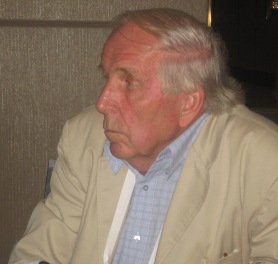
Professor Roger V Short, FRS, from the University of Melbourne made a passionate plea for controlling our numbers: “We are the global warmers. And we hold the key to containing and reducing it.”

He was speaking at session on ‘Life and death in 2020: how will science respond?’

Human population has increased at an unprecedented rate. When he was born, the world had a total of 2 billion people, the elderly academic said. Now, the estimate is around 6.7 billion.
By 2050, according to the United Nations, it is set to reach 9 billion. And that with all efforts at family planning.

The United States and Australia are the biggest emitters of greenhouse gases that cause global warming. Yet, Australia is the only developed country that is encouraging its people to increase the birthrate.

Are we out of our minds, Professor Short wondered.

The message was loud and clear: unless we seriously contain our numbers, we — and our planet — are doomed.

Prof Short recalled how he’d spent a inspiring week with Thailand’s Senator Michai Viravaidya – known as ‘Mr Condom’ in Thailand for his unashamed and long-standing promoting of condom use — to both reduce population growth and to contain the spread of HIV.

john-rennie2.jpg roger-v-short.jpg

Wide use of condoms, and globally adopting a one-child-per-family policy, can give us a chance to arrest run-away global warming, Prof Short suggested.

The world is urgently in need of many more Mr Condoms, it seems.
To illustrate his point, Prof Short took out a T-Shirt saying ‘Stop Global Warming: Use Condoms!‘ and presented it to John Rennie, editor of the Scientific American, who was chairing the session.

The good sport that Rennie was, he immediately donned it.

Read what Christine Scott said about HIV and South Africa during the same session

See also my 19 July 2007 post: Three Amigos: Funny Condoms on a serious mission