The Step-children of Tsunami: Overlooked and forgotten

india-malas-family-lost-their-home-jobs.jpg

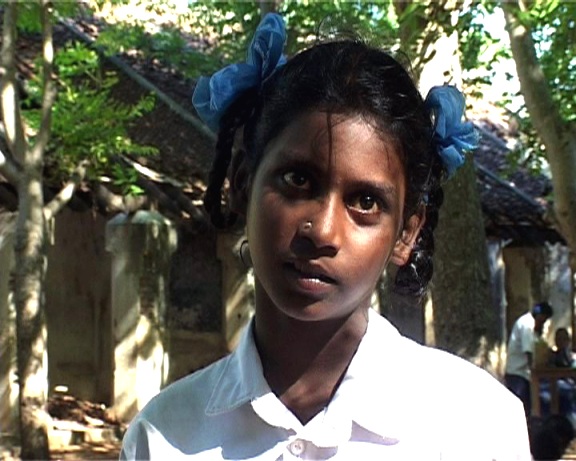
Meet Mala. She lives in in Kottaikkadu village in Kancheepuram District in India’s southern Tamil Nadu state.

She was 11 years old when, in December 2004, the Asian Tsunami crashed into village without warning. This made her very poor family desperate and destitute.

The disaster didn’t kill anyone in her village, but caused considerable property damage. In her case, the waves that rolled in spared their small hut, but her fisherman father was nearly drowned: he survived with some injuries.

But the family’s fishing boat and gear were gone. That was a mighty blow.

After the waves had retreated, they returned to their house and started rebuilding their lives. They thought the world’s generosity in responding to the Asian Tsunami will somehow bring some help.

They were wrong.

When the Tsunami triggered massive aid donations, all affected countries pledged to distribute it in a fair, equitable and transparent manner. But as the aid trickled down layers of government and charities, various biases and distortions crept in.

What happened in Mala’s village was an example. We came across the situation when tracking Mala’s family for a whole year (2005) after the Tsunami, documenting their long road to recovery as part of our Children of Tsunami media project.

We tracked two affected families each in India, Indonesia, Sri Lanka and Thailand, filming their progress — or the lack of it — every month and producing video reports that were uploaded to a dedicated website.

Follow Mala’s story through monthly video reports on our website

The most striking example of aid disparity came from India. Even months after the disaster, Mala’s family — or anyone else in her village — received absolutely no relief or recovery assistance.

Officially, it was because ‘no one was killed’ in her village. But everybody in Kottaikkadu village knew the real reason: in the Indian social hierarchy, they occupy the lowest level, known as ‘Dalits’.

Apparently, that was why both government agencies and charities stayed clear of the village.

Our India production team, led by senior journalist and film-maker Satya Sivaraman (with video camera in the photo, below), investigated further. They compared Kottaikadu with its adjoining village of Alambara. Both had suffered similar damage during the Tsunami: people lost their boats and nets, but there were no deaths.

Image from Children of Tsunami website

Yet the people of Alambara – who belong to a supposedly higher caste of fishermen — received food items, boats and fishing nets from various outside sources.

In fact, they felt quite sorry for their neighbours in Kottaikkadu. “On the day of the tsunami we ran over 15 kilometers,” said Kuppuraj, a resident of Alambara. “Kottaikadu villagers, who live just 600 meters away…ran with us — but nobody has helped them to recover.”

There was another incident that showed up the caste-based discrimination, which my colleague Manori Wijesekera, production manager of Children of Tsunami, has just reminded me.

In March 2005, our India film crew found Mala’s father seriously ill with a lung infection (triggered by his near-drowning during the Tsunami) and his family so helpless that they were unable to even seek medical attention.

So the crew put their filming gear aside, and became good Samaritans: they rushed the sick man to a nearby government-run hospital. But once there, doctors refused to admit or treat him — all due to the patient’s supposedly low caste!

It was only when Satya and crew threatened to film the entire sorry episode, and have it broadcast on television later that day, that medical attention was finally provided. Discarding their production plans, our crew stayed with Mala’s family at the hospital through the night and next day to ensure the doctors gave her father the correct medical attention. The family believes that the production team saved her father’s life that day.

Read more about what happened at Children of Tsunami website

Watch the March 2005 video report that covered the hospitalisation incident
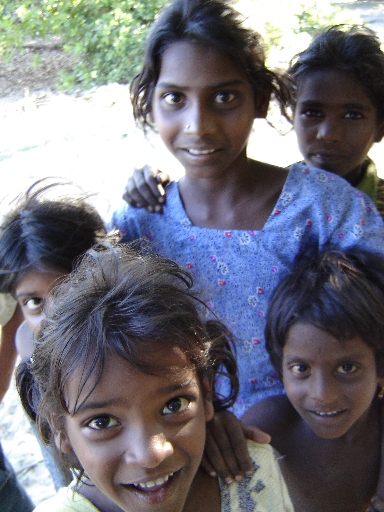
mala-with-her-neighbours.jpg

While their father was recovering, Mala’s mother toiled as a labourer to keep the home fires burning. Mala has one younger sister and two younger brothers.

Children of Tsunami: Rebuilding the Future was TVE Asia Pacific’s response to largely superficial media coverage of the Indian Ocean Tsunami of December 2004. It tracked on TV, video and web the personal recovery stories of eight affected families in India, Indonesia, Sri Lanka and Thailand for a year after the disaster. Its many media products — distributed on broadcast, narrowcast and online platforms -– inspired public discussion on aid management and optimum rehabilitation choices.

As we discovered along the way, some of the affected could be better described as Step-children of Tsunami.

In one of my early blog posts, I paid a tribute to the most extreme example of such a child, Thillainayagam Theeban.

The Tsunami has become yesterday’s news, but there are thousands of affected children, women and men who are still living on the edge of survival.

Related links:

Children of Tsunami: Documenting Asia’s longest year

Children of Tsunami revisited two years later

All images courtesy Children of Tsunami media project, TVE Asia Pacific

People Power: Going beyond elections and revolutions

“At the bottom of all the tributes paid to democracy is the little man, walking into the little booth, with a little pencil, making a little cross on a little bit of paper.”

That’s how Sir Winston Churchill summed up democracy at work. Elections – at national and local levels – give ordinary people the chance to decide who would run their affairs for the next few years. At least in theory.

In the modern world, however, elections alone cannot ensure that people’s wishes prevail. Better models of engagement are needed…and are being developed across the globe.

Historically, people responded to bad governance by rejecting governments at elections, and occasionally by overthrowing corrupt and despotic regimes through mass agitation. In the past decade, this “people power” has toppled rulers in the Philippines, Nepal and Ukraine among others, and sent a strong signal to autocratic governments elsewhere.

Yet such people power has its own limits: in country after country where one political party – or indeed political system – was replaced with another through popular vote or revolt, people have been disappointed or dismayed at how quickly the new brooms lose their bristles. The solution must, therefore, lie in not just participating in elections or revolutions, but in constantly engaging governments and keeping the pressure on them to govern well – or else.

So what is to be done, as Lenin famously asked? One challenge is to find new approaches to promoting good governance.

from-people-power-documentary.jpg
Photo: An election awareness public rally in Rajastan, India (late 2003)

An example is Social Accountability practices – individuals or civil society groups getting together to demand accountability from different levels of government. This represents a significantly higher level of citizen engagement than merely changing governments at elections or taking to the streets.

It involves the careful gathering of data, their systematic analysis and knowledge-based engagement and negotiation with elected and other public officials. Crucial to this process is accessing and using critical information – about budgets, expenditures, excesses, corruption, performance, etc.

The new breed of citizen voice is about using information in a way that lead to positive change in government and society. People use knowledge as a pivotal tool to improve governance, better use of common property resources, and management of public funds collected through taxation or borrowed from international finance institutions.

The media can play multiple roles in such social accountability processes. At a basic level, media’s coverage of these processes adds momentum to citizen movements. At a higher level, some citizen groups are use media as an information tool or campaigning platform or both, optimising each other’s strengths.

Here’s an example from my own experience. In 2004, TVE Asia Pacific produced a half-hour international TV documentary titled People Power that profiled four Social Accountability projects in Africa (Malawi), Asia (India), Europe (Ireland) and Latin American (Brazil).

First broadcast on BBC World in February 2004, it has since been widely distributed to broadcast, civil society and educational users in the global South. It is still available from TVEAP on DVD and VHS video.

Hernando de Soto

We interviewed the Peruvian economist Hernando de Soto (photo, above) of the Institute for Liberty and Democracy in Lima, Peru, who said: “Supposedly in a democracy, if the majority of people are poor, then they set the criteria of what is right. Yet all those mechanisms that allow [society] to decide where the money goes — and that it is appropriately allocated — are not in place throughout the Third World. We take turns electing authoritarian governments. The country, therefore, is left to the [whims] of big-time interests, and whoever funded the elections or parties. We have no right of review or oversight. We have no way for the people’s voice to be heard — except for eight hours on election day.”

When the India story was being filmed, in late 2003, by coincidence several states were holding elections for the state legislatures. Our crew followed the election process in the northern Indian state of Rajastan to see how a citizen group was forcing social accountability for all standing for election.

Mazdoor Kisan Shakti Sangathan (MKSS) invited the people of Beawar, Rajastan, to a public meeting where the affidavits on the local candidates were made available to everyone. This process of social accountability and transparency extends beyond the political process to the village level where the MKSS has successfully lobbied for the right to information legislation to overcome the systemic corruption in the political and bureaucratic organisations.

from-people-power.jpg

MKSS’s struggles has led to laws to ensure people’s right to information across India.

“India is the largest functioning democracy in the world and it has significant strengths (but) it also has weaknesses,” says Dr Bela Bhatix (photographed wearing red saree), Associate Fellow of the Centre for the Study of Developing Societies, interviewed on our film. “Among the strengths is that we have been able to sustain our democracy…It’s no small matter to have regular elections and we usually have something like 60 per cent turnout — around 600 million people, or twice the size of America. But at the same time there are some very important weaknesses of our democracy which we really need to think about.”
dr-bela-bhatix-from-people-power.jpg

Social activist Aruna Roy, coordinator of MKSS (photographed below), says: “In 1996, the MKSS sat in a 40-day sit-in at Beawar and we were demanding the right to access records of the Panchayat, the smallest elected body in India. We involved the entire city and made it a people’s campaign. We involved people from all over India, and the national campaign for people’s right to information was born.”
aruna-roy.jpg

Watch India story from People Power on TVEAP’s YouTube channel:

All photos captured from People Power documentary, courtesy TVE Asia Pacific.

Read TVEAP website feature, People Power beyond elections and revolutions by Nalaka Gunawardene

Wanted: Ethical sourcing of international TV news

In recent years, consumer pressure has built up against products made using child labour and blood diamonds. If these are no longer internationally acceptable, neither should the world tolerate moving images whose origins are ethically suspect.

This is a point I have been making for sometime. I feel very strongly about it, because to me, what goes on behind the cameras is as important as what is in front of the cameras — and is therefore seen by millions of television viewers.

Many media researchers and media-watchers don’t pay enough attention to this aspect. Volumes of content analysis are produced on what is broadcast, but do we probe how that content gets on the air in the first place?

My recent blog post, and international op ed essay, on cheque-book development corrupting the broadcast media reiterates this point.

from-mediachannelorg.jpg from-mediachannelorg.jpg

When Al Jazeeera launched its English language international news and current affairs channel in November 2006, I wrote an op ed essay called ‘Ethical Newsgathering: Al Jazeera’s Biggest Challenge’. This was published by media-watch websites on both sides of the Atlantic: MediaChannel.org managed from New York, USA, and MediaHelpingMedia managed from London, UK.

I looked at the track record of the two leading international news channels, BBC World and CNN International, and noted:

“They have increasingly come to epitomise a disturbing trend in international news and current affairs journalism: the end justifies the means.

“Take, for example, a major news story that broke in my part of the world two years ago: the Asian Tsunami of December 2004.

“In a few dreadful hours, the disaster killed, injured or otherwise shattered the lives of millions. The ‘media tsunami’ that followed added insult to injury by turning the plight of affected people into a global circus. The right to privacy and dignity of thousands of affected people was repeatedly violated. The visual media, in particular, had no qualms about showing the dead, injured and orphaned: the story was gory.

One CNN reporter later wrote a whole book recounting those few momentous days, when his team apparently managed to get stories before anyone else. Seemingly because they threw more money, equipment and diplomatic clout than others. The ‘gung-ho’ tone in that book is revolting yet revealing.

“Such journalists’ only operating guideline seems to be: get the story, no matter what — or who gets hurt in that process.”

Read the essay: Ethical Newsgathering: Al Jazeera’s Biggest Challenge, by Nalaka Gunawardene, on MediaChannel.org

Read an earlier essay, Communication Rights and Communication Wrongs, by Nalaka Gunawardene, on SciDev.Net

tv-influence-on-print-media.jpg

In the corporate media world, we the viewers are ‘consumers’ of what the multiple news channels peddle 24/7. Few of us see beyond what comes up on our screens, and even fewer bother about how those images are sourced.

If we want ethical sourcing of TV news content, that pressure must come from us, the consumers. We should react not only to the carefully packaged moving images and soundbytes dished out to us, but also demand to know if these have been acquired in an ethically acceptable manner.

Good journalism is not just a mix of accuracy, balance and credibility (the A, B and C we are taught in journalism school). There is also D (Discernment) and E (Ethical sourcing).

– Nalaka Gunawardene

Memories of Toyama: Japan Wildlife Film Festival

Image courtesy JWFF

The Japan Wildlife Film Festival opens today – 23 August 2007 – in Toyama, in eastern Japan.

As their website says: “Established in 1993, the Festival is held biennially. It started in the hope that by screening moving images of the wonders of wildlife and the co-existence of nature and people, we could help to increase understanding and awareness of the urgent need to protect and care for the natural world.”

The last Festival, in August 2005, received 331 film entries from 35 countries and some 30,000 people, including many school children, attended the public screenings staged throughout the Toyama region. This level of public participation is exceptional for an international film festival — and shows how well the organisers, the Nature Film Network, have engaged the local people.

International film-makers and broadcasters now know the Festival as one of the biggest of its kind in Asia.

I’m missing Toyama this year. I participated in the last two festivals and have fond memories — of watching great films, having excellent company and enjoying outstanding Japanese hospitality in the salubrious holiday city of Toyama.

In 2003, I was part of the festival’s international jury. Then at the 2005 festival, I was invited to give a talk about our Children of Tsunami media project, which at the time was documenting the personal recovery stories of eight families affected by the Asian Tsunami in India, Indonesia, Sri Lanka and Thailand.

In both years, a highlight of my experience was the opening evening reception, held at a traditional Japanese farm house restored by NFN and located a half-hour’s drive outside the city. There, the local people hosted us to food and beverages prepared at home. An evening of simple, unpretentious cultural exchange — with nothing ‘official’ about it!

That’s the character of NFN chairman Hirohisa Ota: a man of few words who leads by example and brings together a small but dynamic team of staff and volunteers to run the 4-day festival with clockwork precision.

The photo below shows international participants at JWFF 2005.

Photo from JWFF website

Image from JWFF website

List of finalist films competing in JWFF 2007

Read my earlier post on Toyama 2005: Lawyers who locked up the Butterfly Tree

Rajiv Kafle: A ‘Portrait of Commitment’ against HIV

Photo by Shahidul Alam, Drik/Majority World

It was good to see Rajiv Kafle again — even if only in this photograph, where he is the grown up surrounded by children. This was taken by my friend Shahidul Alam, whose latest photo exhibition, Portraits of Commitment, I’ve just seen.

I immediately recognised Rajiv because he was a key character in a documentary film we at TVE Asia Pacific commissioned five years ago, in 2002. Love for a Longer Life, directed by Nepali film-maker Dhurba Basnet, was part of a package of Truth Talking films that probed how Asia Pacific societies were coping with rapid change or crises.

At that time, there were 50,000 Nepalis living with HIV. But Rajiv was the very first among them to publicly announce that he had HIV — it created ripples in the conservative Nepali society.

He is a former injecting drug user who contracted HIV through unsafe needles.

“I injected drugs for two years. I got infected with HIV when I used a contaminated syringe belonging to one of my friends. He was HIV positive and I used his syringe without sterilising it properly,” Rajiv described his case history on our film.

After coming to terms with his own HIV status, Rajiv turned activist. For the past few years, he has been a crusader to educate Nepalese youth to prevent them from contracting HIV through ignorance. He gives talks at schools and colleges about his experiences of living with HIV.

It has not been easy: his revelation shook the conservative Nepali society, where most people are still reluctant to talk about HIV, associating it directly with illicit sex.

“Stigma, discrimination — then death.” That’s the bleak future that many HIV positive people in Nepal face according to Rajiv. “There is a great deal of stigma and discrimination against HIV/AIDS sufferers. Because there is so much negative publicity, an HIV-positive person finds it difficult to reveal his condition. He will have heard only about stigma, discrimination and death.”

“If we create a favourable environment, people will definitely come out and let others know,” he says, adding: “It took me a couple of years before I was able to publicly announce that I was HIV positive.”

Change was happening even five years ago when the camera crew from Nepal Forum of Environmental Journalists (NEFEJ) followed him across Kathmandul Valley as he gave talks at schools and other public places.

“Now I see a change. Lots of young people understand the problem and are getting involved. The media and public are now more interested in this subject and they want to interact with people who have been through this.”

film-maker-dhurba-basnet.jpg

It wasn’t easy to produce Love for a Longer Life. As Dhurba Basnet (photo, above) reported at the time: “The major problem we faced during shooting, however, was that it was very difficult to get people living with HIV to talk naturally on camera. We had to first win their trust. This we achieved by behaving with them as normally as possible.”

After some shooting had been completed, Rajiv Kafle fell ill. “Since he was a major character in the film we had to wait a whole month while he recovered.”

Read more about Truth Talking films from across Asia Pacific

Shahidul Alam’s blog post on Portraits of Commitment photo exhibition featuring individuals making a difference in South Asia’s battle against HIV

Read my earlier blog post on HIV in Nepal: Ratomate’s best cup of tea (29 March 2007)

Rajiv Kafle photo by Shahidul Alam, Drik/Majority World

Making fun of HIV: Welcome to the Scenarios from Africa

General Assembly of Diseases: In the city of Contaminobo, assorted germs in an emergency session. Tuberculosis, Polio, Hepatitis and others are all angry and afraid because their favourite target – humans – are fighting back. Enter ‘His Royal Heinous, Overlord AIDS’. Hope at last! When he attacks the immune system of humans, other germs can still have a chance…The humans are so careless, that it’s easy for AIDS to quickly spread from one to many. But wait a minute – somebody has been listening into all their talk. Which means the secret of defending humans from HIV and his cronies is out.

Iron Will: Moussah is a young man with a healthy, or bubbling, interest in girls. His male friends advise him to be play it safe — carefree sex can easily expose him to HIV, for which there is no cure. They talk about condoms, and another strategy that is an alternative to using the rubber latex. But Moussah doesn’t quite understand the expression ‘iron will’. He interprets it differently, and gets custom made iron underpants made — much to the amusement of his friends, who remind him the most important sex organ is…the brain!

Just Once: A man returns from the field and feels like making love to his wife. She is living with HIV and insists that he uses a condom — but they’ve run out of stocks. So he cycles far and wide in search of condoms – where is a rubber when you need one? Finally he succeeds and rushes home, only to find that his wife did have one last, unused condom with her. So why didn’t you tell me, he asks in exasperation. Her answer is revealing….

Intrigued? There’s a lot more where they came from.

These three stories are part of Scenarios from Africa — a highly successful and popular pan-African initiative to use moving images to get young people talking and acting on HIV/AIDS. The decade-long project has been carried out with and for young people, with community mobilisation, education and media elements.

Integral to this communication effort are television drama vignettes about different scenarios involving HIV in everyday life.

Some are very funny while others are very moving. They cover many dimensions of the HIV epidemic, from preventing the virus spreading to taking care of persons living with HIV. Underlying themes include safe sex, removing social stigma from the epidemic and dispelling misconceptions about how HIV spreads or does not spread.

The project was started in 1997 and is coordinated by the non-profit Global Dialogues Trust. It gave African children and young adults an exciting opportunity to educate themselves and others about HIV/AIDS by inviting them to participate with internationally acclaimed directors in the production of these short films.

The films are based on ideas thought up by young people in a series of contests. So far, over 105,000 young people from 37 African countries have taken part in these contests. Over 1,000 local and international partner organisations have been involved in organising the contests and selecting the winning ideas.

The films range in duration from just under 2 minutes to almost 15 minutes. They were produced by top fiction film-makers and animation specialists in Africa.

All stories use African actors, locations and situations – and employ different story telling tactics.

Scenarios from Africa is a multi-media communication project that has been widely acclaimed by practitioners, activists and scholars worldwide. The films are supported by a user’s guide and online discussion points that help teachers, trainers and activists to make the best use of these stories in their work.

The films are all distributed on a non-commercial basis across Africa and beyond, for broadcast and narrowcast use. The Scenarios films have been broadcast on locally-based television stations in almost every country in sub-Saharan Africa. The films are also collected on compilation DVDs and video cassettes for use by organisations and schools. Some 60,000 copies of the films (DVDs and video cassettes) of the films have been distributed to date.

The films are now available in a wide and growing range of African and European languages, and are reaching tens of millions of people.

Says Daniel Enger of the Global Dialogues Trust: “Although the films were originally produced for the sub-Saharan African cultural context, we have been pleased to learn over the years that the films have proven useful as awareness-raising tools in many countries of the Asia Pacific area. Indeed, most of the HIV-related topics raised in the Scenarios from Africa collections have universal relevance, making the films useful discussion starters across the globe.”

TVE Asia Pacific has recently taken on the task of distributing all Scenarios films across the Asia Pacific region. As with all other films in its catalogue, TVEAP will distribute Scenarios on a non-exclusive, non-commercial basis to broadcast, civil society and educational. We have been promoting the Scenarios films since we screened them to packed houses during the 2004 AIDS Film Festival in Bangkok

Meanwhile, the 5th Scenarios contest will be held from 1 December 2007 to 15 March 2008. Please contact for more information.

Watch Scenarios films on the official website (RealPlayer required)

Scenarios from Africa now available from TVE Asia Pacific

All images used in this post are courtesy Global Dialogues Trust.

Read my other blog posts on HIV:
HIV: Stigma a bigger killer than the virus?
Three Amigos: Funny condoms with a serious mission
Beware of Vatican condoms!
50? In South African terms, you’re probably dead!
Ratomate’s best cup of tea
A girl named Nan-nan

‘Cheque-book Development’: Paying public media to deliver development agency logos

In their ceaseless efforts to keep their organisations in the media spotlight, spin doctors of development agencies are distorting news values and corrupting the media, turning issue-based communication products into ‘logo delivery mechanisms’.

This is the thrust of my latest op ed essay, titled ‘Cheque-book Development’ corrupting the media. It has just published by the popular media-watch website anchored in the US, MediaChannel.org

Image courtesy MediaChannel.org

In this essay, I draw on several years of first hand observations in development, humanitarian and broadcasting circles at Asian and global levels. I focus on a disturbing practice that more and more development/humanitarian agencies engage in: paying intermediaries for getting their stories on global news and current affairs TV channels.

This is nothing short of cash-for-media coverage.

Here’s an extract:

“As development organisations compete more intensely for external funding, they are increasingly adopting desperate strategies to gain higher media visibility for their names, logos and bosses.

“Communication officers in some leading development and humanitarian organisations have been reduced to publicists. When certain UN agency chiefs tour disaster or conflict zones, their spin doctors precede or follow them. Some top honchos now travel with their own ’embedded journalists’ – all at agency expense.

“In this publicity frenzy, these agencies’ communication products are less and less on the issues they stand for or reforms they passionately advocate. Instead, the printed material, online offerings and video films have become ‘logo delivery mechanisms’.

Image courtesy MediaChannel.org Cartoon courtesy Global Journalist

Some of these communication officers I write about have become friends over the years — I empathise with their pressures, but don’t approve of what their organistions do. As I write in the essay:

“This practice is wrong on two counts. One, allowing intermediaries to sell access to the airwaves is a form of corruption. Two, every time this happens, it siphons off tax-payer supported development funds intended for combating poverty and suffering in the majority world.

“It is the reverse of cheque-book journalism, where some media organisations pay celebrity or other sources for exclusive access to their stories. When development agencies are paying sections of the media to get promotional or favourable stories aired, we must call it ‘cheque-book development’.”

Make no mistake — this is a form of media corruption. It’s not just the development sector’s vanity that fuels this process. Many 24/7 news channels are struggling to fill their hours inexpensively. Some turn a blind eye to ethical sourcing as long as they can have a steady supply of subsidised content.

Read my full essay on MediaChannel.org

Note: Being a US-anchored outlet, MediaChannel.org spells ‘cheque-book’ as ‘check-book’, which is correct in American spelling of English! As I write in my essay, it appears that TV channels and networks on that side of the Atlantic seem a bit harder to corrupt. But then, what do I know?

Read my Nov 2006 essay on MediaChannel.org: Ethical News Gathering Challenge for Al Jazeera

I have been speaking about the growing threat of cheque-book development for some time. For instance, I referred to it during Communicating Disasters: An Asian Brainstorming organised by TVE Asia Pacific and UNDP in Bangkok in December 2006.

Essay republished on Asia Media Forum
asia-media-forum.gif

AV against HIV: Recalling my own ‘Richard Gere moment’

The 8th International Conference on AIDS in Asia and the Pacific, or ICAAP8, opens in my home city of Colombo in a few days’ time. As I wrote in an earlier post, some of us have been blocked out of this important event by some arrogant members of the conference Secretariat. But our interest in HIV/AIDS advocacy will not be so easily deterred.

On a positive note, I have vivid memories of my active involvement in the XV International AIDS Conference, held in Bangkok, which attracted over 17,000 delegates to the Thai capital for a week full of events and activities. One of them was the official 2004 International AIDS Film Festival, which TVE Asia Pacific organised at the invitation of the Thai Ministry of Public Health and the International AIDS Society.

2004 AIDS Film Festival in Bangkok 2004 AIDS Film Festival in Bangkok 2004 AIDS Film Festival in Bangkok 2004 AIDS Film Festival in Bangkok

Over 4 days, we screened close to 50 TV and video films at three venues, drawing a total of more than 8,000 visitors. These films came from all over the world, in response to an open call that we had issued. We received a rich mix of genres: documentaries, docu-drama, current affairs programming, short television spots as well as entertainment formats — animation, dramas and reality television.

Films at this festival captured the kaleidoscope of emotions, challenges and contradictions presented by the AIDS pandemic. They were evidence of how TV and film professionals are covering HIV as a major development concern of our times.

That formidable task — which we summed up as ‘AV against HIV’ — received a boost when movie industry heavyweights joined in. We had documentaries narrated by Angelina Jolie, Will Smith and Glenn Close.

And while we were organising the festival, actor-activist Richard Gere sent the word saying he was interested in being associated with it. Of course we seized the offer, and had him open the film festival — hugely raising its profile in the Thai and international media.

2004 AIDS Film Festival banner by TVEAP Richard Gere arrives for 2004 AIDS Film Festival, Bangkok Richard Gere being welcomed by Thai children

After three years, I can still remember the moving speech that Richard Gere made at the opening ceremony in the Scala cinema in downtown Bangkok. Talking to an audience packed with diplomats, businessmen, journalists, activists and government officials, he said his experience with persons living with HIV had changed his life even more than his study of Tibetan Buddhism.

He recalled how he had lost a very close friend to HIV. “I don’t want anyone else to die like that,” he said, adding: “It (AIDS) has gone on too long, way too long.”

Then he did something simple yet very effective. He asked everyone who knew at least one person living with HIV to put their hands up. A few dozen hands went up in an audience of around 500.

Next, he said: hands up everyone who has lost at least one person to HIV. Some hands went down while three dozen remained held up.

I did not put my hands up for either call.

That was a moment of truth for myself. Until then, I hadn’t really, closely known anyone who was living with HIV (and disclosed that fact to me). I also had not lost anyone to HIV. Not knowingly anyway.

As the event progressed, I sat there asking myself:
• What kind of little comfort zone or cocoon am I living in?
• What kind of society do I live in, where very few people – if anyone – would dare to acknowledge they are living with HIV?
• And how can I remain authentic, communicating HIV from such a detached standpoint?

Richard Gere at XVI AIDS Conference in Toronto, 2006

I’ve been writing and speaking about HIV for almost two decades. In that time, I have touched on many aspects of HIV, including:
• The science of HIV/AIDS, as a science communicator;
• Public health aspects of the global pandemic as a feature writer;
• The human rights dimensions of HIV, as a development communicator; and
• Nexus between media and HIV, as a media watcher/researcher.

But I sat there in the Scala cinema wondering if it was sufficient for me to have done all that with the objectivity of a journalist, or the clinical detachment of a researcher.

I then realised that when it comes to HIV/AIDS, we have to suspend these ordinary frameworks and ‘conditioning’ of our training.

We have to:
• Stop thinking of it as someone else’s problem;
• Get away from the ‘us’ and ‘them’ mindset;
• Understand that no one is immune or buffered from the human immunodeficiency virus, HIV; and
• More than anything else — stop living in denial.

These apply to individuals, communities, society — and also governments.

That was my Richard Gere moment.

Read TVEAP news report on 2004 AiDS Film Festival

See more photos on 2004 AIDS Film Festival on TVEAP website

Photos by Jerome Ming and Indika Wanniarachchi for TVEAP

“If we don’t tell our stories, no one else will”

Image courtesy Maisha Labs

An unpretentious, matter-of-fact press release arrived in my email overnight from Maisha Film Lab in Kampala, Uganda. It started as follows:

“MAISHA, the annual training program for East African Filmmakers founded by director Mira Nair (Namesake, Mississippi Masala, Monsoon Wedding) is now in its third year of operation. Housed in Munyonyo, Kampala, the three-week lab (which takes place from July 21st to August 11th, 2007) is currently training 9 filmmakers, 3 sound mixers, 3 cinematographers, and 3 editors with world-renowned filmmaking professionals.”

The press release then listed Maisha’s 2007 mentors. Among them:
– Jason Filardi (Writer, Bringing Down The House)
– Joshua Marston (Writer/Director, Maria Full of Grace)
– Alison Maclean (Writer/Director, Jesus’ Son)
– David Keating (Writer/Director, Last of the High Kings)
– Drew Kunin (Production Sound Mixer, Crouching Tiger Hidden Dragon, Zodiac)
– Kerwin DeVonish (2nd Unit DP, Inside Man)
– Barry Alexander Brown (Editor, Inside Man, Malcolm X), and
– Fellipe Barbosa (Director, Salt Kiss)

Wow – Mira has succeeded in rounding up some of the best film industry talent in North America. All these professionals are donating their time, so that African film-makers can sharpen their skills in making better moving images.

But it’s the mission of Maisha that interests me most — because it so resonates with what we at TVE Asia Pacific have been advocating in Asia in our own small way: equipping and empowering local film-makers to tell their own stories to their people and the world.

Maisha’s tagline says it all: “If we don’t tell our stories, no one else will”

As their website explains: “Film is easily one of the most far-reaching mediums in the modern world, one that essentially validates a culture. In the entire African continent, there are few, if any, training programs for aspiring filmmakers.

“The few films that take place in East Africa are often made by foreigners without local crews, and generally focus on the political turmoil that plagues the region. While there is a flourishing and vital writing and theatre culture in the region, the bridge to convert this talent into screenplays and films has yet to be built.

MAISHA (meaning “life” in Kiswahili) provides new screenwriters and film directors from East Africa (Uganda, Kenya, Tanzania and Rwanda) and South Asia (India, Pakistan, Sri Lanka and Bangladesh) with access to the professional training and production resources necessary to articulate their visions.

Mira Nair image from Harvard University Gazette

Maisha aims to preserve, cultivate and unleash local voices from these regions, and to become one of the first targeted programs to offer structured and accessible resources to these emerging filmmakers. MAISHA is motivated by the belief that a film which explores the truths and idiosyncrasies of the specifically local often has the power to cross over and become significantly universal.

Read more about Maisha Filmmaker Lab

Maisha has selected three short films from this year’s participants’ submitted screenplays. These films are currently in production, crewed entirely by Maisha trainees. The cast is culled from the Kampala theater community. They are:

Must be a God-Fearing Christian Girl
Directed by Wanjiru Kairu, Kenya
John Webuye is a smart, successful man- living at home with his mother. After some failed attempts at internet dating, he finds love in the most unexpected of places.
Assistant director: Consodyne Buzabo, Production Manager: Victor Dimo Okello, Cinemtaographer: Ronald Kasirye, Sound Mixer: Richard Ndung’u, Editor: Risper Mbuthia.

The Trip
Directed by James Gayo, Tanzania
Pembe and Kaniki are two brothers on their way to interview for new jobs. Their bus breaks down along the way- and Kaniki’s wandering eye leads them in a different direction than they had anticipated.
Assistant Director: Jennifer Gatero, Production Manager: Kwezi Kaganda Runihda, Cinematographer: George Karugu, Sound Mixer: Theirry Dushimirimana, Editor: Zipporah Kimundu.

What Happened in Room 13
Directed by Dilman Dila, Uganda
Peter’s wife, Oliva, is pregnant and in the hospital, which gives her wayward husband an excuse to run off to a cheap motel with his best friend’s wife, Prossy. After their encounter leaves Prossy fatally injured, Peter tries desperately to cover his tracks.
Assistant Director: Ayuub Kasasa Mago, Production Manager: Anthony Njeru Thandi, Cinematographer: Nicholas Mtenga, Sound Mixer: Moses Hussain, Editor: Patrick Sekyaya.

Read: June 2004: Mira Nair Launches MAISHA, Film Laboratory for East Africans, South Asians

Read Mira Nair’s profile on Maisha website

Note: One of my claims to fame is that Mira Nair and I are both on the Board of Governors of Ujala TV, the South Asian educational broadcasting venture that I wrote about a few weeks ago. And last month, Mira’s latest film Namesake reduced me to tears in public.

Earthcare Outreach: taking moving images to the grassroots

On 19 July 2007, I wrote about the need for natural history and environment film-makers to take their films back to the locations and communities where they filmed.

I cited the specific example of the Brock Initiative, started by ex BBC Natural History producer Richard Brock, which is supporting projects in several countries in Africa and Asia.

In today’s mail, I received the DVD of Tiger – the death chronicles, the latest documentary by the award-winning Indian film-maker Krishnendu Bose. I’m going to watch and write about it separately, but this reminded me of the outreach work he and his company, Earthcare Films, have been doing for years.

After working for a dozen years with factual film-makers from across Asia, my experience is that not many are really interested in any outreach besides a high profile broadcast. For sure, broadcasts help draw attention to a film and its creator/s. But as we have discussed in recent blog posts, broadcast television is not an ideal platform to get a discussion going on issues and concerns. In fact, many film makers are finding it harder to get their serious films broadcast at times with better audience ratings.

Still, surprisingly few film-makers have time or patience for serious narrowcast outreach. Yes, it is a time consuming, tedious process. The logistics can be demanding and expensive. And there is not much glamour (or ‘arty and intellectual feel’) in going to a small town or remote village and playing back your film to a few dozen people living on the edge of survival.

Image courtesy Earthcare Films website

But as exceptional film-makers like Krishnendu (in photo above, taken from Earthcare Films website) know well, it can be an enormously enriching and satisfying experience for a film-maker. People like him watch the audience while they watch the film.

Films are a greatly underused communication form. Serious communication usually is at most limited to awareness building,” says Earthcare Films website in its section on outreach.

That’s why EarthCare Outreach wants to explore beyond. “Films could be tools for social change and empowerment. Participatory film-making by sharing skills and capacities could take the ‘use’ of films to a different level. Not that it has not been tried and practised, but we want to take it forward and try and push the boundaries.

Krishnendu and colleagues have set up the EarthCare Outreach Trust specifically for this purpose. The objective is “to create ownership and stake in the process and the product of a documentary film of the people whose lives we document. In the process we strive to empower young people and rural communities to make them stakeholders in decision-making and in planning for natural resource management.”

For the past several years, Earthcare Outreach has been active on these fronts, organising mobile film screenings or traveling film festivals in rural and urban areas in different parts of India. The website talks about how they have held community and citizenry exchanges between selected locations, evolving film-making skill-share across these groups.

Read more about Earthcare Outreach activities.

Contact Earthcare Films for more information and involvement

On a personal note, I’m trying to recall when I first met Krishnendu. It must be at least a decade ago — I had seen some of his work before I met the man behind them. We were together as guests of the Earth Vision Tokyo Global Environmental Film Festival in 2001 — where his film, Harvesting Hunger, (image below shows it being filmed) won a special jury award.

Image courtesy Earthcare Films