Outsourcing journalism: From eye witness to i-witness?

Outsourcing has arrived…in broadcast journalism.

Good reporting, we thought, has everything to do with being there, observing and then sharing the information, impressions and opinions. But some editors and publishers disagree.

Just caught this news in the Los Angeles Times, 11 May 2007:

Local news reporting outsourced to India
A news site hires two to cover Pasadena from afar. That helps a shoestring budget go further.

By Alex Pham, Times Staff Writer
May 11, 2007

When is local journalism not really local? When it’s about Pasadena and written by someone in India.

James Macpherson, editor and publisher of the Pasadena Now website, hired two reporters last weekend to cover the Pasadena City Council. One lives in Mumbai and will be paid $12,000 a year. The other will work in Bangalore for $7,200.

The council broadcasts its meetings on the Web. From nearly 9,000 miles away, the outsourced journalists plan to watch, then write their stories while their boss sleeps — India is 12.5 hours ahead of Pacific Standard Time.

“A lot of the routine stuff we do can be done by really talented people in another time zone at much lower wages,” said Macpherson, 51, who used to run a clothing business with manufacturing help from Vietnam and India.

Read the full story

Wait till other media managers get to hear this.

And I can already imagine how our media intellectuals in South Asia will tear this apart.

Read Rediff India coverage of this story

Breaking News from Onion News Network: They know it all!

Some journalists and media organisations never allow the truth to get in the way of a good story.

Now, as broadcast television trades more substance for style, on-screen graphics is everything. Unless a news story is supported with gimmicky, flashy graphics, the networks seem to think, it won’t be news anymore.

This ONION TV News Parody shows how getting the graphics right is more important to TV networks than getting the meaning right. The story keeps shifting but the anchor remains authoritative — without knowing what the news is all about.


Breaking News: Something Happening In Haiti

According to their self introduction: The Onion News Network (ONN) has set the standard for globe-encompassing 24-hour television news since it was founded in December, 1892. The network boasts channels in 171 languages and can be viewed in 4.2 billion households in 811 countries. Now get the only news you need on the web and from our esteemed media partners.

Onion News Network Promo

Earlier post: Jib-Jab Video: What we call the news

Bill Moyers: How the American media followed Pied Pipers of Pentagon

Bill Moyers has done it again.

The heavyweight of public interest broadcasting in America has turned the spotlight right at his own industry, asking how so many members of his profession could be so easily tamed and led astray by the Pied Pipers of Pentagon.

In Buying the War, a 90-minute documentary that aired on the Public Broadcasting System (PBS) on 25 April 2007, Moyers explores the role of the press in the lead-up to the invasion of Iraq.

Buying the War includes interviews with Dan Rather, formerly of CBS; Tim Russert of MEET THE PRESS; Bob Simon of 60 MINUTES; Walter Isaacson, former president of CNN; and John Walcott, Jonathan Landay and Warren Strobel of Knight Ridder newspapers, which was acquired by The McClatchy Company in 2006.

Image courtesy PBS Bill Moyers

How did the mainstream press get it so wrong? How did the evidence disputing the existence of weapons of mass destruction and the link between Saddam Hussein to 9-11 continue to go largely unreported?

“What the conservative media did was easy to fathom; they had been cheerleaders for the White House from the beginning and were simply continuing to rally the public behind the President — no questions asked. How mainstream journalists suspended skepticism and scrutiny remains an issue of significance that the media has not satisfactorily explored,” says Moyers.

“How the administration marketed the war to the American people has been well covered, but critical questions remain: How and why did the press buy it, and what does it say about the role of journalists in helping the public sort out fact from propaganda?”

The programme opened with the following words of Moyers:

Four years ago this spring the Bush administration took leave of reality and plunged our country into a war so poorly planned it soon turned into a disaster. The story of how high officials misled the country has been told. But they couldn’t have done it on their own; they needed a compliant press, to pass on their propaganda as news and cheer them on.

Since then thousands of people have died, and many are dying to this day. Yet the story of how the media bought what the White House was selling has not been told in depth on television. As the war rages into its fifth year, we look back at those months leading up to the invasion, when our press largely surrendered its independence and skepticism to join with our government in marching to war.

The show has already drawn rave reviews. David Sirota says at WorkingforChange:

I went to journalism school because I thought journalism was about sifting through the B.S. in order to challenge power and hold the Establishment accountable. Bill Moyers and the folks I’ve gotten to know at McClatchy Newspapers who Moyers highlights show that that long tradition still exists. But the fact that they are such rare exceptions to the rule also show that the incentive system in journalism today is to reward not the people who challenge power, but the people who worship it. And though Tim Russert and Peter Beinart and Bill Kristol and Tom Friedman can kick back in Washington with their six figure salaries and tell themselves that they are really Important People, what we have seen is that they are part of a new journalistic culture that is threatening to destroy what once was a truly noble profession and undermine our democracy.”

Read the full transcript of Buying the War online

Watch Buying the War online at PBS website

Read the full review at David Sirota’s blog: When journalism became transcription and reporting disappeared

Thank you, Brundtland. Now for the unfinished business…

On 2 April 2007, I posted excerpts from a speech I made in Hyderabad, India, on the worldwide influence of Our Common Future, the final report of the Brundtland Commission on Environment and Development that came out 20 years ago this month.

I have now expanded on that theme in an op ed essay titled ‘Children of Brundtland coming of age’.

It has just been published by Green Accord, an Italian non-profit group that every year organises a gathering of leading environmental experts and journalists. The GreenAccord Forum on Media and Nature, held in an Italian city every Fall, is now the largest, regular gathering of its kind. I have been a participant or speaker at three past editions.

GreenAccord logo

Here are excerpts from my essay:

Brundtland did not invent the concept or term -– various versions had been around since the first UN Conference on the Human Environment (Stockholm, 1972). But it was Our Common Future that took these mainly academic and inter-governmental discussions to a mass audience.

In doing so, it nudged the environmental movement to move up from simple pollution prevention, tree-hugging and whale-saving action to a much broader developmental agenda. Issues such as poverty, international trade, peace and security were integrated into one framework.

And, equally importantly, the report inspired a whole generation of young journalists, educators and activists worldwide. I was one of them: in that sense, we are all Children of Brundtland.

By happy coincidence, the report came out during my first year in science journalism, and significantly altered my outlook and priorities. My early fascination with mega-science topics such as space travel, genetic engineering and nuclear power gave way to an interest in issues of science for human survival and development. I haven’t looked back.

Some environmental journalists at GreenAccord Forum in Nov 2006

I then go on to question the continuing relevance of environmental journalism, and suggest that this kind of labelling has, inadvertently, ghettoised the media coverage of sustainable development issues.

I argue that we urgently need simple good journalism that covers sustainable development as an integral part of the mainstream of human affairs.

“We can’t engage in shoddy journalism in the name of saving endangered species or ecosystems. There is no substitute for plain good journalism.”

Photos courtesy: Zilia Castrillon

Read my full essay here

TVE Asia Pacific website news item on the last GreenAccord Forum in October 2006

Mediasaurus — and the rise of bloggers

Earlier this month, I referred to science fiction writer Michael Crichton’s 1993 Wired article titled ‘Mediasaurus’ — in which he talked about how television as we know it (or knew it, at the time) was doomed.

I’ve just come across this cartoon, which I can’t resist sharing.

Cartoonists are the social philosophers of our time. And no one else achieves a better economy of words.

Source: http://www.indcjournal.com/archives/ariaillg2.jpg

Tabloid journalism – and MTV’s Environment News

What can be done to lure more young audiences to care for and discuss about issues of science and technoloy?

This question was put to a panel on ‘Science and television’ that I was on last week at the Fifth World Conference of Science Journalists in Melbourne, Australia.

Each panelist offered suggestions. Mine was just three words: think more tabloid.

Those who try to communicate science to the non-technical public are mostly trapped in the mindset of the classical documentary, or its print equivalent: broadsheet newspapers. That engages a certain kind of audience, but the masses — including many young people (15 to 25 years) — are not widely represented there. To engage the latter, we have to consider more tabloid formats.

Is that dumbing down the weighty issues we’re peddling? Not necessarily, I argued. We can make things in different formats, without over-intellectualising and not over-simplifying either.

A recent example of this comes from Music Television, MTV, and is discussed in an interesting piece appearing in the Columbia Journalism Review website, CJR Daily.

MTV Break the Addiction campaign

Here are some excerpts from the article written by Curtis Brainard, titled ‘Surprise: MTV’s Environmental News Rocks’

Just over a year ago, on Earth Day 2006, the station announced its “Break the Addiction” campaign, encouraging people to kick (or cut back on) habits that depend on fossil fuel. The campaign is a suite of on-air programming, MTV News stories, public service announcements, contests, online resources, and grassroots mobilization efforts. No, MTV is not the type of news outlet that one would reference in a scholarly paper, and it never will be. And although MTV has produced environmental stories intermittently for over twenty years, the “Break the Addiction” campaign was its first ambitious commitment.

“Historically, the environment never rated highly,” said Ian Rowe, MTV’s vice president of public affairs and strategic partnerships. “But we were starting to see signs that global warming was becoming a bigger story, even if our audiences weren’t clamoring for such news, so we made a proactive decision that we would connect the dots for our audience.”

On Earth Day (22 April 2007), MTV ran a special edition of “Pimp My Ride,” the popular automobile makeover show. Governor Schwarzenegger is a friend of the team at Galpin Auto Sports in California, where the program is filmed. He and the crew (mostly the crew) retrofit a 1965 Chevy Impala with an 800-horsepower, biodiesel engine. “We try to publicize celebrity involvement in these issues to show people it’s cool, and bring the unconverted into the fold,” said Pete Griffin, a public affairs officer who worked on the “Break the Addiction” campaign. It’s no Pulitzer-caliber exposé on the socioeconomics of biofuels, but, Griffin says, “Stand-alone half-hour shows on these issues can be less effective than integrating them into shows that people are already watching.”

With short public service announcements airing around the clock between scheduled programming, says Ian Rowe, “There is no way you can watch the channel without realizing that global warming is one of our central issues.”

Read the full article here

Can journalists save the planet?

earth-at-night-off-website.jpg

Earth’s city lights at night: this is one of my favourite images. Without a single word, it says so much about resource and energy use disparities on our planet.

It also reminds us of the biggest challenge we face: to better manage our affairs so that life — and lights — are not snuffed out.

“The Earth is one, but the world is not.”

These perceptive words opened the final report of the World Commission on Environment and Development (WCED), published 20 years ago this month.

Titled Our Common Future, it was the outcome of over 900 days of worldwide consultations and deliberations by experts, activists, government officials, industrialists and a cross section of ordinary people from all walks of life.

As I wrote in an earlier blog post, that report made a deep impression on myself just when I was getting started in journalism.

Two decades on, there’s much unfinished business. In an editorial just published by the Science and Development Network (SciDev.Net), I take a closer look at the role of journalists in pursuit of that elusive goal of sustainable development.

Here’s a short excerpt:

But environmental journalists can, at best, only weave part of the multi-faceted tapestry of sustainable development. Grasping the bigger picture, and communicating it well, requires the active participation of the entire media industry — from reporters, producers and feature writers to editors, managers and media owners.

Climate change — rapidly emerging as today’s charismatic mega-issue — could provide the means for unifying media and communication industries for this purpose.

Already, there is recognition of climate change’s far-reaching impacts. Echoing the United Kingdom’s Stern Review on the economics of climate change, the UN’s Intergovernmental Panel on Climate Change is pushing for climate change to be ‘rebranded’ as a development, rather than an environmental, problem.

In this scenario, we urgently need more good journalism that covers sustainable development as an integral part of mainstream human affairs.

Read the full editorial on SciDev.Net

Note:
The composite image of Earth at night was created by NASA with data from the Defense Meteorological Satellite Program (DMSP) Operational Linescan System (OLS). Originally designed to view clouds by moonlight, the OLS is also used to map the locations of permanent lights on the Earth’s surface.

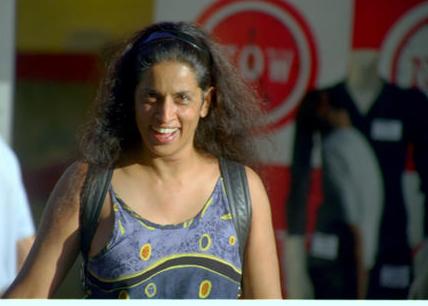
Remembering Saneeya Hussain

20 April 2007: It’s exactly two years ago that Saneeya Hussain left us.

Saneeya was a journalist who took a special interest in environment and human rights issues. All her working life, she campaigned tirelessly for a cleaner, safer and more equitable society for everyone — not just in her native Pakistan, but everywhere.

Ironically, it was the urban nightmare that we have collectively created that finally snatched her away at the prime of her career. She was 51.
saneeya-hussain.jpg

I first met Saneeya when we both worked for the same global organisation – IUCN, The World Conservation Union. She headed IUCN Pakistan’s Communication Division while I started a similar division for IUCN in Sri Lanka in the early 1990s. In fact, the trails she and her team had blazed in Pakistan was a model and inspiration for us.

In 1998, Saneeya moved to Cape Town in South Africa to work with the World Commission on Dams, an independent group of experts that had a tough mandate: consult widely to resolve the controversial issues associated with large dams. When the Commission held its South Asia consultations in Colombo, Sri Lanka, Saneeya approached us at TVE Asia Pacific to handle all the media relations.

It was while working in Cape Town that Saneeya met Luis Ferraz, a Brazilian geographer, whom she married later.

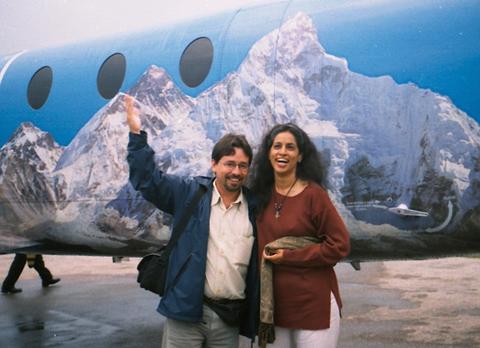
saneeya-and-luis-taking-an-everest-flight.jpg

In 2002, Saneeya became the Executive Director of Panos South Asia, a regional media organisation with its headquarters in Kathmandu, Nepal. As a Board member of Panos, I worked closely with Saneeya in a number of projects and activities.

Although everyone at Panos and in Kathmandu liked her, Saneeya’s stay there was cut short by what her successor at Panos, A S Panneerselvan, called her Siamese twin: asthma.

It was asthma that forced Saneeya to leave Nepal – and the Panos director’s job – as she just couldn’t cope with Kathmandu’s polluted air. As a fellow asthmatic, I fully empathised with her. She moved to Sao Paulo, where she set up what was to be her final home.

What happened in April 2005 has been written and discussed widely by Saneeya’s far-flung network of friends in the past two years. I can only reproduce the last few paras of a tribute I wrote in May 2005, which was privately circulated at the time:

When Saneeya suffered an acute attack of asthma in Sao Paulo on April 7, her husband Luis rushed her to hospital in his car. It was rush hour at 6.30 in the evening, and it took him 20 minutes to drive to the hospital only 2 kilometres away. Saneeya — who had walked to the car — stopped breathing five minutes into the journey. Luis drove as fast as the traffic would allow him, but as it turned out, not nearly fast enough.

Her brain suffered too much damage due to oxygen deprivation, and she never recovered.

As Luis was to remark later, it was not asthma but the traffic that killed Saneeya.

Similar tragic scenarios unfold on South Asia’s mean streets every day. Heart and stroke patients fail to reach help in time. Ambulences and fire engines, with their sirens blaring, only manage to proceed at a snail’s pace. It’s not uncommon for expectant mothers in labour to give birth on their way to hospitals. Then there is the slow, insidious poisoning that goes on 24/7.

So let us be forewarned. If the air pollution doesn’t get us, the traffic jams will. And if we survive both, our road accidents will wait for us. It’s only a matter of time.

Not one but several serial killers are out there.

And we unleashed them all.

beena-sarwar-left-and-saneeya-hussain-photo-courtesy-b-sarwar.jpg

Our mutual friend Beena Sarwar (in the photo above, with Saneeya) has made a 14-minute documentary called Celebrating Saneeya. It was screened at the 5th Karachi International Film Festival in December 2005.

See also my essay ‘Grappling with Asia’s Tsunami of the Air’ (December 2006).

All photos from Saneeya Yahoo Group that links her friends around the world.

Banned in the USA, Al Jazeera now online at YouTube

“The world’s first English language news channel to have its headquarters in the Middle East; covering the world, bridging cultures and setting the news agenda.”

That’s the marketing line of Al Jazeera International (AJI), launched on 15 November 2006.

It’s been slowly building up an audience, which it now claims to be around 90 million households.

But not in the United States of America: it was shut out of most American homes because cable companies have refused to carry their signal.

Elsewhere, commerce – not politics – was at play: some cable operators and hotels, already locked into various deals with the established global news channels of BBC World and CNN International, weren’t easily carrying AJI either.

Undeterred, AJI started this week to post some of their content on YouTube.

al-jazeera.jpg

Well, things are getting more interesting now!

When AJI started less than six months ago, I wrote an op ed published on Both Media Helping Media (UK) and MediaChannel.org (USA). I argued that to make a real difference, AJI needs to not only analyse and present the news differently, but also gather news more ethically in the developing countries of the global South.

BBC World and CNN International have an appalling track record of doing this. “They epitomise a disturbing belief in international news and current affairs journalism: the end justifies the means.”

I added: If products of child labour and blood diamonds are no longer internationally acceptable, neither should the world tolerate moving images whose origins are ethically suspect.”

I ended my essay: We will be watching. And not just what’s shown on AJI, but how those pictures get there.”>

Well, it’s now become easier to follow AJI. I still keep an open mind about their English channel, even if it shows every sign of aping the BBC and CNN. Already we need to look hard to find a real difference.

Let’s give them one year to prove if they mean what they say — or not.

Read my full essay on Media Helping Media, with some reader comments

Read the version that appeared on MediaChannel.org

Science journalism, key to good governance

From Sydney, I have travelled to Melbourne to participate in the Fifth World Conference of Science Journalists, from 16 to 20 April 2007.

It’s the second time a science communication event brings me to this beautiful, multi-cultural Australian city. My first visit was in November 1996 to speak at SCICOMM ’96, the Fourth International Conference on the Public Understanding of Science and Technology, held at the University of Melbourne.

This week’s conference is promising to be interesting and engaging. The programme is full of talks, panels, debates and other activities. Several hundred fellow science journalists, and those researching or supporting science journalism, are expected to attend.

I’ll be kept busy being on two separate panels.

5th-world-conference-0f-science-journalists.jpg

David Dickson, Director of the Science and Development Network (SciDev.Net), has just written an editorial that provides an excellent backdrop to the conference. He argues that the work of science journalists needs greater recognition as an essential precondition for transparent, responsive and accountable government.

Excerpts:

Much will be heard and discussed about how science journalists can inform — and, frequently, entertain — people with stories about scientific and technological developments. Equally important is their role in stimulating public debate in areas where science and technology can impact directly on the social and natural worlds, from stem cell research to global warming.

At the heart of many of these issues lies the key contribution that journalism can make to good governance. The concept of the journalist as a defender of the public interest is usually applied to those writing about overtly political issues, since it is here that the need for — and indeed the challenges to — a free press are often greatest.

But a growing number of political decisions, from allocating medical resources to promoting economic growth, have a scientific and technological dimension to them. It is therefore important to recognise the extent to which science journalism forms an essential component of a well-functioning democracy.
Read the full editorial on SciDev.Net website

Unfortunately, David is not able to join us in person — he’s holed up in London, finalising the organisation’s new five-year strategy.

Note:
I’m flying twin flags at this conference – as the Director of TVE Asia Pacific, and as a Trustee of SciDev.Net

I plan to be posting on to this personal blog as well as to a collective blog by several colleagues from SciDev.Net who are in Melbourne.