‘Toxic Trail’ continues its trail across Asia

mongkon-tianponkrang.jpg mongkon-tianponkrang-of-tef.jpg
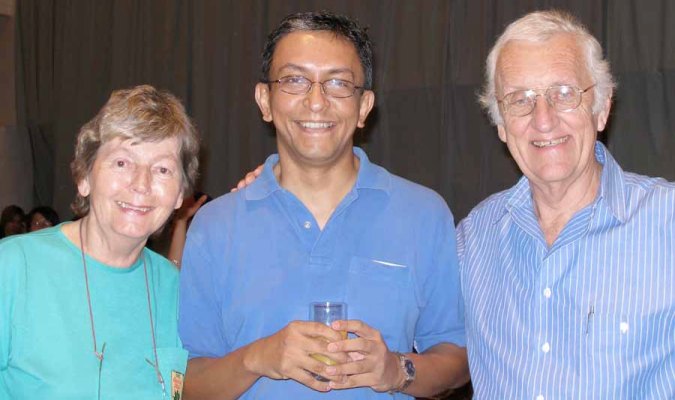
Meet Mongkon (Mong) Tianponkrang.

He is a Programme Coordinator with the Thai Education Foundation (TEF), a non-profit organisation working to improve education in Thailand at all levels, especially using non-formal methods.

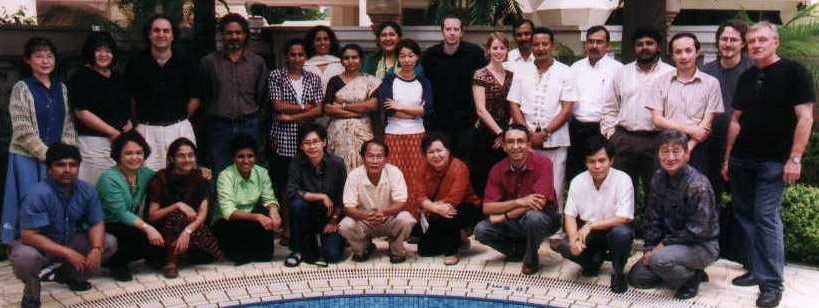
I met Mong earlier this month during our regional workshop on communication capacity building under TVE Asia Pacific‘s Saving the Planet project.

TEF’s School and Community Farmland Biodiversity Conservation project is one of six stories that was chosen from among dozens of public nominations to be featured in the Asian regional TV series we are working on, titled Saving the Planet.

Saving the Planet will feature remarkable initiatives from South and Southeast Asia by educational, civil society and community groups engaged in Education for Sustainable Development (ESD).

Mong was a live wire during our 5-day workshop in Khao Lak, Thailand. We encouraged everyone to share experiences in communicating with their respective audiences, using whatever communication methods and means (media or non-media).

At one point, Mong started describing how he and his team have been using a video film called Toxic Trail that takes a critical look at the use of pesticides in crop cultivation in Thailand and neighbouring countries.

He described how they’d found the film’s Thai version very useful in their work with farmers, housewives and other community members.

This was a fine coincidence: he didn’t know until then that we at TVE Asia Pacific had been involved in versioning Toxic Trails, originally produced in English, into half a dozen Asian languages including Thai. That was back in 2002.

Toxic Trail is a two part documentary that was produced in early 2001, directed by a long-time friend and colleague Janet Boston (who today heads the Thomson Foundation, which has a 40-year track record in training journalists in the developing world). It was first broadcast on BBC World in April 2001.


Image courtesy Community IPM website

It followed Russell Dilts, an expert working with the United Nations Food and Agriculture Organisation (FAO) as he investigated the pesticide industry in South East Asia. The trail begins in Thailand, moving to Cambodia and ending in Indonesia. The main focus, however, is on Cambodia, where Dilts uncovers major problems in the misuse of pesticides.

Dilts makes stark and horrifying findings: the mass use of pesticides is progressively destroying delicate local ecosystems, as well as causing many health problems to farmers and their families involved. Eventually, everybody is affected by consuming agricultural produce with high levels of pesticide residues.

Read TVEAP website feature on Toxic Trail (Aug 2002).

Read key issues raised by Toxic Trail films

Image courtesy Toxic Trail website

Interesting things happened following the release of Toxic Trail in 2001. First, the FAO came under intense pressure from pesticide companies for having supported an investigative film that probed the reality of product stewardship that these companies claimed existed.

Stated simply, Product Stewardship is when companies take the responsibility for their products. It includes the monitoring of the distribution of products with regard to choice of outlet and method of sale. Toxic Trail questioned how this concept was being practised in developing countries such as Thailand and Cambodia.

Clearly, the companies didn’t like what was disclosed with tangible, visual evidence. In the weeks that followed the film’s release, and its high profile broadcast on BBC World, at least three heads rolled at FAO’s Integrated Pest Management (IPM) programme for Asia.

But by then the genie was out of the bottle. The BBC broadcast may have been watched by a handful of officials, diplomats and businessmen who walk the corridors of power. But a much larger Asian audience was reached by our versioning the films into Bahasa Indonesia, Hindi, Khmer, Mandarin, Sinhala and Thai — which, between them, are spoken by close to two billion people. These versions have been broadcast and narrowcast through numerous outlets ever since.

And as Mong reminded us earlier this month, the films are still in good use, several years after their production and versioning.

One clear lesson: it’s not just enough to produce a good TV film. How much it is seen and used depends on the amount of promotion, local adaptation and subsidised or free distribution that goes with it.

In the case of Toxic Trail, there was a network of promoters for IPM and sustainable agriculture who picked it up and ran with it — and continue to spread the word.

Meanwhile, we should be releasing more such ‘genies’ out of their bottles…

Visit Community IPM website

Look up more online resources on integrated pest management

Photos of Mongkon Tianponkrang by Indika Wanniarachchi of TVEAP
Other images courtesy Toxic Trail website

Pay-back time for film-makers: Go back to your locations!

“These days it’s simply not good enough to use the old response… “If people know about it they’ll care for it and do something”. Wrong. They’ll just go on being conned that it’s all perfect out there, with endless jungles, immaculate Masai Maras, and untouched oceans. What planet are they on about?”

These words come from Richard Brock, one of the world’s leading and most senior natural history film makers.

If you haven’t heard his name, chances are that you know at least some of his many creations: he worked in the BBC Natural History Unit producing, among others, the highly successful Life on Earth and Living Planet series presented by David Attenborough.

Image courtesy The Brock Initiative Image courtesy Brock Initiative

The BBC Natural History Unit (NHU) is a department of the BBC dedicated to making TV and radio programmes with a natural history or wildlife theme, especially nature documentaries. It celebrates 50 years in 2007.

Richard Brock worked with them for 35 of those 50 years. He left them a few years ago, according to his own website, ”concerned by the lack of willingness to address the real current state of the environment”.

He then started his own independent production company, Living Planet Productions, which has made over 100 films on a wide range of environmental topics, shown all over the world. As his archive of films and footage mounted up, Richard felt that there was something more, better, that could be done with this resource.

“We’ve been celebrating nature by bringing its wonders to the TV screen all over the world. Now that world is changing, faster and faster, and nature needs help. Films can do that, at a local level, be it with decision-makers in the government or in the village,” he says.

He adds: “When you consider the miles of footage and thousands of programs sitting in vaults out there unused, it seems tragic that the very wonders they celebrate are dwindling, often because no one tells the locals and tries to help. That is why I believe its Payback Time for the wildlife television.”

Thus the Brock Initiative was born. To quote from their website:
“He decided to set up the Brock Initiative, to use his archive of footage, and to ask others to do the same, to create new programs, not made for a general TV audience, but made for those who are really connected to the situation in hand: local communities, decision makers, even that one fisherman who uses dynamite fishing over that one coral reef. Its about reaching those who have a direct impact; reaching those who can make the difference.”

As he emphatically says: “Showing the truth on some minority channel is not the answer. Showing it where it counts, is.”

Image courtesy The Brock Initiative

I hope those development donors and corporate sponsors, who try to outdo each other in supporting programming going out on BBC World (an elite minority channel in most markets) hear people like Richard Brock — long-time BBC insiders who know what they are talking about.

Those who make documentaries on wildlife, natural history or environment (and wild-life of humans) are trapped in their industry’s many contradictions. They go on location filming to the far corners of the planet, capturing ecosystems, species and natural phenomena. Yet for a long time, many have avoided talking about or featuring the one species that has the biggest impact on Nature: Homo sapiens (that’s us!).

Whole series of wildlife documentaries have been made, by leading broadcasters and production houses of the east and west, without once showing a human being or human activity in them. Almost as if humans would ‘contaminate’ pristine Nature!

In recent years, more film-makers have broken ranks and started acknowledging the human footprint on the planet and its environment. But a good many documentaries are still made with ‘pure’ wildlife content, with not a thought spared on the wild-life of our species.

Richard Brock is one who has refused to follow the flock. And he has also punctured the highly inflated claims — promoted by BBC Worlds of this planet — that broadcast television can fix the world’s problems.

As we have found out here in Asia, it’s a judicious combination of broadcast and narrowcast that can work – and we still need the participation of teachers, activists and trainers to get people to think and act differently.

At their best, broadcasts can only flag an issue or concern to a large number of people. For attitudes and behaviour to change, that needs to be followed up by narrowcast engagement at small group levels.

Taking films to the grassroots need not be expensive, says Brock. In fact it can be done inexpensively.

These are not programmes for broadcast to western audiences demanding BIG productions – you are often showing films to people who have never even seen TV. The effort comes in showing the right thing, to the right people, in the right way, and not about expensive effects, top quality cameras or cutting edge effects.”

Using donated archive footage cuts costs dramatically. New footage, important for putting a film in a local context, can be taken on small miniDV cameras and editing can be done on any home computer. In this way, it becomes feasible to put together a film even for a very small, but crucial audience.

The Brock Initiative, started and funded by donations from its founder, has projects in Kenya, Madagascar, Tanzania, the UK and Indonesia.

Read more about the Indonesia project

They also offer wildlife and nature footage free to those who want to use moving images to make a difference.

Read Richard Brock’s formula for making films that make a difference!

As our species’ wild-life pushes our living planet closer to peril, we need many more Richard Brocks to try and reverse disturbing trends at the edges of survival — almost all of them in the global South.

It’s pay-back time, film-makers!

Related blog posts:
End this callous waste – open up broadcast archives for combating poverty and ignorance

Lawyers who locked up the butterfly tree

Anita Roddick, Angkor Wat and the Development Pill

Contact The Brock Initiative

The lawyers who locked up the Butterfly Tree

nalaka-with-neil-and-brenda-curry-at-jwf-2005-awards-night-aug-2005.jpg
This photo was taken in August 2005 in Toyama, Japan, which is some 200km east of Tokyo. The occasion was during the Japan Wildlife Film Festival, held in Toyama every other summer since 1993.

I am seen with Brenda and Neil Curry, my film-maker friends from South Africa. That was a memorable night for Neil, whose remarkable film, The Elephant, the Emperor and the Butterfly Tree, won the festival’s highest award.

The 50-min film captures the delicate relationship between the elephant, the Emperor Moth and the Mopane Tree (scientific name: Colophospermum mopane). It was produced by Oxford Scientific Films for BBC Natural World, bringing together the creative talents of Neil Curry, Alastair and Mark MacEwen, and Sean Morris.

Here’s the full official synopsis of the film:
Mopane woodland has been symbolic of African bush for centuries but its ecology is often misunderstood. Its importance to the fragile ecosystem is paramount. In this programme we show the delicate relationship between the elephant, the emperor moth and the incredible mopane tree. We also show the vital impact this ecosystem has on a local family who depend upon the delicious harvest of mopane worms to supplement their diet, and the precious resources the mopane tree provides in order to survive in the mopane woodland of Botswana.

Foreign delegates, staff and volunteers of JWF2005 Neil Curry accepting the Best of JWF2005 award on behalf of his team

I was in Toyama as a guest speaker, talking about TVE Asia Pacific‘s Children of Tsunami media project, which was then in progress.

Brenda and Neil, originally from the UK, now live in wine country off Cape Town. Neil is the quintessential natural history film-maker: meticulous in his approach to a story, passionate in what he covers, and with tons of patience.

Most natural history film-makers go for animal subjects. It’s much harder to do an interesting film about a plant or tree that stays in one place and does not have an annual breeding cycle like animals.

That’s just one of many reasons why The Elephant, the Emperor and the Butterfly Tree is outstanding. It tells a complex story of an ecosystem that is inter-dependent and in balance.

The film, made in 2004, also won the top award at WildScreen (Bristol, UK), considered to be the oscar awards in wildlife and natural history film-making.

A stand of Mopane laden with seed pods - image courtesy Africa Hunter Image courtesy Tourism Botswana

Now here’s the rest of the story, which is not as upbeat. Neil spent many months in Botswana filming this story, and wanted to take the finished film back to the communities where it was shot. The wildlife parks and schools in the area, he knew, could make good use of the film to educate the local kids, adults and visitors.

What would be simpler than that? Get a VHS or DVD copy and pass it on to them, right?

Wrong. When I met Neil in the summer of 2005, it was more than 18 months since the film was made. For much of that time, he had been trying to obtain permission from the BBC to share a non-broadcast copy of his film with the people in Botswana. His request was passed from person to person, and from division to division, with no clear decision made, and no permission granted.

The BBC had invested funds in making the film, and had a legal right to decide how and where it was to be used. Focused on ‘revenue optimisation’ and ‘returns on investment’, its bean-counters could not care less whether the film-maker wished to share his creation with the local people whose reality he had captured.

This is not an isolated incident. In fact, it is alarmingly wide-spread: every year, excellent environmental documentaries and development films are produced, most of them using public funds (who pays the BBC license fee? The British public!). Yet these films are locked up in complex copyrights that prevent them from being used by anyone outside broadcast circles.

As I said in my recent speech to Asia Media Summit 2007:
Even where the film-makers or producers themselves are keen for their creations to be used beyond broadcasts, the copyright policies stand in the way. In large broadcast organisations, it is lawyers and accountants –- not journalists or producers -– who now seem to decide on what kind of content is produced, and how it is distributed under what restrictions.

I don’t know if Neil Curry ever cleared the rights to screen the film to small groups of people in Botswana or elsewhere in Africa. But I think of this every time BBC World cries its heart out for the poor and suffering in Africa.

This is one global broadcaster that does not put its money where its mouth is.

In fact, the BBC’s accountants must be laughing all the way to their bank.

Read my related posts: End this callous waste: Open up broadcast archives for combating poverty and ignorance!

Public funds, private rights: Big mismatch in development film-making

27 July 2007 – Neil Curry responds to my views on optimum duration of natural history documentaries

End this callous waste…open up broadcast archives for combating poverty and ignorance!

Image courtesy Boeing

This is the new Boeing 787 aircraft that was unveiled a few days ago — described as more fuel-efficient, and therefore more climate friendly. Not to mention being a more comfortable plane to fly on.

Now just imagine if one of these new aircraft were to be used for a single return flight — let’s say Singapore to London and back — and then relegating it to a hanger for the rest of its lifetime!

What a callous waste that would be. Now who would do that, and will that be tolerated?

Yet something like this happens in the moving images industry quite frequently….and not too many seem to be bothered.

Every year, many new TV films and documentaries are produced with considerable investment of time, effort and money. After one or few broadcasts, they are confined to broadcast archives. Trapped in copyright restrictions, they languish there even though they can be a vital resource for teachers, students, civil society groups and trainers worldwide.

To me, this is as much a criminal waste as throwing away a Jumbo jet after a single journey.

In fact, I’ve been writing and talking about it whenever I can. Here’s an extract from my speech to Asia Media Summit 2007 held in late May 2007 in Kuala Lumpur:

Every year, excellent TV programmes are made on different development topics. Public and private funds are spent in making these programmes, which draw in the creativity and hard work of committed professionals.

Many channels broadcast these programmes. They are typically aired a few times and then end up in the archives. Few may be exploited for their multimedia potential.

Yet many of these programmes have a longer shelf-life – and outside the broadcast sphere. They can be extremely useful in education, awareness raising, advocacy and training.

Alas, copyrights restrictions are often too tight for that to happen. Even where the film-makers or producers themselves are keen for their creations to be used beyond broadcasts, the copyright policies stand in the way. In large broadcast organisations, it is lawyers and accountants –- not journalists or producers -– who now seem to decide on what kind of content is produced, and how it is distributed under what restrictions.

Read the full text of my speech here

copy-of-copy-of-ams-ad2-low-res.jpg copy-of-copy-of-ams-ad2-low-res.jpg

This is why we at TVE Asia Pacific have been calling for poverty and development to be recognised as a copyrights-free zone. So that the crushing (and completely meaningless) grip of copyrights can be loosened up.

I first made this proposal in mid 2006, in an op ed essay published online at MediaChannel.org. I then reiterated it at the UN Headquarters in New York in September 2006, when addressing the 59th annual UN NGO Conference.

The idea has been well received in education and civil society circles. But predictably enough, the broadcast community itself has been less enthusiastic.

We just have to keep on at it.

Mine is shorter than yours…yipeee!

In the topsy turvy media world, ‘conventional wisdom’ about film-making is being rapidly undone by the march of what is now known as ‘Digital Natives‘ — those currently under 30 years, who have grown up taking Internet, mobile phones and video games completely for granted.

These Digital Natives are not inclined to watch long duration documentaries. Five minutes is about right. With effort, we can get them to sit through an offering of 10 to 15 minutes. Half an hour is ‘really long’. One hour or 90 minute films — just forget it.

The sooner we face up to this reality, the better. We may not like it, but it’s not the end of the world.

In fact, it challenges us in the media to strive for greater economy of words and time.

As anyone who has worked in television news will confirm, it is indeed possible to tell a story in 100 seconds, if we package it well and carefully. Purists might call it dumbing down of television. Pragmatists would see it as customising to suit new audience realities. I go along with the latter view.

TVE Asia Pacific is not a broadcaster on its own. We produce and distribute content to over three dozen TV channels and networks spread across the Asia Pacific, now home to the world’s largest television audience. It’s through these ‘Emperors of Eyeballs’ (as I like to call them!) that we reach out.

Our broadcast partners have a good idea what their audiences want. Channel after channel tells us that the preference is for shorter, more compact programming. It would be naive to ignore this feedback and market intelligence.

The truth is: we can communicate ‘serious’ content — as long as the packaging and duration are to suit the audience realities.
That’s why TVE Asia Pacific’s recent productions have mostly followed the 5 minute format: we begin, tell and end a self-contained story in just 300 seconds.

Our recent series are examples: The Greenbelt Reports, Digits4Change and Living Labs.

The Greenbelt Reports by TVE Asia Pacific

And that’s a lot of time on screen. We have covered complex issues in exactly five minutes: for example, combating soil salinity with low cost methods; building ‘bio-shields’ of mangroves against the sea’s ravages; and using webcams and satellite links for tele-health.

These and other films continue to be broadcast and used in a range of education, advocacy and awareness efforts across the Asia Pacific and beyond.

No one has really complained about them being too short — except for some film-makers. Some have dismissed our efforts as ‘tabloid television’ and ‘not really documentaries’.

We remain unaffected. We do produce half hour documentaries from time to time, for specific purposes and defined audiences. But to ignore the mass audience trends would be to box ourselves into a tiny part of the audio-visual landscape.

We now know it is much harder to produce shorter films than longer ones. The challenge is to distill and compress without oversimplification or distortion.

So the sooner film-makers get over their obsession with length, the better. It’s not the duration of a film that matters most; it’s how a story is told. Some of the best stories are also the shortest.

To cite my favourite example from the print world, Ernest Hemingway once bet his friends 10 dollars that he could write a self-contained, full story in less then 10 words. He produced what is still considered the world’s shortest short story:
“For sale.
Baby shoes.
Never worn.”

It’s hard to beat that one for its amazing economy of words and sheer power of story telling.

How short is short today? Read leading wildlife film-maker Neil Curry’s views in my post on 27 July 2007

Read my post: Moving images move heart first, mind next

Read my post: Can you make a one-minute film for a better planet?

Joey R B Lozano: The legacy continues…at Silverdocs

I met Joey R B Lozano only once, but he left a deep impression.

A small-made man with passionate zeal and tons of energy, he was every inch an activist-journalist-campaigner. We had invited him to a regional workshop of factual video producing and distributing partners from across Asia that we held in Singapore in November 2002.

We hadn’t worked with Joey earlier. He came recommended by our international partner Witness, which uses video-based advocacy and activism for promoting and safeguarding human rights worldwide.

Joey R B Lozano Joey R B Lozano Joey R B Lozano

Joey used his personal video camera to assert indigenous land rights, and to investigate corruption and environmental degradation in his native Philippines. Joey was an independent human rights activist and also one of the country’s leading investigative reporters.

He freelanced for the Philippine Daily Inquirer, covering Indigenous peoples’ rights and the environment, considered the two most dangerous beats in the Philippines. But years earlier, he had moved out of the capital Manila, and committed his life and career to stories and issues at the grassroots that many of his city-based colleagues had no time or patience in covering on an on-going basis.

Trained as a print journalist, Joey mastered new media and technologies whose potential he quickly realised. He moved into television and video media with ease, and later became an active blogger.

Joey’s TV investigations began in 1986, when he helped ABC’s 20/20 to uncover the “Tasaday hoax”, a highly successful fraud to pass off local tribespeople as a newly discovered Stone Age culture.

He soon embarked on his own investigations and started digging into illegal logging, gold mining and land-grabbing. In turn, his exposes quickly earned him repeated assassination and abduction attempts, in a country that is one of the more dangerous places to practice journalism.

When he came to Singapore, Joey had recently ‘starred’ in a major Canadian documentary titled Seeing is Believing: Human Rights, Handicams and The News, which looked at how committed, passionate individuals were using new communication technologies to change the world.

participants-at-tveap-partner-workshop-singapore-nov-2002.jpg

Photo of Singapore TVEAP workshop participants: Joey Lozano is 6th from left on the frontmost row

Follow Seeing is Believing storyboard on the film’s website

We screened the film, made by Katerina Cizek and Peter Wintonick, and heard first hand from Joey on what his struggles entailed. The film followed Joey as he delivers a new “Witness” donated video camera to Nakamata, a coalition of Indigenous groups in Central Bukidnon. Together, Nakamata and Joey begin documenting a dangerous land claims struggle, and it doesn’t take long for tragedy to unfold in front of the camera.

Watching the film and then listening to Joey — and his Witness colleague Sam Gregory — describe the on-going struggle, was one highlight of our week-long workshop. Some of us saw in Joey the activist-campaigner that we wanted to be, but were too scared or too polite to really become.

Not everyone shared that view. The cynicism — sometimes bordering on disdain — of a fellow Filipino from Metro Manila was palpable. No wonder Joey moved away from the city.

We at TVE Asia Pacific were extremely keen to distribute Seeing is Believing, for it held such a powerful and relevant message for our region, but it was not to be. Our enquiries showed that like most documentaries, it was tied up in too many copyrights restrictions and commercial distribution deals.

Following the Singapore workshop, I did keep a watchful eye on what Joey Lozano was up to. The film’s website provided occasional updates, and sometimes blog posts from Joey himself.

Our paths never crossed again. Almost three years after our single encounter came the news that Joey had passed away. It wasn’t the assorted goons who hated his guts that finally got him. His own body turned against him.

His tribute on the film’s website started as follows:

Joey Lozano defied the odds. For three decades, he survived dangerous missions to defend human rights using his video camera, in the Philippines, a country that ranks high, year after year, for most journalists killed. Joey went into hiding numerous times, and he dodged two assassination attempts. Once, bullets whizzed past his ear as he made his escape on motorbike.
But Joey couldn’t beat the odds of cancer. He died in his sleep on September 16, 2005 – at home and surrounded by his family.

Joey R B Lozano - image courtesy Seeing is Believing

The spirit and legacy of Joey R B Lozano live on. He inspired a large number of journalists and activists to stand up for what is right and just — and to be smart about it in using modern information and communication technologies, or ICTs.

Joey and other Witness activists were pioneers in different parts of the world who turned handicams away from weddings and birthday parties to capture less cheerful sights and sounds the world must see — and then act on. They were at it years before mobile phone cameras, YouTube and user-generated content in the mainstream media.

And now, Witness has established an award at the Silverdocs film festival. The WITNESS Award in Memory of Joey R.B. Lozano will be awarded to the qualifying SILVERDOCS filmmaker of a feature-length film who has produced a well-crafted and compelling documentary about a human rights violation or social justice issue. The winning filmmaker will also have a thoughtful, creative, and feasible outreach plan to use their film as a tool to raise awareness of the human rights or social justice issue explored in the film with a goal to bring about change.

The inaugural award was announced on June 17 — and has been won by “The Devil Came on Horseback” by Annie Sundberg and Ricki Stern.

Joey was a Witness partner and board member. He co-produced many films and collaborated on others that helped raise awareness about threats to indigenous people’s rights in the Philippines from corporations, and the complicity of the government in the abuses. Witness was founded in 1991 by musician peter Gabriel and the Lawyer’s Committee for Human Rights to put new technologies into the hands of local activists around the world.

Joey R B Lozano with his handycam

Read International Wildlife May 1999: Why Joey Lozano Is A Marked Man – investigative reporter works for the environment

Read about and watch Rule of the Gun in Sugarland

Public funds, private rights: Big mismatch in Development film making

After over a decade of extensive networking with environment, wildlife and development film-makers across the Asia Pacific, I have yet to come across a single film-maker who had a ‘sufficient’ budget to make their films or TV programmes.

All the film-makers I know — and that’s several dozen — wish they had a bigger budget to do a better film. At an individual professional’s level, that’s perfectly fine. But collectively, there just isn’t enough money to go around.

And to make matters worse, the number of film-makers keeps growing faster than how available funds expand. In fact, in real terms, the volume of funding to make development films has been shrinking. That’s another story.

In most parts of developing Asia, broadcasters don’t invest much — or any — funds in productions of development films. So independent film-makers, and sometimes even producers within TV stations, have to raise that money from elsewhere.

They turn to development donors, UN agencies, philanthropic foundations, corporate sponsors and even private individuals. They have to beg, borrow – but hopefully, not steal – to create content that is of public interest and educational value.

It’s a constant struggle, but when we get things right, the social benefits can be high.

But there’s one aspect in this whole endeavour that has not received sufficient attention for too long: what happens to the copyrights of such creations?

Development donors manage funds that have originally come from tax payers in industrialised countries — in other words, public funds. When public funds are invested in creating what are meant to be public goods, such goods must remain available and accessible without restriction.

But that’s where things often go wrong.

Public (donor) funds are used to finance the production of development films, yet neither their funders nor commissioners clarify the rights situation to ensure the widest possible public access to the film/s. An individual film-maker or production company takes advantage of this lack of clarity to appropriate the sole copyright, and starts restricting public access to the film/s by locking into exclusive arrangements.

The very purpose of investing public/donor funds in the film’s production is thus defeated.

I have seen this scenario repeat dozens of times across Asia and elsewhere. Usually it involves development donor officials or UN agencies whose media knowledge is rather limited, and whose commitment to the public domain is not always sincere.

It is a contradiction to have full control of copyrights vested in private individuals when films or TV programmes have been fully funded using public funds. To the best of my understand of the public interest, that is just not right.

This is why I keep raising it at every available opportunity. At Asia Media Summit in Kuala Lumpur yesterday, I touched on this in my speech during the panel on ‘mobilising airwaves against poverty’. I said:

522445368_8a10a4f2fa.jpg

I call upon development donors to insist that all development films and other media products they finance -– with tax-payer money – will have no copyright restrictions attached.

I hope the UN agencies will also take note. Perhaps inadvertently, they often get locked into exclusive rights arrangements with single production companies or broadcasters. This should be avoided.

I am proud to announce that all international TV content produced by TVE Asia Pacific is available to broadcast, civil society and educational users anywhere in the world without any license fees or copyright restrictions. We do practise what we preach.

And let us all consider alternative approaches to managing intellectual property — such as the Creative Commons framework now gaining acceptance.

In my virew, there are at least four possible options for handling the rights of a publicly-funded film or other media product:

1. Keep the rights entirely unrestricted (copyleft), allowing unlimited commercial and non-commercial uses of the work.

2. Share the rights equally between the film-maker and the party commissioning (and financing) the film, so that both parties may pursue distribution and promotion in ways they think fit, keeping each other informed if need be, but not having to seek each other’s permission for it.

3. Reserving all rights in the party commissioning (and financing) the film, leaving none of it to the film-maker.

4. Conceding all rights to the film-maker, allowing him/her the full discretion and choice on how rights are managed (or restricted). This is as good as sending the film into a ‘black hole’ from which it may never emerge again.

We don’t advocate option 3, because we respect the right of creative professionals to be acknowledged for their work, and to share the intellectual property (many UN agencies do this, and we don’t think that is healthy or warranted).

We have been applying option 2 in all content we commission from TVE Asia Pacific, and are now actively considering option 1 as well. This is because all our films are made using public (donor), foundation or corporate funds given to us in trust. That must be reflected in the rights regime we apply on the products.

And we never allow ourselves to get locked into a single broadcaster’s copyrights regime.

This is clearly a debate that must gain momentum.

Investing public funds to create privately-held copyrights is just not right.

Photo courtesy Justine Chew, GKPS

Saving the Planet, one tiny step at a time

A youth theatre group that tours the Philippines, engaging small groups on history, culture and development.

A public radio station that takes up development issues through on air reporting and discussions in Nepal’s Kathmandu valley.

A project that brings together Thai school children and farmers to study and understand farmland biodiversity.

These are among the winning projects that have just been selected to be featured in TVE Asia Pacific’s new regional TV series, Saving the Planet.

Six projects or activities – each addressing an aspect of education for sustainable development (ESD) – have been chosen from worldwide public nominations.

saving-the-planet-logo.jpg

Click here for full list of competition winners.

Read TVEAP news story announcing the winners.

I was part of the International selection panel that sifted through dozens of public nominations from all over the world. Reading these was an inspiring experience. In a world that is full of doom and gloom type of news, there still are individuals, groups and communities who are doing their bit to live within our planet’s means….that’s what sustainable development is all about.

The joint statement by the selection panel noted: “The selection panel was impressed by the breadth and scope of nominated activities, which indicates that all across developing Asia, there is an upsurge of concern and commitment to living within the planet’s resources.”

Read the full statement by selection panel

I have always held that governments or scientists can’t save the planet – people can. In the final analysis, all the inter-governmental babble and scientific research are means to an end. Unless people change their attitudes and lifestyles, all that governments or science can do is to buy us more time — which will run out sooner or later.

In Saving the Planet, we are going to showcase some Asian communities and groups who are not just walking the talk themselves, but showing others how to do it as well.

The new TV series will go into production by July, and will be released next year. Watch this space.

Outsourcing with a heart: Cambodia’s success story

Today, 16 May 2007, was observed worldwide as World Information Society Day – it marks the establishment of the International Telecommunications Union (ITU) in 1865 and used to be called the World Telecommunication Day.

The UN-sponsored day was dedicated this year to making available the benefits of the digital revolution to young people everywhere. As the ITU noted in its media release:

The World Summit on the Information Society (WSIS) recognized the young as the future workforce and the earliest adopters of ICT, and called for their empowerment as key contributors to building an inclusive Information Society. World leaders stated their commitment at the Summit in Tunis to actively engage youth in innovative ICT-based development programmes and widen opportunities for them.

Yesterday I wrote about a TV service in Pasadena, California, outsourcing some of its reporting work to journalists in India.

Outsourcing is a worldwide trend, fuelled by the rolling out of Internet access and encouraged – at least in part – by the lower salaries that equally skilled persons still command in the less developed parts of the world. So much has been written and spoken about outsourcing in the IT industry, which has created multi-million dollar businesses in recipient countries such as India.

The outsourcing industry employs tens of thousands of young women and men in developing countries, especially in Asia, which receive the outsourced work. Most of them are from urban backgrounds with English-speaking ability and reasonable levels of education.

But this business-driven process can also benefit young people who haven’t had such advantages in life.

digits4change.jpg

A story in TVE Asia Pacific’s Digits4Change series illustrates this potential. It came from Cambodia, and we called it Compassionate Data.

digits4change-tv-series-cambodia.jpg

We went to Cambodia in late 2005 to find out how business process outsourcing (BPO) is benefiting one of the poorest countries in the world.

Emerging from decades of conflict, Cambodians are now trying to find their place in the global village. But lacking in English and computer skills, many find their opportunities limited.

Digital Divide Data is a non-profit organisation run like a business. Started in 2001, they outsource data processing work from the west.

As the world goes digital, thousands of old, paper-based documents need to be digitised. These tasks take time, effort and quality control. Digital Divide Data (DDD) provides this value added service.

Among its clients are universities, companies and organisations in North America.

But what’s special about DDD is their staff. They employ young men and women from disadvantaged backgrounds – orphans, those with disabilities, or from very poor, rural backgrounds. A few have been trafficked for the sex trade.

Sith Sophary Nhev, DDD’s then Cambodia manager told us: “Many companies outsource this kind of service to international clients by using educated and skillful people, but DDD use disadvantaged people who have low skill and low education but we still provide like a good service, quality, time turnaround and a competitive price for the clients.”

Young people come to DDD with a basic education and virtually no skills. The company trains them in computers and English. In fact, all staff are required to continue their education. The company provides scholarships – and pays them an above average salary.

In the hard-nosed ICT industry that’s usually driven by financial bottomlines, DDD has demonstrated that it is indeed possible to do well and do good at the same time. They are a social enterprise, a growing trend worldwide.

digits4change-compassionate-data.jpg

[

]

Watch the full story on TVEAP’s YouTube Channel

Digits4Change TV series website

Digital Divide Data website

When will the next David Attenborough show up?

David Attenborough has done more to bring Nature and wildlife to the world’s television audiences than anybody else in the past half century.

Growing up in teh 1980s, I watched his pioneering series Life on Earth (1979) and The Living Planet. These series redefined how natural history documentaries were made, and inspired a whole new generation of film-makers and nature lovers.

Sir David Attenborough

Attenborough went on to make several more trail-blazing series, such as The Trials of Life (1990), The Life of Birds (1998) and The Life of Mammals (2002).

He has also produced a large number of stand-alone documentaries, and narrated an astonishing number of films and series, including the multi-award-winning Blue Planet (2001) and Planet Earth (2006).

Image courtesy Wikipedia Image courtesy Wikipedia Image courtesy Wikipedia

I have always been grateful for his inspiration. But Sir David earned my eternal respect when I read in his biography how he had given up British broadcasting’s most coveted post so he could concentrate on what he did best: making natural history films. From 1969 to 1972, he was BBC Television’s Director of Programmes (making him responsible overall for both BBC1 and BBC2), but turned down the offer to become Director General of the BBC. In 1972, he resigned his post and returned to programme making.

I recently came across the following news item, which reminds us that like all creatures big and small in the great Circle of Life that Sir David has so avidly told us about, he too is mortal. At 81, it’s time for the world to look for the next David Attenborough.

This item is from the latest newsletter of Film-makers for Conservation, a network organisation where my company, TVE Asia Pacific, has recently become a member.

New reality TV show to discover the next Attenborough

Join wildlife filmmaking finalist Bryan Grayson as he talks about his journey from engineer to wildlife film maker and discusses his hopes of being the next David Attenborough

David Attenborough, David Bellamy and Steve Irwin. All great men who have brought the wonder of nature to our front rooms. They have worked in some of the worlds most amazing and dangerous locations to show us the beauty, innocence and sometimes savagery of the animal kingdom.

Imagine filming rhinos in Africa, whales in the South Pacific or being within an arms reach of gorillas in the rainforest. Well now a unique new television project will follow six contestants as they embark on a demanding training course at the award-winning Shamwari Game Reserve in South Africa, where they will learn the essential skills and realities of creating a natural history documentary.

Thousands of people entered Animal Planet’s search for amateur film-makers to take part in a once-in-a-lifetime intensive filmmaking course with experts Andrew Barron and Lyndal Davies. The entrants, from across the globe, were filtered down to a final six and Bryon Grayson is the only UK finalist.

But exactly how do you cope with filming a charging herd of wildebeest, learn to track an elusive leopard and deal with stroppy presenters!? Here with the answers is the UK’s contestant, Bryan Grayson. He joins us to share some of his tricks of the trade and offers his advice to all other budding filmmakers.

Bryan Grayson joins us online at http://www.webchats.tv/webchat.php?ID=372 to discuss his hopes for being Animal Planet’s Unearthed wildlife filmmaker after taking part in this remarkable series.

Do you think you have what it takes to be a wildlife filmmaker? Enter here for your chance to appear in series two of UNEARTHED

Watch Unearthed promo video on Google Video

TVE Asia Pacific joins Film-makers for Conservation