When Worlds Collide #82: Anita Roddick: Mixing activism, business and compassion

Nalaka Gunawardene's avatarWhen Worlds Collide, by Nalaka Gunawardene

Text of my ‘When Worlds Collide’ column published in Ceylon Today Sunday broadsheet newspaper on 8 September 2013

“Remember me!”

With those words — and with a mischievous smile — entrepreneur and activist Anita Roddick (1942 – 2007) once autographed a book for me.

You’re hard to forget, I told her. Indeed, the maverick founder of The Body Shop is one of the most unforgettable persons I have met in a quarter century of global travels.

Our two close encounters — a dozen years apart, and on two continents – are among my precious memories.

When Anita died six years ago this week, aged 64, media obituaries described her as one of the world’s most successful women entrepreneurs and also as the ‘Queen of Green’.

She was much more than just green. We remember her as a formidable one-woman cheering squad for a range of social, humanitarian and environmental…

View original post 1,174 more words

සිවුමංසල කොලූගැටයා #133: සේනක බිබිලේ ගිය මගෙහි ඉදිරියට යන්නේ කෙසේ ද?

In early August, Sri Lanka stopped the import of milk from New Zealand after discovering trace amounts of dicyanamide (DCD) a fertilizer additive, in four batches of milk sold by several firms. Concerns were also expressed on the presence of whey protein, a natural byproduct in cheese production.

After nearly a month of confusion and panic, the government now says it “probably overreacted” in its response to stories of contamination in milk powder imported from New Zealand.

Ensuring food safety is vital, and constant vigilance is needed – both on imported as well as locally produced food and beverages.  What is the role of medical doctors and other scientifically trained professionals in such vital debates on public health and safety? How best can they conduct themselves in contentious policy issues with broad implications?

I discuss this in my latest Ravaya column (in Sinhala). Similar ground was covered in my English column (but this is NOT a translation): 1 Sep 2013: When Worlds Collide #81: Who Added Conspiracy to Our Milk?

Cow jumped over the moon
කිරිපිටි ප‍්‍රශ්නයේදී රජයේ ප‍්‍රතිචාරය ‘අවශ්‍ය පමණට වඩා වැඩි වූ බව’ (probably over-reacted) යයි මාධ්‍ය ඇමතිවරයා 2013 අගෝස්තු 30 වනදා ප‍්‍රවෘත්ති සාකච්ඡුාවකදී පැවසුවා.

විශෙෂයෙන් ම තාක්‍ෂණික කරුණු ගැන රජය උමනාවට වඩා කලබල වූ බව ඔහුගේ මතය වුණා. එහෙත් පාරිභෝගිකයන් රැක ගැනීම සඳහා වඩාත් ප‍්‍රවේශම්කාරී වීම රජයක වගකීමක් බවත් ඔහු කියා තිබුණා.

කිරිපිටි ප‍්‍රශ්නය සංකේතවත් කළෙ එන්න එන්න ම තාක්‍ෂණික පදනමක් මත ප‍්‍රතිපත්තිමය තීරණ ගන්නට හා නියාමනය කිරීම් කරන්නට දේශපාලකයන්ටත්, රාජ්‍ය පරිපාලන නිලධාරීන්ටත් සිදු වීමේ නූතන යථාර්ථයයි.

මෙබඳු අවස්ථාවල විශෙෂඥ දැනුම ඇති විද්වතුන්ගේ උපදෙස් හා මග පෙන්වීම ප‍්‍රතිපත්ති සම්පාදකයන්ට අවශ්‍යයි. එය ගවේෂණාත්මකව, සත්‍යවාදීව හා අපක්‍ෂපාතිව ලබාදීම විද්වතුන්ගේ වගකීමයි. එහෙත් එසේ කිරීමේදී තමන්ගේ මතවාදයන් ප‍්‍රබල ලෙස එයට එකතු කිරීමෙන් සමහර විද්වතුන් ප‍්‍රශ්න ව්‍යාකූල කිරීමටත්, ජනමතය අවුල් කොට සමාජය කලබල කරන්නටත් (panic) දායක වූ බව අපට පෙනී ගියා.

කැමති  ඕනෑ ම දේශපාලන, සාමයික හා අනෙකුත් විශ්වාසයක් හෝ ස්ථාවරයක් ගැනීමේ පුද්ගල නිදහස ඇති සමාජයක් තුළ උගතුන් හා බුද්ධිමතුන් පොදු උන්නතිය සඳහා කෙසේ කි‍්‍රයාකාරි විය යුතු ද? විද්‍යාවේ නාමයෙන් විග‍්‍රහයන් කරන විට හා විද්වත් මට්ටමේ බලපෑම් කරන විට තමන්ගේ මතවාදයන් හා වඩාත් සමාජයට හිතකර තේරීම් අතර තුලනයක් පවත්වා ගන්නේ කෙලෙස ද?

පලිබෝධ නාශක, රසායනික පොහොර මෙන් ම පිටරටින් ගෙනා කිරිපිටි ගැනත් මහජන සෞඛ්‍යය සම්බන්ධ ප‍්‍රශ්න මතු වූ විට විද්වතුන් එයට මැදිහත්වීම අගය කළ යුත්තක්. නිලධාරීන්ගේ උදාසීනත්වය, අකාර්යක්‍ෂම බව හා ඇතැම් විට ව්‍යාපාරික බලපෑම්වලට නතුවීම ආදී සාධක නිසා නිසි නියාමනය හා ප‍්‍රතිපත්ති සම්පාදනය සිදු නොවන විට පොදු උනන්තියට කැප වූ බුද්ධිමතුන්ගේ බලපෑම් තීරණාත්මක වනවා.

එහෙත් එය සාක්‍ෂි මත පදනම් වී, ආවේගශීලි  නොවී, ප‍්‍රායෝගික හා තුලනාත්මක වීම අවශ්‍යයි. නැත්නම් සිදු වන්නේ ජන සමාජය අයථා ලෙස කලබල වීමත්, ප‍්‍රතිපත්ති කි‍්‍රයාදාමය එක තැන හිරවීමත් (policy paralysis).

වීරයන් හා දුෂ්ටයන් හැටියට හැම නූතන ප‍්‍රශ්නයක ම කොටස්කරුවන් පැහැදිලි ලෙස බෙදා වෙන් කිරීම අපහසුයි. අසාධාරණ ලාබ තකා වංචනික ලෙස පාරිභෝගිකයන් රැවටීමට තැත් කරන විදේශීය සමාගම් මෙන් ම සියයට සියයක් දේශීය සමාගම් ද සිටිනවා.

හැම කිරි කෝප්පයක ම කිඹුලන් සොයනවාට වඩා ඔබ්බට යන හරවත් වූ ද, වගකීම් සහගත වූ ද කි‍්‍රයාකලාපයක් අප විද්වතුන්ගෙන් අපේක්‍ෂා කරනවා.

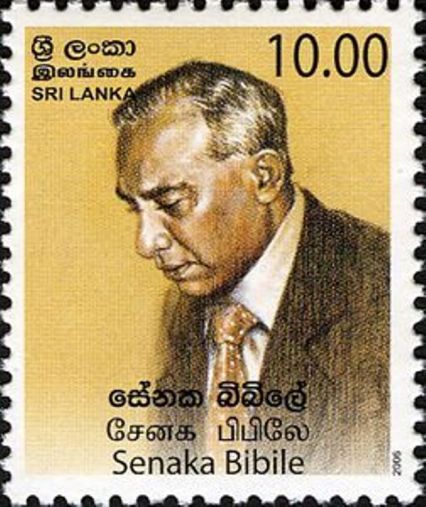
Dr Seneka Bibile
Dr Seneka Bibile

මහජන සෞඛ්‍යය ගැන සංවේදී හා සකි‍්‍රය වන වෛද්‍යවරුන් බොහෝ දෙනකුගේ පරමාදර්ශී වීර චරිතය වන්නේ මහාචාර්ය සේනක බිබිලේ (1920-1977). 1958දී මෙරට ඖෂධවේදය පිළිබඳ ප‍්‍රථම මහාචාර්ය තනතුරට පත් මේ ජනතාවාදී වෛද්‍යවරයා 1971දී රාජ්‍ය ඖෂධ සංස්ථාව පිහිට වූ විට එහි ප‍්‍රථම සභාපතිවරයා වුණා. ඔහුගේ විශිෂ්ඨ බුද්ධිමය දායකත්වය වූයේ අත්‍යවශ්‍ය ඖෂධ පිළිබඳ තර්කාන්විත ක‍්‍රමවේදයක් යෝජනා කිරීමයි (rational pharmaceutical drugs use).

බටහිර වෛද්‍ය ක‍්‍රමයේ රෝගීන්ට දෙන බෙහෙත්වලින් අඩකටත් වඩා රෝගාබාධ සමනය කිරීමට අත්‍යවශ්‍ය හෝ ඉලක්කගත හෝ නොවන බව දැන් පිළි ගැනෙනවා. එහෙත් බොහෝ වෛද්‍යවරුන් බෙහෙත් නියම කරන විටත්, රෝගීන් බෙහෙත් ගන්නා විටත් ඒ ගැන නැවත සිතා බැලීමක් කරන්නේ නැහැ. එසේ හැකි තාක් ඖෂධ නියම කිරීමට වෛද්‍යවරුන්ට නිෂ්පාදන සමාගම් බලපෑම් කරන බවත්, ඒ සඳහා නොයෙක් දිරිගැන්විම් හා පරිත්‍යාග කෙරෙන බවත් කලක සිට ප‍්‍රකටයි.

මහජන මුදලින් පවත්වා ගෙන යන රාජ්‍ය සෞඛ්‍ය ක්‍ෂෙත‍්‍රයේ ඖෂධ භාවිතය වඩාත් තර්කනුකූල විධිමත් කිරිමට 1970 දශකයේ බිබිලේ ඇතුළු විද්වතුන් කිහිප දෙනෙක් උත්සහ කළා. මේ සඳහා වෛද්‍ය වෘත්තිය, සෞඛ්‍ය පරිපාලනය, සෙසු විද්‍යාඥයන් අතර මෙන් ම ජන සමාජ මට්ටමින් ද විද්වත් කතිකාවක් ඔවුන් ඇරඹුවා.

සරසවි වෙද ඇදුරකු ලෙසත් පර්යේෂකයෙකු ලෙසත් ක‍්‍රියා කරන අතර මේ ප‍්‍රතිපත්ති මට්ටමේ වෙනස ඇති කිරිමට මහාචාර්ය බිබිලේ ගත් උත්සාහය ගැන ඔහුගේ ජීවන චරිත කතාවෙත්, වෙනත් ප‍්‍රකාශනවලත් ලේඛන ගතව තිබෙනවා. එහිදී ඔහු මහත් පරිශ‍්‍රමයෙන් තොරතුරු හා සාක්ෂි රැස් කොට, විශ්ලේෂණය කොට ඉදිරිපත් කළ ශාස්ත‍්‍රීය විලාසය ගැන ඔහුගේ සිසුවකු වූ විද්‍යාත්මක කටයුතු පිළිබඳ ජ්‍යෙෂ්ඨ අමාත්‍ය වෛද්‍ය තිස්ස විතාරණ සිහිපත් කරනවා.

සේනක බිබිලේ වයස 57දී හදිසියේ මිය යාම සැක කටයුතු බවත්, ඇතැම් විට කුමන්ත‍්‍රණයක් විය හැකි බවත් සමහරුන් විශ්වාස කරනවා.

ඔහු ගැන කථා කරන බොහෝ දෙනා හා බිබිලේ චරිතය පරමාදර්ශයට ගන්නා නූතන වෛද්‍යවරුන් ඔහුගේ අකල් මරණය ගැන දැඩි අවධානය යොමු කරන අතර, ඔහු ජීවත්ව සිටියදී කි‍්‍රයා කළ විලාසය ගැන සමීපව අධ්‍යයනය කරන්නට නොවෙහෙසීම කණගාටුදායකයි.

මහාචාර්ය බිබිලේට සමාජවාදී දේශපාලන නැඹුරුවක් තිබුණා. ඔහු ලංකා සමසමාජ පක්‍ෂයේ සාමාජිකයෙක්. ඔහුගේ චින්තනය එයින් පොෂණය වූ බව පැහැදිලියි. එහෙත් ඖෂධවේදය පිළිබඳ විද්වත් වාදවිවාදවලදී ඔහු විද්‍යාව හා දේශපාලනය අනවශ්‍ය ලෙස මිශ‍්‍ර කර ගත්තේ හෝ පටලවා ගත්තේ නැහැ.

ජාත්‍යන්තර තලයේ දක්‍ෂ ප‍්‍රතිමල්ලවයත් සමග සංයමයෙන් හා ඉතා සංවිධනාත්මකව වාද විවාද කළ සැටිත්, ලෝකයේ ආණ්ඩු සාමාජිකත්වය දරණ ලෝක සෞඛ්‍ය සංවිධානයේ (WHO) ප‍්‍රබල බුද්ධිමය වෙනසක් කළ සැටිත් වෛද්‍ය විතාරණ, වෛද්‍ය කොල්වින් ගුණරත්න ඇතුඵ බිබිලේ සහෘදයන් වාර්තා කොට තිබෙනවා. මෙන්න පරමාදර්ශය!

බිබිලේ අකාලයේ මිය ගියත් ඔහු ඇරැඹූ චින්තන විප්ලවයට දිගට ම ලාංකික බුද්ධිමය දායකත්වය හා නායකත්වය ලැබුණා.

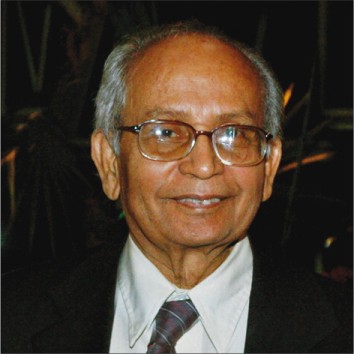
Dr Kumariah Balasubramaniam

බිබිලේ යටතේ සරසවි ඇදුරකුව සිටි ඖෂධවේදී ආචාර්ය කුමාරයියා බාලසුබ‍්‍රමනියම් (1926-2011) ඉන් පසු එම බුද්ධිමය අරගලය තවත් වසර 30කට වැඩි කලක් පෙරට ගෙන ගියා. වෙළදාම හා සංවර්ධනය පිළිබඳ එක්සත් ජාතීන්ගේ සම්මේලනයේ (UNCTAD ආයතනයේ) විශෙෂඥයකු ලෙස කි‍්‍රයා කරමින් ඔහු නේපාලය, කියුබාව, පිලිපීනය, ඉතියෝපියාව හා ටැන්සේනියාව වැනි රටවල අත්‍යවශ්‍ය ඖෂධ ප‍්‍රතිපත්ති සම්පාදනය කළා.

1981දී Health Action International (HAI) නම් ජාත්‍යන්තර රාජ්‍ය නොවන සංවිධානයක් බිහි කිරීමට හවුල් වූ වෛද්‍ය බාලසුබ‍්‍රමනියම්, ප‍්‍රගතිශීලී වෛද්‍යවරුන්, ඖෂධවේදීන් හා වෙනත් සමාජ කි‍්‍රයාකාරිකයන් රැසක් හවුල් කර ගෙන නැණවත් ඖෂධවේදයක් සඳහා ලෝක ව්‍යාප්ත සංවාදයක් පවත්වා ගෙන ගියා. කලක් ඔහු මැලේසියාවේ පිනෑංග්හි පිහිටි HAI ආසියා පැසිෆික් කාර්යාලයේ  උපදේශක ලෙස ද ක‍්‍රියා කළා.

අන්තර් රාජ්‍ය මට්ටමේ WHO සංවිධානයට උදාසීන වන්නට හෝ අකාර්යක්‍ෂම වන්නට හෝ නොදී සිවිල් හා විද්වත් බලපෑම් දිගට ම පවත්වා ගන්නේ HAI වැනි රාජ්‍ය නොවන සංවිධානයි.

බංග්ලාදේශයේ ඖෂධ ප‍්‍රතිපත්තිය ජනතාවාදී කිරීමේ මුල් තැන ගත් වෛද්‍ය සෆ්රුල්ලා චෞද්‍රි (Dr Zafrullah Chowdhury) ආචාර්ය බාලසුබ‍්‍රමනියම් ගැන ඉතා ගෞරවයෙන් කථා කළා. ‘‘ඩොක්ට බාලා මහජන සෞඛ්‍ය ක්‍ෂෙත‍්‍රයේ ලොව පුරා පැතිර සිටින දහස් ගණනක් දෙනා බලාත්මක කළා. මෙය දිගුකාලීන අරගලයක් බවත්, තාවකාලික ජයග‍්‍රහණවලට වඩා ප‍්‍රතිපත්තිමය මට්ටමේ හා චින්තන වෙනසකට කි‍්‍රයා කළ යුතු බවත් ඔහු අපට නිතර සිහිපත් කළා.’’

මහාචාර්ය බිබිලේ මා කිසි දිනෙක මුණ නොගැසුණත් ආචාර්ය බාලසුබ‍්‍රමනියම්ට කොළඹ විද්වත් තලයන්හිදී මා සවන් දී තිබෙනවා. ඔහු බහුශ‍්‍රැත වූත්, මිත‍්‍රශීලී වූත්, නිහතමානී චරිතයක් බව මට මතකයි.

තමන්ගේ දිගුකාලීන අරමුණු සාක්ෂාත් කරගන්නට රාජ්‍ය නිලධාරීන්, ඖෂධ සමාගම්වල නියෝජිතයන් ඇතුඵ අදාල හැම කෙනකු සමග ම ඔහු සන්සුන්ව සාකච්ඡා කළා. ආවේගශීලී වූයේ නැහැ. මෙබඳු අරගලයන්හි මුඛ්‍ය අවශ්‍යතාවයක් වන්නේත් එයයි.

2007දී Ceylon Medical Journal වෛද්‍ය සඟරාවෙහි ලිපියක් ලියමින් වෛද්‍ය මහාචාර්ය කොල්වින් ගුණරත්න කීවේ ශී‍්‍ර ලංකාවෙන් බිහි වී ලෝක ව්‍යාප්ත මට්ටමේ ලොකු ම බලපෑම කළ වෛද්‍යවරයා කේ. බාලසුබ‍්‍රමනියම් බවයි. (අකල් මරණය නිසා බිබිලේ ගමන කෙටි වූ බැවින්.)

2011දී බාලසුබ‍්‍රමනියම් මිය ගිය පසු ලෝකයේ ඉහළ ම පෙළේ වෛද්‍ය පර්යේෂණ සඟරාවක් වන The Lancet ඔහු හැදින්වූයේ ‘ලොව සිටි ඉතා ම දැනුවත් හා අධිෂ්ඨානශීලී සෞඛ්‍ය කි‍්‍රයාකාරියකු’ ලෙසටයි. http://tiny.cc/LancetKB

මේ තරම් ලෝක කීර්තියට පාත‍්‍ර වූ මේ ලංකා පුත‍්‍රයා ගැන දන්නේ වෛද්‍ය ක්‍ෂෙත‍්‍රයෙන් පිටත කී දෙනාද? තරුණ වෛද්‍යවරුන් පවා කී දෙනෙක් මේ චරිතය ගැන අසා දැනුවත් ද? බිබිලේටත් වඩා සාර්ථක වූ මේ විද්වතා ගැන සිංහල මාධ්‍යවල කථා නොකරන්නේ ඇයි?

මාධ්‍ය ප‍්‍රසිද්ධිය නොපතා, නිහඩව අඩසියවසක් ප‍්‍රතිපත්ති හා බුද්ධිමය මට්ටමේ මාහැගි මෙහෙවරක් කළ බාලසුබ‍්‍රමනියම්, අද කාලේ ක්‍ෂණික සේනක බිබිලේලා වන්නට තැත් කරන අයට හොඳ ආදර්ශයක්!

බිබිලේ මගෙහි යන තවත් විද්වතුන් සිටිනවා. කලක් කොළඹ වෛද්‍ය පීඨයේ ඖෂධවේදය ඉගැන් වූ වෛද්‍ය කි‍්‍රශාන්ත වීරසූරිය එක් උදාහරණයක්. දැන් ඔහු ජිනීවා නුවර WHO මූලස්ථානයේ අත්‍යවශ්‍ය ඖෂධ පිළිබඳ ජාත්‍යන්තර විද්වත් කමිටුවේ ලේකම්වරයා.

මහාචාර්ය බිබිලේ හා ආචාර්ය බාලසුබ‍්‍රමනියම් වැනි විද්වතුන් ක‍්‍රමීය මට්ටමෙන් ප‍්‍රශ්න විග‍්‍රහ කොට, සංකීර්ණ සමාජයේ වෙනස්කම් කිරීමේදී මතු වන අභියෝග මනා ලෙස හඳුනා ගෙන සිටියා. උපක‍්‍රමශීලීව, සියුම් ලෙස තමන්ගේ කරුණු හා තර්ක ගොනු කරමින්, විවිධ ක්‍ෂෙත‍්‍රවල හා රටවල මිතුදම් වර්ධනය කරමින්, බුද්ධිමය සංධාන ගොඩ නැගුවා.

මෙබඳු ප‍්‍රතිසංස්කරණවලට නොවරදවා ම විරුද්ධ වන බව දන්නා (ඖෂධ සමාගම් වැනි) පාර්ශ්වයන් ද සංවාදවලට සහභාගී කර ගත්තා. ඔවුන්ට ප‍්‍රසිද්ධියේ පහරදීමට ගියේ නැහැ. ඒ වෙනුවට මහජන අභිවෘද්ධියට නිසැකව දායක වන ප‍්‍රගතිශීලී පියවරවලට ප‍්‍රසිද්ධියේ ඔවුන්ගේ කැමැත්ත ද ලබා ගැනීමට උත්සුක වුණා.

මේවා කඩාකප්පල් කිරීමට අල්ලස්, තර්ජන, ආදිය මතුවිය  හැකි බව දැන සිටියා. තමන්ගේ අවංක බව හා පාරදෘශ්‍ය කි‍්‍රයා කලාපය හරහා ආදර්ශමත් වුණා. තමන් අතින් වැරදි සිදු වූ විට වහා නිවැරදි කර ගත්තා.

මාධ්‍යවලින් සංතෘප්ත වී ඇති අද කාලේ මාධ්‍ය හරහා ද මෙබඳු අරගලයන් කළ යුතු බව ඇත්තයි. එහෙත් ප‍්‍රශ්නයේ ප‍්‍රතිපක්‍ෂයට නිග‍්‍රහ කරමින්, බරපතල චෝදනා නගමින් ආවේගශීලී වනවා වෙනුවට සමාජයට තොරතුරු සන්නිවේදනය කළ හැකි වෙනත් ශෛලීන් තිබෙනවා.

‘රටට වස කැවීමේ ජාත්‍යන්තර ක‍්‍රමන්ත‍්‍රණ’ ගැන කථා කිරීම හරහා අහිංසක ජනයා බියපත් කොට ව්‍යාකූල කරනවාට වැඩි විද්වත් බවක් අප වෛද්‍යවරුන්ගෙන් බලාපොරොත්තු වනවා.

බිබිලේ ගිය මගෙහි අයාලේ ගියාට පමණක් මදි. බිබිලේ බහුවිධ දුෂ්කරතා මැද උපක‍්‍රමශීලීව ප‍්‍රතිපත්ති හා චින්තන මට්ටමේ වෙනසක් කළෙ කෙසේ ද යන්නත් ඔහුගේ අනුගාමිකයන් වූ බාලසුබ‍්‍රමනියම් හා වීරසූරිය වැනි අය ඉන් ඔබ්බට බුද්ධිමය අරගලය ගෙන ගියේ කෙසේ ද යන්නත් සමීපව විමසා බැලීම ඉතා වැදගත්.

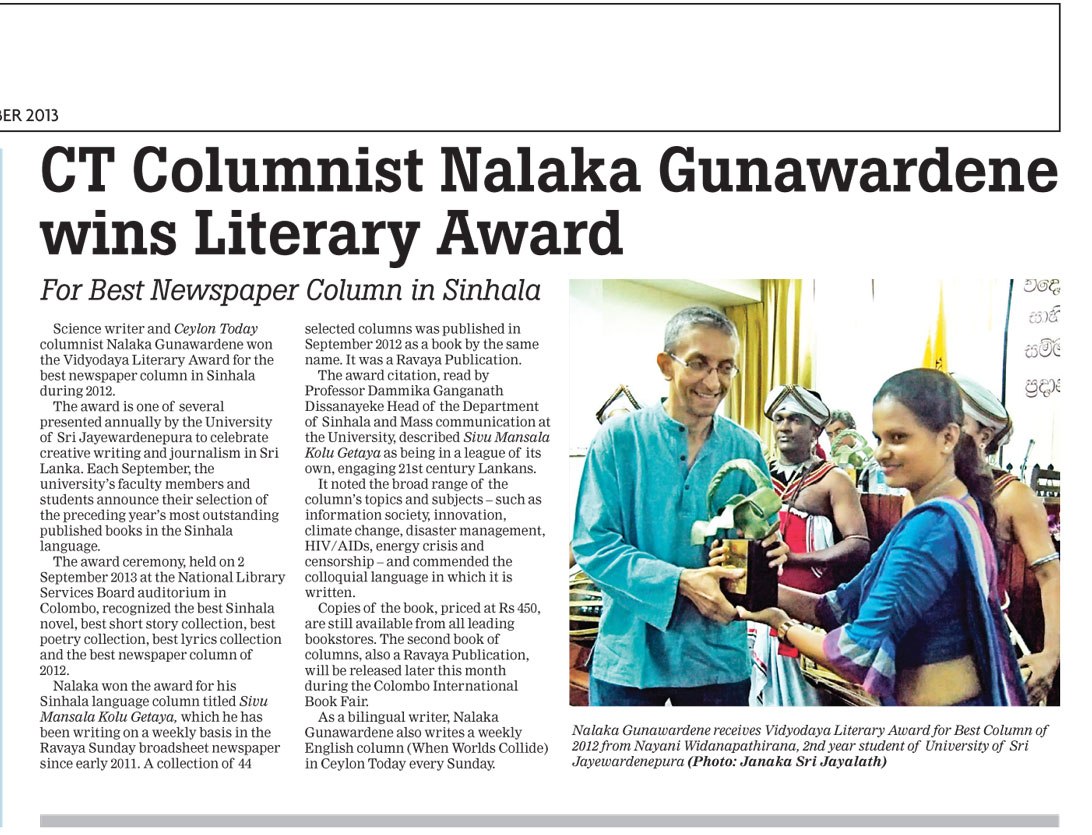
Nalaka Gunawardene wins Literary Award for Best Newspaper Column

Report in Ceylon Today,  5 September 2013:

Nalaka Gunawardene wins literary award - Ceylon Today, 5 Sep 2013, page 2
Nalaka Gunawardene wins literary award – Ceylon Today, 5 Sep 2013, page 2

Science writer Nalaka Gunawardene won the Vidyodaya Literary Award for the best newspaper column in Sinhala during 2012.

The award is one of several presented annually by the University of Sri Jayawardenapura to celebrate creative writing and journalism in Sri Lanka. Each September, the University’s faculty members and students announce their selection of the preceding year’s most outstanding published books in the Sinhala language.

The award ceremony, held on 2 September 2013 at the National Library Services Board auditorium in Colombo, recognized the best Sinhala novel, best short story collection, best poetry collection, best lyrics collection and the best newspaper column of 2012.

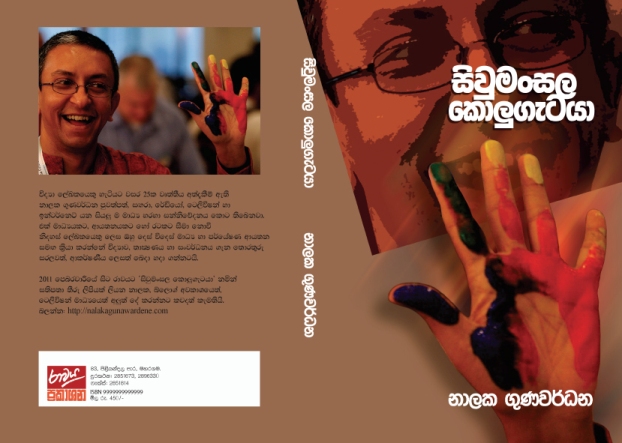
Nalaka won the award for his Sinhala language column titled Sivu Mansala Kolu Getaya (සිවුමංසල කොලූ ගැටයා), which he has been writing on a weekly basis in the Ravaya Sunday broadsheet newspaper since early 2011. A collection of 44 selected columns was published in September 2012 as a book by the same name. It was a Ravaya Publication.

The award citation, read by Professor Dammika Ganganath Dissanayeke,  Head of the Department of Sinhala and Mass communication at the University, described Sivu Mansala Kolu Getaya as being in a league of its own, engaging twenty first century Lankans.

It noted the broad range of the column’s topics and subjects – such as information society, innovation, climate change, disaster management, HIV/AIDs, energy crisis and censorship – and commended the colloquial language in which it is written.

Copies of the book, priced at Rs 450, are still available from all leading bookstores. The second book of columns, also a Ravaya Publication, will be released later this month during Colombo International Book Fair.

As a bilingual writer, Nalaka Gunawardene also writes a weekly English column (When Worlds Collide) in Ceylon Today every Sunday.

Sivu Mansala Kolu Getaya column: Vidyodaya Literary award citation

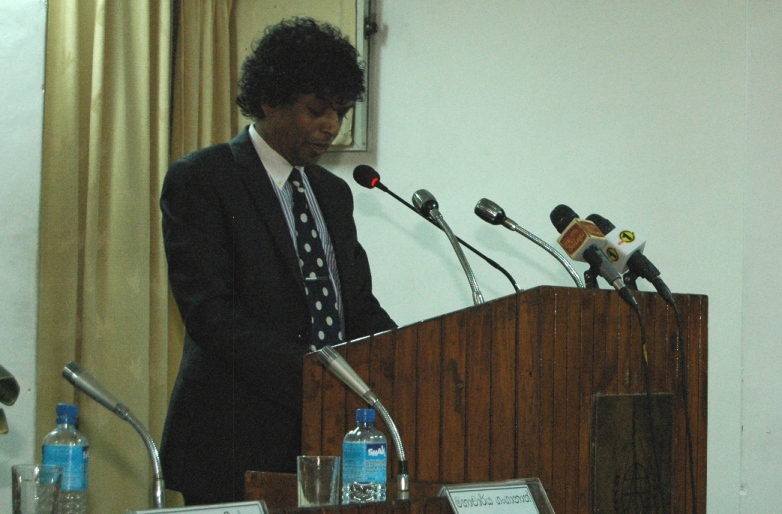
Professor Dammika Ganganath Dissanayeke reads award citation for best newspaper column 2012 at Vidyodaya Lit Award ceremony, 2 Sep 2013. Photo by Janaka Sri Jayalath

I just won the Vidyodaya Literary Award for the best newspaper column in Sinhala during 2012.

This is the relevant extract from the award citation, read by Professor Dammika Ganganath Dissanayeke, Head of the Department of Sinhala and Mass communication at the University of Sri Jayawardenapura:

නාලක ගුණවර්ධනගේ  “සිවුමංසල කොලූගැටයා” රාවය පුවත්පතේ පළවූ තීරු ලිපිවල එකතුවක්. කතුවරයාගේ වස්තු විෂය බෙහෙවින් විරල අත්දැකීමක්. නූතන ලෝකයේ අප හිටගෙන සිටින මහපොළොව ගැන කතුවරයා කතා කරනවා. ඒවා කාටුන්, විකිලීක්ස්, න්‍යෂ්ටික කාන්දු, දේශගුණික විපර්යාස, පරිසර දුෂණය,විකිපීඩියා, AIDS, ස්ටීව් ජොබ්ස් වැනි නූතන පරම්පරාවේ මොළයට වද දෙන විෂය පථ දිගේ දුවනවා.

නව තාක්ෂණය හා නව මාධ්‍ය හේතුකොටගෙන විපර්සායකට ලක්වන ලෝකයත් තොරතුරුත් දෘෂ්ටිමය අතීතකාමීකමකින් නිදහස්ව දකින්නට වෑයම් කිරීම මෙහි විශේෂත්වයයි.

ආතර් සී.ක්ලාක් සමග කතුවරයා කළ සාකච්ඡාවක් දැක්වුනු ලිපියත් ගැටලූ විසඳන අසමම්මත චින්තනයට ඉඩ දෙන්න යන ලිපියත් මේ කෘතියේ දෘෂ්ටි පථය හා විෂය ක්ෂේත‍්‍රය පිළිබඳ සංකේතයක් ලෙස මා දකිනවා.

කතුවරයා ලියන්නේ අපට නොවේ. අපෙන් පසු ආ ආගන්තුක අයි ටී අතපතගාන පරම්පරාවටත් නොවේ. ඊළඟට එන්න ඇඟ හිරි අරින සයිබර් පරම්පරාවටයි. ඊට උචිත වේගවත් බස් වහරක් ද ආකෘතියක් ද කතුවරයා යොදාගෙන තිබෙනවා. එය වක‍්‍රාකාර නැත. මට සිලිටි ද නැත. එහෙත් එය කදිමට ගැලපෙනව කියල මට හිතෙනවා.

‘Sivu Mansala Kolu Getaya’ wins Vidyodaya Literary Award for Best Newspaper Column 2012

Nalaka Gunawardene receives Vidyodaya Literary Award for Best Column of 2012 from Ms Nayayani Widanapathirana, 2nd year student of University of Sri Jayawardenapura [Photo courtesy J'pura flames/Facebook]
Nalaka Gunawardene receives Vidyodaya Literary Award for Best Column of 2012 from Ms Nayayani Widanapathirana, 2nd year student of University of Sri Jayawardenapura [Photo courtesy J’pura flames/Facebook]

I just received a totally unexpected award from an unlikely source. Vidyodaya Literary Award for best newspaper column in Sinhala during 2012.

The award is one of several presented annually by the University of Sri Jayawardenapura to celebrate creative writing and journalism in Sri Lanka. Each September, the University’s faculty members and students announce their selection of the preceding year’s most outstanding published books in the Sinhala language.

The award ceremony, held on 2 September 2013 at the National Library Services Board auditorium in Colombo, recognized the best Sinhala novel, best short story collection, best poetry collection, best lyrics collection and the best newspaper column of 2012.

My award, for the best newspaper column collection of 2012, is for Sivu Mansala Kolu Getaya (සිවුමංසල කොලූ ගැටයා), which came out in September 2012.

A Ravaya Publication, the book comprises a selection of my weekly Sinhala columns by the same name, contributed to the Ravaya Sunday broadsheet newspaper during 2011-12.

Beginning in February 2011, I have sustained the weekly column that touches on many and varied topics related to popular science, human development, mass media and information society. The book compiled 44 of these columns.

The award citation, read by Professor Dammika Ganganath Dissanayeke, Head of the Department of Sinhala and Mass communication at the University, described Sivu Mansala Kolu Getaya  as being in a league of its own, engaging twenty first century Lankans.

The citation noted the broad range of the column’s topics and subjects – such as information society, innovation, climate change, disaster management, HIV/AIDs, energy crisis and censorship – and commended the colloquial language in which it is written.

Vidyodaya Literary Award winners for 2012 - L to R - Rathna Shri Wijesinghe, Liyanage Amarakeerthi, Buddhadasa Galappaththi, Mahinda Prasad Mashibula & Nalaka Gunawardene [Photo courtesy: J'pura flames/Facebook]
Vidyodaya Literary Award winners for 2012 – L to R – Rathna Shri Wijesinghe, Liyanage Amarakeerthi, Buddhadasa Galappaththi, Mahinda Prasad Mashibula & Nalaka Gunawardene
[Photo courtesy: J’pura flames/Facebook]
My last awards were nearly two decades ago (and all for my English writing). These days, I’m much more involved in judging and giving awards to others – ranging from global Digital Emmys to national integrity awards.

The columns and the book are a personalised exploration of how Sri Lanka can cope with many challenges of globalisation and modernisation. Or, if you like more lofty words (ugh!), how a low middle income nation of 20 million can define its identity in turbulent times of rapid change.

The title is of my column puzzles some readers. It’s derived from the angle it offers, and a reflection of my own career and interests: I stand at the intersection (or confluence) of science, sustainable development, media and popular culture. From there, I often play the role of that cheeky lad who asked difficult questions, and once pointed out the Emperor(s) had nothing on when all others were either too polite — or too scared — to say so.

I write in conversational Sinhala mostly because that’s the only command of the language I can muster! Having studied the language only in primary and secondary school, I have no particular literary skill and certainly no artistic pretensions. I just write to express, not impress.

It looks as if others appreciate this simplicity. I use plenty of metaphor and analogy, and also draw on my own wide experiences as a journalist, filmmaker and development communicator.

I like to ‘zoom in’ and ‘zoom out’ when discussing diverse topics. I do so with an open mind and sense of wonder. I have no political ideology to promote — and also no sacred cows to protect or defend!

As a journalist, I was trained to look for what’s New, True and Interesting (‘NTI Test’). Early on in my career, I went beyond simply reporting events, and probed the underlying causes and processes. With those insights, I can now offer my readers perspectives and seasoned opinion. These are much needed today as we swim through massive volumes of information, trying to stay afloat and make sense of it all.

As I said when the book was launched: “In a sense, with this column I have come back home. The last time I wrote in Sinhala was in another century, and in what now feels like another country!”

So it’s nice to be recognized — in the very different land and time where I find myself both a native and an immigrant…

Sivu Mansala Kolu Getaya book cover: A Ravaya Publication

When Worlds Collide #81: Who Added Conspiracy to Our Milk?

Nalaka Gunawardene's avatarWhen Worlds Collide, by Nalaka Gunawardene

Text of my ‘When Worlds Collide’ column published in Ceylon Today Sunday broadsheet newspaper on 1 September 2013

Cow jumped over the moon

After nearly a month of confusion and panic, the government now says it “probably overreacted” in its response to stories of contamination in milk powder imported from New Zealand.

“There was a debate that built up in the country over this issue,” information minister Keheliya Rambukwelle told reporters on August 30. “I personally think our response was beyond the actual need. There was an overreaction when thinking in technical terms.”

The minister added, however, that a government always erred on the side of caution in trying to protect consumers.

In early August, Sri Lanka stopped the import of milk from New Zealand after discovering trace amounts of dicyanamide (DCD) a fertilizer additive, in four batches of milk sold by several firms. Concerns were also expressed on the presence of whey protein…

View original post 1,202 more words