Remembering Asia’s Titanic: The Doña Paz tragedy that killed over 4,000 in Dec 1987

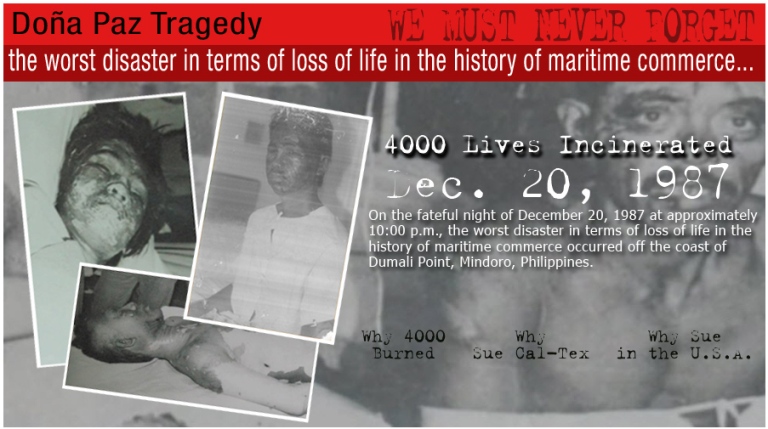
Dona Paz tragedy - image from the survivor website

What is the world’s worst peace-time maritime disaster?

No, it’s not the sinking of the Titanic. It’s a disaster that happened 75 later, on the other side of the planet – in Asia.

It is the sinking of the MV Doña Paz, off the coast of Dumali Point, Mindoro, in the Philippines on 20 December 1987. That night, the 2,215-ton passenger ferry sailed into infamy with a loss of over 4,000 lives – many of them burnt alive in an inferno at sea.

Nobody is certain exactly how many lives were lost — because many of them were not supposed to be on that overcrowded passenger ferry, sailing in clear tropical weather on an overnight journey.

Passenger ferries like the Doña Paz are widely used in the Philippines, an archipelago in Southeast Asia comprising over 7,000 islands. They are among the cheapest and most popular ways to travel.

Just 5 days before Christmas of 1987, hundreds of ordinary people boarded the Doña Paz for a 24-hour voyage from the Leyte island to Manila, the capital.

The Doña Paz – originally built and used in Japan in 1963 and bought by a Filipino ferry company in 1975 — was authorized to carry a maximum load of 1,518 passengers.

But the on the night of the accident, survivors say there may have been more than 4,000 people on board – a gross violation of safety procedures.

Only 24 of them survived the journey — and only just. The entire crew and most of its passengers perished in an accident happened due to negligence, recklessness and callous disregard for safety.

For a glimpse of what happened, watch these first few minutes from 2009 National Geographic documentary,Asia’s Titanic:

For a summary compiled from several journalistic and activist sources, read on…

The Doña Paz had an official passenger list of 1,493 with a crew of 59 on board. But later media investigations showed that the list did not include as many as 1,000 children below the age of four — and many passengers who paid their fare after boarding.

The ship was going at a steady pace. The passengers were settling in for the night. The Doña Paz was scheduled to arrive in Manila by morning. A survivor later said that the weather that night was clear, but the sea was choppy.

Around 10.30 pm local time, without any warning, the Doña Paz collided with another vessel. It was no ordinary ship: the MT Vector was en route from Bataan to Masbate, carrying 8,800 barrels of gasoline, diesel and kerosene owned by Caltex Philippines.

Immediately upon collision, the tanker’s cargo ignited, setting off a massive fire that soon engulfed both ships. Thousands of passengers were trapped inside the burning ferry.

Dozens of passengers leaped into the sea without realizing that the petroleum products had also set the surrounding seas ablaze. Those in the water had to keep diving to avoid the flames spreading on the surface.

Of all the passengers and crew on board, only 24 survived. Everything known about this maritime disaster is based largely on their accounts – and investigative work done by a handful of journalists.

MV Doña Paz in 1984, three years before its tragic end - Photo courtesy Wikimedia Commons - lindsaybridge

One survivor claimed that the lights onboard went out soon after the collision: there had been no life vests on the Doña Paz, and that none of the crew was giving any orders. It was later said that the life jackets were locked up beyond emergency reach.

The few survivors were later rescued swimming among many charred bodies in the shark-infested Tablas Strait that separates Mindoro and Panay islands.

The first help arrived at the scene around one and a half hours after the collision – it was another passing ship. By this time, most passengers of the ferry were dead.

The Doña Paz sank within two hours of the collision, while the Vector sank in four hours. The sea is about 545 meters deep in the collision site.

The Philippines Coast Guard did not learn about the disaster until eight hours after it happened. An official search and rescue mission took more hours to get started.

In the days that followed, the full scale of the horrible tragedy became clear. The ferry’s owner company, Sulpicio Lines, argued that the ferry was not overcrowded. It also refused to acknowledge anyone other than those officially listed on its passenger manifest.

Manifests on Philippine inter-island vessels are notoriously inaccurate. They often record children as “half-passengers” or disregard them entirely. Corrupt officials frequently accept bribes to allow overloading.
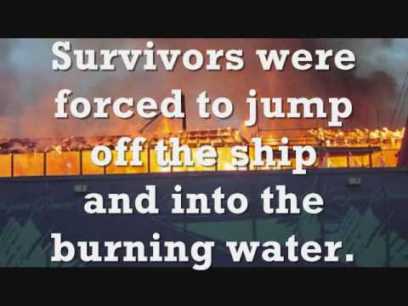
Many victims were probably incinerated when the vessels exploded and will never be accounted for. Rescuers found only 108 bodies, many of them charred and mutilated beyond recognition. More bodies were later washed ashore to nearby islands where the local people buried them after religious rituals.

All officers on board the Doña Paz were killed in the disaster, and the two from the Vector who survived had both been asleep at the time. This left the field entirely to lawyers from all sides to endlessly argue over what went wrong, how – and who was responsible.

It was later found that, at the time of the collision, both ships had been moving slowly: the Doña Paz at 26 km per hour, and Vector at 8 km per hour. They were surrounded by 37 square km of wide open sea – plenty of time and space to avoid crashing into each other!

Experts also wondered why the two ships had not communicated with each other before the crash. It is internationally required that all ships carry VHF radio. The Vector was found to have an expired radio license. The radio license for the Doña Paz was a fake.

Survivors told investigators that the crew of the Doña Paz were having a party on board minutes before it collided with the oil tanker. Some reports suggested that the captain himself had been among the revelers.

Being ordinary people, the passenger didn’t know details of maritime rank or procedure. It is likely that a mate or apprentice was steering the Doña Paz. Not a single crew member survived to tell their version of the incident.

After a long and contentious inquiry, the investigators placed the blame on the Vector.

Independent analyses have identified multiple factors that contributed to this tragedy: lack of law enforcement arising from corruption and connivance; under-qualified and overworked crew; telecommunications failures; and inadequate search and rescue efforts in the event of accidents.
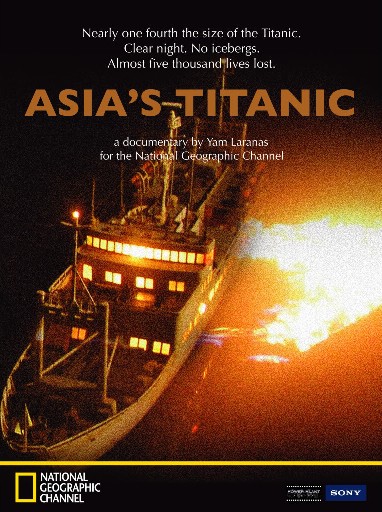
Asia's Titanic - NatGeo poster for 2009 film
In August 2009, National Geographic Channel broadcast an investigative documentary titled Asia’s Titanic that tried to piece together the evidence and understand what happened.

Directed by award-winning Filipino director Yam Laranas, it was the first for any Filipino filmmaker to direct a full-length documentary for the global channel noted for its factual films.

Through dramatic first hand accounts from survivors and rescuers, transcripts from the Philippine congressional inquiry into the tragedy, archival footage and photos and a re-enactment of the collision, dissect the unfolding tragedy of Doña Paz.

The 10-million Filipino peso project took more than 3 years to make, but even its makers could not find all the answers.

“The truth may never be known. In the years after the Doña Paz tragedy, shipping disasters continue to plague the Philippines,” says the documentary as it ends.

Watch the NatGeo film in full on Doña Paz survivors’ website

Meanwhile, nearly 25 years on, the struggle for justice for the victims and survivors is still on.

Related post: Baby Ruth Villarama on researching and filming “Asia’s Titanic” for National Geographic
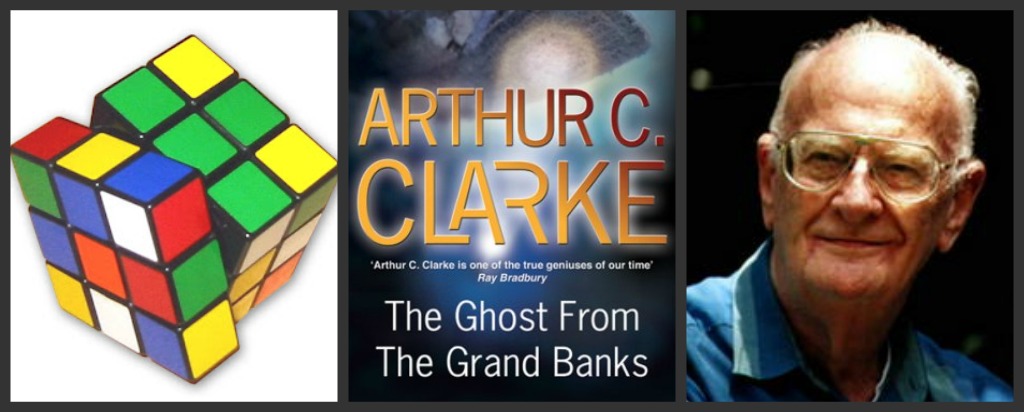
Arthur C Clarke and Rubik’s Cube 2.0 – are we there yet?


Science fiction writer and futurist Sir Arthur C Clarke knew how closed economies and restrictive cultures stifled innovation. He once said the only memorable invention to emerge from Soviet-dominated Eastern Europe was the Rubik’s Cube!

Rubik’s Cube is a 3D mechanical puzzle invented in 1974 by Hungarian sculptor and professor of architecture, Ernő Rubik. Since then, its huge worldwide success has led to several variations.

I just came across an interesting suggestion for an enhanced Rubik’s Cube, by Arthur Clarke himself, while re-reading his 1990 novel The Ghost from the Grand Banks.

It was an ocean-based thriller set in the (then) near future. It revolved around British-American and Japanese teams competing to raise the Titanic‘s wreck in time for the centenary in April 2012.

In the novel, Sir Arthur talks about the Rubik’s Cube making a comeback 30 years after its first appearance — and in a far more deadly mutation.

As he describes: “Because it was a purely mechanical device, the original Cube had one weakness, for which its addicts were sincerely thankful. Unlike all their neighbours, the six centre squares on each face was fixed. The other forty-eight squares could orbit around them, to create a possible 43,252,003,274,489,856,000 distinct patterns.

“The Mark II had no such limitations; all the fifty-four squares were capable of movement, so there were no fixed centres to give reference to its maddened manipulators. Only the development of microchips and liquid crystal displays had made such a prodigy possible; nothing really moved, but the multicoloured squares could be dragged around the face of the Cube merely by touching them with a fingertip”.

A quick check on the official Rubik website, and a Google search, shows no such device being on the market.

Do you know if anyone has attempted this?

Nalaka Gunawardene's avatarWhen Worlds Collide, by Nalaka Gunawardene

Text of my ‘When Worlds Collide’ column published in Ceylon Today Sunday newspaper on 8 April 2012

Now we’re feeling the heat – literally.

The period from February to May is the hottest time of the year for most parts of Sri Lanka, with average day-time temperatures hovering around 31 degrees Centigrade (C). The peak for specific locations can be higher.

True, the extremes that our mercury rises to (36 in Colombo, or 40 in Vavuniya) are still a good 10 degrees cooler than what Indians endure for weeks every summer. But we islanders like our creature comforts: fans and airconditioners (ACs) come to our rescue.

Half of all households in Sri Lanka have at least one electric fan, according to Household Income and Expenditure Survey 2009/10, conducted by the Department of Census and Statistics. It’s the commonest domestic electrical item, followed by sewing machines, refrigerators and washing machines…

View original post 950 more words

සිවුමංසල කොලූගැටයා #61: ශ්‍රී ලංකාව රැක ගන්නට 70 වසරකට පෙර කළ සටන

This is the Sinhala text of my Ravaya Sunday column published in their issue for 8 April 2012. My theme this week is the Battle of Ceylon, or the Easter Sunday Japanese air raid of Ceylon that took place 70 years ago this week.

The 5 April 1942 attack on Colombo Harbour and the nearby Ratmalana Airport took place exactly 119 days after the Pearl Harbour attack in Hawaii.

Similar ground is covered in my English blogpost:
Battle of Ceylon: 70 years on, still waiting for its place in the movies…

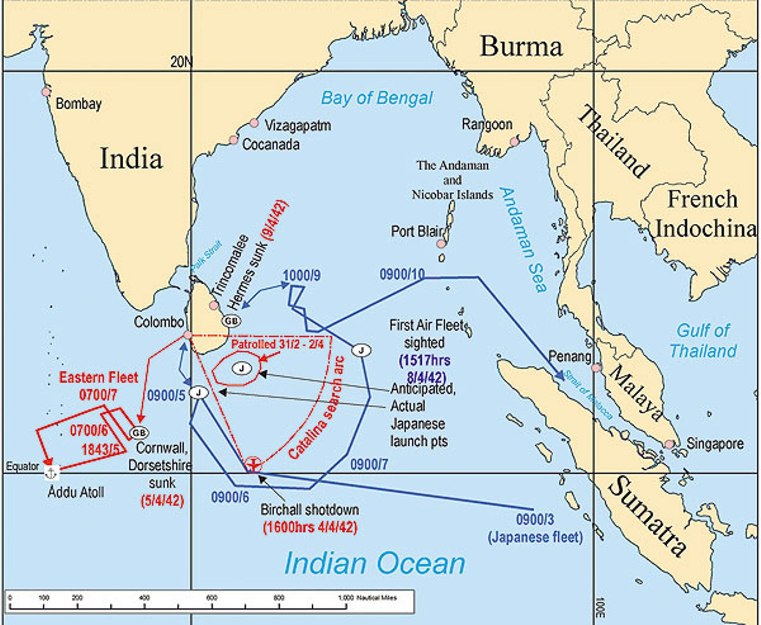
Japanese Air Raids on Ceylon, April 1942 – Map by C E Warner

නිසි කලට අනතුරු ඇගවීමක් ලැබීම නිසා මහ ව්‍යසන වළක්වා ගත් අවස්ථා ඉතිහාසය පුරා අපට හමු වනවා. එහෙත් අනතුරු ඇගවිමක් ලැබුණාට පමණක් මදි. එය ලද විගස තීරණාත්මක ලෙසින් ක‍්‍රියාත්මක වීමත් අවශ්‍යයි.

එය එසේ නොවූ විට සිදු විය හැකි දේ ගැන බලවත් ම උදාහරණය අප දුටුවේ 2004 දෙසැම්බර් 26දා සුනාමිය ආ විටයි. විද්‍යාත්මකව ජාත්‍යන්තර මට්ටමින් ශ‍්‍රි ලංකාවට ලබා දුන් අනතුරු ඇගවීම ගැන මෙරට බලධාරින් කිසිදු පියවරක් නොගැනිම නිසා ලෙහෙසියෙන් බේරා ගත හැකිව තිබූ ජීවිත දහස් ගණනක් පැය කිහිපයක් ඇතුළත විනාශ වුණා.

මේ විපත මට යළිත් සිහිපත් වූයේ මීට වසර 70කට පෙර ජපන් ගුවන් යානා ලංකාවට බෝම්බ ප‍්‍රහාර එල්ල කිරිම ගැන පොතක් කියවන විටයි. 1942 අපේ‍්‍රල් 5දා කොළඹ වරාය හා රත්මලාන ගුවන් තොටුපළටත්, අපේ‍්‍රල් 9 වනදා ත‍්‍රිකුණාමල වරාය හා නැගෙනහිර වෙරළාසන්නව නවතා තිබු මිත‍්‍ර පාක්ෂික යුද්ධ නෞකාවලටත් ප‍්‍රහාර එල්ල වුණා. දෙවන ලෝක යුද්ධය පිළිබඳ ඉතිහාස වාර්තාවල මේ ප‍්‍රහාරයන් හදුන්වන්නේ පාස්කු ඉරිදා ගුවන් ප‍්‍රහාරය (Easter Sunday Air Raid) හැටියටයි. තවත් සමහරුන් එය ලංකාව සඳහා කළ යුද්ධය (Battle of Ceylon) කියා හදුන් වනවා.

එකල රාජකීය ගුවන් හමුදාවේ නිලධාරියකු ලෙස මෙරට සේවය කළ මයිකල් ටොම්ලින්සන් පසු කලෙක (1976) ලියූ The Most Dangerous Moment පොත, මේ සිදුවීම් මාලාව පිළිබඳව ඇති හොඳම ඓතිහාසික සටහනයි.

කොළඹ හා ත‍්‍රිකුණාමලය ප‍්‍රදේශවලට ජපන් ප‍්‍රහාර එල්ල වූයේ ඒ වන විට දෙවන ලෝක යුද්ධය සම්බන්ධයෙන් ඉන්දියානු සාගරයේ තීරණාත්මක තැනක ශ‍්‍රි ලංකාව පිහිටීම නිසා. 1942 පෙබරවාරි වන විට ජපන් හමුදා අග්නිදිග ආසියාව යටත් කර ගත්තා. මලයාව, බුරුමය හා සිංගප්පුරුව ජපන් පාලනයට නතු වීමෙන් පසු දකුණු ආසියාව අල්ලා ගන්නට ඔවුන් උත්සුක වුණා. එහි මුල් පියවර වූයේ ලංකාව යටත් කොට එහි ජපන් යුද්ධ නෞකා, සබ්මැරින හා ගුවන් යානා නතර කිරිමයි. ඉන් පසු ඉන්දියාවටත්, ඉනික්බිති මැදපෙරදිග දක්වාත් බලය විහිදු වීමට ජපන් හමුදාවට සැළසුමක් තිබුණා.

දෙවන ලෝක යුද්ධයේ අතිශයින් බිහිසුණු වූත්, තීරණාත්මක වූත් සන්ධිස්ථානයක් ලෙසින් බි‍්‍රතාන්‍යයේ එවකට සිටි අගමැති වින්ස්ටන් චර්චිල් පසුව හදුන්වා දුන්නේ 1942 මාර්තු – අපේ‍්‍රල් කාලයයි. ඒ කාලය තුළ ලංකාවේ පාලනය බි‍්‍රතාන්‍ය ජාතිකයන් අතින් ගිලිහී ජපන් ජාතිකයන් අතට ගියා නම් දෙවන ලෝක යුද්ධයෙ ඉතිරි වසර තුන හමාර බෙහෙවින් වෙනස් විය හැකිව තිබුණා. (යටත්විජිත පාලනයෙන් මිදීමේ කෙටි මාර්ගය හැටියට මෙරට වාමාංශික දේශපාලකයන් එවකට තර්ක කළේත් ජපන් ජාතිකයන්ට පාක්ෂික වීමයි.)

ජපන් අරමුණු ගැන හොඳ ඉගියක් මිත‍්‍ර පාක්ෂික හමුදාවලට තිබුණත්, ඇත්තට ම ජපන් නාවික හා ගුවන් හමුදාවල හැකියාව ගැන විස්තරාත්මක අවබෝධයක් ඔවුන්ට තිබුණේ නැහැ. අද මෙන් පෘථිවි කක්ෂයේ සිට ලෝකයේ ඕනෑ ම තැනක සිදුවන දේ ගැන ඔත්තු බැලීමේ තාක්ෂණික හැකියාව නොතිබුණු ඒ යුගයේ, ප‍්‍රතිමල්ලව බල පරාක‍්‍රමය පිළිබඳව සෙවීමට මිනිස් ඔත්තුකරුවන් මත බොහෝ සේ යැපීමට සිදු වුණා. ඉන්දියානු සාගරය හරහා යුද්ධ නැව් සමුහයක් එවා ලංකාව ඇල්ලීමට තරම් ජපාන හමුදාවට හැකියාවක් ඇතැයි බොහෝ බි‍්‍රතාන්‍ය පරිපාලකයන් විශ්වාස කළේ නැහැ.

එහෙත් ජපන් ප‍්‍රහාරයකට මුහුණ දීමේ පෙර සුදානමක් 1942 මුල සිට ක‍්‍රියාත්මක වුණා. එහි පෙරමුණ ගත්තේ මිත‍්‍ර පාක්ෂික හමුදා සියල්ල සඳහා මෙරට ප‍්‍රධාන අණ දෙන නිලධාරියා ලෙස පත්ව ආ අද්මිරාල් ශ‍්‍රීමත් ජෙෆ්රි ලේටන් සහ සිවිල් ආරක්ෂක බලධාරියා ලෙස පත් කර සිටි ශ‍්‍රීමත් ඔලිවර් ගුණතිලකයි. දිවයිනේ කිහිප තැනෙක ගුවන් තොටුපළ හෝ ගුවන් තීරු ඇති කිරීම, කොළඹ තුරග ධාවන පිටිය ගුවන් තීරුවක් බවට පත් කිරිම හා ඉන්දියානු සාගරය නිරික්සමින් ගුවන් සංචරණයේ යෙදීම (Aerial Patrols) මේ ආරක්ෂක පියවර කිහිපයක්.

කොග්ගල බොක්ක තාවකාලික ගුවන් කඳවුරක් බවට පත් කිරිමත් සමග දිය මත සිට පියාසර කිරිමේ හැකියාව ඇති කැටලයිනා (Catalina) ගුවන්යානා සමූහයක් එහි රඳවනු ලැබුවා. එක දිගට පැය 18-20ක් පමණ වේලාවක් ගුවන් ගතව සිටීමේ හැකියාව තිබූ “පියාඹන බෝට්ටු” හැටියට හැදින්වුණු කැටලයිනා ගුවන්යානා යොදා ගෙන ලංකාව අවට වර්ග කිලෝමීටර් සිය ගණනක සාගර පෙදෙසක් නිරික්සනු ලැබුවා.

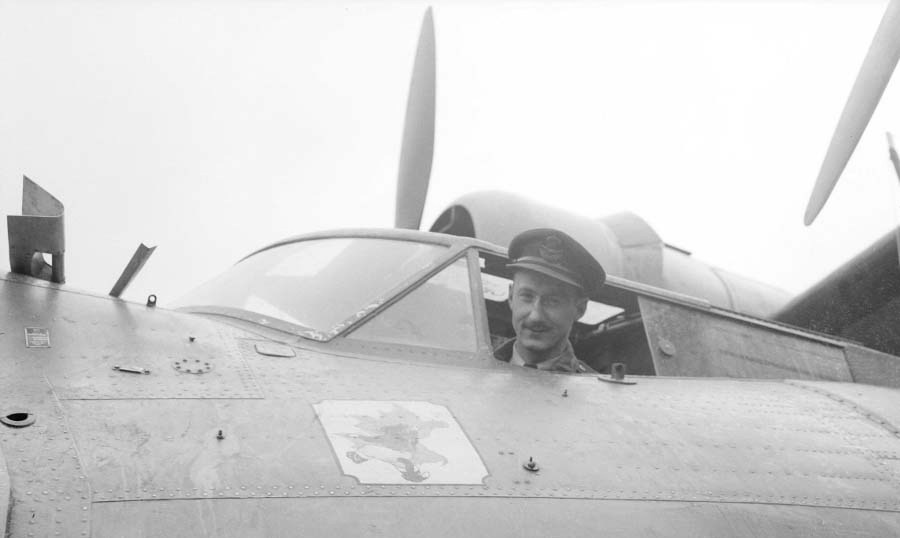
Sq Ldr Leonard Birchall, ‘Saviour of Ceylon’ aboard his Catalina aircraft

1942 අපේ‍්‍රල් 4 වනදා දවස පුරා එසේ නිරික්සිමේ යෙදී සිටි කැටලයිනා යානයක් ආපසු කොග්ගලට එන්නට සුදානම් වන මොහොතේ එහි සිටි ජේ්‍යෂ්ඨතම නිලධාරියා වූ කැනේඩියානු ජාතික ලෙනාඞ් බර්චෝල් ක්ෂිතිජයේ අසාමාන්‍ය අදුරු තිත් කිහිපයක් දුටුවා. එය කුමක්දැයි සොයන්නට පියාසර කළ ඔවුන් දුටුවේ හීන්සීරුවේ ලංකාව වෙත ඇදෙමින් තිබූ ජපන් ගුවන්යානා ප‍්‍රවාහන නෞකා (aircraft carriers) හා තවත් යුද්ධ නැව් කිහිපයක්. මේ නෞකා ඒ වන විට සිටියේ ලංකා දුපතට සැතපුම් 400ක් (කිමි 640) දකුණින්, මාලදිවයින් අසල.

මේ බිහිසුණු ආරංචිය හැකි තාක් විස්තරාත්මකව කොළඹ මෙහෙයුම් මැදිරියට රේඩියෝ පණිවුඩයකින් දැනුම් දුන්නා. ඒ පණිවුඩය යවා විනාඩි කිහිපයක් ඇතුළත කැටලයිනා ගුවන් යානයට යුධ නැවෙන් අහසට නැගුණු සීරෝ (Zero) ප‍්‍රහාරක යානා වෙඩි තැබුවා. මුහුදට කඩා වැටුණ කැටලයිනා යානයේ සිටි බර්චෝල් ඇතුළු පස් දෙනකු ජපන් යුධ සිරකරුවන් බවට පත් වුණා.

කැටලයිනා ගුවන් හමුදා පිරිස ජිවිත පරදුවට තබමින් කොළඹට එවූ රේඩියෝ පණිවුඩයත් සමග ජපන් ප‍්‍රහාරයක් පසුදින උදේ නියත වශයෙන් එල්ල වන බවට පැය 12ක අනතුරු ඇගවීමක් කොළඹට ලැබුණා. එහෙත් ජපන් යුධ නැව් සමුහයට කුමන ප‍්‍රහාරක ගුවන්යානා ඇත් ද, ඒවායේ පියාසර කාලය හා යා හැකි උපරිම දුර ආදිය ගැන නිසි තොරතුරු නොදත් නිසා ඔවුන්ට හැකි වූයේ අනුමාන මත පදනම් වූ ආරක්ෂිත පියවර ගැනීමට පමණයි. දිවයින පුරා සියලූ හමුදා සීරුවෙන් තබන්නටත්, රැය පුරා අවධියෙන් සිටින්නටත් තීරණය වුණා.

එහෙත් මහජනයා කළබල වීම වළක්වනු පිණිස එළඹෙන ජපන් ප‍්‍රහාරය ගැන කිසිදු ප‍්‍රසිද්ධ ප‍්‍රකාශයක් නොකිරිමට රජය තීරණය කළා. මේ නිසා පසුදා හිරු උදාවත් සමග තවත් ඉරිදාවක සැහැල්ලූ ජන ජීවිතය ඇරඹුණා.

බලාපොරොත්තු වූ පරිදි හිමිදිරි පාන්දර ජපන් ප‍්‍රහාරයක් සිදු නොවූ විට මිත‍්‍ර පාක්ෂික හමුදාවල සුදානම මඳක් ලිහිල් වුණා. ඈත එන ගුවන් යානා පියවි ඇසට පෙනෙන්ට පෙර හදුනා ගත හැකි රේඩාර් තාක්ෂණය නිපද වූ අළුත නිසා මුළු ලංකාවට ම තිබුණේ ප‍්‍රාථමික මට්ටමේ රේඩාර් යන්ත‍්‍රයක්. එය රත්මලාන හමුදා ගුවන් තොටුපළේ සවිකර තිබුණා.

පෙරවරු 7.30 වන තුරුත් සතුරු යානාවල සේයාවක් හෝ නොදුටු බැවින් උදාසන ආහාරය ගන්නට රත්මලානේ හමුදා භටයන්ගෙන් කොටසක් මුදා හරිනු ලැබුවා. පෙරවරු 7.50ට ජපන් ගුවන්යානා සමූහයක් රත්මලාන අහසේ එක වර දිස් වුණා.

ගාල්ල අසලින් ලංකා ගුවන් කලාපයට පිවිස, කොළඹ බලා උතුරු දෙසට පියාසර කරන සියයකට වැඩි ජපන් යානා සමහය දකුණු හා බටහිර වෙරළබඩ බොහෝ දෙනා ඇසින් දුටුවා. එහෙත් දුරකථන පණිවුඩයක් හෝ වෙනත් දැනුම්දීමක් හෝ ආරක්ෂක මර්මස්ථානවලට ලැබුණේ නැහැ. මේ නිසා ජපන් ප‍්‍රහාරය එළඹෙන බව දැන දැනත් නිසි සුදානමින් නොසිටීමේ විපාක රත්මලානේදී අත් විදින්නට සිදු වුණා.

බි‍්‍රතාන්‍ය හරිකේන් ප‍්‍රහාරක යානා ගණනාවක් ධාවන පථය මතදී ම ජපන් ප‍්‍රහාර නිසා විනාශ වුණා. කඩිමුඩියේ ගුවන්ගත කළ ඉතිරි ප‍්‍රහාරක යානා මගින් ආක‍්‍රමණික ජපන් හමුදාවට ප‍්‍රතිරෝධයක් එල්ල කළත්, සටනේදී මවිතයෙන් ලබන වාසිය (surprise attack) බොහෝ දුරට ලැබුවේ ජපන් ගුවන් නැවියන්.

බර්චෝල් පැය 12කට පමණ පෙර ලබා දුන් අනතුරු ඇගවීමෙන් හරිහැටි වැඩක් නොගැනීම ගැන සමස්ත බි‍්‍රතාන්‍ය හා මිත‍්‍ර පාක්ෂික සේනාපතිත්වය දැඩි කණස්සල්ලට පත් වූ බවත්, එය ගැන පසුව විභාග කළ සැටින් ටොම්ලින්සන් සිය පොතේ ලියා තිබෙනවා.

එහෙත් උපාය මාර්ගිකව කොළඹ වරායේ තිබු මිත‍්‍ර පාක්ෂික යුද්ධ නෞකා ගණනාවක් එයින් පිටතට යවා ඈත මුහුදේ විවිධ තැන්වල රඳවා තිබූ නිසා ජපන් ප‍්‍රහාරයෙන් ලද නාවිකමය හානිය සීමා වුණා. පැය බාගයකට අඩු කාලයක් පැවතුණු අපේ‍්‍රල් 5 ප‍්‍රහාරයෙන් සාමාන්‍ය වැසියන් 85 දෙනෙකු මිය ගොස් තවත් 77 දෙනෙකු තුවාල ලද බව වාර්තාගතයි. කොලොන්නාවේ තෙල් ටැංකිවලට ඉලක්ක කළ බෝම්බ අංගොඩ මානසික රෝහලට වැටීමෙන් එහි රෝගීන් 7 දෙනෙකු අවාසනාවන්ත ලෙස මිය ගියා.

ප‍්‍රහාරයට පැමිණි ජපන් ගුවන් යානා 27ක් විනාශ කළ බවට මිත‍්‍ර පාක්ෂික හමුදා වාර්තා කළත්, ලක් පොළවට ඇද වැටුණේ එයින් තුනක් පමණක් බව ටොම්ලින්සන් කියනවා. ඒවා හොරණ, ගල්කිස්ස හා පිටකෝට්ටේ යන ප‍්‍රදේශවලට කඩා වැටුණා.

මිට අමතරව හානියට පත් මිත‍්‍ර පාක්ෂික ගුවන්යානා ද ඇතැම් ස්ථාවලට ඇද වැටුණා. ප‍්‍රතිප‍්‍රහාරයෙන් අබලන් වූ ඇතැම් ජපන් යානා සිය යුද්ධ නෞකාවලට ආපසු පියාසර කරද්දී මුහුදට කඩා වැටෙන්නට ඇතැයි ද ඔහු අනුමාන කරනවා.

පාස්කු ඉරිදා ප‍්‍රහාරය ගැන විස්තරාත්මක වාර්තා ගණනාවක් ප‍්‍රකාශයට පත් වී ඇතත් එදින සිදු වූ සන්නිවේදන හා සම්බන්ධිකරණ පසුබෑම් ගැන හොඳම මැදහත් විග‍්‍රහය හමු වන්නේ ටොම්ලින්සන්ගේ පොතෙහි බව මගේ අදහසයි.

මේ පසුබෑම් මැද වුවත් ලංකාවට එල්ල වූ ප‍්‍රහාරය මැඩ පවත්වන්නට මෙරට රඳවා සිටි, විවිධ ජාතීන්ගෙන් සැදුම් ලත් මිත‍්‍ර පාක්ෂික හමුදා සමත් වුණා. ලංකාව රැක ගැනීමේ සටන්වලින් 1942 අපේ‍්‍රල් මාසය තුළ මිත‍්‍ර පාක්ෂික හමුදා නිලධාරින් හා භටයන් දහසකට (1,000) ආසන්න සංඛ්‍යාවක් මිය ගියා. ඒ අතර ලාංකික, බි‍්‍රතාන්‍ය, අයිරිෂ්, ඕලන්ද, කැනේඩියානු, දකුණු අප‍්‍රිකානු හා ඉන්දියානු ජාතිකයන් ද සිටියා.

ලංකාවට අතිශයින් තීරණාත්මක රේඩියෝ පණිවුඩය එවූ ලෙනාඞ් බර්චොල් සහ ඔහුගේ ගුවන් සගයන් යුද්ධය හමාර වූ පසු ඉහළ සම්මාන ලැබ කැනේඩියානු ගුවන් කොමදෝරු තත්ත්වයට උසස් වුණා. “ලංකාව බේරාගත් වීරයා” (Saviour of Ceylon) ලෙස විරුදාවලි ලැබු ඔහු 1967දී කෙටි නිල සංචාරයකට මෙරටට පැමිණියෙ මහත් ගරු සැලකිලි මැදයි.

ඇමෙරිකාවේ හවායි දුපත්වල පර්ල් වරයාට එල්ල වූ ජපන් ප‍්‍රහාරය ගැන බොහෝ පොතපත ලියැ වී, වාර්තා හා වෘතාන්ත චිත‍්‍රපට නිපදවා තිබෙනවා. එම ප‍්‍රහාරයට මුල් වූ ජපන් හමුදා විසින් ම ඊට දින 119කට පසු සිදු කළ කොළඹ ප‍්‍රහාරය ගැන එතරම් ඓතිහාසික හෝ ප‍්‍රබන්ධමය අවධානයක් යොමු වී නැහැ. මේ සිදුවීම් මාලාව ත‍්‍රාසජනක හා සත්‍යමය ලෙසින් වෘතාන්ත චිත‍්‍රපටයකට පාදක කර ගත හොත් අගෙයි.

මයිකල් ටොම්ලින්සන් සිය ගවේෂණාත්මක ග‍්‍රන්ථය පිළිගන්වා ඇත්තේ 1942 මාර්තු – අපේ‍්‍රල් කාලයේ ලංකාව හා එය අවට සාගරය සම්බන්ධ හමුදා මෙහෙයුම්වලට සහභාගි වූ සියලූ දෙනාටයි. විශේෂයෙන් ම දිය-ගොඩ-අහසේ දිවි අහිමි වූ අයටයි. ඒ සටනේ එක් පාර්ශවයකට සක‍්‍රියව සම්බන්ධ වී සිටියත්, ඉතිහාසය වාර්තා කරන්නකු ලෙස ඔහු සිය ප‍්‍රතිමල්ලව ජපන් හමුදාවලටත් ප‍්‍රණාමය පුද කරනවා.

“අප පෞද්ගලිකව කැමති වුවත් නැතත් අතිශයින් කාර්යක්ෂම ලෙසින් හා රණකාමී අයුරින් අප හා සටන් වැදුණු ජපන් හමුදාවලට ද අපේ ගෞරවය හිමි විය යුතු” යැයි ඔහු කියනවා.

End note: While researching for my Sunday column, I stumbled upon two other interesting short video clips on this aspect of the Second World War. They are both computer-generated scenarios, but well made. Despite some minor historical inaccuracies, they illustrate the rich story-telling potential of this vignette of history, largely overlooked by mainstream movie makers.

Easter Sunday Raid: The Battle of Ceylon. Prelude

Battle Of Ceylon

More at: http://tiny.cc/BatCey

Battle of Ceylon: 70 years on, still waiting for its place in the movies…

Memories of Battle of Ceylon, April 1942
While human memories fade and disappear, photographs and films help preserve moments of history – either as factual documentation, or as fictionalised stories.

The Battle of Ceylon, or the Easter Sunday Japanese air raid of Ceylon took place 70 years ago this week. There can’t be too many people who have personal memories of that eventful day, 5 April 1942.

The definitive feature film about this facet of WW2 remains to be made. This blog post explores what (little) that is available online.

The attack on Colombo Harbour and the nearby Ratmalana Airport took place exactly 119 days after the Pearl Harbour attack in Hawaii. In that relatively short time, the Japanese military had advanced westwards in the Indian Ocean with astonishing speed and success.

When Singapore fell in February 1942, it was widely believed that the next Japanese target was Ceylon. Once their battleships, aircraft carriers and submarines were based in Ceylon, their domination over the Indian Ocean would be consolidated.

If the Allies read Japanese intentions correctly, they completely underestimated their adversary’s capabilities. Lack – or deliberate blocking – of information had characterised the build up of Japanese military capabilities for years.

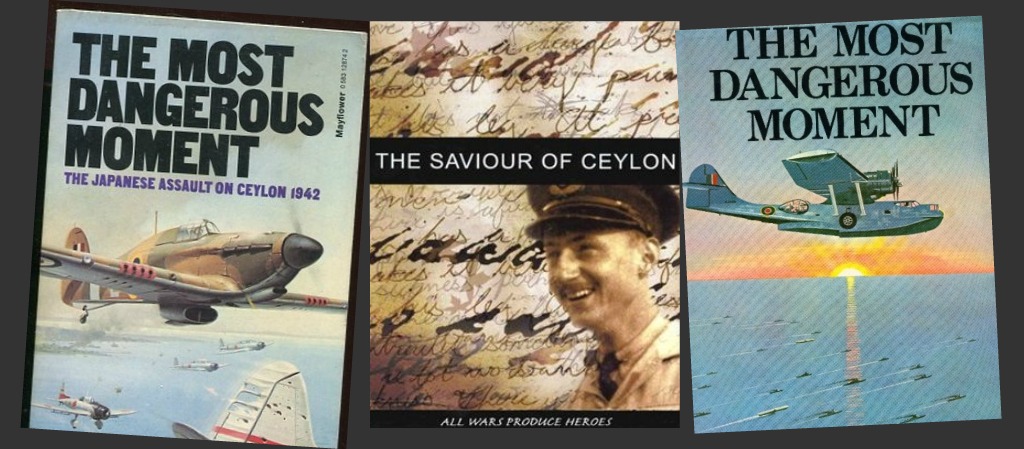
Michael Tomlinson, an Englishman who was posted in Ceylon with the Royal Air Force in 1942, later wrote the definitive book about those fateful days and weeks. Its title, The Most Dangerous Moment, was derived from a remark by British Prime Minister Sir Winston Churchill.

Looking back later, Churchill said the most dangerous moment of the Second World War, and the moment that caused him the most alarm, was when the formidable Japanese fleet was approaching Ceylon.

As it turned out, the Japanese fleet that mounted the air raid on Ceylon was under the command of Admiral Chuichi Nagumo, who, as commander of the First Air Fleet of the Imperial Japanese Navy, had earlier overseen the devastating attack on Pearl Harbour on 7 December 1941.

As Tomlinson has written, “True the [Pearl Harbour] attack was unleashed without a declaration of war and has thus been stamped as an act of infamy, though the Americans had very solid reasons for expecting it and the enormous surprise which the Japanese managed to achieve over the Americans was quite unexpected by their own flyers. Sadly enough when these same airmen, almost man for man the same, were to attack targets in Ceylon four months later, the British, though having extremely accurate and complete intelligence of the Japanese intentions and movements, were taken only a little less by surprise than were the Americans at Hawaii.”

Things didn’t start off that way. The island’s civilian administrators and British military high command had initiated preparations and precautions. These included building several new airstrips, and placing RAF squadrons on the island.

Operating from the Koggala lagoon, on the island’s southern top, Allied airmen conducted aerial patrols of the Indian Ocean using long-range Catalina aircraft – multipurpose ‘flying boats’.

With no satellites in orbit (the Space Age had not yet dawned), and radar still in its infancy, these ‘eyes in the air’ offered crucial surveillance. And the vigilance paid off.

Sq Ldr Leonard Birchall, 'Saviour of Ceylon' aboard his Catalina aircraft

On the evening of 4 April 1942, just before dusk, one Catalina on patrol made a chance observation that changed the course of history. As they were about to turn back, Leonard Birchall, a young Squadron Leader of the Royal Canadian Air Force (RCAF), saw a ‘black speck’ in the Indian Ocean. Upon investigation, they discovered a Japanese aircraft carrier fleet, at the time 400 miles (640km) south of the island.

As the Catalina’s crew took a closer look, its radio operator radioed to Colombo the location, composition, course and estimated speed of the advancing fleet. Moments later, they were shot down by Zero fighters: Birchall and crew mates spent the rest of the War as Japanese prisoners.

The message reached Colombo “a little garbled but essential correct” and immediately passed on to all the Services. But what happened thereafter shows that an early warning by itself serves little purpose unless it is properly acted upon.

I have just written a column on how and why:
Near-misses in the ‘Battle of Ceylon’ (Japanese Air Raid on 5 April 1942)

“Failure in communications all around was to bring tragic results in its wake,” says Tomlinson. “Afterwards, there was even talk about sabotage, but this cannot be taken seriously.”

The Easter Sunday Raid, or the Battle of Ceylon, is well documented. Much to the surprise and disappointment of the Japanese, the Allied naval fleet had been moved out of the Colombo harbour. Another Pearl Harbour was thus avoided.

The Colombo air raid lasted some 20 minutes, and the civilian casualties amounted to 85 dead and 77 injured. The British claimed destroying “27 enemy aircraft” that morning, but the Japanese admitted losing only five. Tomlinson speculates that some damaged aircraft never managed the long flight back.

According to him, only three Japanese planes fell on Ceylonese soil: one each in Horana, on the playground of St Thomas’s College in Mount Lavinia and at Pita Kotte junction.

Hailing from this last area, an eastern suburb of Colombo, I had family elders who actually witnessed the incident. As a schoolboy, I used to walk past that crash site every week day.

Indian Ocean raid April 1942

On April 9, the Japanese bombed Trincomalee harbour on Ceylon’s east coast and also attacked British ships off Batticaloa. The strategic damage was greater, but somehow the defences held. Owing to a combination of factors, the Japanese never returned.

Close to a thousand Allied servicemen lost their lives defending Ceylon that week. But Leonard Birchall survived the notorious Japanese prison camps. Decorated and hailed as the ‘Saviour of Ceylon’, he died in September 2004 aged 89.

A few years ago, Norflicks Productions, a Toronto-based video company, produced a historical documentary about his life. Titled THE SAVIOUR OF CEYLON: The Story of Leonard Birchall (92 mins), it was directed by Marta Nielsen. Producer and Scriptwriter was Richard Nielsen.

See trailer online:

While Pearl Harbour attack and aftermath has been the basis of many documentaries and feature films, the Battle of Ceylon is still under-represented in moving images

While researching for my Sunday column, I stumbled upon two other interesting short video clips on this aspect the Second World War.

They are both evidently computer-generated scenarios, but seemingly well made. Despite some minor historical inaccuracies, they illustrate the rich story-telling potential of this vignette of history, largely overlooked by movie makers.

Easter Sunday Raid: The Battle of Ceylon. Prelude

Battle Of Ceylon

I recently tracked down their creator, Bob Baeyens, who goes by the online moniker Skinny. He says the two clips were made using IL-2 Sturmovik, a World War II combat flight simulator video game that focused on the air battles of the Eastern Front. Here is my brief email exchange with him a few days ago (slightly edited for clarity):

What made you choose the Battle of Ceylon?

We were always looking for (historical) scenarios to create multiplayer missions. Since the game is over 12 years old now, most theaters were covered pretty well, so I bumped in to this one searching for something new — and decided to try making a movie about it as it’s a rather compelling story.”

Do you have a personal link to Ceylon, WW2 or aviation?

No, no and a small one. I used to be a glider pilot.

Why hasn’t anything further happened with Battle of Ceylon film?

The whole jeep/battlefields things must have looked a little weird to you. That’s because its actually a critique and (an) inside joke. I couldn’t get my squad mates from battlefields (on UK dedicated server) to help out making that movie. I needed a couple of real pilots to fly some scenes, drive jeeps, etc. The a.i. in the game made it hard too to make them without human pilots. But I was getting no response or help, so I finally got frustrated and gave up.

I didn’t quite give up; I “finished” it with a parody and a jab! Hence the words, “Best IL2 movie never made”. See this also:

Do you make films for fun, or for a living?

Fun.

Finally, how may I describe you? Is there a website or blogsite or online intro that I can link to?

No need to describe me. If you want to refer to me, use my online
callsign “Skinny”.

Nalaka Gunawardene's avatarWhen Worlds Collide, by Nalaka Gunawardene

Text of my ‘When Worlds Collide’ column published in Ceylon Today Sunday newspaper on 1 April 2012

Few among us have personal memories of the Japanese air raid of Ceylon that happened on the Easter Sunday, 5 April 1942.

Yet the event’s 70th anniversary, falling this week, is a good occasion to reflect on how timely gathering and sharing of information can change the course of history. Although technology has advanced by leaps and bounds since, fundamental lessons can still be learnt.

The Colombo air raid took place exactly 119 days after the Pearl Harbour attack. In that time, the Japanese military had advanced westwards in the Indian Ocean with astonishing speed and success.

When Singapore fell in February 1942, it was widely believed that the next Japanese target was Ceylon. Once their battleships, aircraft carriers and submarines were based in Ceylon, their domination over the Indian Ocean would be…

View original post 920 more words