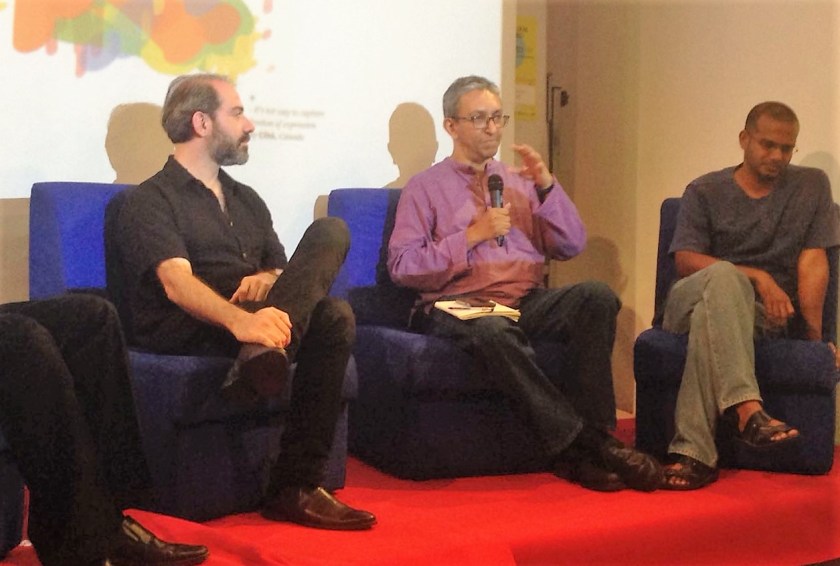
L to R – Kianoush Ramezani, Nalaka Gunawardene, Gihan de Chickera at Night of Ideas in Colombo, 26 January 2017
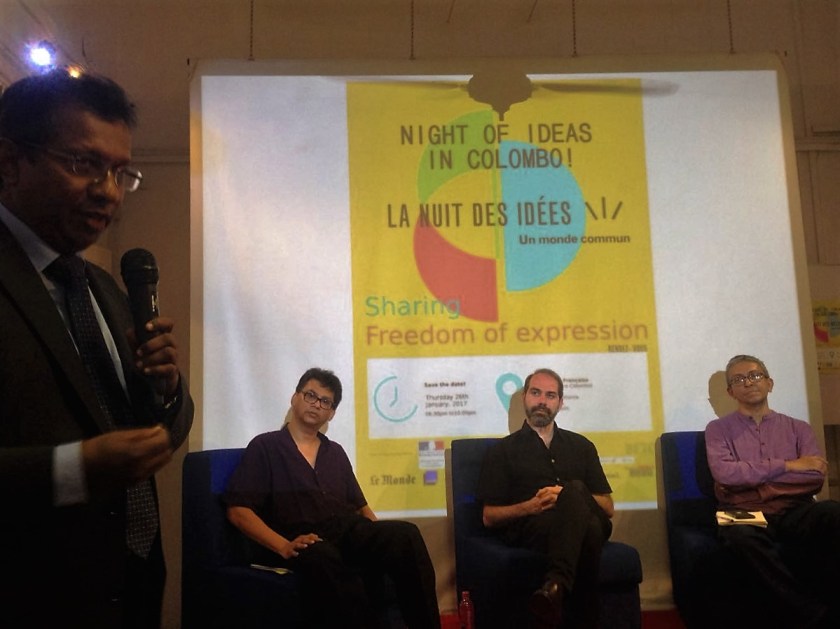
On 26 January 2017, the Alliance Française de Kotte with the Embassy of France in Sri Lanka presented the first ever “Night of Ideas” held in Colombo. During that event, participants were invited to engage in discussions on ‘‘A World in common – Freedom of Expression (FOE)” in the presence of French and Sri Lankan cartoonists, journalists and intellectuals.
I was part of the panel that also included: Kianoush Ramezani, Founder and President of United Sketches (Paris), an Iranian artist and activist living and working in Paris since 2009 as a political refugee; and Gihan de Chickera, Political cartoonist at the Daily Mirror newspaper in Sri Lanka. The panel was moderated by Amal Jayasinghe, bureau chief of Agence France Presse (AFP) news agency.
Human Rights Lawyer and activist J C Weliamuna opens the Night of Ideas in Colombo, 26 January 2017
In my opening remarks, I paid a special tribute to Sri Lanka’s cartoonists and satirists who provided a rare outlet for political expression during the Rajapaksa regime’s Decade of Darkness (2005-2014).
I referred to my 2010 essay, titled ‘When making fun is no laughing matter’ where I had highlighted this vital aspect of FOE. Here is the gist of it:
A useful barometer of FOE and media freedom in a given society is the level of satire that prevails. Satire and parody are important forms of political commentary that rely on blurring the line between factual reporting and creative license to scorn and ridicule public figures.
Political satire is nothing new: it has been around for centuries, making fun of kings, emperors, popes and generals. Over time, satire has manifested in many oral, literary and theatrical traditions. In recent decades, satire has evolved into its own distinctive genre in print, on the airwaves and online.
Satire offers an effective – though not always fail-safe – cover for taking on authoritarian regimes that are intolerant of criticism, leave alone any dissent. No wonder the former Soviet Union and Eastern Bloc inspired so much black humour.
This particular dimension to political satire and caricature that isn’t widely appreciated in liberal democracies where freedom of expression is constitutionally guaranteed.
In immature democracies and autocracies, critical journalists and their editors take many risks in the line of work. When direct criticism becomes highly hazardous, satire and parody become important — and sometimes the only – ways for journalists get around draconian laws, stifling media regulations or trigger-happy goon squads…
Little wonder, then, that some of Sri Lanka’s sharpest political commentary is found in satire columns and cartoons. Much of what passes for political analysis in the media is actually gossip.
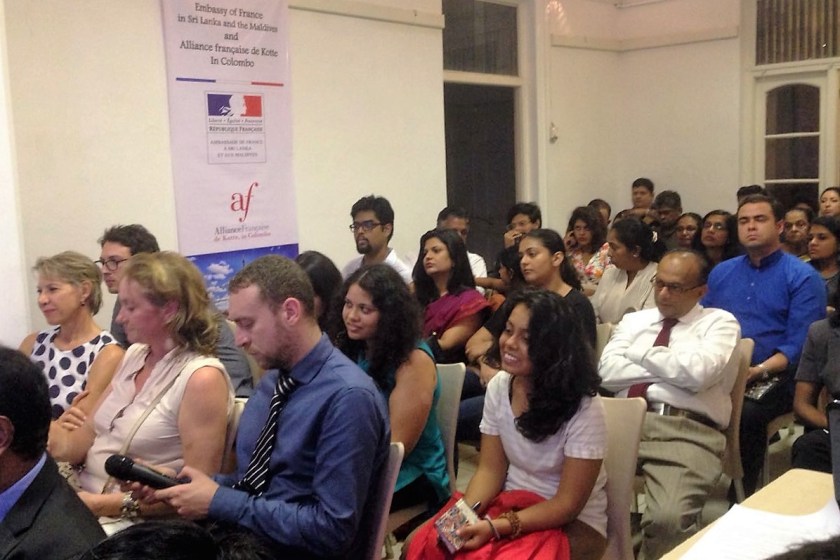
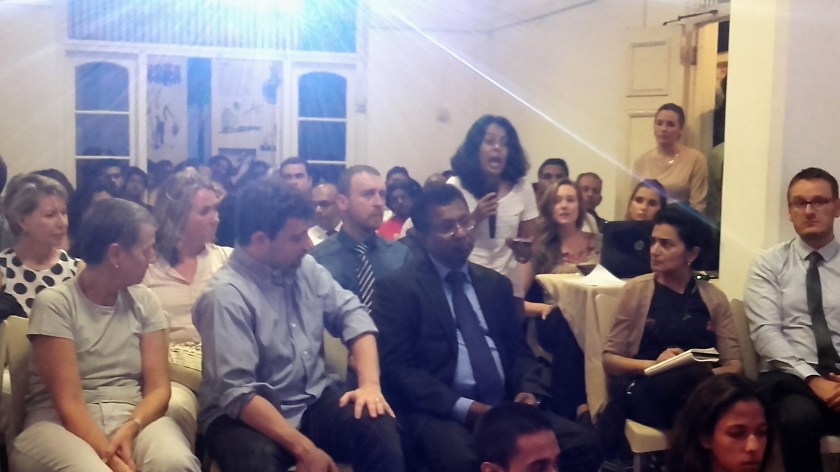
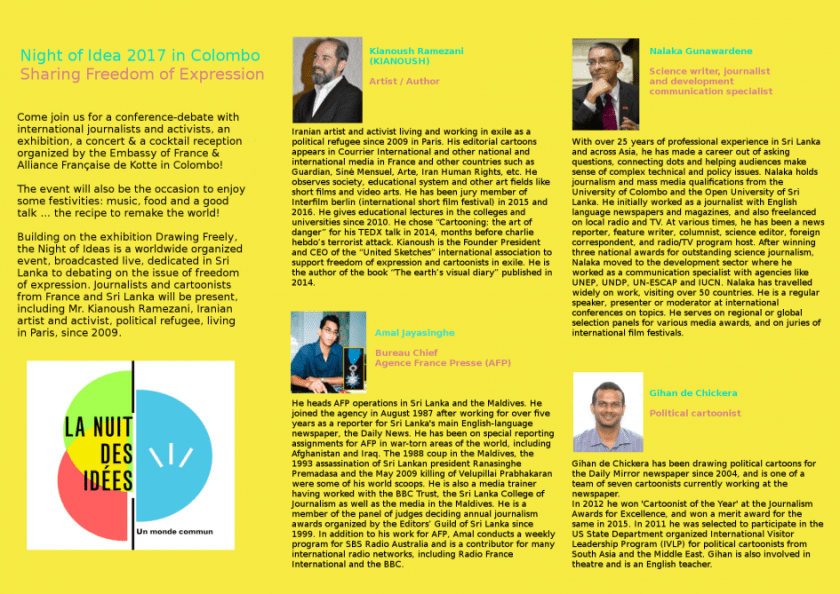
Part of the audience for Night of Ideas at Alliance Française de Kotte, 26 Jan 2017Audience engages the panel during Night of Ideas at Alliance Française de Kotte, 26 Jan 2017Night of Ideas in Colombo – promotional brochure
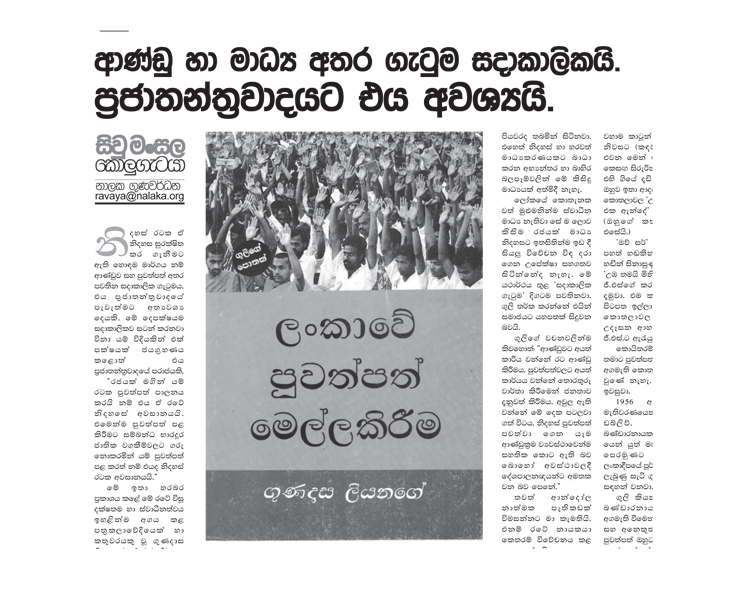
Sivu Mansala Kolu Getaya column by Nalaka Gunawardene, Ravaya 14 Aug 2016
In this week’s Ravaya column (appearing in the print issue of 14 August 2016), I take a close look at the perennial tension between governments and the media.
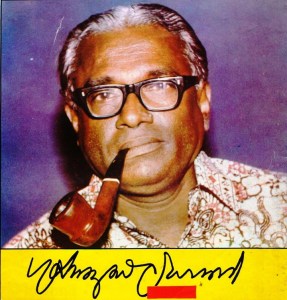
I open with an extract from late Gunadasa Liyanage (1930-1997), one of Sri Lanka’s most accomplished and respected editors of the 20th century. In his 1993 book on ‘Taming the Press in Sri Lanka’ (in Sinhala), he argued that the never-ending confrontation between the government and media is, in fact, a protection for democratic freedoms. If either party wins, it is a set back for democracy.
“If a government controls the media that marks the end of human freedoms in that country. On the other hand, if the media behaves without any responsibility, that too threatens freedoms in society,” he wrote.
So the tension between these two continues in 21st century Sri Lanka, even as we recover from a Decade of Darkness (2005-2014) under the authoritarian rule of Mahinda Rajapaksa. As the government elected in 2015 tries to balance media freedoms with economic growth and political reforms, it faces some familiar challenges.
How much can or should the government allow ultra-nationalists and other political opportunists to exploit media freedom? What are the sane and safe limits to which media houses should accommodate partisan agendas and vitriolic messages emanating from sections of the (serving and retired) military, clergy and electorally defeated political parties?
This column also quotes Vijitha Yapa, one of Sri Lanka’s most senior journalists who was founder editor of The Island, The Sunday Island and the (revived) Sunday Times – all of which positions he quit when he could no longer operate with editorial independence.
I also raise a related point: how far can the President and Prime Minister be criticized in the media?
‘ලංකාවේ පුවත්පත් මෙල්ල කිරීම’ – Taming the Press in Sri Lanka, by Gunadasa Liyanage (1993)



 Open Minds!