A Silent Emergency: More television sets than toilets!

Read a later blog post: Faecal Attraction: There’s no such thing as a convenient flush…

It was September 2004. My daughter Dhara, eight years at the time (or ‘eight plus’ as she insisted on saying), had a complaint.

The toilets in her school were not clean enough. She was finding it squeamish to use them. So she was doing her best to avoid going to the loo: she’d drink less, and try to ‘hold back’ until she could rush home.

Like many sheltered middle class kids, she was still coming to terms with the wider world outside her home. And she attends a well endowed private school where, I am told, toilets are cleaned regularly by janitors engaged by the school.

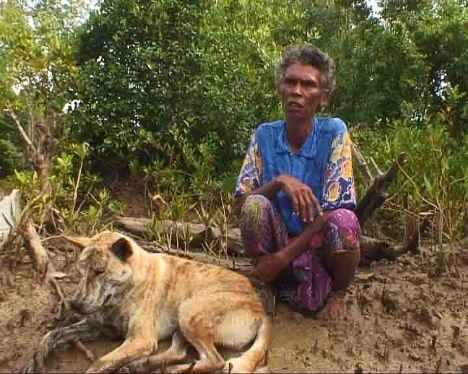
Now we cut to eleven-year-old Susheela, a girl growing up in neighbouring India. I’ve never met her in person, but this sentence summed up her tragic story:
“I was always first in the class. I am very much interested in studies. I want to become a lawyer. But my mother stopped me from going to school after Class V as the middle school I was attending, 5 km from my house, had no toilet. Can someone help me?”

This was the opening of an article on water and sanitation written by Indian journalist Dr Asha Krishnakumar and published in the news magazine Frontline (part of The Hindu group) at the end of 2003. It was titled: A Silent Emergency.
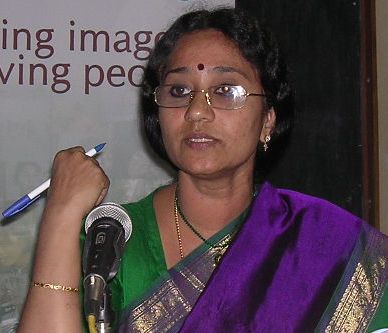
dr-asha-krishnakumar.jpg Image courtesy WSSCC

It was several months later that I actually read Asha’s article. By coincidence, my daughter was having her own ‘toilet issue’ at the time — and the contrast was striking.

Asha’s article continued:
Susheela’s anguish is shared by a large number of girls in India who drop out of school for what sounds like an absurd reason: want of a toilet in school. “Sanitation is closely linked to female literacy in India,” says a United Nations Children’s Fund (UNICEF) study. According to V. Balakrishnan, convener of the Tamil Nadu Primary Schools Improvement Campaign, the lack of proper toilet facilities in schools has a definite and significant bearing on the drop-out rate of girls, particularly around the time they reach Class VIII. In 2000, barely 10 per cent of Tamil Nadu’s 40,000 government schools had usable toilets; the figure is much lower for the country as a whole.

I’d been covering development issues in the media for over 15 years, but this stark reality had not occurred to me. In some developing countries, girls face a greater struggle in enrolling in school and staying on. There are cultural, social and economic factors working against educating girls.

And as Asha’s article revealed, there are other, less known factors adding to this burden.

I shouldn’t have been surprised. Indian census data had revealed in 2001 that, some parts of the country had more television sets than toilets.

Asha’s was one of three dozen excellent media articles on water and sanitation that I read that month as a judge in an international award scheme to recognise the best media reporting on the issue. Organised by the Water Supply and Sanitation Collaborative Council (WSSCC), it was meant to to encourage broader media coverage of water supply, sanitation and hygiene (WASH) issues in the developing world.

The initiative, first launched in 2002, is open to journalists from developing countries, who write or broadcast original investigative reports on WASH issues. The Collaborative Council seeks to use the WASH Media Awards as part of the broader goals of fostering sustainable relations with journalists in developing nations, and increasing media coverage of WASH issues.

WASH has recently announced the next media awards, covering print and broadcast media coverage from 1 July 2007 to 30 April 2008. This time around, it also involves the Stockholm International Water Institute (SIWI).

Winning entries will be presented at the World Water Week in Stockholm , Sweden in August 2008. Deadline for the submission of entries is on or before May 15, 2008. Read the announcement

In 2004, the recipient of the first WASH Media Award was Nadia El-Awady from Egypt for her outstanding article “The Nile and its People”. It illustrated the impacts of industrial pollution, sewage and solid waste management on people’s health and dignity along the River Nile.

We evaluated a large number of high quality entries and decided to give special recognition and Certificates of Appreciation to several other journalists. Asha was one of them.

A few months later, it was my privilege to meet Asha in person at a workshop on media and sustainable development that TVE Asia Pacific organised as part of the Education for a Sustainable Future conference in Ahmedabad, India, in January 2005. The photo shows Asha addressing our workshop while Darryl D’Monte, fellow judge in WASH media awards looks on.
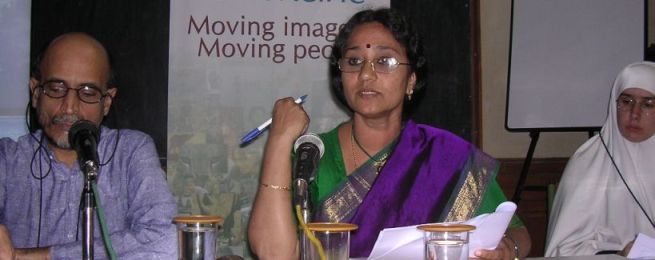
l-to-r-darryl-dmonte-asha-krishnakumar-and-nadia-el-awady.jpg

By another coincidence, the lady on the right is Nadia El-Awady who was overall winner of the WASH media award. At the time she was the Health and Science Page Editor of IslamOnline.net. She has since been promoted.

Either the world is smaller than we think, or our networks are larger than we imagine.

But I will always be grateful to Asha for opening my eyes on a silent emergency. One that I have since explained to my daughter. She no longer complains.

Read the WASH press release on 2004 media award winners

Read the publication on WASH Media Awards 2004

Read WASH media guide on The Biggest Scandal of the last 50 Years

Photos by Janaka Sri Jayalath, TVE Asia Pacific

Love Thy Mangrove: A Greenbelt Report from Pra Thong island, Thailand

jureerat-pechsai-deun.jpg

This is Jureerat Pechsai, nicknamed Deun.

She is a member of the Moken community – indigenous people living on the coast and islands on Thailand’s southern coast. Their nomadic lifestyle has earned them the name Sea Gypsies. In Thai, they are called Chao Ley — or people of the sea.

They traditionally live on small boats and move from place to place. When the Monsoon rains make the seas rough, they set up temporary huts on islands – such as Pra Thong Island, where Deun lives.

Pra Thong is an hour’s boat ride from the mainland city of Phuket — some conservationists call it one of the “Jewels of the Andaman” for its biodiversity. It is also an important nesting beach for turtles.

It was on this island that my colleagues from TVE Asia Pacific met and filmed with her in late 2006 for our Asian TV series, The Greenbelt Reports.

The Asian Tsunami of December 2004 devastated the Moken way of life. Their temporary huts were destroyed, and many families lost loved ones. The losses would have been greater if not for the mangrove forest close to the Moken village.

“Moken loves the water, the forest and everything. And we love the mangrove forest the most. The mangrove forest is like a living creature that has helped the Moken people for years. It’s our most beloved place on the island,” says Khiab Pansuwan, an older woman who is a leader in Deun’s community.

After the Tsunami, some Moken felt that they could not return to their nomadic lives. They have chosen to live on the mainland where they feel safe from the waves. Others who remained on their island had new, permanent houses built for them. But the Moken are quick to abandon these whenever they hear rumours of more Tsunamis.

Watch The Greenbelt Reports: Love Thy Mangrove on YouTube:

The mangrove replanting work on Pra Thong island is led by two women, Khiab and Deun.

Deun has been a volunteer with conservation organisations. She learnt about ecosystems and how to protect mangroves and endangered species like sea turtles. She can see many changes in her environment after the tsunami.

“After the tsunami, there are a lot of changes. We didn’t have much grass before, but now weeds are everywhere. The weeds are now more than grass,” says Deun. “In the past, we used to have more and more beach every year. But now the sea has come so close…”

khiab-pansuwan.jpg

The Tsunami’s impact is not the only factor affecting the mangroves here. Dynamite fishing, oil from boats, foam from fish and oyster nets are all damaging this life-saving greenbelt. Some people also cut down mangrove trees.

But Khiab and Deun are determined to rally everyone around to replant and regenerate their mangroves.

Says Khiab: “The community forest is part of the Moken people. We don’t want to cut the trees or clear it. We want to replant the trees so the forest is like before. We don’t want anyone to cut down trees because the mangrove forest saved many Moken lives.”

The two women are determined to rally everyone around to replant and regenerate their mangroves.

Replanted mangroves will ensure not only protection from the waves, but also a continued supply of shell fish and crabs – the main source of income and food for the Moken.

The Moken have traditionally managed the mangroves sustainably. They fish in different areas of the forest during the year, giving time for fish stocks to regenerate. Logging for firewood is done only in moderation, in designated areas.

But these mangroves are now under threat from outsiders who see it as a source of firewood and shell fish. Only a few Moken are left in the village to protect the forest from these intrusions.

Khiab and Deun have much work to do.

NOTE: We are now looking for more stories like this to be featured in the second Asian TV series of The Greenbelt Reports. See TVEAP website news story calling for story ideas.

All images and video courtesy TVE Asia Pacific

Who makes the best ‘Alphabet Soup’ of all?

Image courtesy Wikipedia

Take a close look. This is the original Alphabet Soup.

It’s is a kind of soup containing noodles shaped like the letters of the Latin alphabet. According to the ever-helpful Wikipedia, it comes as a prepared, canned vegetable soup with letter-shaped noodles. Read full Wikipedia entry

Metaphorically, alphabet soup means “an abundance of abbreviations or acronyms”. In this sense, the term goes back at least as far as President Franklin D. Roosevelt’s alphabet agencies of the New Deal (1933-38). In the United States, the Federal Government is described as an ‘alphabet soup’ on account of the multitude of agencies that it has spawned, including the NSA, CIA, FBI, USSS, BATF, DEA and INS.

But Uncle Sam’s expertise in making alphabet soups has been challenged by another entity – the United Nations. (Interestingly, Roosevelt was an architect of the UN, and coined the term with Winston Churchill). The UN’s propensity for enriching the alphabet soup has few parallels.

In the early 1990s, when I was earning a living as a UN consultant in Asia, I had to wade through the sea of acronyms and abbreviations as part of my daily bread. Funnily enough, some high-level peddlers of arconyms no longer even remembered what they stood for!

The UN has enriched the alphabet soup even more in the years since. MDG is a current favourite – it stands for Millennium Development Goals, a blue print for achieving basic socio-economic development by 2015.

It’s not just the UN, but the entire development community that is in love with coining abbreviations and then liberally bandying them about. Some are manageable. Others are unpronounceable tongue-twisters. PLWHA comes to mind – that stands for Persons Living with HIV/AIDS.

And then there are too many meanings or expansions for the same abbreviation, causing confusion to those who don’t know the context. ICT is a good example. We in media and development circles use it to mean Information and Communications Technologies. But the Wikipedia shows at least another two dozen meanings for the same three letter combination!

Journalism taught me to explain every technical term and abbreviation when introducing it. I still do, but on the whole I avoid abbreviations if we can help it.

But I have to watch out. A colleague reminded me recently that I’ve been happily coining inhouse acronyms myself. Examples:
GBR – The Greenbelt Reports (Asian TV series)
STP – Saving the Planet (Asian regional project and upcoming TV series)
D4C – Digits4Change (Asian TV series)

Does this make me a minor chef in expanding the Alphabet Soup?

Maybe it does! If I can’t beat ’em, I’ll join ’em….

‘Toxic Trail’ continues its trail across Asia

mongkon-tianponkrang.jpg mongkon-tianponkrang-of-tef.jpg
Meet Mongkon (Mong) Tianponkrang.

He is a Programme Coordinator with the Thai Education Foundation (TEF), a non-profit organisation working to improve education in Thailand at all levels, especially using non-formal methods.

I met Mong earlier this month during our regional workshop on communication capacity building under TVE Asia Pacific‘s Saving the Planet project.

TEF’s School and Community Farmland Biodiversity Conservation project is one of six stories that was chosen from among dozens of public nominations to be featured in the Asian regional TV series we are working on, titled Saving the Planet.

Saving the Planet will feature remarkable initiatives from South and Southeast Asia by educational, civil society and community groups engaged in Education for Sustainable Development (ESD).

Mong was a live wire during our 5-day workshop in Khao Lak, Thailand. We encouraged everyone to share experiences in communicating with their respective audiences, using whatever communication methods and means (media or non-media).

At one point, Mong started describing how he and his team have been using a video film called Toxic Trail that takes a critical look at the use of pesticides in crop cultivation in Thailand and neighbouring countries.

He described how they’d found the film’s Thai version very useful in their work with farmers, housewives and other community members.

This was a fine coincidence: he didn’t know until then that we at TVE Asia Pacific had been involved in versioning Toxic Trails, originally produced in English, into half a dozen Asian languages including Thai. That was back in 2002.

Toxic Trail is a two part documentary that was produced in early 2001, directed by a long-time friend and colleague Janet Boston (who today heads the Thomson Foundation, which has a 40-year track record in training journalists in the developing world). It was first broadcast on BBC World in April 2001.


Image courtesy Community IPM website

It followed Russell Dilts, an expert working with the United Nations Food and Agriculture Organisation (FAO) as he investigated the pesticide industry in South East Asia. The trail begins in Thailand, moving to Cambodia and ending in Indonesia. The main focus, however, is on Cambodia, where Dilts uncovers major problems in the misuse of pesticides.

Dilts makes stark and horrifying findings: the mass use of pesticides is progressively destroying delicate local ecosystems, as well as causing many health problems to farmers and their families involved. Eventually, everybody is affected by consuming agricultural produce with high levels of pesticide residues.

Read TVEAP website feature on Toxic Trail (Aug 2002).

Read key issues raised by Toxic Trail films

Image courtesy Toxic Trail website

Interesting things happened following the release of Toxic Trail in 2001. First, the FAO came under intense pressure from pesticide companies for having supported an investigative film that probed the reality of product stewardship that these companies claimed existed.

Stated simply, Product Stewardship is when companies take the responsibility for their products. It includes the monitoring of the distribution of products with regard to choice of outlet and method of sale. Toxic Trail questioned how this concept was being practised in developing countries such as Thailand and Cambodia.

Clearly, the companies didn’t like what was disclosed with tangible, visual evidence. In the weeks that followed the film’s release, and its high profile broadcast on BBC World, at least three heads rolled at FAO’s Integrated Pest Management (IPM) programme for Asia.

But by then the genie was out of the bottle. The BBC broadcast may have been watched by a handful of officials, diplomats and businessmen who walk the corridors of power. But a much larger Asian audience was reached by our versioning the films into Bahasa Indonesia, Hindi, Khmer, Mandarin, Sinhala and Thai — which, between them, are spoken by close to two billion people. These versions have been broadcast and narrowcast through numerous outlets ever since.

And as Mong reminded us earlier this month, the films are still in good use, several years after their production and versioning.

One clear lesson: it’s not just enough to produce a good TV film. How much it is seen and used depends on the amount of promotion, local adaptation and subsidised or free distribution that goes with it.

In the case of Toxic Trail, there was a network of promoters for IPM and sustainable agriculture who picked it up and ran with it — and continue to spread the word.

Meanwhile, we should be releasing more such ‘genies’ out of their bottles…

Visit Community IPM website

Look up more online resources on integrated pest management

Photos of Mongkon Tianponkrang by Indika Wanniarachchi of TVEAP
Other images courtesy Toxic Trail website

Pay-back time for film-makers: Go back to your locations!

“These days it’s simply not good enough to use the old response… “If people know about it they’ll care for it and do something”. Wrong. They’ll just go on being conned that it’s all perfect out there, with endless jungles, immaculate Masai Maras, and untouched oceans. What planet are they on about?”

These words come from Richard Brock, one of the world’s leading and most senior natural history film makers.

If you haven’t heard his name, chances are that you know at least some of his many creations: he worked in the BBC Natural History Unit producing, among others, the highly successful Life on Earth and Living Planet series presented by David Attenborough.

Image courtesy The Brock Initiative Image courtesy Brock Initiative

The BBC Natural History Unit (NHU) is a department of the BBC dedicated to making TV and radio programmes with a natural history or wildlife theme, especially nature documentaries. It celebrates 50 years in 2007.

Richard Brock worked with them for 35 of those 50 years. He left them a few years ago, according to his own website, ”concerned by the lack of willingness to address the real current state of the environment”.

He then started his own independent production company, Living Planet Productions, which has made over 100 films on a wide range of environmental topics, shown all over the world. As his archive of films and footage mounted up, Richard felt that there was something more, better, that could be done with this resource.

“We’ve been celebrating nature by bringing its wonders to the TV screen all over the world. Now that world is changing, faster and faster, and nature needs help. Films can do that, at a local level, be it with decision-makers in the government or in the village,” he says.

He adds: “When you consider the miles of footage and thousands of programs sitting in vaults out there unused, it seems tragic that the very wonders they celebrate are dwindling, often because no one tells the locals and tries to help. That is why I believe its Payback Time for the wildlife television.”

Thus the Brock Initiative was born. To quote from their website:
“He decided to set up the Brock Initiative, to use his archive of footage, and to ask others to do the same, to create new programs, not made for a general TV audience, but made for those who are really connected to the situation in hand: local communities, decision makers, even that one fisherman who uses dynamite fishing over that one coral reef. Its about reaching those who have a direct impact; reaching those who can make the difference.”

As he emphatically says: “Showing the truth on some minority channel is not the answer. Showing it where it counts, is.”

Image courtesy The Brock Initiative

I hope those development donors and corporate sponsors, who try to outdo each other in supporting programming going out on BBC World (an elite minority channel in most markets) hear people like Richard Brock — long-time BBC insiders who know what they are talking about.

Those who make documentaries on wildlife, natural history or environment (and wild-life of humans) are trapped in their industry’s many contradictions. They go on location filming to the far corners of the planet, capturing ecosystems, species and natural phenomena. Yet for a long time, many have avoided talking about or featuring the one species that has the biggest impact on Nature: Homo sapiens (that’s us!).

Whole series of wildlife documentaries have been made, by leading broadcasters and production houses of the east and west, without once showing a human being or human activity in them. Almost as if humans would ‘contaminate’ pristine Nature!

In recent years, more film-makers have broken ranks and started acknowledging the human footprint on the planet and its environment. But a good many documentaries are still made with ‘pure’ wildlife content, with not a thought spared on the wild-life of our species.

Richard Brock is one who has refused to follow the flock. And he has also punctured the highly inflated claims — promoted by BBC Worlds of this planet — that broadcast television can fix the world’s problems.

As we have found out here in Asia, it’s a judicious combination of broadcast and narrowcast that can work – and we still need the participation of teachers, activists and trainers to get people to think and act differently.

At their best, broadcasts can only flag an issue or concern to a large number of people. For attitudes and behaviour to change, that needs to be followed up by narrowcast engagement at small group levels.

Taking films to the grassroots need not be expensive, says Brock. In fact it can be done inexpensively.

These are not programmes for broadcast to western audiences demanding BIG productions – you are often showing films to people who have never even seen TV. The effort comes in showing the right thing, to the right people, in the right way, and not about expensive effects, top quality cameras or cutting edge effects.”

Using donated archive footage cuts costs dramatically. New footage, important for putting a film in a local context, can be taken on small miniDV cameras and editing can be done on any home computer. In this way, it becomes feasible to put together a film even for a very small, but crucial audience.

The Brock Initiative, started and funded by donations from its founder, has projects in Kenya, Madagascar, Tanzania, the UK and Indonesia.

Read more about the Indonesia project

They also offer wildlife and nature footage free to those who want to use moving images to make a difference.

Read Richard Brock’s formula for making films that make a difference!

As our species’ wild-life pushes our living planet closer to peril, we need many more Richard Brocks to try and reverse disturbing trends at the edges of survival — almost all of them in the global South.

It’s pay-back time, film-makers!

Related blog posts:
End this callous waste – open up broadcast archives for combating poverty and ignorance

Lawyers who locked up the butterfly tree

Anita Roddick, Angkor Wat and the Development Pill

Contact The Brock Initiative

Playing Shahrazad; Telling Stories to Save Ourselves…and the Planet

I’ve been silent on this blog for over 20 days. I like to think that was for a good cause.

Well, I was frightfully busy organising and running a small Asian regional workshop in Khao Lak, Thailand – it was part of TVE Asia Pacific’s Saving the Planet project.

Saving the Planet is telling real life stories to save our planet in peril. It was inspired by the Arabian Nights.

Remember how the clever and beautiful Shahrazad saved herself and other women in her kingdom from the murderous King Shahriyar? Once betrayed by a wife, the wicked ruler had embarked on a killing spree where he would wed a virgin bride everyday, and have her beheaded the day after the wedding. All girls and women in his kingdom were threatened.

That is, until, beautiful and clever Sharrazard volunteered to be the next bride. Facing an assured death, she starts telling the king engaging stories that holds him spell-bound. Her story, or stories, since many tales are interwoven and imbedded into the first, lasts for 1001 consecutive nights.

This story-telling captivated the king’s attention and held his patience with its fantastic and mysterious tales, its vivid descriptions and breath-taking heroism. Shahrazad’s story-telling is in itself a heroic and life-saving device, which finally forced the king to spare the wise and courageous girl’s life. Apparently he gave up his killing ways after that experience (if only some of our modern day rulers were so easily reformed!).

Image courtesy Rose TheatreImage courtesy Middleeast UK.comImage courtesy Middleeastuk.com

Read more about Arabian Nights

Story telling is more an art than a science. Shahrazad used it to save her life, and lives of all other women in her kingdom. Mythical as it may be, we can draw a few lessons from the Arabian Nights on what kind of stories to tell — with visible effects.

Good journalism is all about telling stories — real life stories about what happens to real world men, women and children. Mixing journalistic skills with development stories as we do, Saving the Planet is an attempt to tell a few good stories from the Asia Pacific — about individuals and organisations who are engaged in education for sustainable development, or ESD.

As we introduce the project on its dedicated website:
Confronted with a range of environment and development problems, the world is looking for bright ideas to sustain life on the planet. Education at all levels can shape the world of tomorrow, equipping individuals and societies with the skills, perspectives, knowledge and values to live and work in a sustainable manner. Education for Sustainable Development (ESD) is a vision of education that seeks to balance human and economic well-being with cultural traditions and respect for the earth’s natural resources.

copy-of-saving-the-planet-logo.jpg dd8.gif

Saving the Planet started with an open competition – we asked people to nominate projects or activities in developing countries of Asia that are communicating or educating their communities on any aspect of sustainable development. Not just ‘green’ issues (e.g. recycling, conservation) or scarey issues like climate change and ozone depletion, but also ‘brown’ issues (e.g. sanitation, cleaner production) and what I call ‘black and white issues’ – human rights and social justice.

We received dozens of nominations, which we turned over to a regional selection panel. Their final selection was announced in mid May 2007 – see my blog post on the winners.

Read more about the winning stories on Saving the Planet website

The idea is for us to go out and film each of these winning projects for an Asian regional TV series. But ahead of that, we brought to Khao Lak, Thailand, two representatives of each project/organisation for a week-long workshop, 2 to 6 July 2007.

That workshop sought to strengthen the communication skills and capacity of the six organisations. Not just in moving images, which we dabble in, but in new media and older media as well. In short, how to use media and other communication tools to reach out to different audiences and, hopefully, influence them in positive ways that help them — and the planet.

This is why Saving the Planet is also story telling for survival – and here we are talking about the survival of not just one individual, but of all life on the planet. And instead of one evil king, our story tellers are confronted with a multitude of threats to our survival, many of them of our own making.

The analogy with the Arabian Nights is not as far-fetched as it might seem. The success of the Arabian Nights stories over many other forgotten folk tales may be due to their blend of popular themes: heroic and romantic adventures are littered with mystery, old wisdom and exciting struggles between good and evil. Almost all tales have three main elements or notions. Firstly, if there is a problem, there is a solution. Secondly, endurance can enable a crisis to reach a resolution. And finally, fantastic elements help the protagonists to maintain their endurance.

So one thing we kept probing and discussing was how to package serious (and often perceived as ‘boring’) development messages in ways that engage and entertain groups or communities we are trying to reach.

I’ll write more about the workshop when I have a chance. The official report of the workshop will go up on TVEAP and Saving the Planet websites within a few weeks.

For now, here’s the photo of our participants, together with the resource team and my colleagues from TVE Asia Pacific.

participants-and-resource-team-of-saving-the-planet-workshop-in-khao-lak-july-2007.jpg

Saving the Planet is implemented by TVE Asia Pacific in collaboration with the Asia/Pacific Cultural Centre for UNESCO (ACCU),Tokyo, Japan, within the framework of ACCU-UNESCO Asia-Pacific Programme under the UNESCO/Japan Funds-in-Trust for the Promotion of Education for Sustainable Development.

Saving the Planet, one tiny step at a time

A youth theatre group that tours the Philippines, engaging small groups on history, culture and development.

A public radio station that takes up development issues through on air reporting and discussions in Nepal’s Kathmandu valley.

A project that brings together Thai school children and farmers to study and understand farmland biodiversity.

These are among the winning projects that have just been selected to be featured in TVE Asia Pacific’s new regional TV series, Saving the Planet.

Six projects or activities – each addressing an aspect of education for sustainable development (ESD) – have been chosen from worldwide public nominations.

saving-the-planet-logo.jpg

Click here for full list of competition winners.

Read TVEAP news story announcing the winners.

I was part of the International selection panel that sifted through dozens of public nominations from all over the world. Reading these was an inspiring experience. In a world that is full of doom and gloom type of news, there still are individuals, groups and communities who are doing their bit to live within our planet’s means….that’s what sustainable development is all about.

The joint statement by the selection panel noted: “The selection panel was impressed by the breadth and scope of nominated activities, which indicates that all across developing Asia, there is an upsurge of concern and commitment to living within the planet’s resources.”

Read the full statement by selection panel

I have always held that governments or scientists can’t save the planet – people can. In the final analysis, all the inter-governmental babble and scientific research are means to an end. Unless people change their attitudes and lifestyles, all that governments or science can do is to buy us more time — which will run out sooner or later.

In Saving the Planet, we are going to showcase some Asian communities and groups who are not just walking the talk themselves, but showing others how to do it as well.

The new TV series will go into production by July, and will be released next year. Watch this space.

Feeding Oliver Twists of the world…and delivering UN logos with it!

“Please, Sir: I want some more!”

These simple yet evocative words were etched into our memories by Charles Dickens, who created the story of Oliver Twist (1838), the poor orphan struggling – and suffering – in 19th century England.

Dickens mocks the hypocrisies of the time by surrounding the novel’s serious themes with sarcasm and dark humour. The novel may have been inspired by the story of Robert Blincoe, an orphan whose account of his hardships as a child laborer in a cotton mill was widely read in the 1830s.

Image courtesy Wikipedia

The world has seen unprecedented creation of wealth since those dark and miserable days 180 years ago. But sadly, there still are hundreds of millions of children who share young Oliver plight — or worse: many go to bed entirely hungry in a world that does not have an overall shortage of food anymore.

Fighting Hunger 2007

Today, 13 May, thousands of people in different parts of the world will walk wherever they can as part of a global campaign in support of ending hunger – one lingering great shame of our time.


Fight Hunger: Walk the World
is a global fundraising and awareness event that takes place every year in all times zones with one sole purpose – to call for an end to child hunger.

Fighting hunger website tells us:

Hunger is more than having an empty stomach. Hunger means not getting the necessary daily nutrition to lead a fully active, productive and healthy life.

Hunger affects more than 800 million people around the world. A child dies every 5 seconds because he or she is hungry.

This year, the organisers – led by the UN World Food Programme – had a viral video contest. It asked anyone, anywhere to do a short video promoting the event – and the issue of hunger – and upload. Some interesting videos have been received — even if some are blatantly in-your-face propaganda for the UN WFP.

That’s my big, long-lasting complaint about the UN family of agencies addressing and tackling the world’s ills. After a while, they allow their worthy issues to be eclipsed by their own self-promotion, public relations and spin. I wrote last month about how the entire MDG campaign has been subsumed by needless volumes of spin.

If only the World Food Programme and its sister agencies can resist their temptation to see every campaign, issue and programme as a logo-delivery mechanism, they will do a whole lot more good.

For that reason, while I will privately walk and think of those in hunger today, I will not contribute any money to the bloated bureaucracy of the United Nations World Food Programme. I would also ask that they go before a mirror today just before they step out to go walking with the world — and sincerely ask: do you see part of the problem or part of the solution?

Thank you, WFP, for delivering food to tens of millions of people worldwide who would not otherwise be fed, or fed adequately. But try and deliver a little less of your image and your logo, if you can. (We saw so much of this happen in the days and weeks that followed the Asian Tsunami disaster, and it was simply disgusting.)

Both hunger and hypocricy thrive nearly two centuries after Dickens and Oliver Twist. We must walk today to end not just one, but both!

Happy walking, everyone.

Watch the winning and commended videos in Fighting Hunger online video contest

Read UN WFP fact sheet about hunger worldwide

Nepal’s Aankhijhyal is 500 — and counting!

Aankhijhyal is a Nepali word. It means window.

Aankhijhyal is today also a ‘brand name’ in Nepal. It’s Nepal’s most popular TV magazine programme on environment and social development, which recently produced its 500th edition.

Aankhijhyal logo NEFEJ logo

The half-hour programme has been produced regularly since May 1994. Now in its 13th year, it is one of developing Asia’s longest running television shows.

The landmark 500th edition was broadcast on 27 February 2007. In this special programme, its producers, the Nepal Forum of Environmental Journalists (NEFEJ), looked back at the interesting and challenging times they have chronicled and investigated.

And last night in Kathmandu, the Nepali capital, I sat down with a team of friends from NEFEJ to belatedly celebrate the occasion.

A dozen journalists, producers and film-makers joined us. We chatted away well into the night. There was no longer any worries about curfews and army check-points.

“We don’t often get together like this as one big group,” said Rabindra Pandey, head of Audio-Visual at NEFEJ. “Most of the time, we are too busy to socialise. We are chasing deadlines, or stories, or sponsors!”

There is much to cheer, both at micro and macro levels.

Sustaining a half-hour show on television is no mean feat in any part of the world, especially in a low income country like Nepal. Broadcasters here don’t put any money in programmes like Aankhijhyal . In fact, NEFEJ not only produces the show entirely at its own cost, but also pays for airtime on Nepal Television to get it out to the public! That’s the broadcast reality that many of our western colleagues are often unable to understand.

And the general feeling right now in Nepal is upbeat. After Nepal’s own People Power revolution of April 2006, people are hopeful that their ‘second chance in democracy’ can actually work better. While the streets of Nepal are as dusty and chaotic as ever, I can see far more tourists and far fewer soldiers on the roads now than on previous visits in recent years.

NEFEJ is a non-profit collective of journalists committed to communicating sustainable development issues. Foundecd 20 years ago, it has a much better record of democracy than Nepal itself: every year, office-bearers are democractically elected by its over 100 members. There is regular ‘change of guard’ at the top.

NEFEJ is also one of the oldest and strongest parters for us at TVE Asia Pacific.

Aankhijhyal is the organisation’s ‘crown jewel’. It’s the centrepiece of NEFEJ’s Audio Visual Department, and has been widely acclaimed for its investigative approach to sustainable development and social justice issues.

From land reform and agrochemical misuse to the conservation of heritage sites, and from the trafficking of women and children to HIV, Aankhijhyal has been covering a broad range of issues, concerns and controversies in the public interest. While remaining apolitical, the programme has also reflected the human, social and environmental costs of Nepal’s violent insurgency and pro-democracy struggle in recent years.

Filming Aankhijhyal - image courtesy NEFEJ

“Since its inception in 1993, we have come a long way and Aankhijhyal has managed to create awareness among the Nepalis on the issues related to environment and development,” says Rabindra. “Aankhijhyal still remains one of the most popular video magazines on Nepal Television.”

Aankhijhyal’s passing 500 editions is all the more significant because it has been sustained without a break by this non-profit cooperative of journalists. Whether or not external funding was available, NEFEJ has continued producing the programme – often using its own savings from other, better-funded projects.

And it was clear to me last night that they have no intention of resting on their laurels.

“There’s so much happening in Nepal today. We are living in a period of rapid change. We feel one half-hour show a week is not enough to capture the unfolding stories,” said NEFEJ’s current President, Sahaj Man Shrestha, himself a former CEO of a private TV channel in Nepal.

Image courtesy NEFEJ

Read TVE Asia Pacific news item: Nepal’s premier TV magazine Aankhijhyal is 500 (27 Feb 2007)

NEFEJ Aankhijhyal online archives

More about NEFEJ Audio-Visual Department

Read Indian magazine Down to Earth on Aankhijhyal

All images courtesy NEFEJ

Thank you, Brundtland. Now for the unfinished business…

On 2 April 2007, I posted excerpts from a speech I made in Hyderabad, India, on the worldwide influence of Our Common Future, the final report of the Brundtland Commission on Environment and Development that came out 20 years ago this month.

I have now expanded on that theme in an op ed essay titled ‘Children of Brundtland coming of age’.

It has just been published by Green Accord, an Italian non-profit group that every year organises a gathering of leading environmental experts and journalists. The GreenAccord Forum on Media and Nature, held in an Italian city every Fall, is now the largest, regular gathering of its kind. I have been a participant or speaker at three past editions.

GreenAccord logo

Here are excerpts from my essay:

Brundtland did not invent the concept or term -– various versions had been around since the first UN Conference on the Human Environment (Stockholm, 1972). But it was Our Common Future that took these mainly academic and inter-governmental discussions to a mass audience.

In doing so, it nudged the environmental movement to move up from simple pollution prevention, tree-hugging and whale-saving action to a much broader developmental agenda. Issues such as poverty, international trade, peace and security were integrated into one framework.

And, equally importantly, the report inspired a whole generation of young journalists, educators and activists worldwide. I was one of them: in that sense, we are all Children of Brundtland.

By happy coincidence, the report came out during my first year in science journalism, and significantly altered my outlook and priorities. My early fascination with mega-science topics such as space travel, genetic engineering and nuclear power gave way to an interest in issues of science for human survival and development. I haven’t looked back.

Some environmental journalists at GreenAccord Forum in Nov 2006

I then go on to question the continuing relevance of environmental journalism, and suggest that this kind of labelling has, inadvertently, ghettoised the media coverage of sustainable development issues.

I argue that we urgently need simple good journalism that covers sustainable development as an integral part of the mainstream of human affairs.

“We can’t engage in shoddy journalism in the name of saving endangered species or ecosystems. There is no substitute for plain good journalism.”

Photos courtesy: Zilia Castrillon

Read my full essay here

TVE Asia Pacific website news item on the last GreenAccord Forum in October 2006