Earthcare Outreach: taking moving images to the grassroots

On 19 July 2007, I wrote about the need for natural history and environment film-makers to take their films back to the locations and communities where they filmed.

I cited the specific example of the Brock Initiative, started by ex BBC Natural History producer Richard Brock, which is supporting projects in several countries in Africa and Asia.

In today’s mail, I received the DVD of Tiger – the death chronicles, the latest documentary by the award-winning Indian film-maker Krishnendu Bose. I’m going to watch and write about it separately, but this reminded me of the outreach work he and his company, Earthcare Films, have been doing for years.

After working for a dozen years with factual film-makers from across Asia, my experience is that not many are really interested in any outreach besides a high profile broadcast. For sure, broadcasts help draw attention to a film and its creator/s. But as we have discussed in recent blog posts, broadcast television is not an ideal platform to get a discussion going on issues and concerns. In fact, many film makers are finding it harder to get their serious films broadcast at times with better audience ratings.

Still, surprisingly few film-makers have time or patience for serious narrowcast outreach. Yes, it is a time consuming, tedious process. The logistics can be demanding and expensive. And there is not much glamour (or ‘arty and intellectual feel’) in going to a small town or remote village and playing back your film to a few dozen people living on the edge of survival.

Image courtesy Earthcare Films website

But as exceptional film-makers like Krishnendu (in photo above, taken from Earthcare Films website) know well, it can be an enormously enriching and satisfying experience for a film-maker. People like him watch the audience while they watch the film.

Films are a greatly underused communication form. Serious communication usually is at most limited to awareness building,” says Earthcare Films website in its section on outreach.

That’s why EarthCare Outreach wants to explore beyond. “Films could be tools for social change and empowerment. Participatory film-making by sharing skills and capacities could take the ‘use’ of films to a different level. Not that it has not been tried and practised, but we want to take it forward and try and push the boundaries.

Krishnendu and colleagues have set up the EarthCare Outreach Trust specifically for this purpose. The objective is “to create ownership and stake in the process and the product of a documentary film of the people whose lives we document. In the process we strive to empower young people and rural communities to make them stakeholders in decision-making and in planning for natural resource management.”

For the past several years, Earthcare Outreach has been active on these fronts, organising mobile film screenings or traveling film festivals in rural and urban areas in different parts of India. The website talks about how they have held community and citizenry exchanges between selected locations, evolving film-making skill-share across these groups.

Read more about Earthcare Outreach activities.

Contact Earthcare Films for more information and involvement

On a personal note, I’m trying to recall when I first met Krishnendu. It must be at least a decade ago — I had seen some of his work before I met the man behind them. We were together as guests of the Earth Vision Tokyo Global Environmental Film Festival in 2001 — where his film, Harvesting Hunger, (image below shows it being filmed) won a special jury award.

Image courtesy Earthcare Films

Love Thy Mangrove: A Greenbelt Report from Pra Thong island, Thailand

jureerat-pechsai-deun.jpg

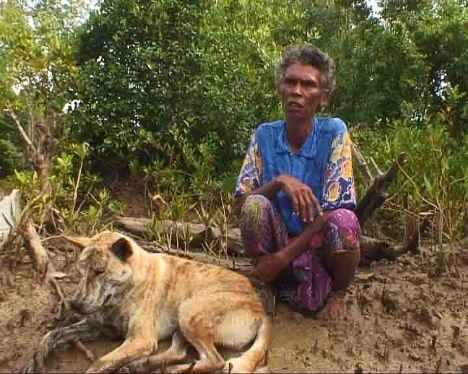
This is Jureerat Pechsai, nicknamed Deun.

She is a member of the Moken community – indigenous people living on the coast and islands on Thailand’s southern coast. Their nomadic lifestyle has earned them the name Sea Gypsies. In Thai, they are called Chao Ley — or people of the sea.

They traditionally live on small boats and move from place to place. When the Monsoon rains make the seas rough, they set up temporary huts on islands – such as Pra Thong Island, where Deun lives.

Pra Thong is an hour’s boat ride from the mainland city of Phuket — some conservationists call it one of the “Jewels of the Andaman” for its biodiversity. It is also an important nesting beach for turtles.

It was on this island that my colleagues from TVE Asia Pacific met and filmed with her in late 2006 for our Asian TV series, The Greenbelt Reports.

The Asian Tsunami of December 2004 devastated the Moken way of life. Their temporary huts were destroyed, and many families lost loved ones. The losses would have been greater if not for the mangrove forest close to the Moken village.

“Moken loves the water, the forest and everything. And we love the mangrove forest the most. The mangrove forest is like a living creature that has helped the Moken people for years. It’s our most beloved place on the island,” says Khiab Pansuwan, an older woman who is a leader in Deun’s community.

After the Tsunami, some Moken felt that they could not return to their nomadic lives. They have chosen to live on the mainland where they feel safe from the waves. Others who remained on their island had new, permanent houses built for them. But the Moken are quick to abandon these whenever they hear rumours of more Tsunamis.

Watch The Greenbelt Reports: Love Thy Mangrove on YouTube:

The mangrove replanting work on Pra Thong island is led by two women, Khiab and Deun.

Deun has been a volunteer with conservation organisations. She learnt about ecosystems and how to protect mangroves and endangered species like sea turtles. She can see many changes in her environment after the tsunami.

“After the tsunami, there are a lot of changes. We didn’t have much grass before, but now weeds are everywhere. The weeds are now more than grass,” says Deun. “In the past, we used to have more and more beach every year. But now the sea has come so close…”

khiab-pansuwan.jpg

The Tsunami’s impact is not the only factor affecting the mangroves here. Dynamite fishing, oil from boats, foam from fish and oyster nets are all damaging this life-saving greenbelt. Some people also cut down mangrove trees.

But Khiab and Deun are determined to rally everyone around to replant and regenerate their mangroves.

Says Khiab: “The community forest is part of the Moken people. We don’t want to cut the trees or clear it. We want to replant the trees so the forest is like before. We don’t want anyone to cut down trees because the mangrove forest saved many Moken lives.”

The two women are determined to rally everyone around to replant and regenerate their mangroves.

Replanted mangroves will ensure not only protection from the waves, but also a continued supply of shell fish and crabs – the main source of income and food for the Moken.

The Moken have traditionally managed the mangroves sustainably. They fish in different areas of the forest during the year, giving time for fish stocks to regenerate. Logging for firewood is done only in moderation, in designated areas.

But these mangroves are now under threat from outsiders who see it as a source of firewood and shell fish. Only a few Moken are left in the village to protect the forest from these intrusions.

Khiab and Deun have much work to do.

NOTE: We are now looking for more stories like this to be featured in the second Asian TV series of The Greenbelt Reports. See TVEAP website news story calling for story ideas.

All images and video courtesy TVE Asia Pacific

How short is short today? Packaging Nature for today’s television viewers

On 15 July 2007, I wrote about the award-winning natural history film-maker Neil Curry, based in South Africa, whom I last met during the Japan Wildlife Film Festival in Toyama in the summer of 2005.

Most recently, Neil made The Elephant, the Emperor and the Butterfly Tree, which has won several of the industry’s top awards.

I’ve since heard from him, and want to share some of his views on how best to package Nature and wildlife for today’s easily-distracted, attention-challenged audiences. He is responding to my post on 13 July 2007 titled Mine is shorter than yours, yipee!

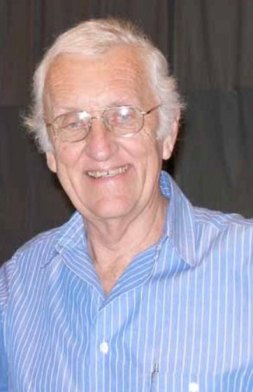
neil-curry.jpg

He says:

‘Mine is shorter than yours….’ is one of the issues I’ve been going on about for years and I’m delighted that Friends of the Earth has now come up with a competition for one-minute films. This ridiculous thing of the ‘standard’ broadcast slot for bluechip wildlife programmes being 52-minute is, in my opinion, one of the main reasons why the public’s view of Nature has become so ‘warped’.

You can’t sustain a 52-minute wildlife film without drama – so we end up with this on-going emphasis on killing, sex, things that are supposedly deadly to humans (everything from snakes and great white sharks to mosquitoes), and dramatic confrontations between macho men – and women – and animals. By insisting on these long films, television itself has actually ‘created’ the audience for wildlife violence – and I’ve been told by more than one commissioning editor that audiences aren’t interested in “place” and “habitat” films any more, they want to see big animals doing exciting things.

In short, Dallas with animals – wildlife “reality-TV”.

Based on my own experience, that’s rubbish. Yes, audiences want a well-told story but they can be equally fascinated by quite prosaic things in the complex inter-relationships of nature, provided the story is told properly. They don’t need all this ‘red in tooth and claw’ stuff. The superb, The Queen of Trees that is currently doing the rounds is a good example – as is the on-going popularity of Attenborough and some of the BBC’s mega-series.

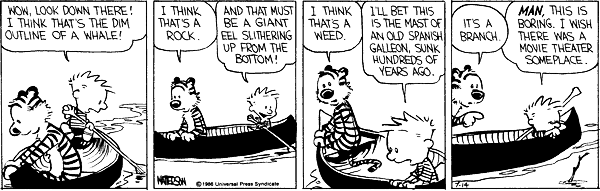
In fact, the over-dramatised programmes often give a quite distorted view of what wildlife is really like. Most creatures don’t spend all their time fighting and killing one another, or looking for human beings to threaten and attack. But if film makers, no matter how serious they are about telling the truth, want to eat, have somewhere to live, educate their kids and so on, they simply have to comply with what the programmers want – and thus, the cycle continues. Of course, it sometimes backfires. Some years ago – unfortunately I can’t remember the exact details now – research in the UK found that school children on field trips into the countryside were bored, because “nothing was happening”. Wildlife programmes on television had led them to expect nature to be full of continuous action and excitement. If children find real nature and the countryside “boring”, imagine how that will influence them when they grow up and find themselves in positions of authority where they may have to make decisions about siting roads, factories, quarries and so on in otherwise unspoilt but “boring” countryside.

nature-is-boring-have-a-movie.gif

If television would just take some of their hour-long wildlife slots and break of them into shorter segments of 30 or even 15 minutes, they would open up the screens to hundreds, perhaps even thousands of fascinating stories about some of the wonders of nature that are astonishing and intriguing, and that would grab audience attention – without any of the drama that is needed to sustain 52 minutes. In my own files I have dozens of stories like that – and so probably, do most other wildlife film makers – but we just never get the chance to tell them because there’s almost no market for short wildlife films on television.

Lord Reith, father of the BBC, said the job of broadcasting was to inform, educate and entertain – but nowadays unfortunately, much of wildlife programming seems to have got itself stuck solely in the entertainment category. It’s a pity because it means a lot of stuff that could give audiences a better understanding of the other life we share this planet with, is largely kept off our screens.

In the circumstances, it’s a miracle that The Elephant, the Emperor and the Butterfly Tree ever got made. It says a lot for the courage and acumen of Mike Gunton, who was commissioning editor on The Natural World at the time, that he was prepared to buck the trend and take it on. There’s no sex, no killing, no violent confrontations – just a boring old tree and a lot of small-scale interactions going on around it, plus a few examples of the dreaded Homo sapiens (who doesn’t even exist in Nature if lots of the wildlife TV programmes are to be believed).

‘Toxic Trail’ continues its trail across Asia

mongkon-tianponkrang.jpg mongkon-tianponkrang-of-tef.jpg
Meet Mongkon (Mong) Tianponkrang.

He is a Programme Coordinator with the Thai Education Foundation (TEF), a non-profit organisation working to improve education in Thailand at all levels, especially using non-formal methods.

I met Mong earlier this month during our regional workshop on communication capacity building under TVE Asia Pacific‘s Saving the Planet project.

TEF’s School and Community Farmland Biodiversity Conservation project is one of six stories that was chosen from among dozens of public nominations to be featured in the Asian regional TV series we are working on, titled Saving the Planet.

Saving the Planet will feature remarkable initiatives from South and Southeast Asia by educational, civil society and community groups engaged in Education for Sustainable Development (ESD).

Mong was a live wire during our 5-day workshop in Khao Lak, Thailand. We encouraged everyone to share experiences in communicating with their respective audiences, using whatever communication methods and means (media or non-media).

At one point, Mong started describing how he and his team have been using a video film called Toxic Trail that takes a critical look at the use of pesticides in crop cultivation in Thailand and neighbouring countries.

He described how they’d found the film’s Thai version very useful in their work with farmers, housewives and other community members.

This was a fine coincidence: he didn’t know until then that we at TVE Asia Pacific had been involved in versioning Toxic Trails, originally produced in English, into half a dozen Asian languages including Thai. That was back in 2002.

Toxic Trail is a two part documentary that was produced in early 2001, directed by a long-time friend and colleague Janet Boston (who today heads the Thomson Foundation, which has a 40-year track record in training journalists in the developing world). It was first broadcast on BBC World in April 2001.


Image courtesy Community IPM website

It followed Russell Dilts, an expert working with the United Nations Food and Agriculture Organisation (FAO) as he investigated the pesticide industry in South East Asia. The trail begins in Thailand, moving to Cambodia and ending in Indonesia. The main focus, however, is on Cambodia, where Dilts uncovers major problems in the misuse of pesticides.

Dilts makes stark and horrifying findings: the mass use of pesticides is progressively destroying delicate local ecosystems, as well as causing many health problems to farmers and their families involved. Eventually, everybody is affected by consuming agricultural produce with high levels of pesticide residues.

Read TVEAP website feature on Toxic Trail (Aug 2002).

Read key issues raised by Toxic Trail films

Image courtesy Toxic Trail website

Interesting things happened following the release of Toxic Trail in 2001. First, the FAO came under intense pressure from pesticide companies for having supported an investigative film that probed the reality of product stewardship that these companies claimed existed.

Stated simply, Product Stewardship is when companies take the responsibility for their products. It includes the monitoring of the distribution of products with regard to choice of outlet and method of sale. Toxic Trail questioned how this concept was being practised in developing countries such as Thailand and Cambodia.

Clearly, the companies didn’t like what was disclosed with tangible, visual evidence. In the weeks that followed the film’s release, and its high profile broadcast on BBC World, at least three heads rolled at FAO’s Integrated Pest Management (IPM) programme for Asia.

But by then the genie was out of the bottle. The BBC broadcast may have been watched by a handful of officials, diplomats and businessmen who walk the corridors of power. But a much larger Asian audience was reached by our versioning the films into Bahasa Indonesia, Hindi, Khmer, Mandarin, Sinhala and Thai — which, between them, are spoken by close to two billion people. These versions have been broadcast and narrowcast through numerous outlets ever since.

And as Mong reminded us earlier this month, the films are still in good use, several years after their production and versioning.

One clear lesson: it’s not just enough to produce a good TV film. How much it is seen and used depends on the amount of promotion, local adaptation and subsidised or free distribution that goes with it.

In the case of Toxic Trail, there was a network of promoters for IPM and sustainable agriculture who picked it up and ran with it — and continue to spread the word.

Meanwhile, we should be releasing more such ‘genies’ out of their bottles…

Visit Community IPM website

Look up more online resources on integrated pest management

Photos of Mongkon Tianponkrang by Indika Wanniarachchi of TVEAP
Other images courtesy Toxic Trail website

Pay-back time for film-makers: Go back to your locations!

“These days it’s simply not good enough to use the old response… “If people know about it they’ll care for it and do something”. Wrong. They’ll just go on being conned that it’s all perfect out there, with endless jungles, immaculate Masai Maras, and untouched oceans. What planet are they on about?”

These words come from Richard Brock, one of the world’s leading and most senior natural history film makers.

If you haven’t heard his name, chances are that you know at least some of his many creations: he worked in the BBC Natural History Unit producing, among others, the highly successful Life on Earth and Living Planet series presented by David Attenborough.

Image courtesy The Brock Initiative Image courtesy Brock Initiative

The BBC Natural History Unit (NHU) is a department of the BBC dedicated to making TV and radio programmes with a natural history or wildlife theme, especially nature documentaries. It celebrates 50 years in 2007.

Richard Brock worked with them for 35 of those 50 years. He left them a few years ago, according to his own website, ”concerned by the lack of willingness to address the real current state of the environment”.

He then started his own independent production company, Living Planet Productions, which has made over 100 films on a wide range of environmental topics, shown all over the world. As his archive of films and footage mounted up, Richard felt that there was something more, better, that could be done with this resource.

“We’ve been celebrating nature by bringing its wonders to the TV screen all over the world. Now that world is changing, faster and faster, and nature needs help. Films can do that, at a local level, be it with decision-makers in the government or in the village,” he says.

He adds: “When you consider the miles of footage and thousands of programs sitting in vaults out there unused, it seems tragic that the very wonders they celebrate are dwindling, often because no one tells the locals and tries to help. That is why I believe its Payback Time for the wildlife television.”

Thus the Brock Initiative was born. To quote from their website:
“He decided to set up the Brock Initiative, to use his archive of footage, and to ask others to do the same, to create new programs, not made for a general TV audience, but made for those who are really connected to the situation in hand: local communities, decision makers, even that one fisherman who uses dynamite fishing over that one coral reef. Its about reaching those who have a direct impact; reaching those who can make the difference.”

As he emphatically says: “Showing the truth on some minority channel is not the answer. Showing it where it counts, is.”

Image courtesy The Brock Initiative

I hope those development donors and corporate sponsors, who try to outdo each other in supporting programming going out on BBC World (an elite minority channel in most markets) hear people like Richard Brock — long-time BBC insiders who know what they are talking about.

Those who make documentaries on wildlife, natural history or environment (and wild-life of humans) are trapped in their industry’s many contradictions. They go on location filming to the far corners of the planet, capturing ecosystems, species and natural phenomena. Yet for a long time, many have avoided talking about or featuring the one species that has the biggest impact on Nature: Homo sapiens (that’s us!).

Whole series of wildlife documentaries have been made, by leading broadcasters and production houses of the east and west, without once showing a human being or human activity in them. Almost as if humans would ‘contaminate’ pristine Nature!

In recent years, more film-makers have broken ranks and started acknowledging the human footprint on the planet and its environment. But a good many documentaries are still made with ‘pure’ wildlife content, with not a thought spared on the wild-life of our species.

Richard Brock is one who has refused to follow the flock. And he has also punctured the highly inflated claims — promoted by BBC Worlds of this planet — that broadcast television can fix the world’s problems.

As we have found out here in Asia, it’s a judicious combination of broadcast and narrowcast that can work – and we still need the participation of teachers, activists and trainers to get people to think and act differently.

At their best, broadcasts can only flag an issue or concern to a large number of people. For attitudes and behaviour to change, that needs to be followed up by narrowcast engagement at small group levels.

Taking films to the grassroots need not be expensive, says Brock. In fact it can be done inexpensively.

These are not programmes for broadcast to western audiences demanding BIG productions – you are often showing films to people who have never even seen TV. The effort comes in showing the right thing, to the right people, in the right way, and not about expensive effects, top quality cameras or cutting edge effects.”

Using donated archive footage cuts costs dramatically. New footage, important for putting a film in a local context, can be taken on small miniDV cameras and editing can be done on any home computer. In this way, it becomes feasible to put together a film even for a very small, but crucial audience.

The Brock Initiative, started and funded by donations from its founder, has projects in Kenya, Madagascar, Tanzania, the UK and Indonesia.

Read more about the Indonesia project

They also offer wildlife and nature footage free to those who want to use moving images to make a difference.

Read Richard Brock’s formula for making films that make a difference!

As our species’ wild-life pushes our living planet closer to peril, we need many more Richard Brocks to try and reverse disturbing trends at the edges of survival — almost all of them in the global South.

It’s pay-back time, film-makers!

Related blog posts:
End this callous waste – open up broadcast archives for combating poverty and ignorance

Lawyers who locked up the butterfly tree

Anita Roddick, Angkor Wat and the Development Pill

Contact The Brock Initiative

The lawyers who locked up the Butterfly Tree

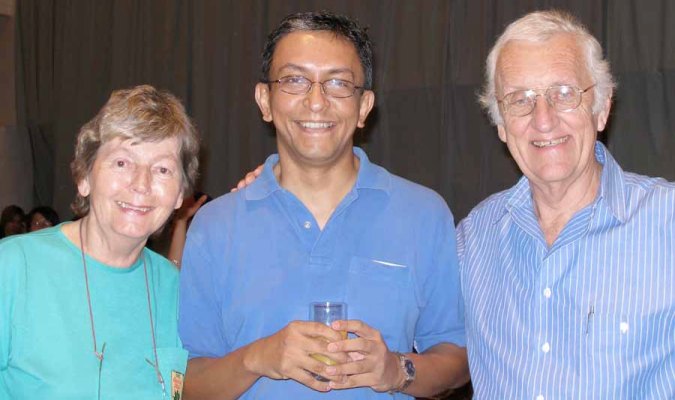
nalaka-with-neil-and-brenda-curry-at-jwf-2005-awards-night-aug-2005.jpg
This photo was taken in August 2005 in Toyama, Japan, which is some 200km east of Tokyo. The occasion was during the Japan Wildlife Film Festival, held in Toyama every other summer since 1993.

I am seen with Brenda and Neil Curry, my film-maker friends from South Africa. That was a memorable night for Neil, whose remarkable film, The Elephant, the Emperor and the Butterfly Tree, won the festival’s highest award.

The 50-min film captures the delicate relationship between the elephant, the Emperor Moth and the Mopane Tree (scientific name: Colophospermum mopane). It was produced by Oxford Scientific Films for BBC Natural World, bringing together the creative talents of Neil Curry, Alastair and Mark MacEwen, and Sean Morris.

Here’s the full official synopsis of the film:
Mopane woodland has been symbolic of African bush for centuries but its ecology is often misunderstood. Its importance to the fragile ecosystem is paramount. In this programme we show the delicate relationship between the elephant, the emperor moth and the incredible mopane tree. We also show the vital impact this ecosystem has on a local family who depend upon the delicious harvest of mopane worms to supplement their diet, and the precious resources the mopane tree provides in order to survive in the mopane woodland of Botswana.

Foreign delegates, staff and volunteers of JWF2005 Neil Curry accepting the Best of JWF2005 award on behalf of his team

I was in Toyama as a guest speaker, talking about TVE Asia Pacific‘s Children of Tsunami media project, which was then in progress.

Brenda and Neil, originally from the UK, now live in wine country off Cape Town. Neil is the quintessential natural history film-maker: meticulous in his approach to a story, passionate in what he covers, and with tons of patience.

Most natural history film-makers go for animal subjects. It’s much harder to do an interesting film about a plant or tree that stays in one place and does not have an annual breeding cycle like animals.

That’s just one of many reasons why The Elephant, the Emperor and the Butterfly Tree is outstanding. It tells a complex story of an ecosystem that is inter-dependent and in balance.

The film, made in 2004, also won the top award at WildScreen (Bristol, UK), considered to be the oscar awards in wildlife and natural history film-making.

A stand of Mopane laden with seed pods - image courtesy Africa Hunter Image courtesy Tourism Botswana

Now here’s the rest of the story, which is not as upbeat. Neil spent many months in Botswana filming this story, and wanted to take the finished film back to the communities where it was shot. The wildlife parks and schools in the area, he knew, could make good use of the film to educate the local kids, adults and visitors.

What would be simpler than that? Get a VHS or DVD copy and pass it on to them, right?

Wrong. When I met Neil in the summer of 2005, it was more than 18 months since the film was made. For much of that time, he had been trying to obtain permission from the BBC to share a non-broadcast copy of his film with the people in Botswana. His request was passed from person to person, and from division to division, with no clear decision made, and no permission granted.

The BBC had invested funds in making the film, and had a legal right to decide how and where it was to be used. Focused on ‘revenue optimisation’ and ‘returns on investment’, its bean-counters could not care less whether the film-maker wished to share his creation with the local people whose reality he had captured.

This is not an isolated incident. In fact, it is alarmingly wide-spread: every year, excellent environmental documentaries and development films are produced, most of them using public funds (who pays the BBC license fee? The British public!). Yet these films are locked up in complex copyrights that prevent them from being used by anyone outside broadcast circles.

As I said in my recent speech to Asia Media Summit 2007:
Even where the film-makers or producers themselves are keen for their creations to be used beyond broadcasts, the copyright policies stand in the way. In large broadcast organisations, it is lawyers and accountants –- not journalists or producers -– who now seem to decide on what kind of content is produced, and how it is distributed under what restrictions.

I don’t know if Neil Curry ever cleared the rights to screen the film to small groups of people in Botswana or elsewhere in Africa. But I think of this every time BBC World cries its heart out for the poor and suffering in Africa.

This is one global broadcaster that does not put its money where its mouth is.

In fact, the BBC’s accountants must be laughing all the way to their bank.

Read my related posts: End this callous waste: Open up broadcast archives for combating poverty and ignorance!

Public funds, private rights: Big mismatch in development film-making

27 July 2007 – Neil Curry responds to my views on optimum duration of natural history documentaries

End this callous waste…open up broadcast archives for combating poverty and ignorance!

Image courtesy Boeing

This is the new Boeing 787 aircraft that was unveiled a few days ago — described as more fuel-efficient, and therefore more climate friendly. Not to mention being a more comfortable plane to fly on.

Now just imagine if one of these new aircraft were to be used for a single return flight — let’s say Singapore to London and back — and then relegating it to a hanger for the rest of its lifetime!

What a callous waste that would be. Now who would do that, and will that be tolerated?

Yet something like this happens in the moving images industry quite frequently….and not too many seem to be bothered.

Every year, many new TV films and documentaries are produced with considerable investment of time, effort and money. After one or few broadcasts, they are confined to broadcast archives. Trapped in copyright restrictions, they languish there even though they can be a vital resource for teachers, students, civil society groups and trainers worldwide.

To me, this is as much a criminal waste as throwing away a Jumbo jet after a single journey.

In fact, I’ve been writing and talking about it whenever I can. Here’s an extract from my speech to Asia Media Summit 2007 held in late May 2007 in Kuala Lumpur:

Every year, excellent TV programmes are made on different development topics. Public and private funds are spent in making these programmes, which draw in the creativity and hard work of committed professionals.

Many channels broadcast these programmes. They are typically aired a few times and then end up in the archives. Few may be exploited for their multimedia potential.

Yet many of these programmes have a longer shelf-life – and outside the broadcast sphere. They can be extremely useful in education, awareness raising, advocacy and training.

Alas, copyrights restrictions are often too tight for that to happen. Even where the film-makers or producers themselves are keen for their creations to be used beyond broadcasts, the copyright policies stand in the way. In large broadcast organisations, it is lawyers and accountants –- not journalists or producers -– who now seem to decide on what kind of content is produced, and how it is distributed under what restrictions.

Read the full text of my speech here

copy-of-copy-of-ams-ad2-low-res.jpg copy-of-copy-of-ams-ad2-low-res.jpg

This is why we at TVE Asia Pacific have been calling for poverty and development to be recognised as a copyrights-free zone. So that the crushing (and completely meaningless) grip of copyrights can be loosened up.

I first made this proposal in mid 2006, in an op ed essay published online at MediaChannel.org. I then reiterated it at the UN Headquarters in New York in September 2006, when addressing the 59th annual UN NGO Conference.

The idea has been well received in education and civil society circles. But predictably enough, the broadcast community itself has been less enthusiastic.

We just have to keep on at it.

Mine is shorter than yours…yipeee!

In the topsy turvy media world, ‘conventional wisdom’ about film-making is being rapidly undone by the march of what is now known as ‘Digital Natives‘ — those currently under 30 years, who have grown up taking Internet, mobile phones and video games completely for granted.

These Digital Natives are not inclined to watch long duration documentaries. Five minutes is about right. With effort, we can get them to sit through an offering of 10 to 15 minutes. Half an hour is ‘really long’. One hour or 90 minute films — just forget it.

The sooner we face up to this reality, the better. We may not like it, but it’s not the end of the world.

In fact, it challenges us in the media to strive for greater economy of words and time.

As anyone who has worked in television news will confirm, it is indeed possible to tell a story in 100 seconds, if we package it well and carefully. Purists might call it dumbing down of television. Pragmatists would see it as customising to suit new audience realities. I go along with the latter view.

TVE Asia Pacific is not a broadcaster on its own. We produce and distribute content to over three dozen TV channels and networks spread across the Asia Pacific, now home to the world’s largest television audience. It’s through these ‘Emperors of Eyeballs’ (as I like to call them!) that we reach out.

Our broadcast partners have a good idea what their audiences want. Channel after channel tells us that the preference is for shorter, more compact programming. It would be naive to ignore this feedback and market intelligence.

The truth is: we can communicate ‘serious’ content — as long as the packaging and duration are to suit the audience realities.
That’s why TVE Asia Pacific’s recent productions have mostly followed the 5 minute format: we begin, tell and end a self-contained story in just 300 seconds.

Our recent series are examples: The Greenbelt Reports, Digits4Change and Living Labs.

The Greenbelt Reports by TVE Asia Pacific

And that’s a lot of time on screen. We have covered complex issues in exactly five minutes: for example, combating soil salinity with low cost methods; building ‘bio-shields’ of mangroves against the sea’s ravages; and using webcams and satellite links for tele-health.

These and other films continue to be broadcast and used in a range of education, advocacy and awareness efforts across the Asia Pacific and beyond.

No one has really complained about them being too short — except for some film-makers. Some have dismissed our efforts as ‘tabloid television’ and ‘not really documentaries’.

We remain unaffected. We do produce half hour documentaries from time to time, for specific purposes and defined audiences. But to ignore the mass audience trends would be to box ourselves into a tiny part of the audio-visual landscape.

We now know it is much harder to produce shorter films than longer ones. The challenge is to distill and compress without oversimplification or distortion.

So the sooner film-makers get over their obsession with length, the better. It’s not the duration of a film that matters most; it’s how a story is told. Some of the best stories are also the shortest.

To cite my favourite example from the print world, Ernest Hemingway once bet his friends 10 dollars that he could write a self-contained, full story in less then 10 words. He produced what is still considered the world’s shortest short story:
“For sale.
Baby shoes.
Never worn.”

It’s hard to beat that one for its amazing economy of words and sheer power of story telling.

How short is short today? Read leading wildlife film-maker Neil Curry’s views in my post on 27 July 2007

Read my post: Moving images move heart first, mind next

Read my post: Can you make a one-minute film for a better planet?

Playing Shahrazad; Telling Stories to Save Ourselves…and the Planet

I’ve been silent on this blog for over 20 days. I like to think that was for a good cause.

Well, I was frightfully busy organising and running a small Asian regional workshop in Khao Lak, Thailand – it was part of TVE Asia Pacific’s Saving the Planet project.

Saving the Planet is telling real life stories to save our planet in peril. It was inspired by the Arabian Nights.

Remember how the clever and beautiful Shahrazad saved herself and other women in her kingdom from the murderous King Shahriyar? Once betrayed by a wife, the wicked ruler had embarked on a killing spree where he would wed a virgin bride everyday, and have her beheaded the day after the wedding. All girls and women in his kingdom were threatened.

That is, until, beautiful and clever Sharrazard volunteered to be the next bride. Facing an assured death, she starts telling the king engaging stories that holds him spell-bound. Her story, or stories, since many tales are interwoven and imbedded into the first, lasts for 1001 consecutive nights.

This story-telling captivated the king’s attention and held his patience with its fantastic and mysterious tales, its vivid descriptions and breath-taking heroism. Shahrazad’s story-telling is in itself a heroic and life-saving device, which finally forced the king to spare the wise and courageous girl’s life. Apparently he gave up his killing ways after that experience (if only some of our modern day rulers were so easily reformed!).

Image courtesy Rose TheatreImage courtesy Middleeast UK.comImage courtesy Middleeastuk.com

Read more about Arabian Nights

Story telling is more an art than a science. Shahrazad used it to save her life, and lives of all other women in her kingdom. Mythical as it may be, we can draw a few lessons from the Arabian Nights on what kind of stories to tell — with visible effects.

Good journalism is all about telling stories — real life stories about what happens to real world men, women and children. Mixing journalistic skills with development stories as we do, Saving the Planet is an attempt to tell a few good stories from the Asia Pacific — about individuals and organisations who are engaged in education for sustainable development, or ESD.

As we introduce the project on its dedicated website:
Confronted with a range of environment and development problems, the world is looking for bright ideas to sustain life on the planet. Education at all levels can shape the world of tomorrow, equipping individuals and societies with the skills, perspectives, knowledge and values to live and work in a sustainable manner. Education for Sustainable Development (ESD) is a vision of education that seeks to balance human and economic well-being with cultural traditions and respect for the earth’s natural resources.

copy-of-saving-the-planet-logo.jpg dd8.gif

Saving the Planet started with an open competition – we asked people to nominate projects or activities in developing countries of Asia that are communicating or educating their communities on any aspect of sustainable development. Not just ‘green’ issues (e.g. recycling, conservation) or scarey issues like climate change and ozone depletion, but also ‘brown’ issues (e.g. sanitation, cleaner production) and what I call ‘black and white issues’ – human rights and social justice.

We received dozens of nominations, which we turned over to a regional selection panel. Their final selection was announced in mid May 2007 – see my blog post on the winners.

Read more about the winning stories on Saving the Planet website

The idea is for us to go out and film each of these winning projects for an Asian regional TV series. But ahead of that, we brought to Khao Lak, Thailand, two representatives of each project/organisation for a week-long workshop, 2 to 6 July 2007.

That workshop sought to strengthen the communication skills and capacity of the six organisations. Not just in moving images, which we dabble in, but in new media and older media as well. In short, how to use media and other communication tools to reach out to different audiences and, hopefully, influence them in positive ways that help them — and the planet.

This is why Saving the Planet is also story telling for survival – and here we are talking about the survival of not just one individual, but of all life on the planet. And instead of one evil king, our story tellers are confronted with a multitude of threats to our survival, many of them of our own making.

The analogy with the Arabian Nights is not as far-fetched as it might seem. The success of the Arabian Nights stories over many other forgotten folk tales may be due to their blend of popular themes: heroic and romantic adventures are littered with mystery, old wisdom and exciting struggles between good and evil. Almost all tales have three main elements or notions. Firstly, if there is a problem, there is a solution. Secondly, endurance can enable a crisis to reach a resolution. And finally, fantastic elements help the protagonists to maintain their endurance.

So one thing we kept probing and discussing was how to package serious (and often perceived as ‘boring’) development messages in ways that engage and entertain groups or communities we are trying to reach.

I’ll write more about the workshop when I have a chance. The official report of the workshop will go up on TVEAP and Saving the Planet websites within a few weeks.

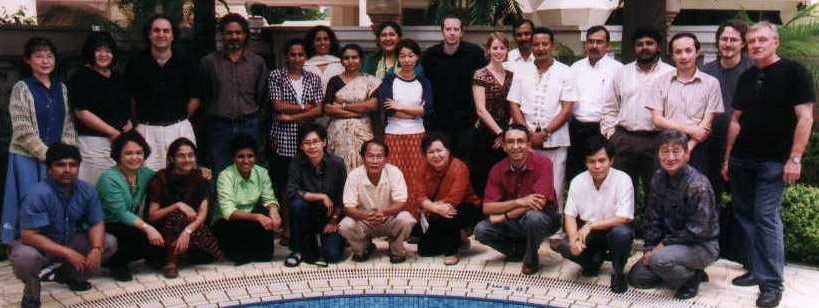
For now, here’s the photo of our participants, together with the resource team and my colleagues from TVE Asia Pacific.

participants-and-resource-team-of-saving-the-planet-workshop-in-khao-lak-july-2007.jpg

Saving the Planet is implemented by TVE Asia Pacific in collaboration with the Asia/Pacific Cultural Centre for UNESCO (ACCU),Tokyo, Japan, within the framework of ACCU-UNESCO Asia-Pacific Programme under the UNESCO/Japan Funds-in-Trust for the Promotion of Education for Sustainable Development.

Joey R B Lozano: The legacy continues…at Silverdocs

I met Joey R B Lozano only once, but he left a deep impression.

A small-made man with passionate zeal and tons of energy, he was every inch an activist-journalist-campaigner. We had invited him to a regional workshop of factual video producing and distributing partners from across Asia that we held in Singapore in November 2002.

We hadn’t worked with Joey earlier. He came recommended by our international partner Witness, which uses video-based advocacy and activism for promoting and safeguarding human rights worldwide.

Joey R B Lozano Joey R B Lozano Joey R B Lozano

Joey used his personal video camera to assert indigenous land rights, and to investigate corruption and environmental degradation in his native Philippines. Joey was an independent human rights activist and also one of the country’s leading investigative reporters.

He freelanced for the Philippine Daily Inquirer, covering Indigenous peoples’ rights and the environment, considered the two most dangerous beats in the Philippines. But years earlier, he had moved out of the capital Manila, and committed his life and career to stories and issues at the grassroots that many of his city-based colleagues had no time or patience in covering on an on-going basis.

Trained as a print journalist, Joey mastered new media and technologies whose potential he quickly realised. He moved into television and video media with ease, and later became an active blogger.

Joey’s TV investigations began in 1986, when he helped ABC’s 20/20 to uncover the “Tasaday hoax”, a highly successful fraud to pass off local tribespeople as a newly discovered Stone Age culture.

He soon embarked on his own investigations and started digging into illegal logging, gold mining and land-grabbing. In turn, his exposes quickly earned him repeated assassination and abduction attempts, in a country that is one of the more dangerous places to practice journalism.

When he came to Singapore, Joey had recently ‘starred’ in a major Canadian documentary titled Seeing is Believing: Human Rights, Handicams and The News, which looked at how committed, passionate individuals were using new communication technologies to change the world.

participants-at-tveap-partner-workshop-singapore-nov-2002.jpg

Photo of Singapore TVEAP workshop participants: Joey Lozano is 6th from left on the frontmost row

Follow Seeing is Believing storyboard on the film’s website

We screened the film, made by Katerina Cizek and Peter Wintonick, and heard first hand from Joey on what his struggles entailed. The film followed Joey as he delivers a new “Witness” donated video camera to Nakamata, a coalition of Indigenous groups in Central Bukidnon. Together, Nakamata and Joey begin documenting a dangerous land claims struggle, and it doesn’t take long for tragedy to unfold in front of the camera.

Watching the film and then listening to Joey — and his Witness colleague Sam Gregory — describe the on-going struggle, was one highlight of our week-long workshop. Some of us saw in Joey the activist-campaigner that we wanted to be, but were too scared or too polite to really become.

Not everyone shared that view. The cynicism — sometimes bordering on disdain — of a fellow Filipino from Metro Manila was palpable. No wonder Joey moved away from the city.

We at TVE Asia Pacific were extremely keen to distribute Seeing is Believing, for it held such a powerful and relevant message for our region, but it was not to be. Our enquiries showed that like most documentaries, it was tied up in too many copyrights restrictions and commercial distribution deals.

Following the Singapore workshop, I did keep a watchful eye on what Joey Lozano was up to. The film’s website provided occasional updates, and sometimes blog posts from Joey himself.

Our paths never crossed again. Almost three years after our single encounter came the news that Joey had passed away. It wasn’t the assorted goons who hated his guts that finally got him. His own body turned against him.

His tribute on the film’s website started as follows:

Joey Lozano defied the odds. For three decades, he survived dangerous missions to defend human rights using his video camera, in the Philippines, a country that ranks high, year after year, for most journalists killed. Joey went into hiding numerous times, and he dodged two assassination attempts. Once, bullets whizzed past his ear as he made his escape on motorbike.
But Joey couldn’t beat the odds of cancer. He died in his sleep on September 16, 2005 – at home and surrounded by his family.

Joey R B Lozano - image courtesy Seeing is Believing

The spirit and legacy of Joey R B Lozano live on. He inspired a large number of journalists and activists to stand up for what is right and just — and to be smart about it in using modern information and communication technologies, or ICTs.

Joey and other Witness activists were pioneers in different parts of the world who turned handicams away from weddings and birthday parties to capture less cheerful sights and sounds the world must see — and then act on. They were at it years before mobile phone cameras, YouTube and user-generated content in the mainstream media.

And now, Witness has established an award at the Silverdocs film festival. The WITNESS Award in Memory of Joey R.B. Lozano will be awarded to the qualifying SILVERDOCS filmmaker of a feature-length film who has produced a well-crafted and compelling documentary about a human rights violation or social justice issue. The winning filmmaker will also have a thoughtful, creative, and feasible outreach plan to use their film as a tool to raise awareness of the human rights or social justice issue explored in the film with a goal to bring about change.

The inaugural award was announced on June 17 — and has been won by “The Devil Came on Horseback” by Annie Sundberg and Ricki Stern.

Joey was a Witness partner and board member. He co-produced many films and collaborated on others that helped raise awareness about threats to indigenous people’s rights in the Philippines from corporations, and the complicity of the government in the abuses. Witness was founded in 1991 by musician peter Gabriel and the Lawyer’s Committee for Human Rights to put new technologies into the hands of local activists around the world.

Joey R B Lozano with his handycam

Read International Wildlife May 1999: Why Joey Lozano Is A Marked Man – investigative reporter works for the environment

Read about and watch Rule of the Gun in Sugarland