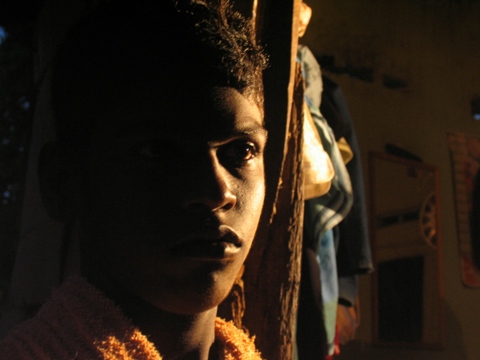
Fossil fuels and fossil fools in India

‘‘People in India, unlike the West, don’t understand the seriousness of climate change….They think global warming is a fantasy. Indians are using fossil fuel like never before. We have constructed oven-like buildings and spend enormous energy cooling them.’’

I came across these words by the well known Indian environmental film-maker Mike Pandey in an article in NewIndPress that surveyed how Indian documentary film-makers are rising to the challenge of communicating climate change.

The article, ‘Meltdown on Film’ published on 15 March 2007 highlights the formidable task of raising awareness in India, now one of the fastest growing economies in the world, consuming larger volumes of fossil fuels every year.

Mike knows what he’s talking about: his film Global Warming went largely unnoticed when it was released in India three years ago.

And he is one of India’s top notch film makers on environment, wildlife and natural history. He has won three Panda Awards — also known as the ‘Green Oscar’ — at the Wildscreen Film Festival held every other year in Bristol, UK — and considered to be the most important festival of its kind in the world. (Modest cough: I was on the jury of Wildscreen 2000, when we gave Mike one of his three Green Oscars.)

Viewer apathy is not the only problem that India’s environmental film-makers have to contend with. Here’s an extract from the article:

Like any environmentalist, our documentary filmmakers are “concerned” about issues like global warming. But the lacklustre reactions of research agencies (who ‘‘support” the cause but don’t really come forward to fund documentaries), zero interest from broadcasters who, according to one filmmaker, prefer ‘‘sexy environmental stories’’, together with viewer apathy, are the reasons why the few impressive documentary films on climate change vanish after a few screenings at festivals. Take the Public Service Broadcast Trust’s (PSBT) Open Frame, for instance, the annual documentary film festival held in Delhi. Or the roving environmental and wildlife film festival CMS Vatavaran, where open discussions are held after every screening. Barely a couple of films are chosen by the public broadcaster Doordarshan after they are screened at these two festivals, which is why most of the documentaries don’t ever reach the masses.

‘‘Public interest stories and documentaries are the last thing broadcasters want to show,’’ quips Pandey. ‘‘People like me are lucky to have found space on DD. Value-based programmes are nudged out so easily by broadcasters these days.”

The article continues:

A few years ago, when Mike Pandey returned to his favourite spot in Austria to capture a snowcap for one of his films, he was shocked to see it had melted. He says, ‘‘I had seen the ice cap the previous year. I had to go deeper into the area to get my shots. It’s common in Austria to see ice caps vanishing. You see blossoms and splendid crops in many areas.’’ After Earth Matters, which is being shown on Doordarshan, Pandey is coming up with a series of six films on global warming, which will talk about ‘‘using alternative energy for the future.’’

Whenever out for shoots at Lakshwadeep, Kochi and Gujarat, Mike has been noticing ‘‘visible changes’’ in ‘‘ocean ferocity’’ and where the sea neighbours the land. ‘‘The water has come in a bit more into the land over the years,’’ he observes.

‘‘You don’t have to be a scientist to notice these changes; you can see it all happening now. Unfortunately, people living along the Indian coastline will be the first ones to face any kind of major impact,’’ he adds.

On my visit to Hyderabad last week, I was told that there are now close to 50 TV channels that cover news and current affairs on a 24/7 basis (in English and other Indian languages). Yet this kind of news hardly seems to make the headlines….it’s probably moving too slowly.

Mike Pandey and other environmental film-makers have their work cut out for them.

“If (Indian cricketer) Sachin Tendulkar or (Bollywood star) Shah Rukh Khan loses his cell phone, the news will reach every nook and corner of the country, but the fact that iodine is essential for the human body is still not known widely,” Mike told India’s Frontline news magazine in 2004. Read full article: Nature’s film-maker in Frontline of 18-31 Dec 2004

Read TVE Asia Pacific website feature on Mike Pandey’s 2003 film on the whale shark in India
More memories of Theeban…

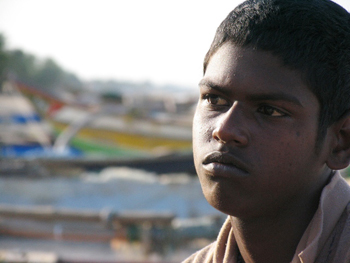
On March 17, I wrote about introducing our Children of Tsunami documentary at the DC Environmental Film Festival, and and how I dedicated the screening to Theeban – the Sri Lankan boy who survived the Asian Tsunami, but was killed in the island nation’s political violence on 3 March 2007.

My personal tribute to Theeban has been widely circulated online. Edited versions have appeared on MediaHelpingMedia (UK) and Asia Media from University of California Los Angeles (USA).

It appears that my tribute has moved many readers. I’ve heard from several by email – encouragingly, all supportive and sympathetic. Among those who wrote was young journalist Chathuri Dissanayake, who worked as a researcher for Video Image, the Sri Lankan production company we (TVE Asia Pacific) engaged to film Theeban’s unfolding story for most of 2005.

With her permission, I want to share her recollections and views:

It’s a very nice piece about Theeban. It captures what we had grown to love in the boy. The picture you have of him taken on I think our first visit brings back a lot of memories.

theeban.jpg

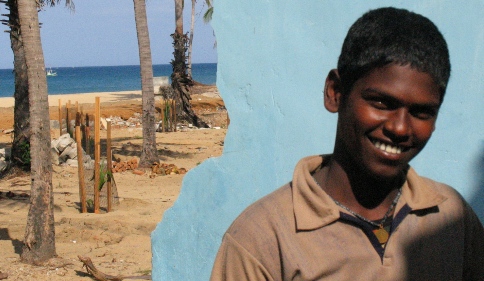
When he was abducted (in late 2006), I always thought at least he is alive, now I’m still trying to come to terms with the fact that he is no more. The best memory I have of him is his wide smile. The pictures you have chosen bears ample testimony as to how beautiful that is. Even though he couldn’t communicate with us coz of the language barrier his smile and eyes were so expressive. When I first met him at the camp what struck me most was his unspoilt innocence. I wish I had taken a bit more trouble to help him out after the filming ended.

Theeban gave life to harsh realities of the conflict in the country that I have lived all my life with. Before meeting Theeban and visiting his village, I only knew what media told me of the east but Theeban brought it closer to me. Earlier, when ever I heard of the violence in the north or the east, it was just news to me as it was to many living in the “right side of the country”. But the Children of Tsunami project opened up the other side of the story, and as a young journalist, I gained a lot of experience.

To me, Theeban was real and he represented many youngsters in the area. His scattered dreams and hopes were real and it is a tragedy that help doesn’t reach them. Nothing substantial was done to help him and many others like him to rebuild their lives. Theeban was too young for any sort of vocational training that was available, and he didn’t have the right qualifications. My dilemma of what would happen to Theeban and many like him whose futures were washed away in the Tsunami grew as all the options of vocational training I checked out for Theeban turned out that applicants needed at least (GCE) Ordinary Level. Theeban was forced to leave school and it looked as if it never struck to any authority that someone needs to look after the youths like Theeban.

theeban-photocredit-video-imagetveap.jpg

To me Theeban, like many others was another victim of forces that he had no control over. It was not his fault that a tidal wave destroyed his family but he paid for it dearly, gave up his education and took the responsibilities of the bread winner of the family on to his shoulders. When the Tsunami struck he was still hopeful he wanted to earn money and take care of his brothers. He missed his mother dearly but found a bit of comfort in his grandma. But the violence that sprang up in the area had no mercy on him. Theeban’s story ended in tragedy coz the forces that were against him were too strong for him to fight back. The hope I saw in his eyes still haunts me. But I take comfort in knowing that at least he tried to fight back. No matter what his shy smile and shining eyes will remain with me.

That is how I remember Theban best. A youth who managed to smile and have a hope for the future in spite of the trauma that he went through when many grown up men around him gave up on life.

Have you made your million dollars yet?

Money, money, money!

Many development film-makers like to decry our society’s obsession with money, consumerism and greed. Some would make films that passionately promote sharing ideas and resources at community level, and advocate common property resources over private ownership.

But when it comes to rights of their own film/s, these very film-makers would become extremely possessive: they want to restrict it in every conceivable way.

They feel justified in such sentiment and action: after all, they have invested a great deal of time, effort, creativity and hard-won resoures to make their films. They must now seek a ‘return on investment’ like everyone else (it’s a material world!). Film-makers too have families to feed.

No argument on that last one. But it would be interesting to find out how many – or how few – development films deliver any appreciable ‘returns on investment’ to their makers. Certainly in developing Asia, development film-makers will be seriously endangered species if they had to rely on license fees or royalties for their survival.
https://i0.wp.com/www.hcn.org/allimages/1996/oct28/graphics/961028.001.gif
After a dozen years of extensive networking with environment, wildlife and development film-makers across Asia Pacific, I have yet to come across a single film-maker who made his or her million dollars from a film.

Yet, many continue to cling on to the traditional notion of copyright in film, perhaps hoping that sooner or later, that cherished million bucks would come calling.

And in the meantime, they continue to approach every known funding source – and many unknown and unlikely ones – for supporting their next film. At TVE Asia Pacific, we receive our fair share of these requests every month – and we are not even a funding source for independent films! These requests are accompanied by impressive CVs or filmographies, listing past films produced.

Produced, yes. But how many are circulating? How many have been seen outside film festival circuits, or beyond a one-off broadcast (or two)? How many films are available for educational, advocacy, training or activist purposes at affordable cost of duplication and dispatch?

The answer is depressing: precious few.

Because our film-makers are waiting for their million dollar deal or sale, and won’t let go of their creations. Even if many have been made using development donor (i.e. public) funding, these films are not in the public domain.

That, to me, is incongruent with the lofty ideals that many development films proclaim: sharing ideas and resources at community level, and advocating common property resources.

We have to walk our talk, or we risk joining the already burgeoning ranks of hypocrites in our societies.

The time has come for documentary film-makers, especially those covering development topics, to take a fresh look at copyright. That doesn’t mean abandoning all our rights to be known and acknowledged as creators of our films.

For a start, I strongly recommend an interesting and insightful essay, “Shoot, Share and Create: Looking beyond copyright makes sense in film“, written by a young Indian lawyer-activist specialising in intellectual property. Lawrence Liang is a Bangalore-based lawyer who works at the Alternative Law Forum. I had the opportunity of meeting the dynamic and articulate Lawrence at the Asia Commons meeting in Bangkok in June 2005 – he’s certainly a man to watch in this rapidly evolving field of managing our digital commons and how to safeguard the public interest in the bewildering era of digital media.
Lawrence Liang

Here’s how he starts his essay, which he wrote as an open letter addressed to Indian documentary filmmakers:

When I was in law school, I had great aspirations of wanting to be a filmmaker, and an FTII-type (Film and TV Institute of India, a prominent school for film-making) friend told me the best place to start was to watch a lot of foreign films and documentaries. So I did that rather dutifully and spent many hours when I should have been reading corporate law, watching documentaries.

My fondest memory of my placement in Mumbai with a law firm was when we took off to the Tata Institute of Social Sciences (TISS) and watched Anjali Monteiro and K P Jayashankar’s film on the Yerawada prison in Pune.

I gave up on the idea of becoming a filmmaker after we finally did do a documentary on law school. But by then the bug had bitten and I had fallen in love with cinema and the documentary form as well. I think watching documentaries has also made me a better lawyer than I would have been if I read Ramiaya on the Indian Companies Act. So if I have written this rather longish argument about why documentary filmmakers should start thinking about open content licenses, it is with a sense of repaying a debt.

Read the full essay at Alternative Law Forum website

Read my own call for recognising poverty as a copyright free zone

You got films on YouTube?

Earlier this year, we at TVE Asia Pacific decided to place all our short video films on YouTube.

We are always willing to try out new ways of reaching out to the various – and increasingly fragmented – publics. Any new media format or platform that comes into the public domain is to be explored and exploited to peddle our content.

With this in mind, we launched the TVEAPFilms channel on YouTube in February 2007. We have so far placed three distinctive TV series on this channel:

Digits4Change, which explores how information and communications technologies (ICTs) are changing lives and livelihoods across Asia (6 x 5 min stories)

The Greenbelt Reports, where we revisited tsunami-affected countries in South and Southeast Asia, investigating how communities co-exist with coastal greenbelts of coral reefs, mangroves and sand dunes (12 x 5 min stories)

Living Labs, our latest series which was released this month, which profiles global action research efforts to grow more food with less water (8 x 5 min stories)

Since then, attending film festivals in Singapore and Washington DC, I realised that many documentary film-makers aren’t yet convinced about this new outlet.

‘You got your films on YouTube?’ one film-maker asked me somewhat incredulously. ‘How can you be sure someone will not download and manipulate it?’

Well, we can’t be sure. But that doesn’t prevent us from engaging this new platform. We’re willing to take these risks.

Another colleague asked: ‘But isn’t that a place for all those ameteurs?’ Perhaps. But in this digital age, the division between so-called amateurs and professionals is blurring.

Some film-makers have started placing trailers for their longer films on YouTube. Since we produce a fair number of short, self-contained films — all of which come under the YouTube’s upper limit of 10 mins — we are able to place our entire films online.

And unlike broadcast television and even passive webcasts, YouTube allows our online viewers to comment on films, and if they feel so moved, even to rank them.

At TVE Asia Pacific, we want our moving images to move people…so they join the conversation. In that sense, YouTube is a good platform to be on, and a good community to be part of.

Do visit TVEAPFilms channel on YouTube. Tell us what you think – whatever you think.

The Nature of David Suzuki

One of my highlights in the recent week I spent in Washington DC, attending the DC Environmental Film Festival, was listening to a talk by the Canadian naturalist and television personality David Suzuki.

In a 90-minute presentation at the Smithsonian Natural History Museum, Suzuki talked about his childhood, early influences, academic career and public life. He kept his packed audience – over 600 people – spell-bound, entertained and inspired. It reminded me of the first time I listened to this charismatic geneticist: in the summer of 1991, on my first visit to his home city of Vancouver.

If anything, he had got better with age but, I was happy to note, hasn’t mellowed. He still has the same passion that has made him not just a highly successful science communicator, but an ardent activist for the environmental cause and the rights of indigenous people, or First Nations.

David Suzuki

Introducing their well-known host, Canadian Broadcasting Corporation (CBC) says:
“Dr. Suzuki is an award-winning scientist, environmentalist and broadcaster. His television appearances, explaining the complexities of the natural sciences in a compelling, easily understood way, have consistently received high acclaim for over 30 years. He is the only network television science host who was actually a practising scientist.”

In his Smithsonian talk, Suzuki reminded us that his show – The Nature of Things with David Suzuki – is the only regular science programme that is broadcast on prime-time TV in North America on a mainstream public access channel. This might partly explain, he suggested, why Canadians are better informed about science and environmental issues that affect their daily lives. (In contrast, programmes like Nova go out on niche channels.)

The Museum of Broadcasting has this to say about the programme:
“One of the longest-running television shows in Canadian history, The Nature of Things has aired continuously since 6 November 1960. An hour-long general science program, the show began as a half-hour series–an attempt, as the first press release phrased it, ‘to put weekly science shows back on North American television schedules.’

Suzuki has been presenting the show without a break since 1979, and it is now branded by his name. When The Nature of Things with David Suzuki turned 30 years in l990, Suzuki wrote in The Toronto Star that in the gimmicky world of television-land, where only the new is exciting, “the longevity of a TV series is just like the persistence of a plant or animal species — it reflects the survival of the fittest.”

CBC’s official webpage for the show

Read a brief history of The Nature of Things

CBC profile of David Suzuki, and selected extracts and interview clips

A girl named Nan Nan…

Nan Nan is a young girl living in Guo Zhuang Village, in China’s Anhui province. Her parents died of AIDS sometime ago, and she now lives with an older sister — and HIV.

After her parents’ death, the two girls were shunned by relatives and left to live without adult care. “Little Flower,” Nan Nan’s teenage sister, is about to get married. She vows not to tell the groom about her sibling’s disease.

Nan Nan is one China’s estimated 75,000 (and growing) AIDS orphans. She is one of several children whose depressing story is captured in a documentary film, The Blood of the Yingzhou District (China/USA, 40 mins, 2006).

I watched this film last afternoon at the Woodrow Wilson Centre in Washington DC as part of the DC Environmental Film Festival. For me, it was one of the highlights of the festival. After all, this film won the Oscar award for Best Documentary, Short Subjects (while Al Gore’s An Inconvenient Truth won the Oscar for best documentary feature).

Notwithstanding the giggly woman moderator provided by the host institution, and even in the absence of any representative from the film’s producers – China AIDS Media Project — the audience managed to have fairly good discussion with a representative from Family Health International who was panelist to discuss the issue of AIDS orphans.

Accoring to FHI, some 15 million children worldwide have lost one or both parents to HIV/AIDS — and the numbers continue to grow as the pandemic consumes men and women of child-bearing age.

But the millions and billions don’t make much sense to most people. It’s hard to visualise more than a few thousand, let alone millions. This is something that UN agencies – all claiming to be serving the poor and disadvantaged – often forget: they dabble in the abstract, theoretical and statistical matters far removed from real people, real issues.

In that sense, films like The Blood of the Yingzhou District take us close to the unfolding human tragedies behind big numbers.
BLOOD OF THE YINGZHOU DISTRICT

This is just what we tried to do in our own Children of Tsunami media project, in which producing a documentary film was one of many outputs across different media platforms and formats.

A question was asked how the film has been received in China. The giggly moderator informed us that it is allowed to be screened in China, which is encouraging. But the Chinese response to the film has been mixed, as can be expected. See this interesting exchange online.

What impressed me the most was the film’s subtle yet powerful use of soundtrack – a good mix of music, natural sounds and spoken voices. Some featured children did seem a bit like acting at times, but that didn’t detract the film’s value too much, at least for me.

Truly a moving image creation that moves people!

See trailer on YouTube.

Remembering Thillainayagam Theeban (1990 – 2007)

Thillainayagam Theeban (1990 – 2007)
Since we started Children of Tsunami media project in early 2005, as a citizen media response to the Indian Ocean Tsunami, I have introduced it to dozens of audiences of many and varied kinds in different parts of the world. But presenting our documentary, Children of Tsunami: The Journey Continues to the 15th DC Environmental Film Festival at the World Bank headquarters yesterday (16 March 2007) was perhaps the most difficult of all.

No, this was not a cynical audience – far from it, they turned out to be a very appreciative one, as I describe in my other post. But this was the first public introduction I had to make after we lost Theeban, the Sri Lankan boy who was one of eight children whose recovery story we tracked and filmed for much of 2005.

Theeban was murdered by unidentified gunmen who stormed into his ‘temporary’ tsunami shelter on 3 March 2007. The death is linked to spiralling political violence that is once again sweeping across Sri Lanka.

When the shocking news reached us three days later, our Sri Lankan camera team at Video Image and we at TVE Asia Pacific just couldn’t believe it. We were all in tears, and some of us were also angry. Theeban, who survived the killer waves 26 months ago (but lost his mom and kid brother in the disaster) suffered many indignities in displacement. And now, he is gone. 

It’s now two weeks since Theeban was killed, but I still can’t speak about it without a lump in my throat.

That’s why I was nervous in introducing the film yesterday at the festival: I knew I was just seconds away from being stuck for words, and overcome with emotion.

My friends in the audience later said I had managed reasonably well. This is what I said as I ended my brief introduction:

“We ran out of funds to sustain our monthly filming beyond end 2005. By then we found that our film crews and we ourselves had become attached to our participating families, and especially the children who worked so closely with our film crews. We remain interested in their personal progress, even if we can no longer publish their stories.

Earlier this month, we received the devastatingly sad news that the Sri Lankan boy we filmed has been murdered –- by unidentified gunmen, right at the ‘temporary’ camp in Eastern Sri Lanka.

Thillainayagam Theeban survived the killer Tsunami waves and endured 26 months of extreme hardship in displacement — only to be swept away by the wave of political violence currently sweeping Sri Lanka.

We still don’t know who killed Theeban, and for what reasons. He was abducted by an armed group a few months ago, from whom he escaped earlier this year. It is believed that Theeban was killed as a punishment — and as a warning to all others.

He was 16 years at the time of his death. We don’t know if his killers would ever face justice.

I want to dedicate this screening to Theeban — and thousands of young people like him who are still languishing in temporary shelters, struggling to rebuild their futures.”

After the screening, there was some sympathy and empathy in the audience about Theeban. But on the whole this particular development didn’t inspire too many questions or remarks. The predominantly American audience seemed more intrigued by our journalistic documentation of how evangelical Christian groups rushed to tsunami-struck Asia, offering relief support coupled with religious conversion. (Find out more about this by watching the film online.)

Ah well, everyone takes away something different from a film like Children of Tsunami. It has so many facets and elements mixed together.

We set out asking lots of questions, and found only a few answers. We still have lots of questions in search of answers…and new ones emerging.

Thillainayagam Theeban (1990 – 2007)

TVE Asia Pacific official statement on Theeban’s death

My personal tribute to Theeban, published by MediaHelpingMedia, UK

My tribute to Theeban, published by UCLA Asia Media

Children of Tsunami go to Washington DC

dc-environmental-film-festival.jpg

I was at the World Bank headquarters in Washington DC on Friday, 16 March 2007, introducing our documentary film, Children of Tsunami: The Journey Continues.

This was part of the 15th Environmental Film Festival in the Nation’s Capital, held at multiple venues showcasing a total of 115 films from all over the world. Good friends at the World Bank had recommended and sponsored the screening of our film.

Despite rains lashing the US capital and in the freezing cold, close to 80 people turned up to see the film, which was very encouraging. The compact auditorium was virtually full, and practically everyone stayed for the entire one and a half hour event. At the end, many of them made supportive remarks or asked good questions. It was very gratifying to present our work to such an appreciative audience.

Nalaka Gunawardene introducing Children of Tsunami

Introducing the film, I said:

“Children of Tsunami is different from most other films in this festival. It’s not an environment film, nor is it a wildlife film. Yet it’s all about wild…life!

This film is about the aftermath of a mega-disaster, when life itself went wild, shattering the futures of hundreds of thousands of people across South and
Southeast Asia.

The Asian Tsunami of December 2004 triggered one of the biggest humanitarian relief efforts in history. It also inspired an unprecedented volume of donations and aid to the affected countries and people.

Our film begins when the media frenzy had begun to die down. We take over after most news cameras left the scene.

Indeed, Children of Tsunami started out in some anger and frustration. We were deeply concerned that most news media coverage focused on death and destruction, or doom and gloom. For sure, it was a large scale tragedy, but there were stories of courage and resilience, which we felt didn’t get the coverage they deserved.

In most post-tsunami media coverage, the affected people were portrayed as ‘victims’ rather than survivors. They were also reduced to nameless, faceless statistics. Whole countries or regions were reduced to simple blips on a map.

And then, after a few days and weeks of saturation coverage, the news media started to move on to other breaking stories. That’s the nature of our media.

But we who live and work in Asia knew the story was far from over. We knew the recovery stories would unfold for months and years to come. We wanted to keep these stories alive. We were keen to stay and move with the stories.

So in mid January 2005, we started the Children of Tsunami media project….”

Here’s the text of my full remarks:

Introducing Children of Tsunami at DC Environmental Film Festival, 16 March 2007

See synopsis at the film festival website

Visit Children of Tsunami website where you can watch this film – and many other related films – online