Earth Hour 2010: Feels good, but how about tackling ‘vampire power’?

This year’s Earth Hour was observed around the globe this weekend. On Saturday 27 March 2010, millions of businesses and households switched off some or most night lights from 8:30 to 9:30 pm local time.

An estimated one billion people, along with thousands of cities and hundreds of globally famous monuments, switched off their lights according to the organisers, WWF (World Wide Fund for Nature). I couldn’t participate personally, as I was flying through that night from Amsterdam to Singapore.

Originating in Australia in 2007, Earth Hour has become a global event held on the last Saturday of March every year. It asks households and businesses everywhere to voluntarily turn off their non-essential lights and other electrical appliances for one hour (60 minutes) as a way to raise awareness on the need to act on climate change.

For sure, Earth Hour is mostly symbolic – we can’t save enough electricity in just an hour to make any dent in our planetary energy consumption. But it reminds us of the need to conserve energy whenever and wherever we can — and reinforces the fact that the climate crisis is very closely linked to how we generate and use energy.

Indeed, night lights are one of the most visible indicators of energy use. In my writing and talks, I keep using this composite NASA image of the Earth at night shows, energy use is also proportionate to the level of economic activity and social development. Asia accounts for a good deal of the world’s lights at night.

Earth at night - NASA composite image

There is a better way to involve everyone, everywhere in an on-going way to save significant amounts of electricity: tackle the growing concern about Standby power.

A large number of electronic and electrical products — from TVs and microwave ovens to air-conditioners — cannot be switched off completely without being unplugged. These consume power 24 hours a day, often without the knowledge of the consumer. This is called ‘standby power’, also known variously as vampire power, vampire draw, phantom load, or leaking electricity. (These vampires draw electricity!).
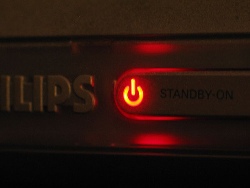
Standing by, costing us -- and warming the planet...
A very common “electricity vampire” is a power adapter which has no power-off switch. Some such devices offer remote controls and digital clock features to the user, while other devices, such as power adapters for laptop computers and other electronic devices, consume power without offering any features.

Another example is the typical microwave oven. Over its lifespan, it consumes more electricity powering its digital clock than it does heating food. Yes, heating food requires more than 100 times as much power as running the clock, but then, most microwave ovens stand idle —in “standby” mode – more than 99% of the time.

It’s the cumulative effect that matters here. The wasted standby power (vampire energy loss) of an individual household is typically very small, but the sum of all such devices within the household becomes significant. When we add up millions of such households, it suddenly becomes a whopping number.

Here’s a short video made by Good Magazine, in association with Nigel Holmes, explaining everything about standby power:

In fact, the International Energy Agency (IEA) estimates that standby power accounts for 1% of the world’s total carbon dioxide emissions. For context, all the world’s air travel contributes around 2.5% of global CO2 emissions. But airlines, airports and flights have drawn much more attention – and considerable flak – than this widely distributed energy leakage happening right under most of our roofs…
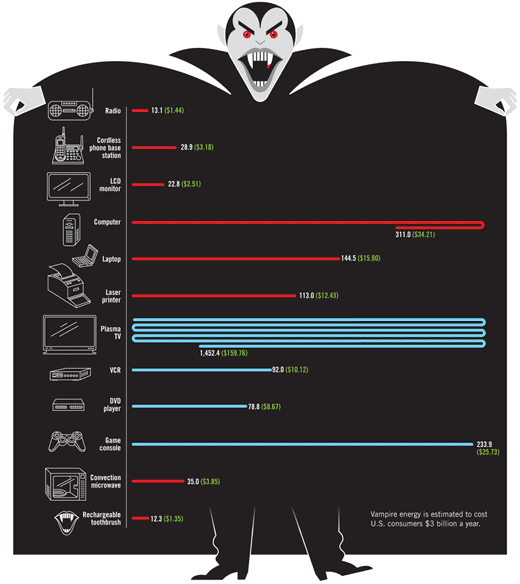
Standby power consumed by different devices - courtesy Geeks Are Sexy website

Industrialised countries are now more aware of this situation. “An individual product draws relatively little standby power (see here for examples), but a typical American home has forty products constantly drawing power. Together these amount to almost 10% of residential electricity use,” says an entire website dedicated to this topicby the US government’s top-ranked Lawrence Berkeley National Laboratory (LBNL).

Across the Atlantic, the British Government’s 2006 Energy Review found that standby modes on electronic devices account for 8% of all British domestic power consumption.

A similar study in France in 2000 found that standby power accounted for 7% of total residential consumption. Further studies have since come to similar conclusions in other developed countries, including the Netherlands, Australia and Japan. Some estimates put the proportion of consumption due to standby power as high as 13%.

In helpful tips to consumers on saving electricity, the US Department of Energy says: “Many appliances continue to draw a small amount of power when they are switched off. These ‘phantom’ loads occur in most appliances that use electricity, such as VCRs, televisions, stereos, computers and kitchen appliances. These phantom loads can be avoided by unplugging the appliance or using a power strip and using the switch on the power strip to cut all power to the appliance.”

It also advises consumers to unplug battery chargers when the batteries are fully charged or the chargers are not in use. Technical solutions to the problem of standby power exist in the form of a new generation of power transformers that use only 100 milliwatts in standby mode and thus can reduce standby consumption by up to 90%. Another solution is the ‘smart’ electronic switch that cuts power when there is no load and restores it immediately when required.

LBNL also offers advice on how to reduce standby power consumption in our households and offices.

Standby power is receiving more attention at the supply end too, with manufacturers and regulators getting into the act. The One Watt Initiative is an energy saving proposal by the IEA to reduce standby power use in all appliances to just one watt.

The initiative, launched in 1999, aimed to ensure that by 2010 all new appliances sold in the world only use one watt of electricity in their standby mode. The IEA estimates that this can help reduce CO2 emissions by 50 million tons in the OECD countries alone by 2010 — the equivalent to removing 18 million cars from the roads.

IEA fact sheet on reducing standby power

IEA/OECD policy paper (2001): Things that go blip in the night: Standby power and how to limit it

Related June 2008 blog post: Broadcasters and climate change: Turn off your lights, but not your minds!

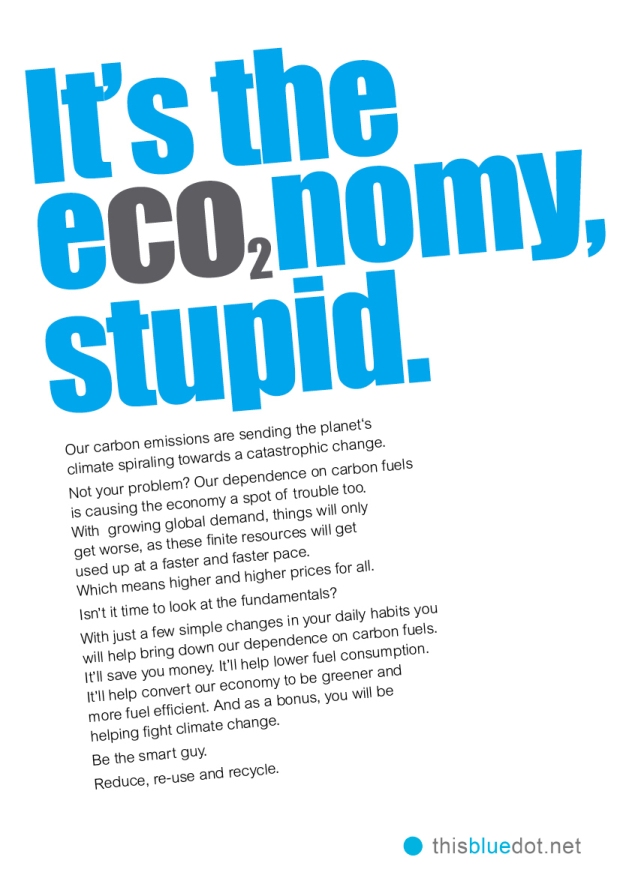
Counting growth on a warming planet: It’s the eco2nomy, stupid!

‘Climate change is the greatest market failure the world has ever seen,’ said the Stern Review on the Economics of Climate Change that the UK government published in November 2006. This 579-page assessment on the economics of climate change was headed by Sir Nicholas Stern, a former chief economist at the World Bank. The report warned that the world economy will suffer a serious blow if action to slow down climate change was not taken soon. According to Stern,’There is still time to avoid the worst impacts of climate change, if we take strong action now.’

Though not in the same league, this interesting call to action just caught my eye – it reminds us of a slogan that rode Bill Clinton to office in the 1990s, but takes on a whole new meaning now on a warming planet.

The reference given, http://www.palebluedot.net, did not have a working website as at today, 27 March 2010.

The Stern Review is the most comprehensive, rigorous and terrifying report published todate by a finance ministry. It points out that carbon emissions have already increased global temperatures by more than 0.5°C and that with no action to cut greenhouse gases, we will warm the planet another 2 to 3°C within the next 50 years. This will transform the physical geography of the planet and the way we live, with floods, disease, storms and water shortages becoming more frequent.

Stern and his team – no crying-wolf greenies, them – cautioned that the effects of climate change could cost the world between 5% and 20% of GDP, prompting the worst recession since the 1920s. Action to reduce greenhouse gas emissions and the worst of global warming, on the other hand, would cost 1% of global GDP.

Now who’s being stupid?

So you think you can be a Hot-shot? Go right ahead…

A few days ago, commenting on cartoons on climate change, I wrote: “So how do we capture climate change’s multiplicity in visual forms? Photographers go for the evidence and authenticity. Film makers work on both current impacts and future scenarios…”

Now here comes a chance for photographers everywhere to bear witness to the climate crisis slowly unfolding all around us.

The Deutsche Welle Global Media Forum 2010 has started an online photo competition called Hot Shots, to bring attention to the effects that climate change is having on people all over the world.

As the website says, “Hot Shots is…designed to create a visual record of these personal impressions by and for people around the world. The focus is not only on spectacular events, but also on climate change from people’s own, personal perspective.”

Send your photos to hotshots@dw-world.de and show how climate change and global warming are affecting your personal environment. Click here for details on participating and information about prizes.

Where are all the women cartoonists hiding?

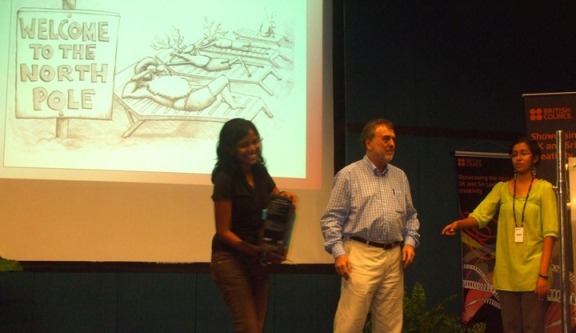
Shamanthi Rajasingham receiving her first prize in climate cartoon contest Sri Lanka

“So how many women cartoonists are working in our newspapers?”

My daughter Dhara, 13, asked me this simple question earlier this month when I was involved in judging Sri Lanka’s first contest of cartoons on climate change, organised by the British Council and the Ken Sprague Fund of UK.

I tried to come up with an answer, and couldn’t think of a single woman cartoonist who works for a print or online media outlet in Sri Lanka. That, despite my long association with the media and also being a great admirer (and collector) of good cartoons.

Later that day, at the awards ceremony for winning and commended climate cartoonists, I posed the same question to leading Lankan cartoonists Wasantha Siriwardena, Winnie Hettigoda and Dharshana Karunatilleke. They too couldn’t name one immediately; later, a single name was mentioned but it’s not one I recognised.

Clearly, cartooning is still a very male dominated profession — but that might soon change, going by the active participation of young women in the climate change cartoon contest.

Shamanthi Rajasingham
In fact, the first and third prize winners were both women — respectively Shamanthi Rajasingham and W M D Nishani. They beat close to 200 other contestants to get there.

Additionally, there were 6 women among the 22 commended cartoonists, and one woman among those 11 who were highly commended — judged on four criteria. See all winning and commended entries.

W M D Nishani
Okay, the four judges were all male (among us, two professional cartoonists). But during this entire judging process, the identity of artists was withheld and we only knew each entry by a number. In fact, we discovered the names (and gender) of artists only at the awards ceremony.

This would be encouraging news to Dhara and all other aspiring young girls and women who want to pursue careers in media. Let’s hope at least some of the women contestants in the climate cartoons contest would end up being more than just hobby cartoonists…

Meanwhile, it’s not just Sri Lanka that has a shortage of women engaged in cartooning, and awareness of their contribution is lacking. A quick Google search brought up a book titled “The Great Women Cartoonists” by Trina Robbins (Watson-Guptill Publications, 2001). Reviewing it in TIME, Andrew D Arnold wrote: “Name three women cartoonists who worked from 1900 to 1950. Okay, just name one. Couldn’t do it? Neither could I until reading a new, invaluable book…”

Cartooning on climate change: Young artists rise to the challenge

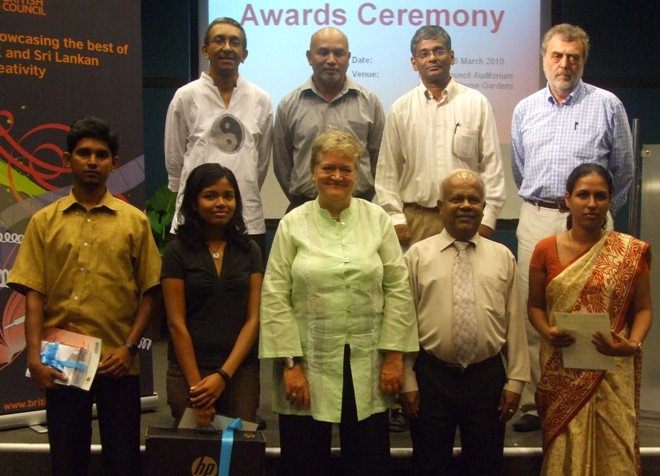
Cartoon contest top prize winners with British Council director and chief guest (all front row) and four judges (all back row) at awards ceremony, Colombo 6 March 2010

Man-made climate change is a complex planetary phenomenon. It has multiple causes and effects – not all of it immediately evident. Different areas of the world are going to be impacted differently and unevenly. Human response to the climate challenge has been patchy, and is mired in so much denial, rhetoric and political posturing.

So how do we capture this multiplicity in visual forms? Photographers go for the evidence and authenticity. Film makers work on both current impacts and future scenarios. What about cartoonists – who have to do their visual metaphors in a limited space that is static and two-dimensional? How much of climate change’s nuance and complexity can they really grasp and convey?

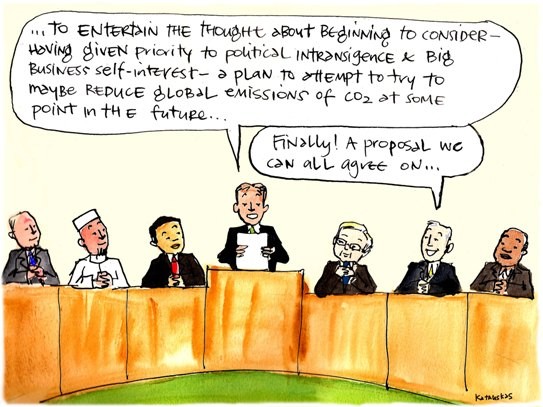
The short answer is: a great deal. On this blog, I’ve written that when it comes to cartoons, less is definitely more. Take, for example, many millions of printed words and probably thousands of minutes of airtime generated around the (over-hyped and under-performing) Copenhagen climate conference in Dec 2009. As I noted in blog posts on 17 Dec, 18 Dec and 21 Dec 2009, it was assorted cartoonists from around the world who summed it all up in a few perceptive strokes. This is why I keep saying that when it comes to commenting on our topsy-turvy times, no one can beat cartoonists for their economy of words.

In late 2009, the British Council and the Ken Sprague Fund of UK organised a cartoon contest on climate change which was open to all Lankan citizens from 18 to 35 years. They offered attractive prizes for anyone who could be ‘seriously funny’ about this global crisis. The participants could submit entries under 6 themes: drought and water shortage; deforestation and rain forest destruction; melting of the ice caps; role of industry in polluting the atmosphere; devastation of our seas and disappearance of marine life; and climate change in an urban environment.

Some 400 entries were received from 175 contestants (each person could submit up to 5 entries) – which surprised and delighted the organisers. During the past few weeks, I have been involved in judging these cartoons to select the top winners and commended entries. Joining me in this enjoyable task were nationally recognised professional cartoonist Wasantha Siriwardena and environmentalist Nimal Perera. We worked with a British counterpart, top cartoonist Michal Boncza Ozdowski.

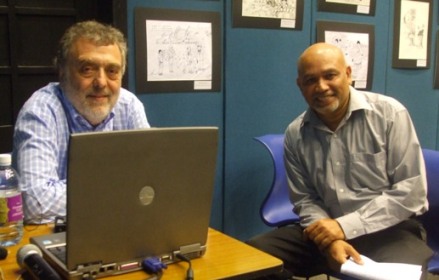
Michal Boncza Ozdowski (L) and Wasantha Siriwardena conducting cartoon workshop
The winners were announced, with awards and certificates, on 6 March 2010. It coincided with a half-day workshop on cartooning conducted by Michal and Wasantha. The chief guest at the ceremony was Camillus Perera, the seniormost Lankan cartoonist still professionally active.

As national judges, we looked at close to 200 cartoon entries that conformed with the contest’s published rules for eligibility. Since comparative ranking of creative works is never easy, we first agreed on four criteria for assessing the very diverse entries: cartoon value and humour; subject relevance to climate change (defined broadly); how effectively the climate related message was being communicated; and clarity and artistic merit of the entry.

Our initial judging coincided with the climate circus in Copenhagen, when we narrowed it down to a shortlist of 40 entries. We then individually scored these cartoons for each of our four criteria. We sometimes had to discuss and demarcate how far the scope of the contest could stretch. For example, when is an entry a good work of art but not a cartoon (more like a poster)? And what are the acceptable limits in the thematic or subject coverage of a vast topic like climate change?

The British Council later shared the full shortlist with Michal Ozdowski, who provided his own rankings and comments. We met again in February 2010 to discuss and reconcile our rankings — and found that our separately done rankings broadly agreed! (Note: During this entire judging process, the identity of artists was withheld and we only knew each entry by a number. In fact, we judges discovered the names only on the day of the awards ceremony, to which all shortlisted contestants were invited.)

Additionally, Michal kindly offered crisp comments about the top three winners, which became citations at the awards ceremony. So here are the winners of climate change cartoon contest 2009:

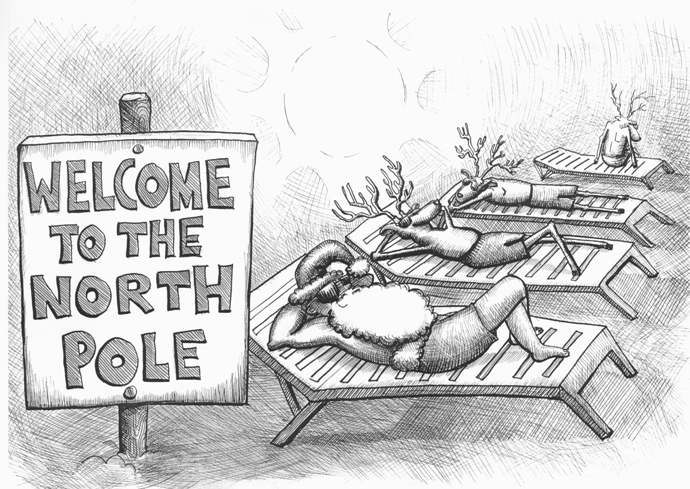
First prize: Welcome to the North Pole! By by Shamanthi Rajasingham

First prize winning climate cartoon - by Shamanthi Rajasingham

Citation for first prize: It is uncomplicated – a great advantage when satirising. Its composition is strong and imaginative, the draughtsmanship confident.

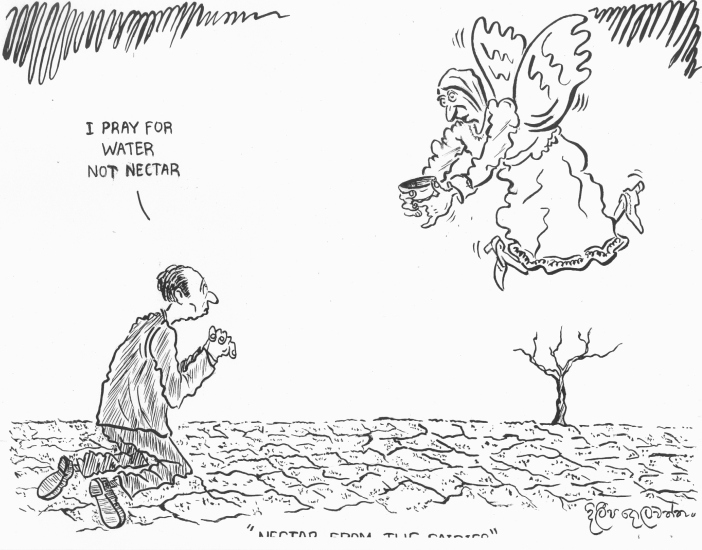
Second Prize: “I pray for water, not nectar” by Dileepa Dolawatte

Second prize winning climate cartoon by Dileepa Dolawatte

Citation for second prize: Apart from the vibrant and highly accomplished draughtsmanship, it lampoons brilliantly the fairy’s naivety – a funny eye-opener. Incorporates very cleverly traditional beliefs and myths. Here we are truly past the dodgy miracles stage in the climate change battles…

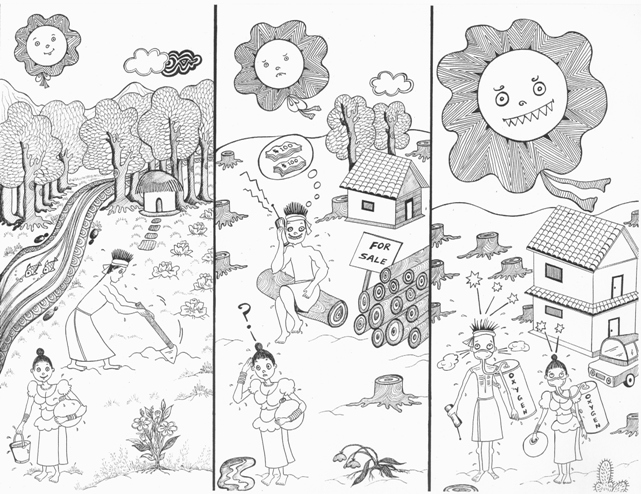
Third Prize: Theme – Drought and water shortage, by W M D Nishani

Third prize winning climate cartoon by W M D Nishani

Citation for third prize: An eloquent, if over-didactic, strip cartoon – could be quite effective in women’s publications. Coherent draughtsmanship catalogues effectively the woes of a ‘get-rich-quick’ development.

See all the highly commended and commended entries on the British Council website.

Media melee at Copenhagen: Chasing a hazy story in a crazy conference?

Polite or dodgy? Did anything more than this happen in Copenhagen?

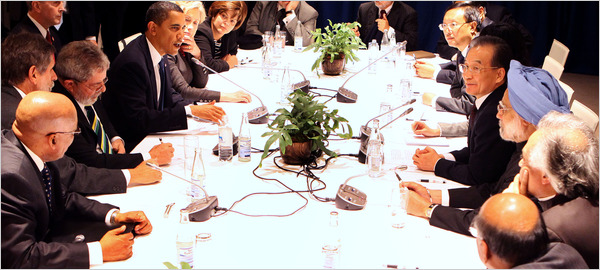
What happens when over 3,500 journalists from all over the world roam around a two-week long UN conference that saw plenty of loud bickering and hot air in the name of saving the planet from global warming? Well, the media pack adds to the noise levels and hot air, for sure — and they are not above bickering themselves.

At least, that’s the report from Copenhagen, where the UN climate conference COP15 ended on Dec 18 with a watered down, disappointing something called the Copenhagen Accord.

Darryl D'Monte
I’ve just read an interesting report filed from the Ground Zero of that half-event by my Indian friend (and senior journalist turned climate columnist) Darryl D’Monte.

He says: “The media in Copenhagen has been an unmanageable and unruly lot. There are some 3,500 of us covering the summit, most having come this week, and journalists – once again, the electronic media – don’t think twice about carrying on conversations at the loudest decibel levels, turning the room into a virtual Tower of Babel. The TV crews in particular are like packs of wolves. They station themselves at every available nook and corner where some VIP may enter and exit and try to get that exclusive byte as he or she makes an appearance“.

Read the full story at InfoChange India:
Media melee at Copenhagen, By Darryl D’Monte

Was it a non-event, half event or what?

Have they dropped the ball (Earth) in Copenhagen?

The news from Copenhagen, on the last day of the UN climate conference, has been a bit confusing. Have they got a climate deal, or have they simply agreed to meet again and talk more while the planet warms up?

As one news item put it: “Representatives of 192 countries quibbled over every word through the night as a weak political declaration started to emerge out of the climate summit once scheduled to finalise a treaty that would tackle global warming.”

The declaration remains “weak” and “wishy washy” in the absence of agreement over the main sticking points dogging this December 7-18 UN Framework Convention of Climate Change (UNFCCC) conference – the refusal by industrialised countries to commit more emission reductions and their unwillingness to put on the table money to help poor countries cope with climate change effects.

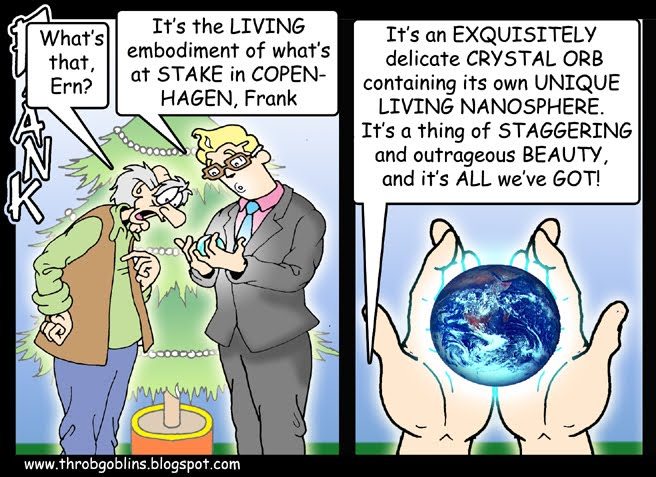
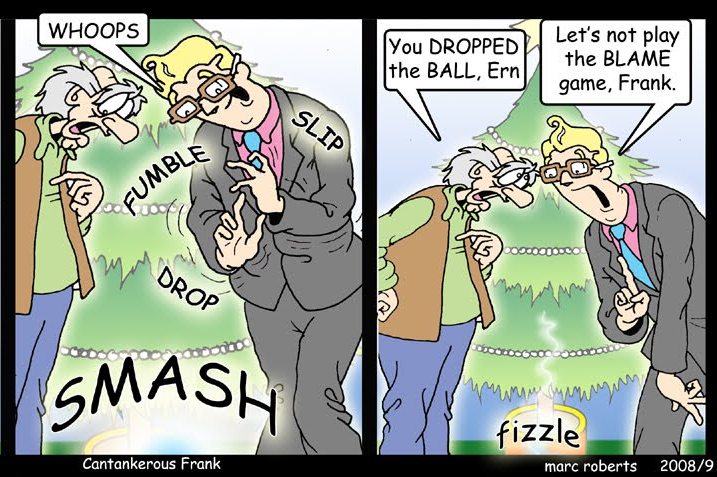
So, less than one week to go for Christmas, have the men (and few women) in suits dropped the ball (read: Earth) in Copenhagen? Clarity and interpretations will soon flow. I still hope it won’t come to what cartoonist Marc Roberts envisaged in this cartoon, originally drawn a year ago:

THROBGOBLINS INTERNATIONAL brings dark green humour to brighten your day

Dance for the Climate: dance your anger and joys to a U2 tune!

Hopenhagen?
As the UN climate conference culminates today in Copenhagen, there seem to be lots of angry people in the Danish capital. Many civil society and environmental activists, and some journalists, have been frustrated by the inter-governmental bickering process and the occasionally tough crowd control measures by the Danish police.

As author and activist Naomi Klein wrote at the end of the first week: “By the end, around 1,100 people had been arrested. That’s just nuts. Saturday’s march of roughly 100,000 people came at a crucial juncture in the climate negotiations, a time when all signs point either to break down or a dangerously weak deal. The march was festive and peaceful but also tough. ‘The Climate Doesn’t Negotiate’ was the message, and Western negotiators need to head it.”

I’m not in Copenhagen for uptodate news, but the 5,000+ journalists and over 10,000 activists are keeping us well informed on what’s happening (or not happening). Perhaps part of their anger can be dissipated by heeding a creative call to Dance for the Climate.

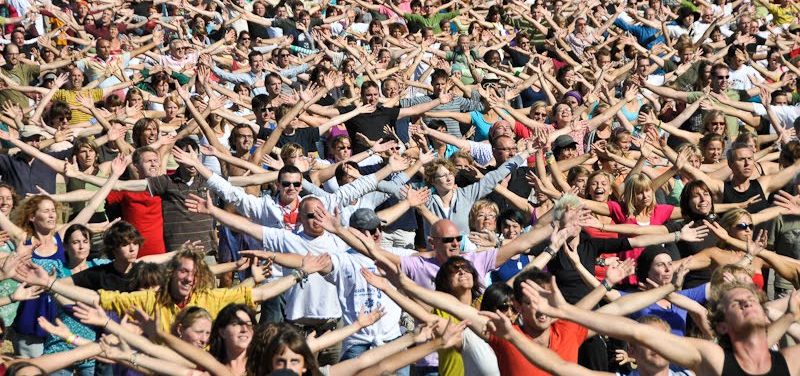
It’s an alternative way of demonstration, made into an inspiring and hopeful video clip by award winning Belgian film director Nic Balthazar. It shows 12 000 people on a Belgium beach in a truly spectacular simultaneous choreography dancing to the U2 hit single ‘Magnificent’. Bono and his band graciously gave the rights to their music. The message of the clip to politicians in Copenhagen is to ‘start moving, together, before it’s too late. The time is now to change climate change’.

In a recent email, Seppe Verbist, handling international distribution of “Dance for the Climate” clip, wrote: “We believe that the chances of success of the UN Conference are influenced by the clear signals from ordinary people to their politicians. The ‘Dance for the Climate-clip’ wants to contribute to this, and we sincerely hope we can count on your support!”

According to her, the clip has been released three weeks ago and they are now trying to spread it worldwide. In Europe the distribution goes pretty well as the European Broadcasters Network (EBU) offered the clip to all her members. They are picking up the offer and integrating the clip into their Copenhagen content. In Canada weather forecasters from different broadcast networks are organizing an imitation of Dance For The Climate, and the clip will be shown 24/7 at the World Expo 2010 in Shanghai in the Meteo World Pavilion. They’re expecting 100 000 visitors every day for six months. The Al Gore Climate Project also supported the clip and shared it with their network. It’s been on TV in Brazil and Mexico as well.

Dancing can be a powerful way to express not just joy, but a range of emotions. One of my favourite calls to action came from Ken Saro-Wiwa, the Nigerian poet, author, environmentalist and minority rights activist (for his Ogoni people) who was executed by Nigeria’s military on 10 November 1995. While in jail facing an uncertain future, he wrote these momentous words:
“Dance your anger and your joys,
Dance the military guns to silence,
Dance oppression and injustice to death,
Dance my people,
For we have seen tomorrow
And there is an Ogoni star in the sky.”

And today, we must also dance for saving our climate.

Climate cartoons: When less is definitely more!

While politicians, scientists and activists were jostling in Copenhagen at the crucial climate conference, I spent a few hours this week laughing my head off about climate change.

That’s when I judged the Sri Lanka entries for the cartoon contest on climate change, organised by the British Council and the Ken Sprague Fund of UK.

Joining me on this enjoyable challenge were professional cartoonist Wasantha Siriwardena and environmentalist Nimal Perera. We started off with close to 150 entries – many of them good, and some excellent – and ended up with a shortlist or 30 or so of the best.

That’s all I can say about it for now, since the final selection of winners will only be made in January 2010. In the meantime, I’ve been looking at many climate related cartoons inspired by the Copenhagen conference. Here are some that particularly appealed to me…

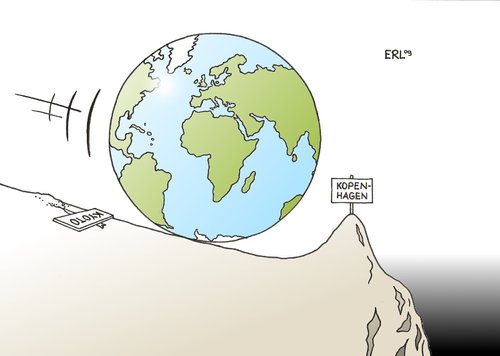
Last chance, by Erl
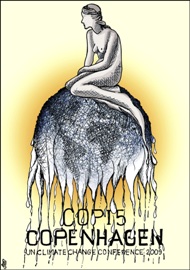
CLIMATE SUMMIT OF COPENHAGEN! by ismail dogan
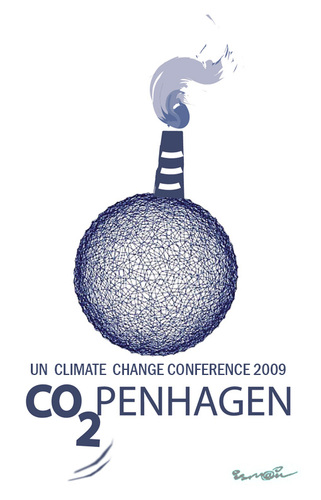
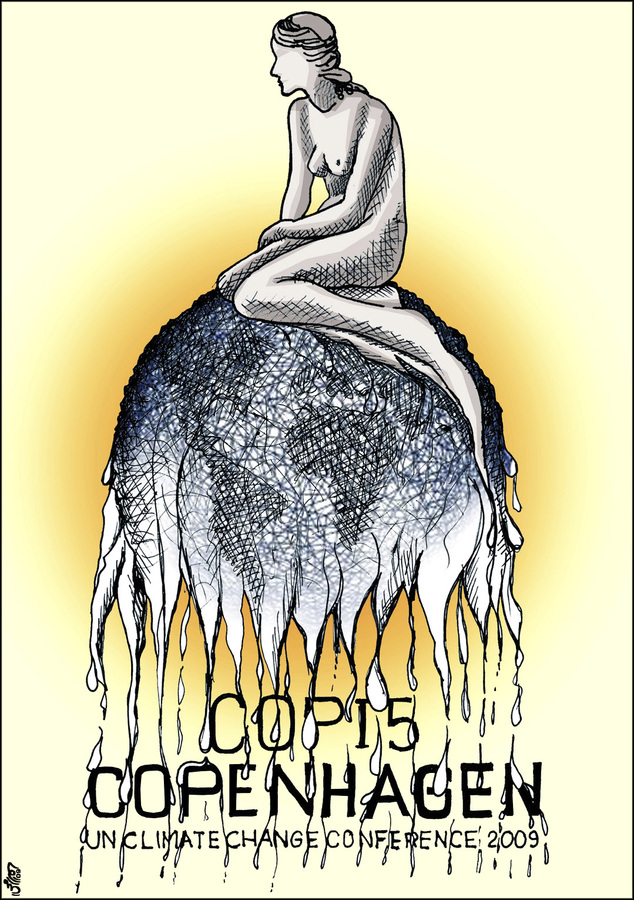
copenhagen 09 logo - by samir abdl-fatah ramahi
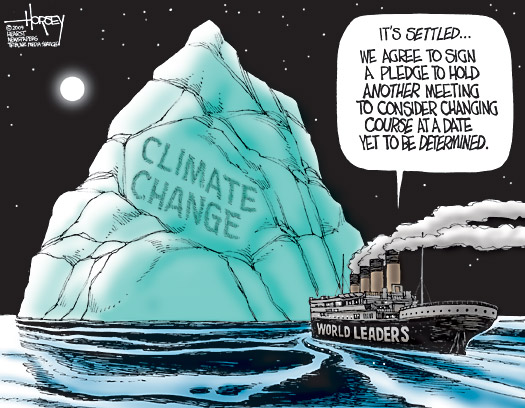
by David Horsey
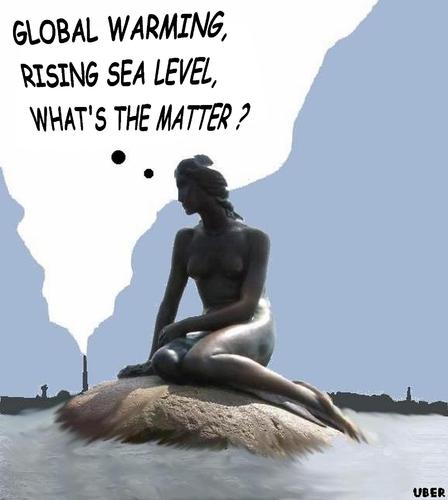
by uber

Earth Journalism award winners: Front-runners in the race to save the planet

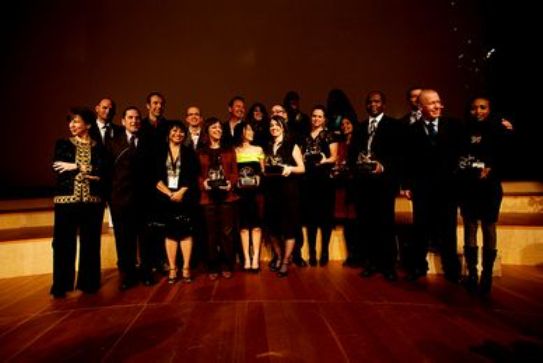
Earth Journalism 2009 Award winners

“If we are to have any hope of reversing the effects of climate change, then we have a monumental task of educating the six billion people on our planet about how climate change works and what they can do to help. The media is critical in this effort, since just one reporter has the ability to reach thousands, even millions, of people. These awards help to expand and honour these vitally important efforts.”

So said Dr Rajendra Pachauri, 2007 Nobel Peace Prize co-winner and head of the UN climate panel (IPCC) at the gala ceremony in Copenhagen tonight to present the inaugural Earth Journalism Awards.

Among the other presenters were key figures on climate and environmental issues, including Mary Robinson, the former President of Ireland; Marina Silva, the former environment minister of Brazil; and award-winning Chinese movie star Li Bingbing, who is also the Global Ambassador for WWF’s Earth Hour.

Nearly 1,000 journalists, bloggers and citizen reporters from 148 countries participated in the competition by submitting their work. The 15 winners were selected through a process involving a globe-spanning, independent jury with over 100 media and climate change experts. The winning reports included a Kenyan group who spread environmental information to their peers in the Nairobi slums through a hip hop video filmed atop mountains of trash, a compelling account of a small Pakistani community adapting to climate change, and an investigative report on disturbing business practices in Papua New Guinea’s carbon market.

Full list of winning entries and winners found on Earth Journalism website.

The Global Public Award, determined by thousands of online votes, went to “The Route of Smoke,” a multimedia report by Brazilian journalists Andreia Fanzeres and Cristiane Prizibisczki, who documented how customary farming practices that contribute to the country’s emissions are clashing with new methods for responsible agriculture.

“Our reporting showed how complex this issue of burning forests in the Amazon really is,” Fanzeres said. “It’s not about ‘good guys’ versus ‘bad guys.’ If you understand the complexities of climate change, you can start to solve the problem.”

James Fahn, Internews’ Global Director of Environmental Programs, said: “The Earth Journalism Awards were established to boost climate change coverage in this critical year leading up to Copenhagen, and to highlight the efforts of journalists reporting on this challenging subject around the world.”

10 Nov 2009: Earth Journalism Awards: Vote online for your favourite climate story!