Love Thy Mangrove: A Greenbelt Report from Pra Thong island, Thailand

jureerat-pechsai-deun.jpg

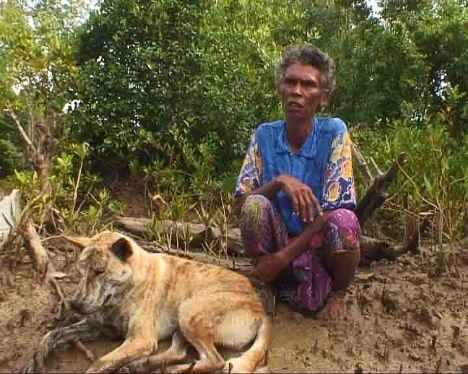
This is Jureerat Pechsai, nicknamed Deun.

She is a member of the Moken community – indigenous people living on the coast and islands on Thailand’s southern coast. Their nomadic lifestyle has earned them the name Sea Gypsies. In Thai, they are called Chao Ley — or people of the sea.

They traditionally live on small boats and move from place to place. When the Monsoon rains make the seas rough, they set up temporary huts on islands – such as Pra Thong Island, where Deun lives.

Pra Thong is an hour’s boat ride from the mainland city of Phuket — some conservationists call it one of the “Jewels of the Andaman” for its biodiversity. It is also an important nesting beach for turtles.

It was on this island that my colleagues from TVE Asia Pacific met and filmed with her in late 2006 for our Asian TV series, The Greenbelt Reports.

The Asian Tsunami of December 2004 devastated the Moken way of life. Their temporary huts were destroyed, and many families lost loved ones. The losses would have been greater if not for the mangrove forest close to the Moken village.

“Moken loves the water, the forest and everything. And we love the mangrove forest the most. The mangrove forest is like a living creature that has helped the Moken people for years. It’s our most beloved place on the island,” says Khiab Pansuwan, an older woman who is a leader in Deun’s community.

After the Tsunami, some Moken felt that they could not return to their nomadic lives. They have chosen to live on the mainland where they feel safe from the waves. Others who remained on their island had new, permanent houses built for them. But the Moken are quick to abandon these whenever they hear rumours of more Tsunamis.

Watch The Greenbelt Reports: Love Thy Mangrove on YouTube:

The mangrove replanting work on Pra Thong island is led by two women, Khiab and Deun.

Deun has been a volunteer with conservation organisations. She learnt about ecosystems and how to protect mangroves and endangered species like sea turtles. She can see many changes in her environment after the tsunami.

“After the tsunami, there are a lot of changes. We didn’t have much grass before, but now weeds are everywhere. The weeds are now more than grass,” says Deun. “In the past, we used to have more and more beach every year. But now the sea has come so close…”
khiab-pansuwan.jpg

The Tsunami’s impact is not the only factor affecting the mangroves here. Dynamite fishing, oil from boats, foam from fish and oyster nets are all damaging this life-saving greenbelt. Some people also cut down mangrove trees.

But Khiab and Deun are determined to rally everyone around to replant and regenerate their mangroves.

Says Khiab: “The community forest is part of the Moken people. We don’t want to cut the trees or clear it. We want to replant the trees so the forest is like before. We don’t want anyone to cut down trees because the mangrove forest saved many Moken lives.”

The two women are determined to rally everyone around to replant and regenerate their mangroves.

Replanted mangroves will ensure not only protection from the waves, but also a continued supply of shell fish and crabs – the main source of income and food for the Moken.

The Moken have traditionally managed the mangroves sustainably. They fish in different areas of the forest during the year, giving time for fish stocks to regenerate. Logging for firewood is done only in moderation, in designated areas.

But these mangroves are now under threat from outsiders who see it as a source of firewood and shell fish. Only a few Moken are left in the village to protect the forest from these intrusions.

Khiab and Deun have much work to do.

NOTE: We are now looking for more stories like this to be featured in the second Asian TV series of The Greenbelt Reports. See TVEAP website news story calling for story ideas.

All images and video courtesy TVE Asia Pacific
How short is short today? Packaging Nature for today’s television viewers

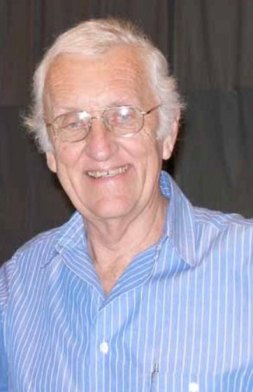
On 15 July 2007, I wrote about the award-winning natural history film-maker Neil Curry, based in South Africa, whom I last met during the Japan Wildlife Film Festival in Toyama in the summer of 2005.

Most recently, Neil made The Elephant, the Emperor and the Butterfly Tree, which has won several of the industry’s top awards.

I’ve since heard from him, and want to share some of his views on how best to package Nature and wildlife for today’s easily-distracted, attention-challenged audiences. He is responding to my post on 13 July 2007 titled Mine is shorter than yours, yipee!

neil-curry.jpg

He says:

‘Mine is shorter than yours….’ is one of the issues I’ve been going on about for years and I’m delighted that Friends of the Earth has now come up with a competition for one-minute films. This ridiculous thing of the ‘standard’ broadcast slot for bluechip wildlife programmes being 52-minute is, in my opinion, one of the main reasons why the public’s view of Nature has become so ‘warped’.

You can’t sustain a 52-minute wildlife film without drama – so we end up with this on-going emphasis on killing, sex, things that are supposedly deadly to humans (everything from snakes and great white sharks to mosquitoes), and dramatic confrontations between macho men – and women – and animals. By insisting on these long films, television itself has actually ‘created’ the audience for wildlife violence – and I’ve been told by more than one commissioning editor that audiences aren’t interested in “place” and “habitat” films any more, they want to see big animals doing exciting things.

In short, Dallas with animals – wildlife “reality-TV”.

Based on my own experience, that’s rubbish. Yes, audiences want a well-told story but they can be equally fascinated by quite prosaic things in the complex inter-relationships of nature, provided the story is told properly. They don’t need all this ‘red in tooth and claw’ stuff. The superb, The Queen of Trees that is currently doing the rounds is a good example – as is the on-going popularity of Attenborough and some of the BBC’s mega-series.

In fact, the over-dramatised programmes often give a quite distorted view of what wildlife is really like. Most creatures don’t spend all their time fighting and killing one another, or looking for human beings to threaten and attack. But if film makers, no matter how serious they are about telling the truth, want to eat, have somewhere to live, educate their kids and so on, they simply have to comply with what the programmers want – and thus, the cycle continues. Of course, it sometimes backfires. Some years ago – unfortunately I can’t remember the exact details now – research in the UK found that school children on field trips into the countryside were bored, because “nothing was happening”. Wildlife programmes on television had led them to expect nature to be full of continuous action and excitement. If children find real nature and the countryside “boring”, imagine how that will influence them when they grow up and find themselves in positions of authority where they may have to make decisions about siting roads, factories, quarries and so on in otherwise unspoilt but “boring” countryside.

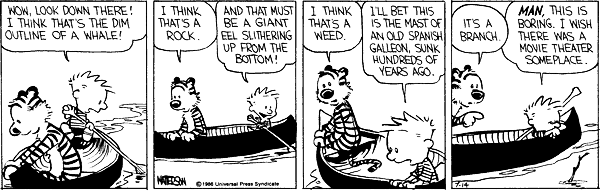
nature-is-boring-have-a-movie.gif

If television would just take some of their hour-long wildlife slots and break of them into shorter segments of 30 or even 15 minutes, they would open up the screens to hundreds, perhaps even thousands of fascinating stories about some of the wonders of nature that are astonishing and intriguing, and that would grab audience attention – without any of the drama that is needed to sustain 52 minutes. In my own files I have dozens of stories like that – and so probably, do most other wildlife film makers – but we just never get the chance to tell them because there’s almost no market for short wildlife films on television.

Lord Reith, father of the BBC, said the job of broadcasting was to inform, educate and entertain – but nowadays unfortunately, much of wildlife programming seems to have got itself stuck solely in the entertainment category. It’s a pity because it means a lot of stuff that could give audiences a better understanding of the other life we share this planet with, is largely kept off our screens.

In the circumstances, it’s a miracle that The Elephant, the Emperor and the Butterfly Tree ever got made. It says a lot for the courage and acumen of Mike Gunton, who was commissioning editor on The Natural World at the time, that he was prepared to buck the trend and take it on. There’s no sex, no killing, no violent confrontations – just a boring old tree and a lot of small-scale interactions going on around it, plus a few examples of the dreaded Homo sapiens (who doesn’t even exist in Nature if lots of the wildlife TV programmes are to be believed).

Channel South Asia? Yes and No!

I wrote a few days ago about Ujala TV, a fledgling and entirely private, modest effort to operate a satellite TV channel carrying education and information for South Asian audiences — a quarter of the world’s total population.

This reminds me of discussions that have been around for years about setting up a South Asian TV network.

It’s one of those good ideas too dangerous to be mentioned frequently in public — in case our South Asian governments actually take it up! And that, as all South Asians know, will be the death of another good idea.

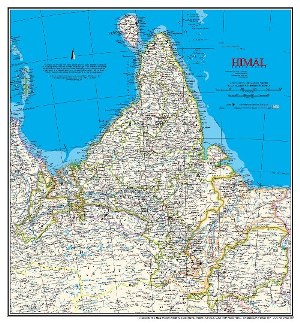
Two years ago, Himal Southasian, the only publication that truly thinks and acts at South Asian level (even if they spell it as one word: Southasian!) ran an interesting analysis on the prospects for a South Asian channel. It was written by Indian journalist Aman Malik.

The article’s premise was this:
Isn’t it time for a regional television network that ‘thinks Southasian’ and broadcasts via satellite and cable throughout the region? While Latin America’s incipient Telesur and West Asia’s energetic Al Jazeera might provide models, it is clear that we will have to go our own way.

Read Channel Southasia by Aman Malik in Himal Southasian, Nov – Dec 2005

Himal Southasian Cartoon courtesy Himal Southasian

It looked at the experience of Al Jazeera Arabic channel in the Middle East (launched in 1996), and the more recent initiative of Telesur, the pan Latin American television network founded by the Chavez administration of Venezuela in 2005.

Aman’s article was based on this premise:
“Regionalism in Southasia, which got a boost with the official sanction of the establishment of SAARC two decades ago, has been an increasingly important theme for civil society in each of the region’s countries. Over time, such groups have felt the need for print and electronic media that cover the region as a whole; the overwhelming presence of western satellite news has made analysts call for native channels. The spread of Indian channels, in particular the satellite footprints of Hindi and English broadcasts emanating from India, has again led people in other countries to call for a satellite channel that is uniquely Southasian, without allegiance to any national sensibility.”

Map courtesy www.safeer.info copy-of-southasian-map-by-himal.jpg

He also analysed the prevailing media mix accurately when he wrote:
Coverage of the Southasian neighbourhood is hampered by the fact that no television channels, beyond the few big Indian channels, keep correspondents (or even stringers) in the neighbouring countries. As a result, the news that is used is filtered through the medium of Western wire services and television channels. A region the size of the Subcontinent generates an enormous volume of news, but you would not know that ‘there is a region out there’ if you watched television in any of the countries of Southasia. The Indian channels that are able do so send camera units parachuting into nearby countries – if there is a bombing spree in Dhaka, for instance, a state of emergency in Kathmandu, or a tsunami disaster in Colombo. But they themselves have neither the wherewithal nor the interest to stay with a story to do follow-up.”

He then summed up the divided opinion on the timing for such a channel:
“Some believe that now is the perfect time for a Southasian channel; they tend to be the idealists who hanker for ‘soft borders’, Southasian camaraderie, peace and the prosperity that comes from peace. There are others who believe that the time is not right for such a channel; they tend to be the realists who point out, first, that the audiences are currently not present for a channel that tries to be all things to all audiences across seven nation states. They also point to the enormous costs of running a satellite channel in Southasia. Such an investment would be unlikely to be backed by bankers and investors – at least, not until the movement for Southasian regionalism evolves into a revolution.”

Among the key issues such a venture will have to address is language. There is no one South Asian language spoken and understood by all people — between Hindu and Urdu, a few hundred million may be covered but it still leaves out a sizeable number who don’t understand these. English, for the time being, is the language that cuts across political borders, even if it has its own cultural barriers: only a numerical minority speaks English, even if they are among the more influential in societies.

Other challenges for a Channel South Asia include:
* Given the enormous diversity among South Asian peoples, societies and economies, how would audience be defined for such a channel (no channel can be all things to all people).
* How to rise above the interests and perspective of a single country
* How to recruit and nurture staff who can think beyond and above their own nationalities
* Where in geographical terms can such a broadcaster be anchored, and yet stay beyond the crushing bureaucracy and political pressures of the physical location?
* Where to find the investors with deep enough pockets yet honourable enough not to meddle with the editorial aspects of such an operation

I agree fully with Aman when he writes:
The governments of Southasia clearly cannot be expected to back a Southasian television channel — neither by themselves, nor due to their lack of trust in each other. Such a channel would be an expensive project, from the hardware and satellite hook-ups, to region-wide networks of correspondence and marketing reach. But if not the government, then who would have the required cash to promote it? While a sense of regionalism may be developing, it is still incipient as far as the marketplace is concerned; investors are hardly going to come up at this time with the multimillion dollars that the project would need.

I, for one, am relieved that South Asian governments are unlikely to come together in such a venture – we’ve suffered long enough and hard enough with our state-owned, government-controlled, ruling party mouthpieces (both radio and TV) that pollute our airwaves (a public commons) every day and night. Euphemistically called ‘national television’, these conduits of governmental propaganda have progressively lost audience share — and influence — since private channels started operating in the early 1990s. They are today reduced to vanity channels for vane politicians and bureaucrats. The mass audience has long ago abandoned them.

I’d rather take chances with a South Asian Murdoch, than with our unaccountable, selfish governments.

Read the full article on Channel Southasia in Himal Southasian, Nov-Dec 2005
Enriching South Asian airwaves: Ujala TV is one year old – and counting

Satellites and South Asia: An overview by David Page and William Crawley published in Himal South Asian magazone, August 2000

Arthur C Clarke on ‘Satellites and Saris – 25 years later’ in Frontline Magazine, 28 April – 11 May 2001

Bill Moyers and the Yes Men: The ultimate media merger?

On 20 July 2007, the Bill Moyers Journal on PBS opened with these words by the inimitable Bill Moyers:

“Here with me now are two partners of Triglyceride Investments, a private equity fund that recently announced its intention of combining the assets of all the hedge funds on Wall Street in order to bring under a single canopy of ownership every media outlet in America. Their prospectus contends that the handful of big media companies that control most of what you see, hear, and read cannot possibly produce maximum return on investment as long as each has to field its own army of lobbyists in Washington.

“If only one holding company instead of four or five controlled all the country’s radio and television stations and all of its cable, newspaper, and Internet outlets, eliminating the need for the competitive purchase of politicians, the savings on campaign contributions alone would increase the bottom line tenfold.

“Not the least of their argument is that since our present media system and Washington so closely mirror each others’ interests, it could even be possible to close down the government altogether and have the country run by Wall Street, saving huge sums of money now spent on perpetuating an impression to the contrary. Joining me are Andy Bichlbaum, the chairman of Triglyceride Investments, and his partner, Mike Bonanno, chief executive of their offshore subsidiary, Tsetse Media Inc., with headquarters in the Marianas Islands.

Bill talks with the two ‘money men’ very seriously for a couple of minutes — before letting on that it’s all a big joke. The two men are not from Wall Street – they’re the ‘Yes Men’ and “they serve up satirical humor laced with lunacy to call the media’s attention to serious issues”.

Read the full transcript of the 21-minute interview

Watch the full interview on PBS Online

The Yes Men are Andy Bichlbaum and Mike Bonanno, two impersonators who use satire to bring media attention to issues that otherwise might be overlooked.

Their premise, from their website, is:
Small-time criminals impersonate honest people in order to steal their money. Targets are ordinary folks whose ID numbers fell into the wrong hands. Honest people impersonate big-time criminals in order to publicly humiliate them. Targets are leaders and big corporations who put profits ahead of everything else.

It all started some years ago when they set up a parody of the World Trade Organization’s website. Somebody mistook it for the real thing and they got a serious invitation to speak as experts at an international conference in Austria.

“We actually see this as a form of journalism. Or perhaps more precisely, the form of collaboration of journalists,” explains Bichlbaum in his interview with Bill Moyers.

“A lot of the issues that we address journalists want to cover. But…in many situations, editorial control won’t let them unless there’s a good little hook behind it. And so, we’ve found a way to create funny spectacles that give journalists the excuse to cover issues.”

To me, their best prank was when they managed to fool BBC World TV in front of a global audience. In December 2004, on the 20th anniversary of the Bhopal gas disaster, “Dow representative” “Jude Finisterra” went on BBC World TV to announce that the company was finally going to compensate the victims with US$ 12 billion, and clean up the mess in Bhopal. The story shot around the world, much to the chagrin of Dow, who briefly disavowed any responsibility. And the BBC was left with egg all over its smug face.

Watch how the mighty news giant fell for a prank by two determined men:

After this, would you ever trust BBC World when it claims to give us the bigger picture?

And here’s the UK Channel Four’s gleeful documentation of how the BBC and other news media fell for the Yes Men:

The Yes Men have also impersonated representatives from Halliburton, Exxon and others, giving public presentations aimed at exposing what they believe to be discrepancies between how these groups want to be seen and how they really act. They call this process, “identity correction.”

While some criticize them for deception and call their hijinx unethical, they argue “these kinds of [corporate and political] wrongdoings are at such a scale – they’re so vast compared to our white lies that we think it’s ethical.”

Take the PBS Online Poll: Do you think the Yes Men’s methods are an acceptable form of social activism?

Mike and Andy released their first film in 2004 entitled, “The Yes Men,” as well as a book, The Yes Men: The True Story of the End of the World Trade Organisation. They are planning on releasing a new film shortly.

If I ever meet them, I’ll have just one question: just how do you suppress the giggles as you fool the gullible?

Enriching South Asian airwaves: Ujala TV is one year and counting…

Some of us dream about doing great things. Other agitate for reform. A few among us just go ahead and do it.

This story is about one such group, and its inspirational leader, who took on the formidable challenge of setting up an educational television channel for South Asia.

Just thinking about it can scare away most people. Home to over 1.5 billion people, including the largest concentration of poor anywhere in the world, South Asia is in a region full of disparities, divisions and desperation. It is not only the most militarised region in the world, but also one of the most highly bureaucratised (the British invented bureaucracy and we in South Asia perfected it!). Starting a new venture of any kind is fraught with endless permissions and paperwork.

None of this deterred Rashid Latif from launching Ujala TV in mid 2006 as a free, 24-hour satellite television channel dedicated to education and information with focus on South Asia.

Ujala TV Ujala TV Ujala TV

Ujala TV is wholly owned and operated by a non-profit entity called the People’s Education Network (PEN) that Rashid founded.

As the channel’s website says: ”A refreshing new television alternative, Ujala does not belong to any nation – it belongs to South Asia. Showcasing both local and international programs our goal is to help ease the barriers placed between us and within our own minds.”

Ujala TV’s test transmissions started on 2 July 2006 from Dubai, where Latif assembled his small team of hard-working professionals at the Dubai Media City. This was a smart move: not to be anchored in any single country in South Asia itself when broadcasting to the region.

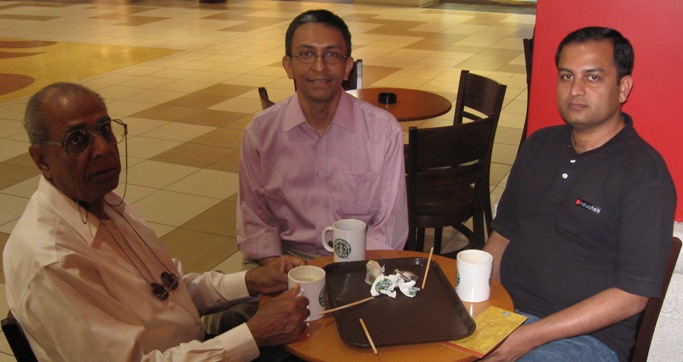
l-to-r-rashid-nalaka-sohail.jpg

Photo shows (L to R) Rashid Latif, Nalaka Gunawardene and Sohail Khan in Dubai, May 2006

As Sohail Khan, Director Operations of Ujala TV, recalled recently: “I still cherish the excitement when I was at Samacom (the Uplink Earth Station at Dubai) at around 2 am Dubai Time to press the button to air Ujala for the very first time at 00:00 GMT on 2 July 2007 (4 am Dubai Time) to start the Test Transmission.”

They had worked long and hard to get to that point. A few weeks earlier, in mid May 2006, I stopped over in Dubai specifically to meet Rashid and his team who were busy preparing to launch. At that time, they were working out of their office for 16 – 18 hours a day, every day, and sleeping a few hours at the office itself.

This was no multi-million dollar start up channel. The entire operation was being financed by Rashid Latif from personal funds. Although the channel’s aims were entirely in the public interest, he declined to seek funding from development donors or philanthropic foundations.

A Pakistan-born Canadian citizen, Rashid worked in the Pakistan government as a senior broadcast manager before heading west to work in the corporate sector. He started Ujala TV after formal retirement.

“I started working on ‘Ujala’ project (at the age of 75) when most of my contemporaries had either played their innings or were about to pack up and leave for the pavilion,” Rashid said in a recent letter.

Until this letter, I had no idea that Rashid was 75. He has the energy and drive of someone in his late 50s or early 60s!

Sohail looks back on the first year: “During this first year, we came across many difficulties, including, changing laws in India and Pakistan for Landing Rights with huge financial requirements, and increase in running costs due to change in different rentals here in Dubai. These problems, however, do not have any effect on our determination, and we are still trying to eliminate the darkness from our part of the world, and to spread Ujala.

nalaka-with-rashid-latif.jpg

The new channel still struggles to establish its brand identity and distribution networks — it’s not easy to compete with big corporations with their deep pockets.

But a modest start has been made. Now we need to sustain the momentum.

Meanwhile, Rashid is looking for a dynamic South Asian national to take over from him, so that he can fully retire. Now that’s going to be a tall order.

Declaration of interests:
1. I am on the honorary Board of Governors of People’s Education Network along with over a dozen academics, journalists and film-makers who share Rashid’s ideal for a South Asian public interest TV channel.
2. TVE Asia Pacific has supplied many development films to Ujala TV over the past few months.

Read Aman Malik’s article in Himal Southasian on Channel Southasia

‘Toxic Trail’ continues its trail across Asia

mongkon-tianponkrang.jpg mongkon-tianponkrang-of-tef.jpg
Meet Mongkon (Mong) Tianponkrang.

He is a Programme Coordinator with the Thai Education Foundation (TEF), a non-profit organisation working to improve education in Thailand at all levels, especially using non-formal methods.

I met Mong earlier this month during our regional workshop on communication capacity building under TVE Asia Pacific‘s Saving the Planet project.

TEF’s School and Community Farmland Biodiversity Conservation project is one of six stories that was chosen from among dozens of public nominations to be featured in the Asian regional TV series we are working on, titled Saving the Planet.

Saving the Planet will feature remarkable initiatives from South and Southeast Asia by educational, civil society and community groups engaged in Education for Sustainable Development (ESD).

Mong was a live wire during our 5-day workshop in Khao Lak, Thailand. We encouraged everyone to share experiences in communicating with their respective audiences, using whatever communication methods and means (media or non-media).

At one point, Mong started describing how he and his team have been using a video film called Toxic Trail that takes a critical look at the use of pesticides in crop cultivation in Thailand and neighbouring countries.

He described how they’d found the film’s Thai version very useful in their work with farmers, housewives and other community members.

This was a fine coincidence: he didn’t know until then that we at TVE Asia Pacific had been involved in versioning Toxic Trails, originally produced in English, into half a dozen Asian languages including Thai. That was back in 2002.

Toxic Trail is a two part documentary that was produced in early 2001, directed by a long-time friend and colleague Janet Boston (who today heads the Thomson Foundation, which has a 40-year track record in training journalists in the developing world). It was first broadcast on BBC World in April 2001.


Image courtesy Community IPM website

It followed Russell Dilts, an expert working with the United Nations Food and Agriculture Organisation (FAO) as he investigated the pesticide industry in South East Asia. The trail begins in Thailand, moving to Cambodia and ending in Indonesia. The main focus, however, is on Cambodia, where Dilts uncovers major problems in the misuse of pesticides.

Dilts makes stark and horrifying findings: the mass use of pesticides is progressively destroying delicate local ecosystems, as well as causing many health problems to farmers and their families involved. Eventually, everybody is affected by consuming agricultural produce with high levels of pesticide residues.

Read TVEAP website feature on Toxic Trail (Aug 2002).

Read key issues raised by Toxic Trail films

Image courtesy Toxic Trail website

Interesting things happened following the release of Toxic Trail in 2001. First, the FAO came under intense pressure from pesticide companies for having supported an investigative film that probed the reality of product stewardship that these companies claimed existed.

Stated simply, Product Stewardship is when companies take the responsibility for their products. It includes the monitoring of the distribution of products with regard to choice of outlet and method of sale. Toxic Trail questioned how this concept was being practised in developing countries such as Thailand and Cambodia.

Clearly, the companies didn’t like what was disclosed with tangible, visual evidence. In the weeks that followed the film’s release, and its high profile broadcast on BBC World, at least three heads rolled at FAO’s Integrated Pest Management (IPM) programme for Asia.

But by then the genie was out of the bottle. The BBC broadcast may have been watched by a handful of officials, diplomats and businessmen who walk the corridors of power. But a much larger Asian audience was reached by our versioning the films into Bahasa Indonesia, Hindi, Khmer, Mandarin, Sinhala and Thai — which, between them, are spoken by close to two billion people. These versions have been broadcast and narrowcast through numerous outlets ever since.

And as Mong reminded us earlier this month, the films are still in good use, several years after their production and versioning.

One clear lesson: it’s not just enough to produce a good TV film. How much it is seen and used depends on the amount of promotion, local adaptation and subsidised or free distribution that goes with it.

In the case of Toxic Trail, there was a network of promoters for IPM and sustainable agriculture who picked it up and ran with it — and continue to spread the word.

Meanwhile, we should be releasing more such ‘genies’ out of their bottles…

Visit Community IPM website

Look up more online resources on integrated pest management

Photos of Mongkon Tianponkrang by Indika Wanniarachchi of TVEAP
Other images courtesy Toxic Trail website

Pay-back time for film-makers: Go back to your locations!

“These days it’s simply not good enough to use the old response… “If people know about it they’ll care for it and do something”. Wrong. They’ll just go on being conned that it’s all perfect out there, with endless jungles, immaculate Masai Maras, and untouched oceans. What planet are they on about?”

These words come from Richard Brock, one of the world’s leading and most senior natural history film makers.

If you haven’t heard his name, chances are that you know at least some of his many creations: he worked in the BBC Natural History Unit producing, among others, the highly successful Life on Earth and Living Planet series presented by David Attenborough.

Image courtesy The Brock Initiative Image courtesy Brock Initiative

The BBC Natural History Unit (NHU) is a department of the BBC dedicated to making TV and radio programmes with a natural history or wildlife theme, especially nature documentaries. It celebrates 50 years in 2007.

Richard Brock worked with them for 35 of those 50 years. He left them a few years ago, according to his own website, ”concerned by the lack of willingness to address the real current state of the environment”.

He then started his own independent production company, Living Planet Productions, which has made over 100 films on a wide range of environmental topics, shown all over the world. As his archive of films and footage mounted up, Richard felt that there was something more, better, that could be done with this resource.

“We’ve been celebrating nature by bringing its wonders to the TV screen all over the world. Now that world is changing, faster and faster, and nature needs help. Films can do that, at a local level, be it with decision-makers in the government or in the village,” he says.

He adds: “When you consider the miles of footage and thousands of programs sitting in vaults out there unused, it seems tragic that the very wonders they celebrate are dwindling, often because no one tells the locals and tries to help. That is why I believe its Payback Time for the wildlife television.”

Thus the Brock Initiative was born. To quote from their website:
“He decided to set up the Brock Initiative, to use his archive of footage, and to ask others to do the same, to create new programs, not made for a general TV audience, but made for those who are really connected to the situation in hand: local communities, decision makers, even that one fisherman who uses dynamite fishing over that one coral reef. Its about reaching those who have a direct impact; reaching those who can make the difference.”

As he emphatically says: “Showing the truth on some minority channel is not the answer. Showing it where it counts, is.”

Image courtesy The Brock Initiative

I hope those development donors and corporate sponsors, who try to outdo each other in supporting programming going out on BBC World (an elite minority channel in most markets) hear people like Richard Brock — long-time BBC insiders who know what they are talking about.

Those who make documentaries on wildlife, natural history or environment (and wild-life of humans) are trapped in their industry’s many contradictions. They go on location filming to the far corners of the planet, capturing ecosystems, species and natural phenomena. Yet for a long time, many have avoided talking about or featuring the one species that has the biggest impact on Nature: Homo sapiens (that’s us!).

Whole series of wildlife documentaries have been made, by leading broadcasters and production houses of the east and west, without once showing a human being or human activity in them. Almost as if humans would ‘contaminate’ pristine Nature!

In recent years, more film-makers have broken ranks and started acknowledging the human footprint on the planet and its environment. But a good many documentaries are still made with ‘pure’ wildlife content, with not a thought spared on the wild-life of our species.

Richard Brock is one who has refused to follow the flock. And he has also punctured the highly inflated claims — promoted by BBC Worlds of this planet — that broadcast television can fix the world’s problems.

As we have found out here in Asia, it’s a judicious combination of broadcast and narrowcast that can work – and we still need the participation of teachers, activists and trainers to get people to think and act differently.

At their best, broadcasts can only flag an issue or concern to a large number of people. For attitudes and behaviour to change, that needs to be followed up by narrowcast engagement at small group levels.

Taking films to the grassroots need not be expensive, says Brock. In fact it can be done inexpensively.

These are not programmes for broadcast to western audiences demanding BIG productions – you are often showing films to people who have never even seen TV. The effort comes in showing the right thing, to the right people, in the right way, and not about expensive effects, top quality cameras or cutting edge effects.”

Using donated archive footage cuts costs dramatically. New footage, important for putting a film in a local context, can be taken on small miniDV cameras and editing can be done on any home computer. In this way, it becomes feasible to put together a film even for a very small, but crucial audience.

The Brock Initiative, started and funded by donations from its founder, has projects in Kenya, Madagascar, Tanzania, the UK and Indonesia.

Read more about the Indonesia project

They also offer wildlife and nature footage free to those who want to use moving images to make a difference.

Read Richard Brock’s formula for making films that make a difference!

As our species’ wild-life pushes our living planet closer to peril, we need many more Richard Brocks to try and reverse disturbing trends at the edges of survival — almost all of them in the global South.

It’s pay-back time, film-makers!

Related blog posts:
End this callous waste – open up broadcast archives for combating poverty and ignorance

Lawyers who locked up the butterfly tree

Anita Roddick, Angkor Wat and the Development Pill

Contact The Brock Initiative

The Three Amigos: Funny Condoms with a serious mission

For some reason, my blog post with the highest number of daily hits for the past few days has been what I wrote in mid April: ‘Beware of Vatican Condoms – and global warming’.

I’m not sure if the interest is really in condoms, the Vatican or global warming, but since we must be demand-driven, here’s a new condom story! It concerns the three funniest condoms I’ve met.

Image courtesy Three Amigos website

They are called The Three Amigos – they are three differently shaped and coloured condoms, each with distinctive personality. They go places — certainly more than your average condom — to airports, forests, football games, recording studios, even television talk shows!

They are funny, amiable and out to have a good time. Occasionally they are also fallible and gullible — just like many humans are.

And like many of us, they grapple with hard choices in life – for example, between caution and temptation, or between right and wrong.

So far there are 20 adventures of The Three Amigos — each no longer than a minute: in those precious few seconds, a compact story is told with stunning effect. Talk about packing a punch.

Wherever they go, and whatever they do, the three friends have one mission: to remind us of many ways in which we can help stop the spread of HIV/AIDS.

The Three Amigos is a series of twenty Public Service Announcements (PSAs) in the form of short comedic sketches, featuring three animated, talking condoms. Some 80 volunteers in Canada, India and South Africa have created this ground-breaking behaviour modification programme to stop the spread of HIV/AIDS.

It is a multi-award winning series that has been endorsed by Bishop Desmond Tutu of South Africa, who believes these PSAs are a powerful communicating tool to encourage people to change their behaviour.
Read Desmond Tutu letter here
See testimonials from all over.

The Three Amigos The Three Amigos The Three Amigos The Three Amigos

The Three Amigos is a north-south joint production. Its producers are Brent Quinn of South Africa and Firdaus Kharas of Canada. They are jointly responsible for the project and its contents.

Firdaus Kharas, who was also the Director of the series, is Ottawa-based and specializes in the creation of television programmes, feature films and animation. Most of the productions are international in creation and on international themes such as children’s rights.

We met Firdaus in person when TVE Asia Pacific organised the International AIDS Film Festival 2004 in Bangkok, as part of the XV International AIDS Conference held in the Thai capital.

We screened The Three Amigos every day, always to a packed house. Amidst the often depressing, long-format documentaries dealing with the death and misery unleashed by HIV (very much part of the HIV story), the animated cartoons livened up the audience — and showed that discussing HIV on television can be funny yet serious at the same time.

Producer Firdaus Kharas at TVEAP's AIDS Film Festival 2004 Producers Brent Quinn (L) and Firdaus Kharas

Earlier this month, July 2007, I showed a dozen of The Three Amigos PSAs as part of my presentation on ‘Who is afraid of Moving Images?’ at the regional communication capacity building workshop under our Saving the Planet project, held in Khao Lak, Thailand.

Our participants, all engaged in non-formal education through civil society organisations from South and Southeast Asia, had interesting things to say about The Three Amigos. In conservative Philippines that extends the Vatican’s dictates, for example, our friends can’t go very far — and it was uncertain if they could go on the air at all.

In conservative yet secular India, some of it could get on broadcast television – but not the more explicit ones. Clearly, making fun of sex, sexuality and sexual habits is a very delicate task, and such humour does not always travel across cultures.

In Thailand itself, The Three Amigos will have no problems of media and public acceptance. After all, condom use has been popularised by the well known Senator Mechai Viravaidya, better known as Mr Condom.

Read what Senator (Mr Condom) Viravaidya and actor Richard Gere said at our AIDS Film Festival 2004 in Bangkok.

As Asia grapples with an increasing incidence of HIV, countries will have to make some hard choices on confronting the epidemic. One choice is how to make the best use of tried and tested, existing public educational materials like The Three Amigos, all too willing to traverse Asia spreading their message: use condoms to stop AIDS.

Watch The Three Amigos online at their website

How to order tapes of The Three Amigos

PS: The website is careful to stress this:
“These PSA’s should be used as one component only in a comprehensive HIV/AIDS prevention programme. The PSA’s will not be appropriate in all settings and in all cultures and careful evalualtion of the appropriateness of each PSA should be made.”

The lawyers who locked up the Butterfly Tree

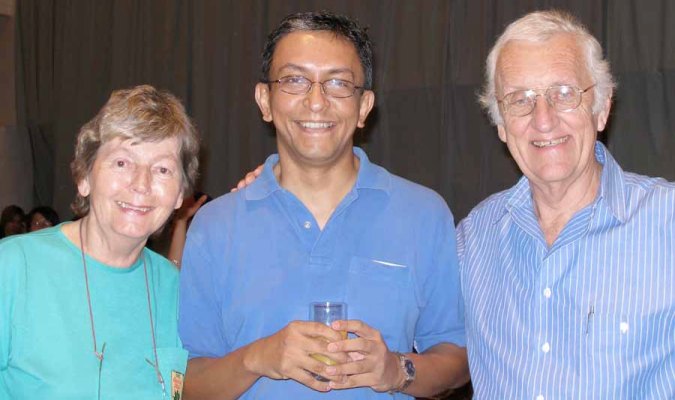
nalaka-with-neil-and-brenda-curry-at-jwf-2005-awards-night-aug-2005.jpg
This photo was taken in August 2005 in Toyama, Japan, which is some 200km east of Tokyo. The occasion was during the Japan Wildlife Film Festival, held in Toyama every other summer since 1993.

I am seen with Brenda and Neil Curry, my film-maker friends from South Africa. That was a memorable night for Neil, whose remarkable film, The Elephant, the Emperor and the Butterfly Tree, won the festival’s highest award.

The 50-min film captures the delicate relationship between the elephant, the Emperor Moth and the Mopane Tree (scientific name: Colophospermum mopane). It was produced by Oxford Scientific Films for BBC Natural World, bringing together the creative talents of Neil Curry, Alastair and Mark MacEwen, and Sean Morris.

Here’s the full official synopsis of the film:
Mopane woodland has been symbolic of African bush for centuries but its ecology is often misunderstood. Its importance to the fragile ecosystem is paramount. In this programme we show the delicate relationship between the elephant, the emperor moth and the incredible mopane tree. We also show the vital impact this ecosystem has on a local family who depend upon the delicious harvest of mopane worms to supplement their diet, and the precious resources the mopane tree provides in order to survive in the mopane woodland of Botswana.

Foreign delegates, staff and volunteers of JWF2005 Neil Curry accepting the Best of JWF2005 award on behalf of his team

I was in Toyama as a guest speaker, talking about TVE Asia Pacific‘s Children of Tsunami media project, which was then in progress.

Brenda and Neil, originally from the UK, now live in wine country off Cape Town. Neil is the quintessential natural history film-maker: meticulous in his approach to a story, passionate in what he covers, and with tons of patience.

Most natural history film-makers go for animal subjects. It’s much harder to do an interesting film about a plant or tree that stays in one place and does not have an annual breeding cycle like animals.

That’s just one of many reasons why The Elephant, the Emperor and the Butterfly Tree is outstanding. It tells a complex story of an ecosystem that is inter-dependent and in balance.

The film, made in 2004, also won the top award at WildScreen (Bristol, UK), considered to be the oscar awards in wildlife and natural history film-making.

A stand of Mopane laden with seed pods - image courtesy Africa Hunter Image courtesy Tourism Botswana

Now here’s the rest of the story, which is not as upbeat. Neil spent many months in Botswana filming this story, and wanted to take the finished film back to the communities where it was shot. The wildlife parks and schools in the area, he knew, could make good use of the film to educate the local kids, adults and visitors.

What would be simpler than that? Get a VHS or DVD copy and pass it on to them, right?

Wrong. When I met Neil in the summer of 2005, it was more than 18 months since the film was made. For much of that time, he had been trying to obtain permission from the BBC to share a non-broadcast copy of his film with the people in Botswana. His request was passed from person to person, and from division to division, with no clear decision made, and no permission granted.

The BBC had invested funds in making the film, and had a legal right to decide how and where it was to be used. Focused on ‘revenue optimisation’ and ‘returns on investment’, its bean-counters could not care less whether the film-maker wished to share his creation with the local people whose reality he had captured.

This is not an isolated incident. In fact, it is alarmingly wide-spread: every year, excellent environmental documentaries and development films are produced, most of them using public funds (who pays the BBC license fee? The British public!). Yet these films are locked up in complex copyrights that prevent them from being used by anyone outside broadcast circles.

As I said in my recent speech to Asia Media Summit 2007:
Even where the film-makers or producers themselves are keen for their creations to be used beyond broadcasts, the copyright policies stand in the way. In large broadcast organisations, it is lawyers and accountants –- not journalists or producers -– who now seem to decide on what kind of content is produced, and how it is distributed under what restrictions.

I don’t know if Neil Curry ever cleared the rights to screen the film to small groups of people in Botswana or elsewhere in Africa. But I think of this every time BBC World cries its heart out for the poor and suffering in Africa.

This is one global broadcaster that does not put its money where its mouth is.

In fact, the BBC’s accountants must be laughing all the way to their bank.

Read my related posts: End this callous waste: Open up broadcast archives for combating poverty and ignorance!

Public funds, private rights: Big mismatch in development film-making

27 July 2007 – Neil Curry responds to my views on optimum duration of natural history documentaries

End this callous waste…open up broadcast archives for combating poverty and ignorance!

Image courtesy Boeing

This is the new Boeing 787 aircraft that was unveiled a few days ago — described as more fuel-efficient, and therefore more climate friendly. Not to mention being a more comfortable plane to fly on.

Now just imagine if one of these new aircraft were to be used for a single return flight — let’s say Singapore to London and back — and then relegating it to a hanger for the rest of its lifetime!

What a callous waste that would be. Now who would do that, and will that be tolerated?

Yet something like this happens in the moving images industry quite frequently….and not too many seem to be bothered.

Every year, many new TV films and documentaries are produced with considerable investment of time, effort and money. After one or few broadcasts, they are confined to broadcast archives. Trapped in copyright restrictions, they languish there even though they can be a vital resource for teachers, students, civil society groups and trainers worldwide.

To me, this is as much a criminal waste as throwing away a Jumbo jet after a single journey.

In fact, I’ve been writing and talking about it whenever I can. Here’s an extract from my speech to Asia Media Summit 2007 held in late May 2007 in Kuala Lumpur:

Every year, excellent TV programmes are made on different development topics. Public and private funds are spent in making these programmes, which draw in the creativity and hard work of committed professionals.

Many channels broadcast these programmes. They are typically aired a few times and then end up in the archives. Few may be exploited for their multimedia potential.

Yet many of these programmes have a longer shelf-life – and outside the broadcast sphere. They can be extremely useful in education, awareness raising, advocacy and training.

Alas, copyrights restrictions are often too tight for that to happen. Even where the film-makers or producers themselves are keen for their creations to be used beyond broadcasts, the copyright policies stand in the way. In large broadcast organisations, it is lawyers and accountants –- not journalists or producers -– who now seem to decide on what kind of content is produced, and how it is distributed under what restrictions.

Read the full text of my speech here

copy-of-copy-of-ams-ad2-low-res.jpg copy-of-copy-of-ams-ad2-low-res.jpg

This is why we at TVE Asia Pacific have been calling for poverty and development to be recognised as a copyrights-free zone. So that the crushing (and completely meaningless) grip of copyrights can be loosened up.

I first made this proposal in mid 2006, in an op ed essay published online at MediaChannel.org. I then reiterated it at the UN Headquarters in New York in September 2006, when addressing the 59th annual UN NGO Conference.

The idea has been well received in education and civil society circles. But predictably enough, the broadcast community itself has been less enthusiastic.

We just have to keep on at it.