Faecal Attraction: There’s no such thing as a convenient flush…

Out of sight is out of mind.

That’s how it works for most of us. Especially when the subject is what we do in the privacy of our toilets and then just flush away.

But there is no such thing as a Convenient Flush — it’s all linked to how waste, including sewage, is disposed of. Or not.

And what goes around, even out of our sight, comes around — turning up in the least expected ways! Like faecal matter in our drinking water.

A new film produced by the New Delhi-based research and advocacy organisation Centre for Science and Environment (CSE) probes the link between sewage disposal and river water pollution in India — specifically, the River Yamuna, part of the massive Indo-Gangetic river system.

The film by Pradip Saha is titled Faecal Attraction: Political Economy of Defecation. It is accompanied CSE’s latest publication Sewage Canal: How to Clean the Yamuna.

The book and the film expose the political economy of defecation, where the rich are subsidised to defecate in convenience and the poor pay for pollution with their ill health because of dirty water.

It begins by asking two simple questions: Where does your water come from? What do you do with your shit?

Watch the answers – some amusing, others absurd – in this 3-min trailer on YouTube:

Backed by scientific data, CSE shows how India’s 14 major rivers, as well as 55 minor and many small rivers have all been reduced to sewers. They receive millions of litres of sewage, industrial residue and agricultural waste from the cities and towns through which they flow.

Delhi and Agra together account for 90 per cent of the pollution in the River Yamuna, a major tributary of the Ganges. Yamuna is one of the most polluted rivers in the world, especially around New Delhi, the capital of India, which dumps about 57% of its waste into the river.

When Yamuna flows by Delhi, the city extracts gallons of fresh water for drinking and irrigation. What is given in return to the river is only excreta – sewage, and industrial and agricultural waste. This sewage is (supposed to be) collected, transported, and assembled for treatment (cleaning), and then flown back to the river. In reality, what goes back is far from clean… The irony is that the city has 40 per cent of the entire sewage treatment infrastructure in the country with only five per cent of the country’s population! And still, Yamuna is unclean.

Cartoon courtesy CSE India

Though numerous attempts have been made to clean it, the efforts have proven to be futile. Although the government of India has spent nearly $500 million to clean up the river, the river continues to be polluted with garbage while most sewage treatment facilities are underfunded or malfunctioning.

“As these rivers die a slow death, the sole blame for their pathetic condition lies with human beings who have always treated these water bodies as their personal dumping zones,” says CSE.

Anil Agarwal, founder director of CSE, believed that a “society is known by the water it keeps”. “The health of a river…reflects the very health of the human society, its ability to live harmoniously with its environment,”, he said.

In that sense, things are very seriously wrong with not just the Yamuna, but river systems across India.

Read CSE Director Sunita Narain’s presentation on the River Yamuna pollution and clean up options
Read CSE Press release on river pollution

A Silent Emergency: More television sets than toilets!

Read a later blog post: Faecal Attraction: There’s no such thing as a convenient flush…

It was September 2004. My daughter Dhara, eight years at the time (or ‘eight plus’ as she insisted on saying), had a complaint.

The toilets in her school were not clean enough. She was finding it squeamish to use them. So she was doing her best to avoid going to the loo: she’d drink less, and try to ‘hold back’ until she could rush home.

Like many sheltered middle class kids, she was still coming to terms with the wider world outside her home. And she attends a well endowed private school where, I am told, toilets are cleaned regularly by janitors engaged by the school.

Now we cut to eleven-year-old Susheela, a girl growing up in neighbouring India. I’ve never met her in person, but this sentence summed up her tragic story:
“I was always first in the class. I am very much interested in studies. I want to become a lawyer. But my mother stopped me from going to school after Class V as the middle school I was attending, 5 km from my house, had no toilet. Can someone help me?”

This was the opening of an article on water and sanitation written by Indian journalist Dr Asha Krishnakumar and published in the news magazine Frontline (part of The Hindu group) at the end of 2003. It was titled: A Silent Emergency.

dr-asha-krishnakumar.jpg Image courtesy WSSCC

It was several months later that I actually read Asha’s article. By coincidence, my daughter was having her own ‘toilet issue’ at the time — and the contrast was striking.

Asha’s article continued:
Susheela’s anguish is shared by a large number of girls in India who drop out of school for what sounds like an absurd reason: want of a toilet in school. “Sanitation is closely linked to female literacy in India,” says a United Nations Children’s Fund (UNICEF) study. According to V. Balakrishnan, convener of the Tamil Nadu Primary Schools Improvement Campaign, the lack of proper toilet facilities in schools has a definite and significant bearing on the drop-out rate of girls, particularly around the time they reach Class VIII. In 2000, barely 10 per cent of Tamil Nadu’s 40,000 government schools had usable toilets; the figure is much lower for the country as a whole.

I’d been covering development issues in the media for over 15 years, but this stark reality had not occurred to me. In some developing countries, girls face a greater struggle in enrolling in school and staying on. There are cultural, social and economic factors working against educating girls.

And as Asha’s article revealed, there are other, less known factors adding to this burden.

I shouldn’t have been surprised. Indian census data had revealed in 2001 that, some parts of the country had more television sets than toilets.

Asha’s was one of three dozen excellent media articles on water and sanitation that I read that month as a judge in an international award scheme to recognise the best media reporting on the issue. Organised by the Water Supply and Sanitation Collaborative Council (WSSCC), it was meant to to encourage broader media coverage of water supply, sanitation and hygiene (WASH) issues in the developing world.

The initiative, first launched in 2002, is open to journalists from developing countries, who write or broadcast original investigative reports on WASH issues. The Collaborative Council seeks to use the WASH Media Awards as part of the broader goals of fostering sustainable relations with journalists in developing nations, and increasing media coverage of WASH issues.

WASH has recently announced the next media awards, covering print and broadcast media coverage from 1 July 2007 to 30 April 2008. This time around, it also involves the Stockholm International Water Institute (SIWI).

Winning entries will be presented at the World Water Week in Stockholm , Sweden in August 2008. Deadline for the submission of entries is on or before May 15, 2008. Read the announcement

In 2004, the recipient of the first WASH Media Award was Nadia El-Awady from Egypt for her outstanding article “The Nile and its People”. It illustrated the impacts of industrial pollution, sewage and solid waste management on people’s health and dignity along the River Nile.

We evaluated a large number of high quality entries and decided to give special recognition and Certificates of Appreciation to several other journalists. Asha was one of them.

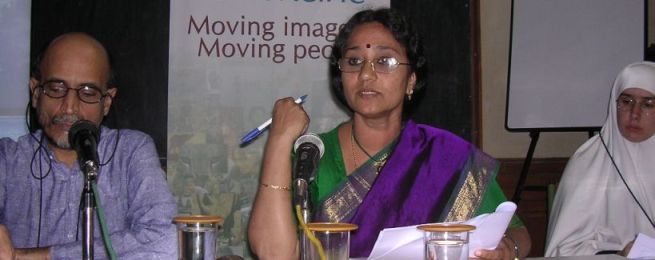
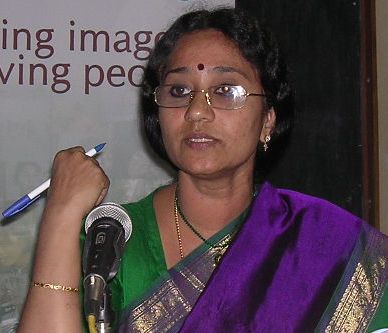
A few months later, it was my privilege to meet Asha in person at a workshop on media and sustainable development that TVE Asia Pacific organised as part of the Education for a Sustainable Future conference in Ahmedabad, India, in January 2005. The photo shows Asha addressing our workshop while Darryl D’Monte, fellow judge in WASH media awards looks on.

l-to-r-darryl-dmonte-asha-krishnakumar-and-nadia-el-awady.jpg

By another coincidence, the lady on the right is Nadia El-Awady who was overall winner of the WASH media award. At the time she was the Health and Science Page Editor of IslamOnline.net. She has since been promoted.

Either the world is smaller than we think, or our networks are larger than we imagine.

But I will always be grateful to Asha for opening my eyes on a silent emergency. One that I have since explained to my daughter. She no longer complains.

Read the WASH press release on 2004 media award winners

Read the publication on WASH Media Awards 2004

Read WASH media guide on The Biggest Scandal of the last 50 Years

Photos by Janaka Sri Jayalath, TVE Asia Pacific