Feeding Oliver Twists of the world…and delivering UN logos with it!

“Please, Sir: I want some more!”

These simple yet evocative words were etched into our memories by Charles Dickens, who created the story of Oliver Twist (1838), the poor orphan struggling – and suffering – in 19th century England.

Dickens mocks the hypocrisies of the time by surrounding the novel’s serious themes with sarcasm and dark humour. The novel may have been inspired by the story of Robert Blincoe, an orphan whose account of his hardships as a child laborer in a cotton mill was widely read in the 1830s.

Image courtesy Wikipedia

The world has seen unprecedented creation of wealth since those dark and miserable days 180 years ago. But sadly, there still are hundreds of millions of children who share young Oliver plight — or worse: many go to bed entirely hungry in a world that does not have an overall shortage of food anymore.

Fighting Hunger 2007

Today, 13 May, thousands of people in different parts of the world will walk wherever they can as part of a global campaign in support of ending hunger – one lingering great shame of our time.


Fight Hunger: Walk the World
is a global fundraising and awareness event that takes place every year in all times zones with one sole purpose – to call for an end to child hunger.

Fighting hunger website tells us:

Hunger is more than having an empty stomach. Hunger means not getting the necessary daily nutrition to lead a fully active, productive and healthy life.

Hunger affects more than 800 million people around the world. A child dies every 5 seconds because he or she is hungry.

This year, the organisers – led by the UN World Food Programme – had a viral video contest. It asked anyone, anywhere to do a short video promoting the event – and the issue of hunger – and upload. Some interesting videos have been received — even if some are blatantly in-your-face propaganda for the UN WFP.

That’s my big, long-lasting complaint about the UN family of agencies addressing and tackling the world’s ills. After a while, they allow their worthy issues to be eclipsed by their own self-promotion, public relations and spin. I wrote last month about how the entire MDG campaign has been subsumed by needless volumes of spin.

If only the World Food Programme and its sister agencies can resist their temptation to see every campaign, issue and programme as a logo-delivery mechanism, they will do a whole lot more good.

For that reason, while I will privately walk and think of those in hunger today, I will not contribute any money to the bloated bureaucracy of the United Nations World Food Programme. I would also ask that they go before a mirror today just before they step out to go walking with the world — and sincerely ask: do you see part of the problem or part of the solution?

Thank you, WFP, for delivering food to tens of millions of people worldwide who would not otherwise be fed, or fed adequately. But try and deliver a little less of your image and your logo, if you can. (We saw so much of this happen in the days and weeks that followed the Asian Tsunami disaster, and it was simply disgusting.)

Both hunger and hypocricy thrive nearly two centuries after Dickens and Oliver Twist. We must walk today to end not just one, but both!

Happy walking, everyone.

Watch the winning and commended videos in Fighting Hunger online video contest

Read UN WFP fact sheet about hunger worldwide

Can you make a one minute film for a better planet?

One minute – or 60 seconds – is a lot of time on the air. Our friends in radio and TV broadcasting know this well.

And with shrinking attention spans, many news items on TV are now being packaged for a minute, or not much longer.

Now, Friends of the Earth (together with FilmMinute) are challenging us all to come up with very short films that are one minute long — and still pack a message that benefits our planet.

Image courtesy FoE UK

Their challenge: make a film of exactly 60 seconds which explores how we look after our planet and use it like there is a tomorrow.

Here are the key rules of the game:

60 seconds – no more, no less.
Ideally broadcast quality.
Consider audience – Internet, TV, phones, etc.
Contributors must be the sole author(s).
You can submit more than one film.
No unlicenced use of copyrighted material.
No rude, unlawful or discriminatory material.
No promotion of products or services.
Some prizes are only open to UK residents.
All green one-minute films can be entered, regardless of previous screenings and awards.

Deadline is 20 August 2007. That should give us plenty of minutes to come up with some really compelling one minute films.

Image courtesy FoE

Helpful links:

Making your greenfilm


How to submit your film (via YouTube!)

Competition rules and regulations in detail

Awards and prizes
FilmMinute – the international one minute film festival: make every second count

And now, Al Jazeera get on You Tube

YouTube seems to be everywhere!

Last week in Sydney and this week in Melbourne, journalists and media researchers can’t talk enough about You Tube — though not everyone is equally enthusiastic about the online video sharing platform.

This just in, from MediaChannel.org:

Al Jazeera English goes You Tube

The Doha-based broadcaster Al Jazeera (English) will launch a YouTube branded Channel, the company said today. YouTube users worldwide will have the ability to comment on Al Jazeera English clips, rate them, recommend them to friends and post their own video responses to communicate with other viewers.

Content will include segments from shows such as ‘Frost over the World’, ‘Everywoman’, ‘Inside Iraq’, ‘Inside Story’, ‘Listening Post’, ‘Riz Khan’, ‘One-on-One’, ‘The Fabulous Picture Show’, ‘Witness’ and ‘48′. Al Jazeera English is also planning to release some exclusive web-only programming, starting with ‘Poltical Bytes’, a global conversation hosted by UN correspondent Mark Seddon which will ask the YouTube community to carry on the conversation and add video contributions. The broadcaster said it will provide new content to the site by adding at least 10-15 new clips each week.

Nigel Parsons, Managing Director of Al Jazeera English said: “We believe that YouTube is a perfect platform to reach out to our audience and to give wide and easy access to new viewers around the world. We have significantly built on our distribution since launch and now reach well in access of 90 million cable and satellite households worldwide. With YouTube’s community of millions of online users this is set to dramatically increase.”

Copyright, copyleft and film-makers in the digital age

In my post on 1 April, Have you made your million dollars yet?, I wrote:

Many development film-makers like to decry our society’s obsession with money, consumerism and greed. Some would make films that passionately promote sharing ideas and resources at community level, and advocate common property resources over private ownership.

But when it comes to rights of their own film/s, these very film-makers would become extremely possessive: they want to restrict it in every conceivable way.

This came up during a session at the OUR Media 6 conference in Sydney yesterday.

Andrew Lowenthal, from EngageMedia in Australia, talked on ‘Online video for social action’ and presented what his non-profit organisation is doing.

As their website says:
EngageMedia is a website and a network for distributing social justice and environmental video from South East Asia, Australia and the Pacific. It is a space for critical documentary, fiction, artistic and experimental works that challenge the one-way communication model of the mainstream media.

Andrew said they currently host around 120 videos online, all offered for free public access at the moment. They are keen to add more titles to this collection, to build an online, engaged community of film makers and film viewers.

But as we discussed, many film makers aren’t yet ready or willing to give their films to be placed online.

“Some of them freak out at the very mention of being placed online. They ask how their copyright can be safeguarded, and how they can make money,” Andrew noted.

Fred Noronha, who has campaigned for a long time for Indian documentary makers to open up and share their films, agreed. “Many film-makers are apprehensive. They aren’t broadcasting, or webcasting their productions. They just show it at a few film festivals. Many films don’t go out to the wider public.”

At TVE Asia Pacific, we come across this all the time. As a non-commercial, non-exclusive distributor, we ask film-makers to share distribution rights while copyright stays firmly with them. Even then, many are not convinced.

Of course, each creative professional is entitled to the full returns of their investment of time, effort and creativity. But let’s not forget: many films, especially those on development issues (which covers health, education, environment, ICT, science in development and human rights, among others), are made with development funding or philanthropic grants. Which means the production costs are largely or entirely paid for.

Yet when such films are made, their creators would rather hang on to them than let them go. Copyright is one concern they cite. ‘Returns on investment’ is another. (Hmmm…if a film has been paid for by public/donor funds, returns to whom?)

Creative Commons offers a good way forward, and we had a presentation from CC Australia on this during the session. More about that later.

Go to:
Engage Media
Creative Commons

Moving images moving heart first, mind next

“Film is a lousy medium to communicate information. It works best at the emotional level.”

Bruce Moir, one of Australia’s seniormost film professionals made this remark soon after I had presented TVE Asia Pacific’s Children of Tsunami experience to OUR Media 6 conference in Sydney last afternoon.

After more than 35 years in documentary and feature film production for both cinematic and broadcast industries, in different parts of the English speaking world, Bruce knows a thing or two about moving people with moving images.

I was delighted and privileged to have Bruce join my presentation. He’d come at my invitation to the conference happening in his city.

“We’ve got to remember that film appeals to people’s hearts more than their minds,” Bruce explained. “The way to people’s heads is through their hearts, from the chest upwards — and not the other way round.”

I hope this was an ‘Aha!’ moment to at least some in our audience. I’ve personally heard Bruce say this before, but it bears repetition – because many film professionals tend to overlook this. Especially those who are trying to ‘communicate messages’.

Even a few weeks ago, I quoted him in a review as saying: “Our fundamental job is to tell a story – one that holds an audience’s interest and moves their heart, regardless of language, cultural context or subject….I have always believed that film achieves its optimal impact by aiming to ‘get at the audience’s head via their heart’ rather than the other way around.”

Bruce Moir

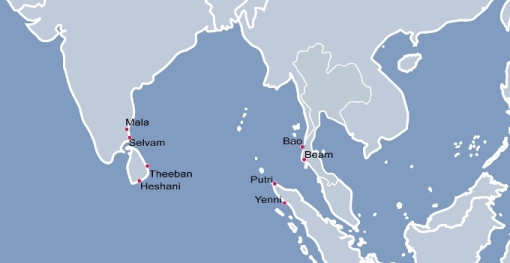
Without Bruce’s involvement, Children of Tsunami would have turned out to be very different. He was our Supervising Producer for the entire effort, advising and guiding our national film production teams tracking the progress of Tsunami survivor families in India, Indonesia, Sri Lanka and Thailand for one year afer the Asian Tsunami.

As Bruce recalled, the four teams came with different backgrounds, skill levels and film-making traditions of their own – ranging from television news and current affairs to development film-making, the type usually commissioned by UN agencies. Bringing them to be ‘on the same page’ was no easy task.

Film-makers are not particularly known for their patience or people-skills. Many I know have a ‘just-get-on-with-it-never-mind-the-niceties’ attitude. Bruce is one of the most patient persons I know: he would spend days and weeks relating to our production teams – usually by email or phone – gently nudging them in certain directions.

For sure, there’s no one right way to make a film. But there are some tried and tested principles in good story telling, which is what Bruce excels in. And which he willingly shares with others.

The year-long, 4-country and 8-location Children of Tsunami project was the biggest logistical operation TVE Asia Pacific has mounted in its 11 years of existence. (We’re in no great hurry to top that one!). Our production teams – operating from Bangkok, Colombo, Ubud (Indonesia) and Chennai – related to our regional production team based in two cities: Colombo, where TVEAP office is currently anchored, and Sydney, where Bruce lives.

We only came together face to face just once, in Bangkok, early on in the process. That meeting agreed on styles and formats, and also helped build the human relationships.

The rest of the time it was all through communications technologies. As you can imagine, lots of tapes moved around, as did many Gigabytes of video over the web. (DHL should have become a sponsor – they had lots of business from us!)

children-of-tsunami-locations.jpg

As I explained in my talk, Children of Tsunami was not just a film project. We published a monthly video report online on each of the eight families we were tracking, plus maintained a dedicated website with growing volumes of text, images and links. The monthly videos were edited and post-produced in the countries of filming, by our production teams themselves. It was distributed film-making, even if everyone worked to a common format.

With all that frenzy now behind us, the products of Children of Tsunami continue to be distributed, showcased and discussed at film festivals and conferences like OUR Media.

As I said yesterday to my predominantly academic audience: we’ve got a story telling and journalistic practice, and we now need a theory for it.

Related links:

Children of Tsunami: Documenting Asia’s longest year

Children of Tsunami revisited two years later

Grow, grow, grow your reef…

Coral reefs are sometimes called the rainforests of the sea. They are biologically rich and diverse.

But all over the tropical seas, coral reefs are under many pressures – from bad fishing practices to naturally occurring phenomena like the El Nino. Reefs are being damaged and destroyed faster than their natural recovery rate.

Unless a helping hand can be given, many coral reefs would soon be lost forever.

Giving Nature a helping hand is just what a Sri Lankan group of divers have been doing at the Rumassala coral reef on the island’s south coast.

coral-bleaching-a-major-concern.jpg generic6.jpg

TVE Asia Pacific’s international TV series, The Greenbelt Reports, has featured this effort in one episode. Watch it on TVEAP channel on YouTube

Read the story on TVEAP website: Regeneration – a new chance for coral reefs?

Photos courtesy TVE Asia Pacific, from The Greenbelt Reports TV series

You got films on YouTube?

Earlier this year, we at TVE Asia Pacific decided to place all our short video films on YouTube.

We are always willing to try out new ways of reaching out to the various – and increasingly fragmented – publics. Any new media format or platform that comes into the public domain is to be explored and exploited to peddle our content.

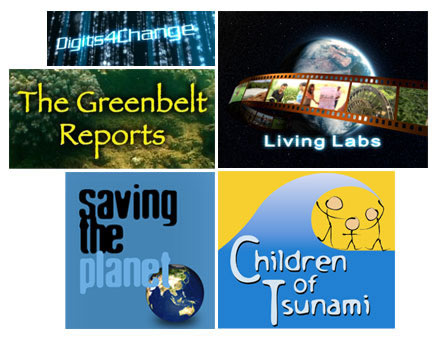
With this in mind, we launched the TVEAPFilms channel on YouTube in February 2007. We have so far placed three distinctive TV series on this channel:

Digits4Change, which explores how information and communications technologies (ICTs) are changing lives and livelihoods across Asia (6 x 5 min stories)

The Greenbelt Reports, where we revisited tsunami-affected countries in South and Southeast Asia, investigating how communities co-exist with coastal greenbelts of coral reefs, mangroves and sand dunes (12 x 5 min stories)

Living Labs, our latest series which was released this month, which profiles global action research efforts to grow more food with less water (8 x 5 min stories)

Since then, attending film festivals in Singapore and Washington DC, I realised that many documentary film-makers aren’t yet convinced about this new outlet.

‘You got your films on YouTube?’ one film-maker asked me somewhat incredulously. ‘How can you be sure someone will not download and manipulate it?’

Well, we can’t be sure. But that doesn’t prevent us from engaging this new platform. We’re willing to take these risks.

Another colleague asked: ‘But isn’t that a place for all those ameteurs?’ Perhaps. But in this digital age, the division between so-called amateurs and professionals is blurring.

Some film-makers have started placing trailers for their longer films on YouTube. Since we produce a fair number of short, self-contained films — all of which come under the YouTube’s upper limit of 10 mins — we are able to place our entire films online.

And unlike broadcast television and even passive webcasts, YouTube allows our online viewers to comment on films, and if they feel so moved, even to rank them.

At TVE Asia Pacific, we want our moving images to move people…so they join the conversation. In that sense, YouTube is a good platform to be on, and a good community to be part of.

Do visit TVEAPFilms channel on YouTube. Tell us what you think – whatever you think.