Oz challenge to Japanese whaling – on YouTube!

Who said YouTube is only for activists and video enthusiasts to share their content?

The above appeal is by Australia’s Environment Minister Malcolm Turnbull, who’s using the popular new media platform to reach out to children and young adults in Japan in a campaign aimed at stopping Japan’s stubborn insistence on whaling.

The Australian Department of Environment has taken out a YouTube channel where this and several other videos are on offer.

This is very encouraging – to see a government putting aside diplomatic niceties and taking a campaign right to the heart of a society that is still culturally attached to whale meat. For sure, Australia is also active in inter-governmental negotiations to sustain the global ban on whaling, but addressing the issue from the demand side and future generation angle can make the anti-whaling positions stronger.

Here’s how Reuters reported the story this week:

CANBERRA, Oct 9 (Reuters) – Australia has taken its battle against Japanese whaling in the Antarctic to the Internet, with a new YouTube campaign unveiled on Tuesday that targets Japanese children.

“Can you imagine what life on Earth would be like without these magnificent creatures? Hundreds of years of whaling have nearly wiped them out,” Australia’s Environment Minister Malcolm Turnbull says in the video, subtitled in Japanese.

Japan plans for the first time to hunt 50 humpback whales in the Antarctic over the coming summer, with the endangered animals currently migrating south along the Australian coast. Japan also plans to hunt 935 minke whales for scientific research.

The Japanese whaling fleet, hampered by a fire on the factory processing ship Nisshin Maru last February which killed one crewman, was recently bolstered by the addition of a new chaser vessel.

Australia’s government, facing re-election in weeks, has dismissed as futile the opposition’s calls for legal action over Japanese whaling in Australia’s Antarctic Whale Sanctuary, which is not recognised by other nations.

Japan’s fisheries agency, confident its whaling rights will be confirmed, has challenged any country to take it to the International Court of Justice in The Hague

Turnbull said Canberra would fight in the court of public opinion.

Read the full story on Reuters AlertNet

Greenpeace anti-whaling website

Here’s an animated anti-whaling TV commercial I came across on YouTube that takes a different look at the same issue. It was produced by Saachi & Saachi Poland:
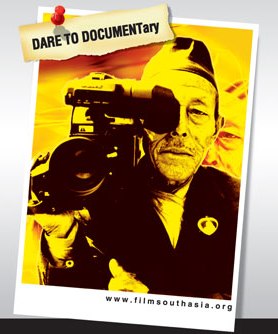
Ram Bahadur Tamang: The face of Film South Asia

ram-bahadur-tamang.jpg ram-bahadur-tamang.jpg

For ten years, this ordinary Nepali man’s photo has been a rallying call for documentary film-makers across South Asia, home to one fifth of humanity.

He has become the symbol, and the logo, of Film South Asia (FSA), a regional film festival organised every other year in Kathmandu since 1997. FSA, whose latest edition rolls out in the Nepali capital this week (11 – 14 October 2007) is the leading and most enduring film festival that brings together South Asian film-makers and film-lovers. It is a low-budget, high-energy festival organised by the non-profit Himal Association.

Having been associated with FSA from the beginning (I was on the first festival’s jury, and have hosted a couple of travelling festivals since), I was curious about who this old man was. On a visit to Kathmandu last month, I asked FSA Chairman and documentary champion Kanak Mani Dixit about it.

It turns out that the FSA logo is derived from this photo, taken of an ordinary Nepali called Ram Bahadur Tamang. Photocredit goes to Cory R Adams.

Courtesy Himal Southasian

Ram Bahadur belonged to the Tamang people, who are believed to have migrated to Nepal from Tibet. Today, the Tamangs reside mainly in the high hills north of Kathmandu.

Perhaps inspired by my query, Kanak has written up the story behind the photo/logo in his column On the Way Up in the latest issue of Himal Southasian which he edits.

He says: “The Tamang from Byabar served the Rana palaces as guards and porters. Ram Bahadur was one such. One day, he was caught by a photographer holding an early-model Sony video camera. He had a Sirdi Sai Baba badge on his left lapel. The image of Ram Bahadur is now the logo of the Film South Asia documentary film festival. He looks out over the world through his camera and his other, free, eye. The trophy given to the best film at the end of each FSA is known as the Ram Bahadur Trophy.”

Not much more is known about old Ram Bahadur. He had moved on shortly after this picture was taken. We don’t know, for example, if he ever actually used the Sony camera, or was just playing with what, at the time, seemed a high-tech curiosity. This was, after all, the early 1990s when video cameras were not quite ubiquitous.

Read Kanak Mani Dixit on Who’s Ram Bahadur Tamang in Himal South Asian October 2007

Read my July 2007 post: Himal Southasian – 20 years of celebrating South Asian diversity