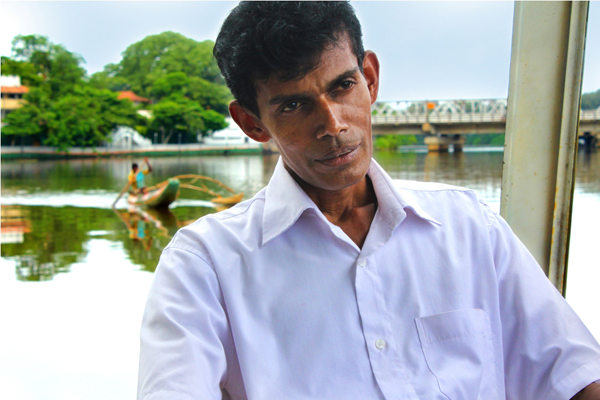
I S W Karunathilaka, winner of the ‘Ray Award’ 2012. Photo by Mevan Peiris/Snap Photography
I S W Karunathilaka, inventor of a waveless boat design that saves fuel and protects river banks, won the inaugural Ray Award for nurturing innovation excellence in Sri Lanka.
An accountant turned entrepreneur, he received the award at a gala awards ceremony held on 17 October 2012 at the Cinnamon Lakeside Hotel, Colombo, amidst an international audience.
The Commercial Bank has offered a grant worth LKR 1 million to assist Karunathilaka to prepare his invention for commercialisation, while the University of Moratuwa will provide technical advice and guidance.
Six Lankan inventors, already honoured with Presidential Awards for Innovation in recent years, were shortlisted for the award. Coming from diverse backgrounds and training, each had designed or produced a practical solution to an everyday need.
The Ray Award is a biennial, life-time award given in memory of the late Ray Wijewardene, the foremost inventor produced by Sri Lanka, to help a state recognised inventor to commercialise his or her invention. It is administered and presented by the Ray Wijewardene Charitable Trust (RWCT) in collaboration with the Sri Lanka Inventors Commission (SLIC) and the Commercial Bank.
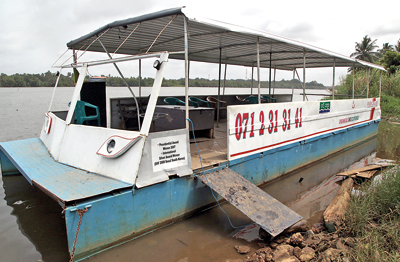
Prototype of waveless eco-boat designed by I S W KarunatilakeThe waveless boat is non-symmetric in shape: rectangular on the outside, but has curves facing the inside. It contains twin hulls, which allow water to travel through the hollow mid section and prevents waves being formed on the boat’s sides as it moves.
The boat is eco friendly in other ways too. It consumes less fuel as energy is not wasted in wave generation. Unlike conventional boats made from fibre glass, Karunathilaka’s vessel is made of steel and aluminium, with an anodic protection which reduces corrosion.
He has already built a prototype that can carry up to 50 passengers or 4,000 kg of cargo, which has been operating on the Kalu Ganga since late 2011.
“It was late Dr Ray Wijewardene’s vision and dream to see Sri Lanka develop economically through inventiveness and innovation,” said Dr Tissa Vitarana, Senior Minister of Scientific Affairs, who was chief guest. “The Ray Award celebrates what he stood for.”
“Our inventors need state recognition, society’s appreciation and funding to commercialise their ideas. We really need a good venture capital bank in Sri Lanka to support our inventors – this is what had made a difference in advanced economies like the United States,” he added.
Dr Vitarana noted that only 2 per cent of Sri Lanka’s exports received a high technology input at the moment. He underlined the need for Sri Lanka to develop its own technologies responding the country’s particular needs and powered by the country’s own innovative and enterprising people.
He hoped that RWCT would help Sri Lanka to achieve what the late Ray Wijewardene had in mind: for Sri Lanka to become a developed country without the problems of poverty.
Deepal Sooriyaarachchi, Commissioner of the Sri Lanka Inventors Commission and member of the selection panel said the Ray Award is a celebration of Lankan inventiveness. Long-listed candidates were assessed on three criteria, or three ‘I’s: Invention, Innovation and Impact.
Professor Malik Ranasinghe, Chairman of the Board of Trustees of RWCT, said the Trust supports innovations in sustainable agriculture, renewable energy, engineering and aeronautics – disciplines and pursuits that were close to Ray’s heart. “We hope that ‘The Ray’ will help to create the next Ray Wijewardene in Sri Lanka.”
All past winners of the Presidential Awards for innovation, presented by SLIC, were eligible and invited to apply for the Ray Award. The Trust received a total of 56 applications, which were reviewed by an independent panel that interviewed 17 candidates.
The selection panel was chaired by Prof Uditha Liyanage, Director and Chairman of the Board of Management, Postgraduate Institute of Management (PIM) affiliated to University of Sri Jayawardenapura.
A documentary featuring the six shortlisted inventors, produced by Ray Wijewardene’s grandson Rehan Alexander Mudannayake, was screened during the awards ceremony.
Ray Award 2012 Winner and shortlisted candidates with Dr Tissa Vitarana, Senior Minister of Science
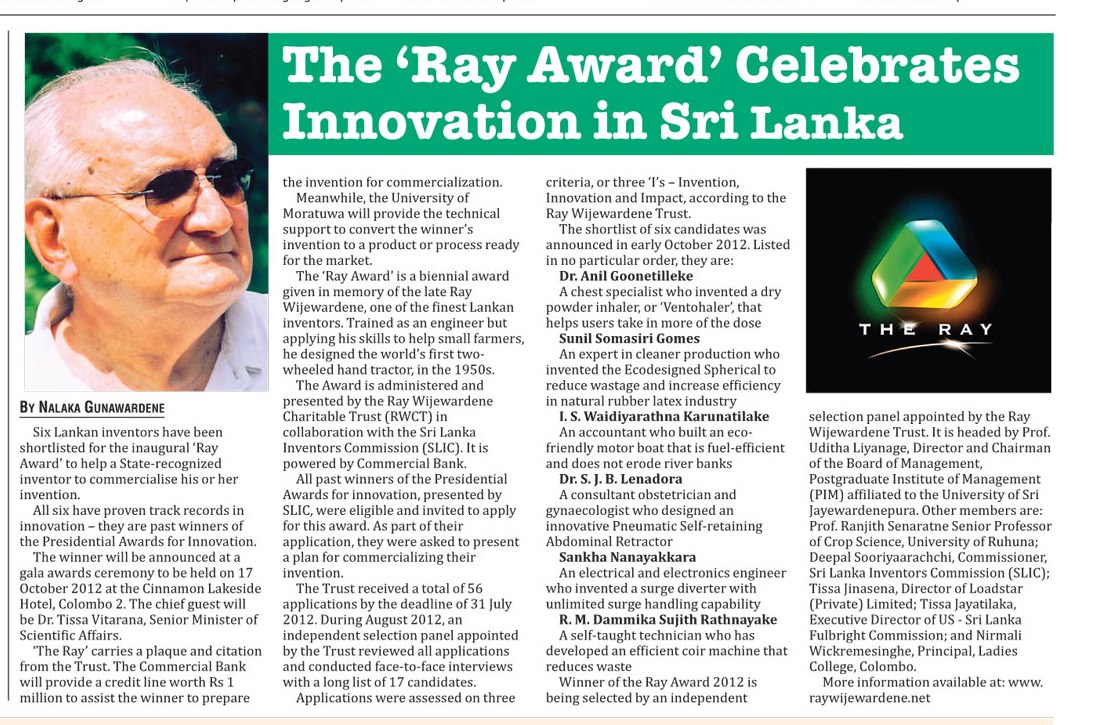
Published in Ceylon Today newspaper, 16 October 2012:
The RAY Award LogoSix Lankan inventors are shortlisted for the inaugural “Ray Award” to help a state recognised inventor to commercialise his or her invention.
All six have proven track records in innovation — they are past winners of the Presidential Awards for Innovation.
The winner will be announced at a gala awards ceremony to be held on 17 October 2012 at the Cinnamon Lakeside Hotel, Colombo 2. The chief guest will be Dr Tissa Vitarana, Senior Minister of Scientific Affairs.
“The Ray” carries a plaque and citation from the Trust. The Commercial Bank would provide a credit line worth Rs 1 million worth to assist the winner to prepare the invention for commercialisation.
Meanwhile, the University of Moratuwa would provide the technical support to convert the winner’s invention to a product or process ready for the market.
The Ray Award is a biennial award given in memory of the late Ray Wijewardene, one of the finest Lankan inventors. Trained as an engineer but applying his skills to help small farmers, he designed the world’s first two-wheeled hand tractor in the 1950s.
The Award is administered and presented by the Ray Wijewardene Charitable Trust (RWCT) in collaboration with the Sri Lanka Inventors Commission (SLIC). It is powered by Commercial Bank.
All past winners of the Presidential Awards for innovation, presented by SLIC, were eligible and invited to apply for this award. As part of their application, they were asked to present a plan for commercialising their invention.
The Trust received a total of 56 applications by the deadline of 31 July 2012. During August 2012, an independent selection panel appointed by the Trust reviewed all applications and conducted face-to-face interviews with a long list of 17 candidates.
Applications were assessed on three criteria, or three ‘I’s – Invention, Innovation and Impact, according to the Ray Wijewardene Trust.
The shortlist of six candidates was announced in early October 2012. Listed in no particular order, they are:
Dr Anil Goonetilleke
A chest specialist who invented a dry powder inhaler, or ‘Ventohaler’, that helps users take in more of the dose
Sunil Somasiri Gomes
An expert in cleaner production who invented the Ecodesigned Spherical to reduce wastage and increase efficiency in natural rubber latex industry
I S Waidiyarathna Karunatilake
An accountant who built an eco-friendly motor boat that is fuel-efficient and does not erode river banks
Dr S J B Lenadora
A consultant obstetrician and gynaecologist who designed an innovative Pneumatic Self Retaining Abdominal Retractor
Sankha Nanayakkara
An electrical and electronics engineer who invented a surge diverter with unlimited surge handling capability
R M Dammika Sujith Rathnayake
A self-taught technician who has developed an efficient coir machine that reduces waste
Winner of the Ray Award 2012 is being selected by an independent selection panel appointed by the Ray Wijewardene Trust. It is headed by Prof Uditha Liyanage, Director and Chairman of the Board of Management, Postgraduate Institute of Management (PIM) affiliated to University of Sri Jayawardenapura. Other members are: Prof Ranjith Senaratne Senior Professor of Crop Science, University of Ruhuna; Deepal Sooriyaarachchi, Commissioner, Sri Lanka Inventors Commission (SLIC); Tissa Jinasena, Director of Loadstar (Private) Limited; Tissa Jayatilaka, Executive Director of U.S – Sri Lanka Fulbright Commission; and Mrs Nirmali Wickremesinghe, Principal, Ladies College, Colombo.
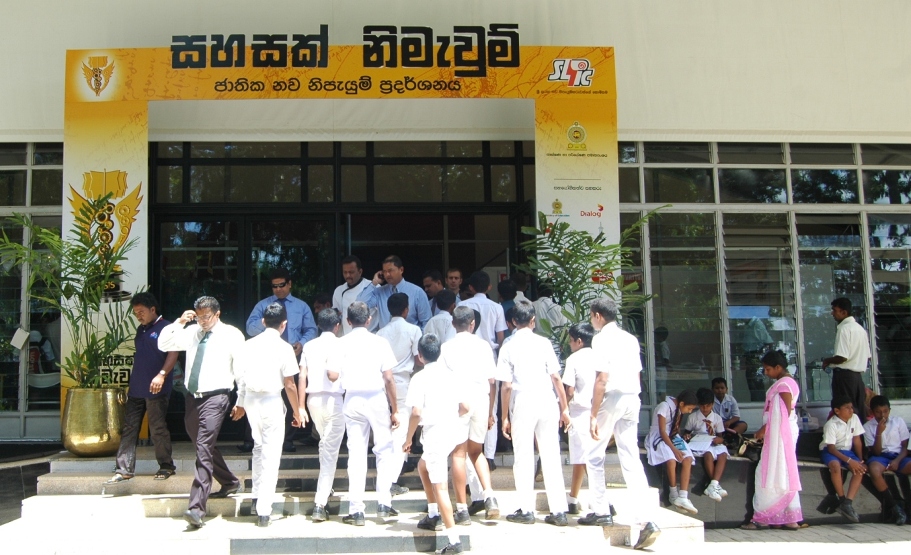
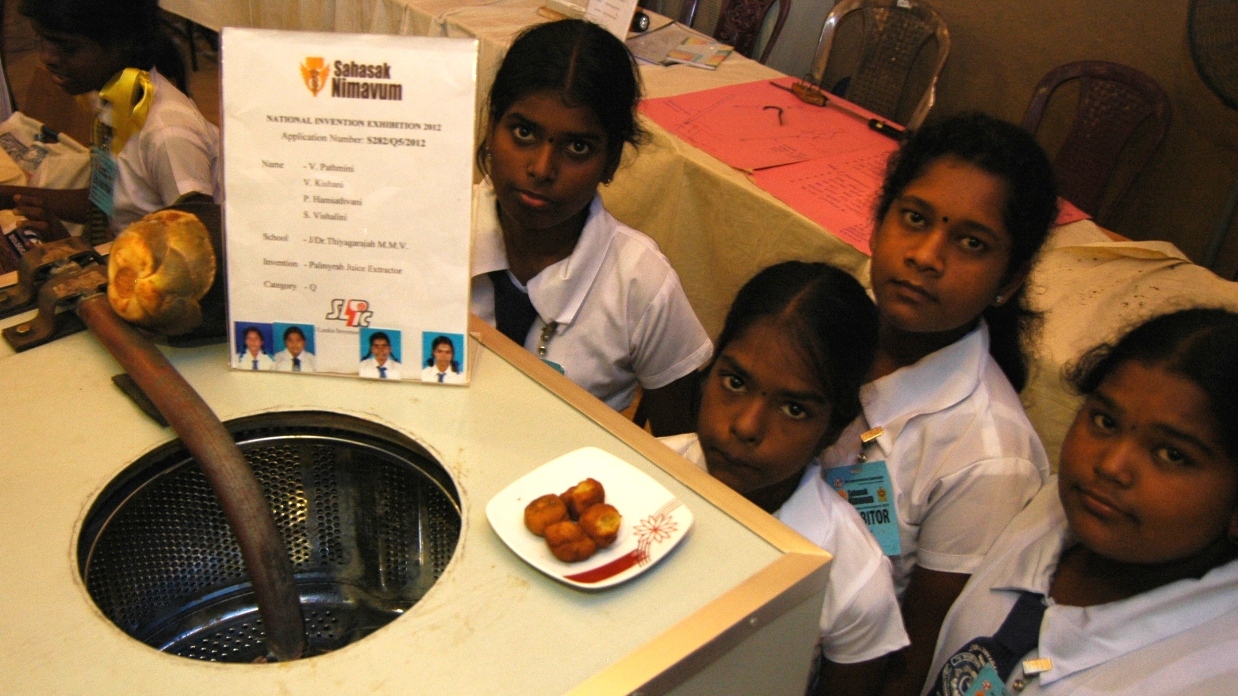
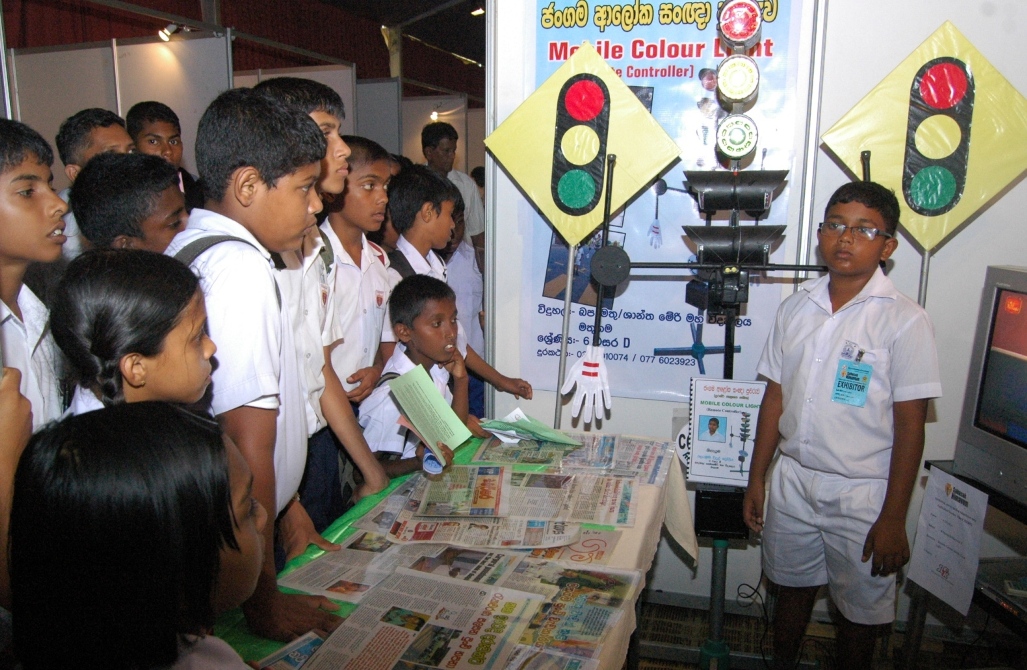
In this week’s Ravaya column (in Sinhala), published in issue for 7 Oct 2012, I share my impressions of Sahasak Nimawum, the first national inventors exhibition of Sri Lanka held on Sep 30, Oct 1 and 2 in Colombo.
Organised by Sri Lanka Inventors Commission, it brought together over 900 innovations – including some 400 by school children from around the island.
I spent many hours at the exhibition, talking to dozens of exhibitors and taking hundreds of photos. Clearly, I can only share a few overall impressions in a column like this. I’ll be using the other info in my future writing aimed at critically cheerleading innovation in Sri Lanka.
Sahasak Nimawum 2012 entrance – photo Janaka Sri Jayalath

 Open Minds!