Wanted: Fair Trade in Film and Television!

This short film, Fair Trade: The Story (8 mins) has been produced by Eq.tv (Equilibrium Television).

It’s very well made, with great use of images and sound, and powerfully sums up the complex issues around fair trade in an accessible manner. The best part: we don’t feel it’s an activist film, even though fair trade is, by definition, progressive and activist.

What is your power as a consumer? The film, produced in association with TransFair USA and TinCan Productions, begins with this question.

It then tells us: “Fair Trade combines stringent environmental criteria with the highest income and labour standards of any product certification. Fair Trade ensures a fair price for farmers, fair wages for workers, safe working conditions, direct marketing access, community development, democratic decision making, sustainable farming methods, environmental protection.”

Chris White of TransFair USA quips: “Fair trade isn’t a product. Fair trade isn’t a brand. Fair trade is a story.”

Fair trade is all about creating opportunities for small scale producers in the developing countries to get organised and supply directly to consumers in different parts of the world. When they sell direct, with few or no intermediaries, they can earn three or four times more, and that money will enhance their incomes, living standards and societies.

Read more about fair trade at Oxfam website, Make Trade Fair

Fair trade is certainly a cherished ideal, but it’s mired in complex economic and political realities. The globalised march of capital, profit-maximising multinational corporations and developed country farm subsidies are three among many factors that made fair trade difficult to achieve in the real world.

Difficult, but not impossible. Determined producers and consumers have shown over the years that they can connect to each other, ensuring greater fairness and justice in transaction. That’s the power of the consumer.

Now here’s another kind of fair trade that I have been advocating for a long time: Fair Trade in Film and Television (FTinFT for short). It’s high time we started promoting this as another plank in fair trade activism.

Let me explain. In the media-rich, information societies that we are now evolving into, media and cultural products are an important part of our consumption — and therefore, more of these have to be produced. In the globalised world, more television and film content is being sourced from the majority world — or is being outsourced to some developing countries where the artistic and technical skills have reached global standards.

But in a majority of these media production deals, the developing country film and TV professionals don’t enjoy any fair terms of trade or engagement. Their creativity and toil are being exploited by those who control the global flow of entertainment, news and information products.

This is why the top talent in the global South become assistants, helpers and ‘fixers’ to producers or directors parachuting in to our countries to cover our own stories for the Global Village. Equitable payments and due credits are hardly ever given.

I personally know many award winning film-makers in developing countries across the Asia Pacific who have been engaged on such unfair, uneven terms. Lacking sufficient market opportunities and trade unions in their own countries, these professionals have little choice but accept the occasional assignment that comes their way from BBC, CNN, AJI or other global players.

Remember, film-makers have families to feed too.
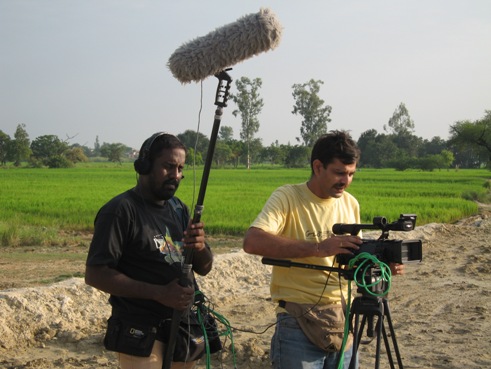
Unfair trade in film and TV is also how the unsung, unknown creative geniuses contribute significantly to the development of new cartoon animation movies or TV series, as well as hip video games that enthrall the global market. Lacking the clout and skill to negotiate better terms, freelancers and small companies across the global South remain the little elves who toil through the night to produce miracles. They work for tiny margins and even tinier credit lines. Some don’t get acknowledged at all.

If you think this is inevitable in the big bad world of profit-making business, hear this. I also know some western charities that champion global justice who are equally guilty of repeatedly exploiting southern film-makers — sometimes, ironically, to produce documentaries about social justice issues!

Even as they cover stories about fair trade practices in coffee or cotton, these entities practise unfair trade in their own industry.

I can cite many examples. Last year, the London-based Panos Institute approached me for recommendations for development-sensitive film-makers in two Asian countries where they wanted to implement some training programmes. I asked if the professionals I can gladly recommend – whose skills are on par with any western counterpart – would be paid international rates. Panos backed out saying they can only pay a local rate, which they felt was good enough.

Then there are UN agencies who always haggle with local film-makers over rates and fees. The same agencies that happily commission PR media agencies from Madison Avenue for hundreds of thousands of US Dollars would ask southern film-makers to donate their time, or work at a reduced fee, for the United Nations causes!

Local rates for local talent is simply not good enough if their work contributes to an international media effort. Southern film-makers and photographers, who lack opportunities to roam the planet looking for stories and work, should be engaged on fair, international rates in any media venture whose products will be consumed globally.

I’m proud to say that TVE Asia Pacific practises what I preach here. We are small time commissioners of southern film-making talent, but we always pay international rates, and engage local talent in every country we work in. And they get due, proper credit in all our productions.

This, then, is the essence of Fair Trade in Film and Television that we must advocate and agitate for. As long as the story tellers of the global struggles for social justice are themselves excluded from the story, there can be no fair trade, or true global justice.

There is now an urgency to address FTinFT because Media Process Outsourcing (MPO) is emerging as a growth industry. May 2007 news: India’s InfoSys and TV18 set up MPO firm.

Let me return to the question frequently posed by fair trade activists: What is your power as a consumer?

Now ask that question as a consumer of media products on TV, video, DVD, web and mobile devices. Don’t take anything for granted. Don’t accept the lofty PR claims of big time (or even small time) producers and peddlers of media content on how ethically they have sourced or made this content.

For a start, look carefully at where stories have been made, and whether local film and TV professionals get proper, on-screen credit. And write to the big players – 24/7 news channels, cartoon corporations and others – demanding to know their fair trade policies and practices in content creation and sourcing.

Make the same demands on the United Nations agencies peddling media products on their social causes. See how many of them will stand a simple test: do they engage southern film-makers to tell stories of development and social justice in the South? If not, why not?

And if you are in a position to decide on commissioning a new film, TV or video product, please consider engaging local talent — but pay them international rates if your product is going to cross borders (these days it very likely will).

We have a long way to go to achieve Fair Trade in Film and Television. Let’s get moving!

Read my call for ethical sourcing of international TV news
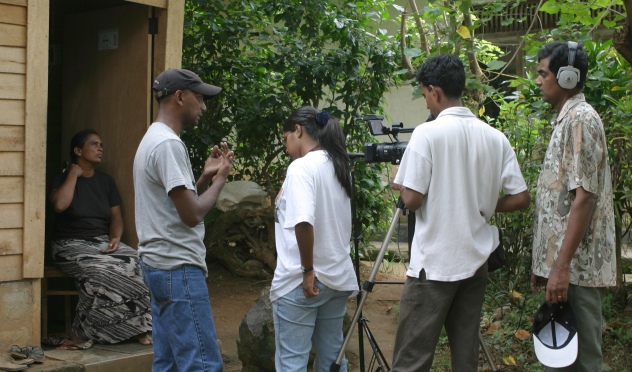
Photos from TVE Asia Pacific image archives

Remembering Diana, the world’s first Princess of Television

Today, 31 August 2007, is the tenth anniversary of Princess Diana’s tragic death in a road accident in Paris.

A decade on, I can still remember exactly where and how I first heard the news. This experience is widely shared: to many in my generation — born in the 1960s and raised through 1970s and 1980s (just like Diana was) — this was an unforgettable moment. Perhaps just like the assassination of John F Kennedy was to a previous generation.

The analogy between Di and JFK goes further. Both had charismatic personalities that appealed far beyond their home country. Both epitomised the vibrancy of youth and the potential for change in the institutions they joined (Diana the British Royal family, and JFK the American government). Both lives were snuffed out before they could fulfill that promise, but they left enduring legacies — and thriving cottage industries of conspiracy theories (‘Who killed JFK?’ has now been joined by ‘Who killed Diana?’).

Here’s another similarity: JFK and Diana were both iconic images of the era of television.

If JFK turned up just in time to charm the first generation of American TV viewers, Diana’s arrival on world stage coincided neatly with the worldwide roll out of satellite television, especially the all-news channels. And thanks to the advances in global broadcasting, Diana commanded a far bigger global audience than JFK did (though the comparisons must end there).

I would like to remember Diana as the first Princess of Television of our media-rich age.

Looking back, we can see how satellite television started and evolved almost in parallel to Diana’s own life. Diana had just celebrated her first birthday, when the world’s first trans-Atlantic satellite television signal was relayed from Europe to the Telstar satellite over North America on 23 July 1962. (By coincidence, JFK was to have participated in the event, but could not owing to a technical delay.)

Over the next two decades, as Diana grew up and matured into a young lady who would soon capture the world’s imagination, satellite TV’s technology, outreach and mass following evolved to cover more channels, territories and eyeballs.

A turning point came when the US entrepreneur Ted Turner took a daring step for that time by launching the Cable News Network (CNN), the world’s first 24 hour news channel. CNN went on the air on 1 June 1980 amidst many skeptics asking: who would possibly want to watch news all the time?

Who indeed! Until then, conventional wisdom had confined news to a regular evening slot, anchored by larger-than-life newscasters. The routine was broken only when there was some earth-shattering development.

Turner’s CNN, ridiculed in the early days as the ‘chicken noodle network’, changed all that, and paved the way for dozens of 24/7 news channels.

As it turned out, CNN arrived just in time. The engagement between Diana and Charles, the Prince of Wales, was announced a few months later, in February 1981.

Their Royal Wedding on 29 July 1981 was watched by a combined television audience of over 750 million worldwide. That broke records as the highest audience for a live broadcast, surpassing the Apollo XI Moon landing a dozen years earlier (seen by an estimated 500 million).

The rest is recent history. Television newsgatherers could never have enough of Diana — apparently their audiences kept asking for more. That may be a debatable point, but Diana was quick to learn the art of exploiting the inevitable: when she realised it was a stark fact of life, she started using it to her personal advantage.

Diana used television as much as television used Diana. Her famous BBC Panorama interview with Martin Bashir was one among many instances when she lived her personal life under the glare of public television (photo below).

Image from BBC Image courtesy BBC

But Diana’s clever use of television was not just for advancing her personal agenda. When she became a big time charity supporter in the 1990s, she used the power of moving images to demystify and humanise global issues from caring for people living with HIV/AIDS to banishing the scourge of landmines. These ensured that Diana became the People’s Princess in the last years of her life.

Image courtesy Daily Telegraph

Early on in her marriage to Charles, a leading newsman told Diana: when you married him, we came as part of the package deal. If she was initially stressed by that revelation, she later made the best use of that inevitable trapping of her celebrity.

And when she died young and tragically, on 31 August 1997, her premature departure became the biggest news story of the year.

The BBC (domestic) announces Princess Diana’s death:

BBC World TV announces Diana’s death in Paris:

Diana’s funeral on 6 September 1997 had a larger global satellite TV audience than did her wedding. Of course, by then there were more people and more television sets on this planet.

Elton John sings a special version of ‘Candle in the Wind’ at Princess Diana’s funeral:

So we salute the legacy of the world’s first Princess of Television. One who moved our hearts with moving images of her personal life and those of the worthy causes she championed. One who showed how moving images can move people.

PS: There was a time when the unforgettable television moments were gone after their broadcasts (unless recorded on tape). But now we have YouTube, where the world’s visual memory lives on. All news and current affairs coverage I have linked to in this post were found on YouTube by simply searching for Princess Diana. There is much more where these came from.

Read BBC Online’s timeline of the life of Princess Diana

Al Jazeera International: Looking hard for the promised difference

Image courtesy Al Jazeera

This is how Al Jazeera International (AJI), which started broadcasting on 15 November 2006, promoted itself.

In its own words, the 24/7 English language channel set out to ‘balance the information flow from (global) South to North, providing accurate, impartial and objective news for a global audience from a grass roots level, giving voice to different perspectives from under-reported regions around the world.’

Noble ideals, indeed — and we fervently hope they succeed. That’s what I said in my op ed, Ethical Newsgathering: Biggest Challenge for Al Jazeera, published online within days of the new channel going on the air.

I said: “In recent years, the self righteous arrogance and the not-so-subtle biases of BBC and CNN have become increasingly intolerable. But unless it’s very careful and thoughtful, AJI runs the risk of falling into the same cultural and commercial traps that its two older rivals are mired in.

“CNN can’t get out of its US-centric analysis even in its international broadcasts. And the BBC news team is like a hopelessly mixed up teenager: one moment they are deeply British or at least western European; the next moment they are more passionate about Africa than Africans themselves.

“Desperately seeking legitimacy and acceptance, these global channels have sometimes traded in their journalistic integrity for privileged access, exclusives or -– dare we say it? -– to be embedded.”

I admit that I haven’t been watching enough of AJI to come to any firm conclusions. One reason: the new channel is still not widely available in some countries that I visit and spend time in.

But going by what is on their YouTube channel, where some 1,300 video segments have been placed so far (as at 29 August 2007), I have a rough idea of AJI’s first few months of coverage.

I’m looking long and hard for the difference that they so emphatically promised. Instead, I find them a paler version of BBC World, at times trying oh-so-hard to be just like the BBC!

Take, for example, the coverage they have recently done on the bloody and protracted civil war in Sri Lanka. Being where I live and work, I take a particular interest in this topic.

In a 2-part edition of AJI’s People & Power programme, Juliana Ruhfus investigates the impact of Sri Lanka’s civil war.

People & Power: How the East was Won: Part 1 of 2

People & Power: How the East was Won: Part 2 of 2

I don’t have a problem with AJI’s analysis in this documentary, which tries hard to be balanced and fair in what I know is a very difficult subject to cover, with intolerant hardliners on both sides of the conflict.

But I have several issues with how it has been put together – the norms and ethics of their newsgathering.

* A white blond woman, so evidently a parachute journalist, is reporting and presenting the story. Why isn’t an Asian telling this story?

* She is repeatedly mispronouncing all the local names. Just like the BBC does as a matter of routine.

* She gestures, interviews and talks exactly like those know-all reporters from the BBC. At times I detect a faint condescension in her voice, but that may be my imagination.

* For part of the coverage, the intrepid AJI reporter becomes embedded with the Sri Lankan armed forces, and interviews civilians under the watchful eye of military men. This is hardly a credible way of eliciting any honest responses!

* More importantly, she shows little regard for the personal safety of some people she interviews. At one point, she asks three muslim men if the Eastern Province of Sri Lanka is now any safer than before it was ‘liberated’ by the government forces. The men are clearly uncomfortable with this question. Honest answers can cost them dearly. But why should she care? She persists, showing close-ups of these individuals.

* Even when she interviews people who had explicitly asked for concealment of their identity, she leaves tell-tale signs for those identities to be easily guessed. A woman whose teen-aged son has been coerced into joining a paramilitary group is filmed in silhouette — not a good enough cover. Real voices have not been altered through a synthesizer.

These and other observations blur the difference between BBC and AJI in my mind. With a few notable exceptions, most BBC reporters don’t care one bit about the hapless, distressed people whom they interview. All they want is to get a ‘good story’ with dramatic visuals.

AJI is desperately trying to outdo the BBC in all the latter’s wrong aspects. Otherwise why should Juliana Ruhfus try so hard to get a damning comment from an interviewee evidently ill-at-ease of being ambushed by this western woman?

I still want to have an open mind about AJI’s promised difference, and keep hoping that it will emerge sooner rather than later. But this kind of newsgathering and film-making don’t augur well.

If this is the ethical standard of journalism that AJI aspires to, we who had high hopes of their becoming a real alternative to the dominant two are going to be disappointed.

Read my earlier post: Wanted: Ethical sourcing of international TV News

Watch Al Jazeera on YouTube

AJI AJI