Text of my ‘When Worlds Collide’ column published in Ceylon Today broadsheet newspaper on 18 April 2014
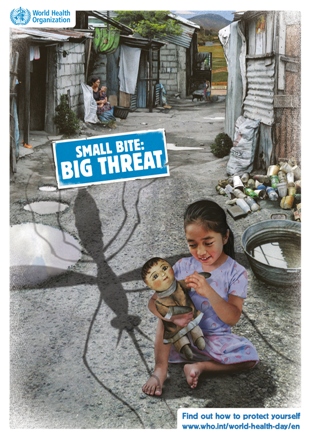
The theme for World Health Day, observed on April 7, was vector-borne diseases – a major public health challenge in the tropics. It was packaged under the slogan: Small Bite, Big Threat.
Vectors are small creatures which carry serious diseases. As the World Health Organisation (WHO) noted, globalization of trade and travel, and trends such as climate change and urbanization, all impact on how vector-borne diseases spread. Some vectors have started turning up in countries where they were previously unknown.
Formidable among them is the mosquito. Different species spread a number of infectious diseases: malaria, dengue, lymphatic filariasis, chikungunya, Japanese encephalitis and yellow fever.
In terms of deaths caused, malaria is the most deadly: in 2010, it killed an estimated 660,000, mostly African children. But the world’s fastest growing vector-borne disease is
As Frenchmen also pioneered photography in the decades that followed, it was just a matter of time before the two innovations were combined. The world’s first aerial photos (from a camera not supported by a ground-based structure) were taken by French photographer and balloonist Gaspard-Félix Tournachon in 1858. Again, over Paris.
A French company was involved in the world’s first use of a motion picture camera mounted on an aircraft too. That was on 24 April 1909 – this time over Rome…
Text of my ‘When Worlds Collide’ column published in Ceylon Today broadsheet newspaper on 29 March 2014
“We have to start asking not what is wrong with Facebook but what is wrong with our society?”
Those words, by Dr Harini Amarasuriya, Senior Lecturer in Sociology at the Open University of Sri Lanka, sum up neatly the debate that has been going on for some weeks in Sri Lanka on the pros and cons of social media.
In an interview with Ceylon Today on 16 February 2014, Dr Amarasuriya also noted: “Social media is here to stay whether we like it or not. It is only a tool and it can be either liberating or exploitative. A young person’s life is mostly on social media today; we simply need to teach them how to manage it.”
I once posed this question to the late Dr Ray Wijewardene (1924-2010), who studied agricultural engineering at Cambridge University and experimented all his life on methods of farming that didn’t cost the Earth.
He agreed, saying: “They (DoA) are still following outmoded western methods which even the West is now questioning! The other problem is the huge gap between research and effective extension to the farmer.”
That was in 1995. Almost two decades on, calls for ecologically sustainable farming have gained much momentum – but the century-old Department still stubbornly remains stuck to its tired, old and destructive ways.
Take, for example, current concerns about the proposed New…
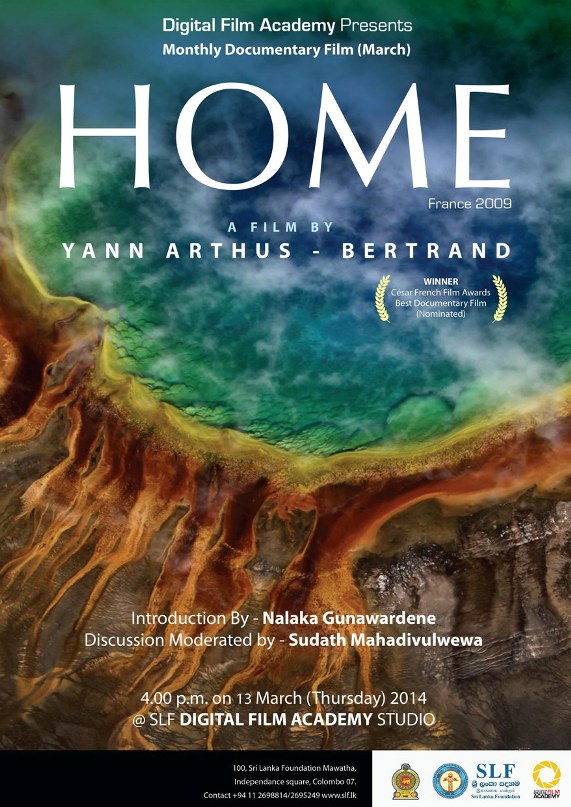
I just took part in a public screening of HOME, the 2009 documentary that offers a new view of our planet — from slightly above.
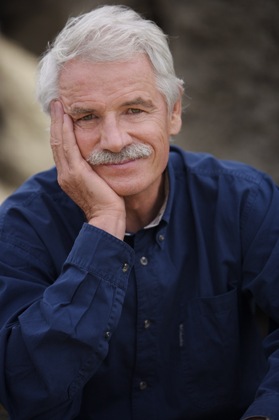
French photographer, journalist and activist Yann Arthus-Bertrand and his team travelled around the planet over 18 months to make this film. They filmed interesting natural and human-made locations in 50 countries — all from the air. This offers a different perspective to our growing impact on the planet’s natural processes and balances.
Technically outstanding and aesthetically enjoyable as it is, does HOME overstate the case for planet-saving action? Or does it gloss over deep-rooted causes of today’s ecological crisis? These and other questions were raised and discussed at our screening.
HOME the movie screening in Colombo, 13 March 2014
I was encouraged by over 60 people turning up – a mix of students, professionals, retirees and others – and staying transfixed for the two full hours – plus another 45 mins of Q&A. This is just a summary of wide ranging discussion moderated by filmmaker and film buff Sudath Mahadivulwewa.
We discussed both style and substance. I personally dislike the patronising narration by actress Glenn Close – who reminds me of an all-knowing old matron. But a few felt that this theme demanded just such a voice and delivery.
We agreed that HOME isn’t a typical natural history or environmental documentary. Its scope is vast (story of our planet and human civilisation), its vantage viewpoint extraordinary.
With all its stunning views and haunting music, HOME projects a strong message of anthropocentrism – that human beings are the central or most significant species on the planet (at least in terms of impact). This is now a dominant view among scientists who study the planet (hence the new name for our times, Anthropocene).
I sometimes wonder – as did some in my audience – whether we take too much credit for our signature on the planet. We sure are the most damaging species, but I worry about environmentalism turning into a religion-like dogma. I have always stayed clear of ‘Mother Earth’ kind of romanticising – we don’t need to turn the planet into a gigantic matriarchy to be motivated to care for it!
Besides, some geological processes — such as volcanic eruptions, earthquakes and tsunamis — are not triggered by human action. When I hear die-hard greens trying to link these phenomena to humanity (never mind the absence of any evidence), I consider it environmental advocacy going crazy.
I also drew my audience’s attention to Alan Weisman’s 2007 best-seller The World Without Us, which offers an original approach to questions of humanity’s impact on the planet: he envisions our Earth, but without us. We may be a formidable presence right now, but if we disappear, the planet would slowly but surely reassert itself…
Is HOME political enough? Some argued the film left too much for individual thought and action when, in fact, much of today’s resource crises and environmental problems stem from structural anomalies and deeply political disparities in the world. Is this an attempt to absolve the governments and corporations of responsibility and heap it all on individuals?
Opinion was divided, but it got us talking – and thinking. I don’t know Yann Arthus-Bertrand, but perhaps he kept the message at personal level so his film can be non-threatening and benignly subversive? There are times when harsh delivery can alienate part of the intended audience.
All considered, an evening well spent. As I’d tweeted in advance, we had a slightly out of this world experience with Arthur-Bertrand as our guide – and no reality altering substances. Indeed, the stark reality facing humanity can be very sobering…
Text of my ‘When Worlds Collide’ column published in Ceylon Today broadsheet newspaper on 7 March 2014
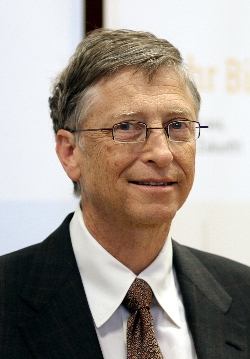
“When you’re trying to reach a goal, data not only tells you if you’re succeeding, but it also suggests which activities you should do more of in order to improve your results,” says Bill Gates.
He should know. As one of the world’s top computer geeks, he built up Microsoft and has now turned his data crunching and analytical skills to supporting social development – especially public health and agriculture.
“Ultimately, the better the data available in the development field, the higher the quality of people’s lives in poor countries,” he wrote in a recent op-ed essay for an Asian Development Bank publication.
Text of my ‘When Worlds Collide’ column published in Ceylon Today broadsheet newspaper on 21 February 2014
Kalpana Sharma
Plain good journalism does not need any more labels. Having been associated with the world of public interest journalism for over two decades in one form or another, I can well appreciate this.
As my Indian journalist friend Kalpana Sharma sums up: “Journalists are good or bad, professional or unprofessional. I am not sure if other labels, such as ‘environmental’ or ‘developmental’, ought to be tagged on to journalists.”
The Mumbai-based independent journalist, columnist and media consultant has been saying this for a long while. And in over four decades of full time journalism, she has also ‘walked her talk’ — setting a shining example for journalists everywhere.
In her writing, TV appearances and public speaking, Kalpana stays well within the boundaries of good, old-fashioned journalism based on its A, B…
Text of my ‘When Worlds Collide’ column published in Ceylon Today broadsheet newspaper on 14 February 2014
Coastal challenges of South Asia – courtesy Down to Earth Magazine, CSE
Many different worlds collide on the coast – both literally and metaphorically.
Coasts are where land meets the sea. A precise coastline cannot be fixed because tides and wave action keep it dynamic. Hence the term ‘coastal zone’ for the wider interactive area where natural and human actions take place.
Coasts are also where survival and livelihood pursuits co-exist – and often compete – with recreational activity. Throw in important ecosystems such as mangroves and coral reefs, and key infrastructure like ports and power plants, and collisions are almost inevitable.
Text of my ‘When Worlds Collide’ column published in Ceylon Today broadsheet newspaper on 17 January 2014
Malala Yousafzai, the Pakistani teenager turned activist, was a key newsmaker of 2013. Having survived an assassination attempt by Taliban gunmen in October 2012, she has now become a global champion for educating girls.
Long before Malala, there was another spirited young South Asian girl named Meena. Like Malala does today, Meena too spoke out on behalf of girls — their right to education, health, nutrition and, most important, to be treated the same way as boys.
Like Malala, young Meena was passionate, intense and yet always courteous. While Malala challenged the intolerant Taliban, Meena took on an equally formidable adversary named…tradition.
Malala and Meena could have been sisters in arms — except that the latter isn’t quite real. She is a beloved cartoon character developed by Asian animators and development…
Text of my ‘When Worlds Collide’ column published in Ceylon Today Sunday broadsheet newspaper on 15 December 2013
My friend Sombath Somphone has been a gentle, generous and soft-spoken man as long as I have known him, which is over 15 years. Beneath that beaming face, however, is a sharp intellect, caring heart and quiet resolve.
He knows social change takes time, effort and comes in small steps. Especially in conservative societies and tight political systems like those in his country – Laos, one of the world’s five remaining socialist states (along with China, Cuba, North Korea and Vietnam).
Sombath isn’t a politician. Nor is he an activist, although some have given him that label. The Sombath I know is a sensitive thinker who pauses to reflect on where his country and the world are headed. He is also a teacher and mentor who has helped thousands of young…

 The theme for World Health Day, observed on April 7, was vector-borne diseases – a major public health challenge in the tropics. It was packaged under the slogan: Small Bite, Big Threat.




 Open Minds!