Nalaka Gunawardene's avatarWhen Worlds Collide, by Nalaka Gunawardene

Text of my ‘When Worlds Collide’ column published in Ceylon Today Sunday newspaper on 14 October 2012

The battle to keep the Internet open and free is being fought on several fronts, and for a whole range of reasons – from access to knowledge and enabling social justice and to supporting democratic pluralism and market liberalism.

With connectivity spreading and getting cheaper, an estimated 3 million Lankans (15% of population) regularly use the medium. They and their families are slowly but surely tapping its potential for education, skills development and income generation.

As information society takes root, we grapple with post-connectivity challenges. Among them: how to negotiate with self-appointed guardians of culture and morals. The Internet is their favourite whipping boy now.

As with any other medium with diverse content, user discretion is advised. Throwing the baby out with the bathwater is not.

Extending that metaphor, how can we safeguard…

View original post 1,271 more words

Nalaka Gunawardene's avatarWhen Worlds Collide, by Nalaka Gunawardene

Text of my ‘When Worlds Collide’ column published in Ceylon Today Sunday newspaper on 7 October 2012

Last week, I spent many hours at Sri Lanka’s first exhibition of inventions and inventors held at BMICH, Colombo, and took lots of photos and notes. I have yet to process all that information, but some trends and directions are emerging.

Ambitiously named Sahasak Nimawum (‘A Thousand Inventions’ in Sinhala), the event showcased nearly that many ideas, designs, prototypes as well as some inventions already in the market. There was diversity in topics, themes, inventors and technologies.

It’s like a gem mine – precious and semi-precious stones amidst lots of gravel. We just have to sift though much to get to a few treasures.

That’s how it works in spotting or nurturing innovation: no shortcuts, guarantees or productivity schedules. Innovation takes time, effort and patience. Society’s celebration sure helps bring out more.

Encouragingly…

View original post 1,061 more words

Nalaka Gunawardene's avatarWhen Worlds Collide, by Nalaka Gunawardene

Text of my ‘When Worlds Collide’ column published in Ceylon Today Sunday newspaper on 30 September 2012

“Those who are crazy enough to believe they can change the world are the ones that do!”
– Steve Jobs (1955-2011)

It will soon be one year since Apple’s co-founder and inventive genius departed in a hurry. There are many ways to remember him. I think of him as the quintessential maverick.

Indeed, he turned that personal quality into a core value at Apple. That was also the theme of a memorable advertising slogan – ‘Think Different’ – that boosted the company’s sagging image in 1997.

Jobs had just returned after 11 years in the ‘tech wilderness’. The campaign’s TV component, a commercial named “The Crazy Ones”, saluted notable mavericks through history.

The commercial, entirely in black-and-white, featured 17 iconic personalities –including Albert Einstein, Mahatma Gandhi, Buckminster Fuller, Thomas Edison…

View original post 1,146 more words

Nalaka Gunawardene's avatarWhen Worlds Collide, by Nalaka Gunawardene

Text of my ‘When Worlds Collide’ column published in Ceylon Today Sunday newspaper on 23 September 2012

“Why don’t the greenhouse gases escape through the Ozone Hole?”

The misperception of the TV viewer in this cartoon (which first appeared in the Akron Beacon Journal in Ohio, United States, a few years ago) is more common that you’d imagine.

In recent years, as climate change rose up in the news agenda and the public’s concerns, I have met many people – from different educational and cultural backgrounds – who confused or conflated the two issues.

I once listened to a senior Lankan civil servant saying in a public speech that the ozone hole was “letting in the Sun’s heat that, in turn, was warming up our atmosphere”. He could have been forgiven – but as the then head of our environmental agency, he should have known better.

For sure, there is…

View original post 1,045 more words

Nalaka Gunawardene's avatarWhen Worlds Collide, by Nalaka Gunawardene

Text of my ‘When Worlds Collide’ column published in Ceylon Today Sunday newspaper on 16 September 2012

Today, 16 September, is observed worldwide as the International Day for the Preservation of the Ozone Layer. The theme this year is “Protecting our atmosphere for generations to come”.

Exactly 25 years ago, governments of the world came together at a historic conference in Montreal, Canada, to adopt the Montreal Protocol on Substances that Deplete the Ozone Layer.

This legally binding international treaty has now been ratified by 196 states (including Sri Lanka) as well as the European Union. With such universal ratification, it is the world’s most widely subscribed international law.

It is an extraordinary success story of governments, experts and ordinary people coming together and acting resolutely to protect all life on Earth from the Sun’s harmful ultraviolet rays.

In a quarter century, it has rallied governments and industries in…

View original post 1,106 more words

Nalaka Gunawardene's avatarWhen Worlds Collide, by Nalaka Gunawardene

Text of my ‘When Worlds Collide’ column published in Ceylon Today Sunday newspaper on 9 September 2012

Yang Saing Koma is lean, soft spoken and modest – not your typical image of a revolutionary. But for 15 years, the Cambodian agronomist has driven a grassroots revolution that is changing farming and livelihoods in one of the least developed countries in Asia.

A champion of farmer-led innovation in sustainable agriculture, Koma founded the Cambodian Centre for Study and Development in Agriculture (CEDAC) in 1997. Today, it is the largest agricultural and rural development organisation in Cambodia, supporting 140,000 farmer families in 21 provinces.

However, he isn’t just another western educated Asian expert returning home to shake things up. Yes, his doctorate from the University of Leipzig and work experience with international development agencies helped open doors. But Koma is a rare systemic thinker who sees the bigger picture, has the right…

View original post 1,148 more words

Nalaka Gunawardene's avatarWhen Worlds Collide, by Nalaka Gunawardene

Text of my ‘When Worlds Collide’ column published in Ceylon Today Sunday newspaper on 2 September 2012

Neil Armstrong’s death last week created news headlines worldwide. We indulged in some harmless nostalgia for a turbulent decade in another century that now belongs to a very different era.

For many of us who experienced it, the memory of Apollo 11 Moon landing is indelible. But did they really go to the Moon? Some still ask this question, all these years later. Was it all an elaborate hoax?

The Apollo Program had twin goals: to land astronauts on the moon; and to send back live TV transmissions so that everyone could see it – including the rival Russians and their allies.

To their credit, the Soviet Union accepted the Moon landings with good grace, although it meant they lost the Great Space Race where they scored some impressive initial victories.

But not…

View original post 1,148 more words

Nalaka Gunawardene's avatarWhen Worlds Collide, by Nalaka Gunawardene

Text of my ‘When Worlds Collide’ column published in Ceylon Today Sunday newspaper on 26 August 2012

My column last week, on large scale chronic kidney failure (scientifically abbreviated as CKDu) that has become a major public health crisis in Sri Lanka’s Dry Zone, inspired some discussion online — both on my blog and at Groundviews.org

Of course, scientists and environmentalists have been debating its causes for years without conclusive evidence or targeted action. Even then, the current silence of the state health bureaucracy frustrates many. A million US Dollar research study, initiated in 2008 with World Health Organisation (WHO) support, has been completed but its findings not released. Why?

As I noted, delays in releasing such studies will allow speculation and conspiracy theories to gain momentum. That helps no one.

At least two theories (among several competing ones) suggest a link between CKDu and agricultural runoff.

One…

View original post 1,126 more words

Nalaka Gunawardene's avatarWhen Worlds Collide, by Nalaka Gunawardene

Text of my ‘When Worlds Collide’ column published in Ceylon Today Sunday newspaper on 19 August 2012

Much of Sri Lanka’s Dry Zone is currently grappling with a drought caused by the delayed Monsoon. This is a double whammy for residents in several districts who have been engulfed by another ‘slow emergency’ for nearly two decades: mass scale kidney failure affecting large numbers.

Diabetes or high blood pressure can lead to kidney failure. But beginning in the 1990s, thousands of people in the North Central Province (NCP) developed the condition without having either factor – mostly farmer men.

This puzzled doctors and other researchers who struggled to understand how and why. It was soon assigned an official name: Chronic Kidney Disease of unknown etiology (abbreviated as CKDu).

Anuradhapura and Polonnaruwa Districts are ‘Ground Zero’ of this mysterious ailment for which there is no known cure. It has since spread to…

View original post 1,372 more words

සිවුමංසල කොලූගැටයා #78: කනක් මානි ඩික්සිත් – හිමාල කඳු සොළවන පුංචි වැඩකාරයා

This is the (Sinhala) text of my Sunday column in Ravaya newspaper on 12 August 2012, which is about the journalistic, political and social endeavours of my friend Kanak Mani Dixit of Nepal, whom I introduced in Colombo a few days ago.

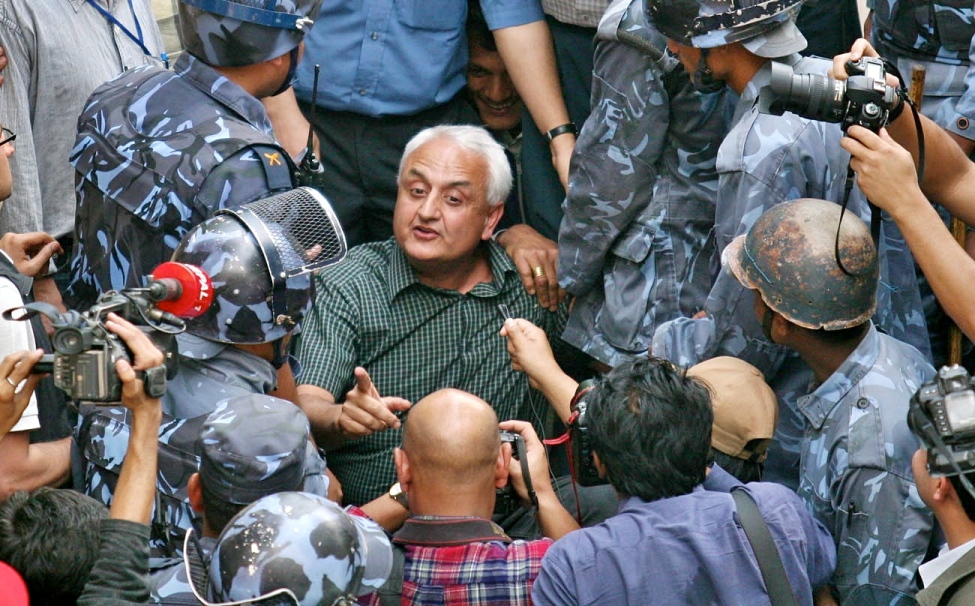
Kanak Mani Dixit challenges Nepali Army arresting him for peaceful street protests on 5 April 2006, Kathmandu – Photo by Shehab Uddin

ශ‍්‍රී ලංකා කර්තෘ සංසදය හා ශ‍්‍රී ලංකා පුවත්පත් ආයතනය සංවිධානය කළ 2011 ජනමාධ්‍ය විශිෂ්ටතා සම්මාන උළෙලේ ප‍්‍රධාන ආරාධිතයා ලෙස පැමිණියේ නේපාල පුවත්පත් කතුවර හා ප‍්‍රකාශක කනක් මානි ඩික්සිත් (Kanak Mani Dixit). මාධ්‍ය නිදහස හා මාධ්‍යවේදියාගේ සමාජ මෙහෙවර ගැන දේශනයක් ද ඔහු කොළඹ දී පැවැත්වූවා.

ශ‍්‍රී ලංකාවට නිතර යන එන හා අපේ රට ගැන ඕනෑකමින් අධ්‍යයනය කරන මේ දකුණු ආසියාතික හිතවතා එසේ මෙසේ චරිතයක් නොවේ. මා ඔහු දකින්නේ හිමාලයේ කඳු හොල්ලන්නට තරම් සමත් ඉමහත් ධෛර්යයක් හා කැපවීමක් ඇති, අතිශයින් කාර්යශූර පුද්ගලයකු හැටියටයි. ඔහු මගේ මිතුරකු වගේ ම මා බෙහෙවින් අගය කරන අසාමාන්‍ය ගණයේ චරිතයක්. එයට හේතු ගණනාවක් තිබෙනවා.

ඩික්සිත්වරුන් නේපාලයේ ඉසුරුබර, ප‍්‍රභූ පවුලක්. පෙළපතින් උරුම වූ සම්පත් හා වරප‍්‍රසාද භුක්ති විඳිමින් සැහැල්ලූවෙන් හෝ විනෝදකාමීව හෝ සිටීමට හැකියාව තිබුණත් ඔවුන් පොදු උන්නතියට කැප වෙමින්, විද්‍යා, කලා හා ශිල්ප ශාස්ත‍්‍ර ප‍්‍රගුණ කරන පිරිසක්. එබඳු පෙළපතක වුවත් කනක් සුවිශේෂීයි.

නේපාලයේත්, ඉන්දියාවේත් ඉගෙනුම ලැබ මාධ්‍ය කලාවේ ඉහළ ම පශ්චාත් උපාධියක් අමෙරිකාවේ කොලම්බියා සරසවියෙන් ලද කනක්, වසර කිහිපයක් නිව්යෝක් නුවර එක්සත් ජාතීන්ගේ මූලස්ථානයේ තොරතුරු අංශයේ සේවය කළා. එබඳු තනතුරකට පත් වන අපේ වැනි රටවලින් මතු වන බහුතරයක් දෙනා නැවත සිය රට එන්නේ නැහැ.

එහෙත් බටහිරින් හා ජාත්‍යන්තර සංවිධාන ක්ෂේත‍්‍රයෙන් ලත් දැනුම හා අත්දැකීම් රැගෙන කනක් ආපසු නේපාලයට ආවේ 1980 දශකය මැදදී. 1987දී ඔහු හිමාල් (HIMAL) නම් සඟරාවක් ඇරඹුවා. හිමාලයට සාමුහිකව හිමිකම් කියන භූතානය, ඉන්දියාව, නේපාලය, ටිබෙටය, පකිස්ථානය හා චීනය යන රටවල් කෙරෙහි මුලින් අවධානය යොමු කළ මේ ඉංග‍්‍රීසි සඟරාව, වසර කිහිපයකින් සමස්ත දකුණු ආසියාවම ආවරණය කැරෙන පරිදි HIMAL Southasian නමින් යළි නම් කළා.

හිමාල් සඟරාව දේශපාලන, සමාජ විද්‍යාත්මක, කලා, විද්‍යා හා අන් මාතෘකා දකුණු ආසියාතික කෝණයෙන් බලමින් විග‍්‍රහ කරන ප‍්‍රකාශනයක්. වසර 25ක් ගත වීත් එයට ඍජුව තරඟකාරී වෙනත් කලාපීය ප‍්‍රකාශනයක් නැහැ. (ඉන්දියානු පුවත් සඟරා බොහෝ කොට තම රටෙහි සිදුවීම්වලට වාර්තාකරණය හා විග‍්‍රහයන් සීමා කරන අතර දකූණු ආසියාවේ සෙසු රටවල් ගැන ඇස යොමු කරන්නේ ඉඳහිට පමණයි.)

කනක් ඩික්සිත්, මිලියන් 26කට අධික ජනතාවක් වෙසෙන, ලෝකයේ අන්ත දුගී රටවල් 49න් එකක් වන නේපාලයේ සමාජ, ආර්ථික හා දේශපාලන ප‍්‍රශ්න ගැන සංවේදී වන අතර දකුණු ආසියාතික පොදු චින්තනයක් හා අනන්‍යතාවයක් ගොඩ නංවන්නට කවදත් උත්සුක වූ අයෙක්.

දකුණු ආසියාවේ ආණ්ඩු 1985දී අටවා ගත් සාර්ක් (SAARC) නම් අන්තර්-රාජ්‍ය කලාපීය සහයෝගිතා සංවිධානයට වඩා කනක්ගේ දැක්ම පුළුල් හා ගැඹුරුයි. රාජ්‍ය නායකයන්, නිලධාරීන් හා තානාපතීන් විටින් විට මුණ ගැසී නිල කථාබහ කරන අතර සාර්ක් රටවල් අටෙහි වසන මිලියන් 1,400ක් සාමාන්‍ය ජනයා ද ආර්ථික, සාංස්කෘතික හා සමාජයීය මට්ටමින් සබඳතා දියුණු කර ගත යුතු බව ඔහු දැඩි සේ විශ්වාස කරනවා. සැබෑ කලාපීය සහයෝගීතාව බිහි වන්නේත්, අන්‍යෙන්‍ය විශ්වාසය හා සුහදතාව වැඩෙන්නේත් අන්තර්-රාජ්‍ය ගිවිසුම් හරහා නොව මිනිස් සබඳතා හරහා යයි ඔහු නිතර කියනවා.

දකුණු ආසියාතික මට්ටමින් ජන සබඳතා, කලා සබඳතා හා මාධ්‍ය සබඳතා වැඩි කරන්නට Film South Asia නමින් කලාපීය වාර්තා චිත‍්‍රපට උළෙලක් 1997දී ඔහු ඇරඹුවා. දෙවසරකට වරක් කත්මණ්ඩු නුවර පැවැත්වෙන මේ උළෙලට දකුණු ආසියාවේ ඕනෑ ම තේමාවක් ගැන නිපදවුණු චිත‍්‍රපට ඉදිරිපත් කැරෙනවා. උළෙලක හොඳම චිත‍්‍රපට ලෙස සම්මාන ලබන චිත‍්‍රපට ඉන්පසු වසරක් පුරා දකුණු ආසියාවේ ප‍්‍රධාන නගරවලටත්, වෙනත් රටවලටත් සංචාරය කරනවා.

මා කනක් හරිහැටි හඳුනා ගත්තේ මුල්ම Film South Asia චිත‍්‍රපට උළෙලේ ජූරි සභිකයකු ලෙස 1997 ඔක්තෝබරයේ ඔහු සමග කටයුතු කළ කාලයේ. සීමිත සම්පත් හා පහසුකම් මැද, එහෙත් දැඩි උද්‍යොගයෙන් හා ස්වේච්ඡ සේවකයන්ගේ උදවුවෙන් ලොකු වැඩ කරන්නට මේ පුංචි මිනිසාට ඇති සුවිසල් සංවිධාන ශක්තිය මා හොඳාකාර දුටුවා.

චිත‍්‍රපට උළෙල, සම්මන්ත‍්‍රණ, විද්වත් වැඩමුළු මෙන් ම වෙනත් නොයෙක් පොදු උන්නතියට දායක වන ක‍්‍රියාකාරකම් කනක් නිතර සංවිධානය කරනවා. එසේ කරන්නේ හිමාල් මීඩියා නම් මාධ්‍ය ආයතනය හරහා සතිපතා හා මාස්පතා පත්තර සඟරා කිහිපයක් ද පළ කරන අතරයි.

තමන්ගේ ම ප‍්‍රකාශන ආයතනයක අධිපති හා ප‍්‍රධාන කර්තෘ වීමේ වාසිය ඔහුට ඇතත්, එ් වාසියම අවදානමක් වන අවස්ථා ද තිබෙනවා. ඔහු තර්කානුකූලව හා ප‍්‍රතිපත්ති ගරුකව ගන්නා ඇතැම් ස්ථාවරයන් නිසා නේපාලයේ ප‍්‍රබල දේශපාලකයන් හා නිලධාරීන් කෝපයට පත්ව විවිධ තර්ජන, හිරිහැර හා දැන්වීම්කරුවන් බිය වැද්දීම ආදිය සිදු කළ අවස්ථා තිබෙනවා. එහෙත් ප‍්‍රබල විවේචකයන් පවා ඔහුගේ අවංක බව හා පක්ෂග‍්‍රාහී නොවීම අගය කරනවා.

වාමාංශික මාවෝවාදී (Maoist) ගරිල්ලා ව්‍යාපාරයක් නේපාලයේ ප‍්‍රජාතන්ත‍්‍රවාදීව පත් වූ රජයට එරෙහි වන්නට පටන් ගත්තේ 1996 සිටයි. ටික කලෙකින් සන්නද්ධ අරගලයක් බවට පත් වූ එය වසර 10ක් තිස්සේ 12,000කට අධික ජීවිත බිලි ගත්තා. නේපාල දේශපාලන ඉතිහාසය ගැන කියන්නට මේ අවස්ථාව නොවූවත්, මාවෝවාදීන් ප‍්‍රබල වී හා දරුණු වී, බලයේ සිටි රජය අසරණව සිටින වකවානුවේ පවා ගරිල්ලන්ගේ ප‍්‍රචන්ඩත්වය ප‍්‍රසිද්ධියේ හෙළා දැකීමට පුවත්පත් කතුවරයකු ලෙස කනක්ට ධෛර්යය තිබුණා.

2005 පෙබරවාරියේදී පාර්ලිමේන්තුව අත්හිටුවමින් පූර්ණ විධායක බලය සියතට ගත් නේපාලයේ ඥනේන්ද්‍ර රජු, අත්තනෝමතික පාලනයකට යොමු වුණා. රජුගේ ආඥදායකත්වය යටතේ නේපාල හමුදාව මාවෝවාදී ගරිල්ලන්ට එරෙහිව බිහිසුණු රාජ්‍ය ප‍්‍රචන්ඩත්වයක් රට පුරා මුදා හරින්නට ගත් විට එය විවේචනය කරන්නට තරම් පිට කොන්දක් තිබුනේ නේපාල සමාජයේ හා මාධ්‍ය ක්ෂේත‍්‍රයේ ඉතා ටික දෙනකුටයි.

ප‍්‍රභූ පැලැන්තිය හා පීඩිත බහුතරයක් අතර පංති අරගලයක් ලෙස ඇවිලෙමින් තිබූ නේපාල සිවිල් යුද්ධයේදී, කනක් ප‍්‍රභූ පෙළපතකින් ආවත් යුක්තිය, සාධාරණත්වය හා මානව හිමිකම් වෙනුවෙන් දිගට ම මතවාදීව පෙනී සිටියා. එහිදී ඔහු නිතර ජීවිත තර්ජනවලට ලක් වූ බව ප‍්‍රකට කරුණක්.

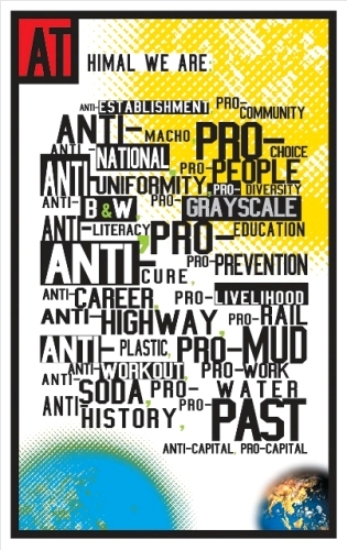
What Himal is all about…

2005 සැප්තැම්බරයේ මාවෝවාදීන් මාස තුනක එ්කපාර්ශවික සටන් විරාමයක් ප‍්‍රකාශ කළා. එ් රජුගේ පාලනයත් සමග යම් මට්ටමක එකඟත්වයකට පැමිණිමට. දෙපසින් ම දරුණු ලෙස බැට කා හෙම්බත් වී සිටි නේපාල ජනතාව එ් විරාමය අතරතුර වීදි උද්ඝෝෂණ කරන්නට පටන් ගත්තා. පාර්ලිමේන්තුව නැවත කැඳවන ලෙස ඔවුන් බල කර සිටියා.

හමුදාව හා පොලිසිය යොදා ගෙන හදිසි නීතිය යටතේ ජන බලවේගය පාලනය කරන්නට රජු උපරිම උත්සහ ගත්තා. නේපාල ජන ආන්දෝලනයේ සුවිශේෂී ලක්ෂණයක් වූයේ දේශපාලන පක්ෂ හා වෘත්තිය සමිතිවලට අමතරව විද්වතුන්, වෘත්තිකයන් හා ඉහළ පැලැන්තියේ උදවියත් වීදි බැසීමයි.

රජුගේ දඩබ්බර ඇඳිරි නීතියක් කඩ කරමින් වීදි ගත වී උද්‍යොග පාඨ කියමින් සිටි සිය ගණනක් අත්අඩංගුවට ගනිද්දී කනක් ඩික්සිත් ද සිර බාරයට පත් වුණා. බලාධිකාරීන් සමග පෞද්ගලික සබඳතා ඇති පුවත්පත් ප‍්‍රකාශකයකු හා කතුවරයකු ලෙස ඕනෑ නම් ඔහුට තම හිතවත්කම් මත පැය කිහිපයක් ඇතුලත නිදහස් වන්නට ඉඩ තිබුණා. එහෙත් ප‍්‍රතිපත්තිමය ස්ථාවරය මත ඔහු එසේ කළේ නැහැ. දින 19ක් තමා රඳවා තැබූ කත්මණ්ඩු හිර ගෙදර, එයින් නිදහස් වූ පසු වතාවක් ඔහු පිටතින් මට පෙන්වූයේ හැඟීම් බරවයි.

ජන බලවේගය ගිනි අවි හා මැර බලයෙන් මැඬ පවත්වන්නට බැරි වූ තැන රජු 2006 අපේ‍්‍රල් 24 වනදා එයට හිස නැමුවා. පාර්ලිමේන්තුව නැවත ස්ථාපිත කොට, අගමැතිවරයකුට කැබිනට්ටුවක් පත් කර ගෙන රට පාලනය කරන්නට ඉඩ දී, පෙර පරිදි නාමික රාජ්‍ය නායකයා ලෙස සිටීමට රජු කැමති වුණා. එහෙත් ඉනික්බිති දිග හැරුණු සිදුවීම්වල අවසානය වූයේ රාජාණ්ඩු සංකල්පය ම ඉවත දමා නේපාලය 2008දී ජනරජයක් බවට පත් වීමයි.

මේ දේශපාලන හා ව්‍යුහමය ප‍්‍රතිසංස්කරණ තවමත් හරිහැටි නිමා වී නැහැ. නව ව්‍යවස්ථාවක් සම්පාදනය කර ගන්නට නේපාල දේශපාලන පක්ෂ තවමත් වෙර දරනවා. ඔහුත් සමග වීදි අරගල කළ, එකට සිරබත් කෑ සමහරුන්ව අද කනක් විවේචනය කරනවා. මේ නිසාදෝ දැන් බලයේ සිටින ඇතමුන්ට මේ ප‍්‍රතිපත්තිගරුක කතුවරයා හිසරදයක් වෙලා. අන්තවාදී දේශපාලන කණ්ඩායමක් මෑතදී ඔහුව ‘ජන සතුරකු’ (Enemy of the People) ලෙස හංවඩු ගසනු ලැබුවේ එ නිසායි.

මේ අතර රටේ සාමාන්‍ය ජනතාවගේ සුබ සිද්ධිය ගැනත්, අනාගත ආර්ථික හා සමාජයීය ස්ථාවරය ගැනත් කනක් ඩික්සිත් දිගට ම විග‍්‍රහ කරනවා. දේශපාලනයෙන් ඔබ්බට දිවෙන දැක්මක් කනක්ට තිබෙනවා. ඉන්දියාවට හා චීනයට මැදි වී තිබෙන නේපාලය, ආර්ථික වශයෙන් දියුණු කරන්නට ගත යුතු ප‍්‍රතිපත්ති හා උපායමාර්ග ගැන ඔහු මාධ්‍ය හරහාත්, විද්වත් සභා සහ සිවිල් සමාජය තුළත් සංවාද කරනවා.

උදාහරණයක් හැටියට ජනාකිර්ණ හා තදබදයට ලක් වූ කත්මණ්ඩු නිම්නයේ පොදු මාර්ග ප‍්‍රවාහනය දියුණු කරන්නට උපක‍්‍රම සොයා ඔහු රාජ්‍ය හා පෞද්ගලික අංශයේ කොයි කවුරුත් සමග වැඩ කරනවා. මෝටර් බයිසිකල් හා රටවලින් පිරී ඉතිරී ගිය මංමාවත් වෙනුවට කාටත් ලෙහෙසියෙන් ගමන් යා හැකි, වාත දුෂණය පාලනය කරගත් ප‍්‍රවාහන පද්ධතියක් බිහි කර ගන්නට තවමත් කත්මණ්ඩු නුවරට ඉඩක් ඇතැයි ඔහු විශ්වාස කරනවා.

එ අතර ඓතිහාසික වශයෙන් වැදගත් සිද්ධස්ථාන හා පුරාණ ගොඩනැගිලි සංරක්ෂණය කිරීම ගැනත් ඔහු බොහෝ උනන්දු වනවා. මේ සියල්ල කරන අතරේ නේපාලයේ ඉතිහාසය හා සංස්කෘතික උරුමය ගැන දරුවන්ට රසවත් ලෙස කියා දෙන ලමා පොත් ලියන්නටත් ඔහු පටන්ගෙන තිබෙනවා.

වයස 45දී ඔහු නේපාල බසින් එරට පුවත්පත් වලට ලිපි ලිවීම ඇරඹුවා. එ දක්වා ඉංගී‍්‍රසි පුවත්පත් ලේඛකයකු හා කතුවරයකු ලෙස ක‍්‍රියා කළ ඔහු දැන් වසර හත අටක සිට එරට ප‍්‍රධාන දේශීය බස හරහා වැඩි ජන සංඛ්‍යාවක් අමතනවා. ර්‍ණමෙය මුලදී මට ලෙහෙසි වූයේ නැහැ. නමුත් සැබෑ සමාජ, ආර්ථික හා දේශපාලන පරිනාමයකට හරිහැටි දායකවන්නට නම් නේපාල බසින් ද සන්නිවේදනය කළ යුතු බව මා තේරුම් ගත්තා” පසුගිය සතියේ ඔහු කොළඹදී මට පැහැදිලි කළා.

කනක් තමා කරන දේ ගැන අළුත් තොරතුරු බ්ලොග් අඩවියක් හරහාත් (www.kanakmanidixit.com), ට්විටර් වැනි වෙබ් මාධ්‍ය හරහාත් ලොව පුරා විසිර සිටින මිතුරන් සමග බෙදා ගන්නවා.

කනක් ඩික්සිත් කරන හපන්කම් අසන දකින මට නිතර සිතෙන්නේ අපේ ප‍්‍රභූ පැලැන්තිවලත් ඉඳහිටවත් මෙබඳු පොදු උන්නතියට කැප වන, එඩිතර චරිත හමු වනවා නම් කෙතරම් අපූරු ද කියායි! අපට සිටින ප‍්‍රකාශක හාමුලා හා පත්තර මුදලාලිලාට මේ හිමාලයේ කඳු සොළවන පුංචි මිනිසාට කිට්ටු කරන්නත් අමාරුයි!